
Shape identification Building Vocabulary Worksheets for Ages 5-9
4 filtered results
Difficulty Level
Grade
Age
-
From - To
Subject
Activity
Standards
Enhance your child's learning experience with our engaging Shape Identification Building Vocabulary Worksheets, designed for ages 5-9! These interactive activities not only help kids recognize and describe various geometric shapes, but also boost their vocabulary skills. By using colorful illustrations and fun exercises, children will learn to identify shapes, explore their properties, and articulate their observations effectively. Perfect for homeschooling or supplementary use in the classroom, our worksheets promote critical thinking and creativity while making learning enjoyable. Equip your young learners with the essential skills they need for future academic success – dive into the world of shapes today!
Favorites
With answer key
Interactive
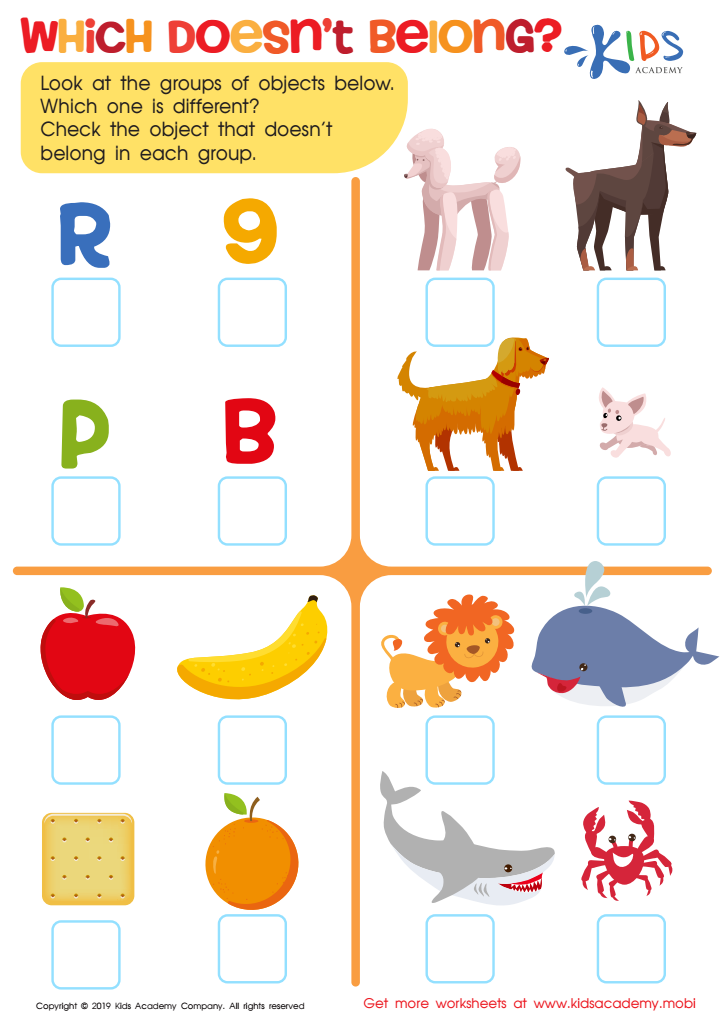
Which Doesn't Belong? Worksheet
This engaging worksheet helps preschoolers recognize similar and different attributes of common words, using brightly-colored pictures. They analyze the items in each category and check off what is different. For extra practice, have them explain their reasoning verbally! Sorting and classifying are important skills to learn.
 Assign to My Students
Which Doesn't Belong? Worksheet
Worksheet











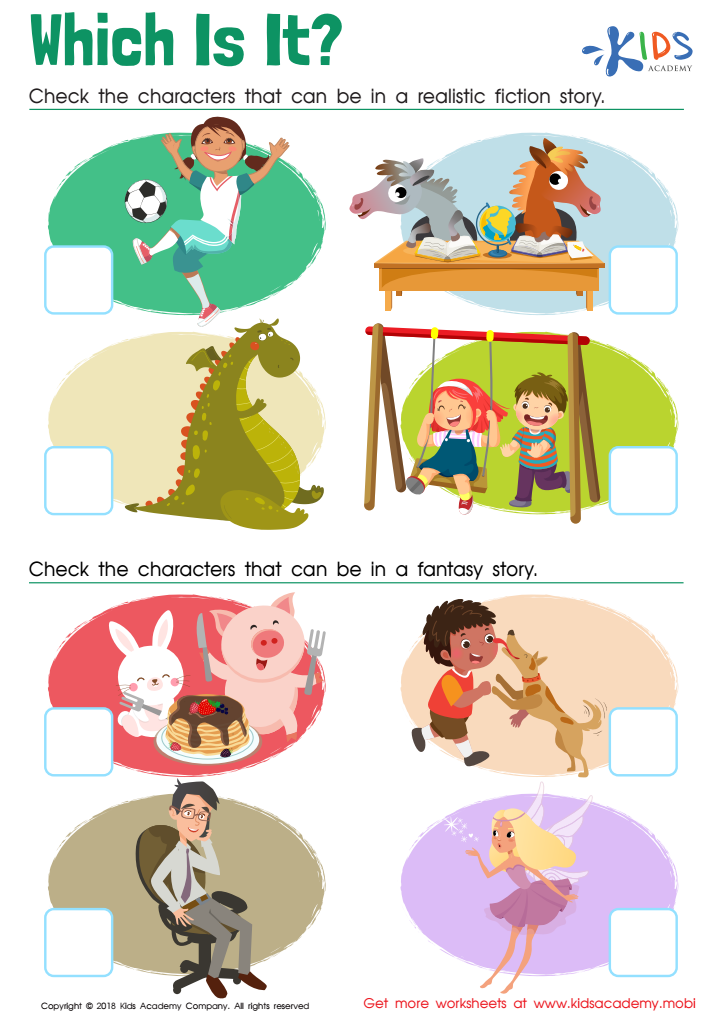
Which Is It? Worksheet
This colorful worksheet helps young readers identify elements of fact and fiction using fun picture clues. They can check off characters who exist in realistic fiction stories, which makes learning the difference between the two genres fun and engaging.
Which Is It? Worksheet
Worksheet
Join Kids Academy for Free
Who is primarily going to use this learning content?


.jpg)





Shape identification and vocabulary building are crucial for children ages 5-9, as they form foundational skills essential for later academic success. At this developmental stage, children are eager to explore their environment, and recognizing shapes helps them make sense of the world around them. Understanding shapes enhances spatial awareness, allowing young learners to relate objects to one another and perceive their relationships in space, which is foundational in subjects like mathematics and science.
Moreover, building vocabulary that accompanies shape identification enriches their language skills. By associating words with visual components, children expand their linguistic repertoire, improving communication skills essential for conveying ideas and feelings effectively. This vocabulary growth fosters cognitive development and critical thinking, enabling children to describe their observations and engage in discussions.
Engaging children with shapes through interactive activities—like art, games, and real-life encounters—also nurtures a positive attitude towards learning and curiosity. For parents and teachers, fostering an environment rich in shape-based vocabulary lays the groundwork for more complex concepts in the future, making math more comprehensible and enhancing overall literacy. Emphasizing these skills ensures comprehensive development during a critical stage of growth, preparing children for continued learning experiences.








