Enhancing Counting Skills Reading Worksheets for Ages 5-9
3 filtered results
-
From - To
Boost your child's counting skills with our engaging reading worksheets tailored for ages 5-9! Our resources combine fun and learning, helping young learners develop their numerical understanding through interactive activities. These worksheets emphasize the connection between counting and reading, featuring colorful visuals and captivating themes that make math enjoyable. Perfect for classrooms or home learning, our materials are designed to enhance cognitive skills while improving literacy. With various activities such as counting objects, number recognition, and arithmetic puzzles, your child will gain confidence in their counting abilities. Explore our collection today and watch your child's skills soar!
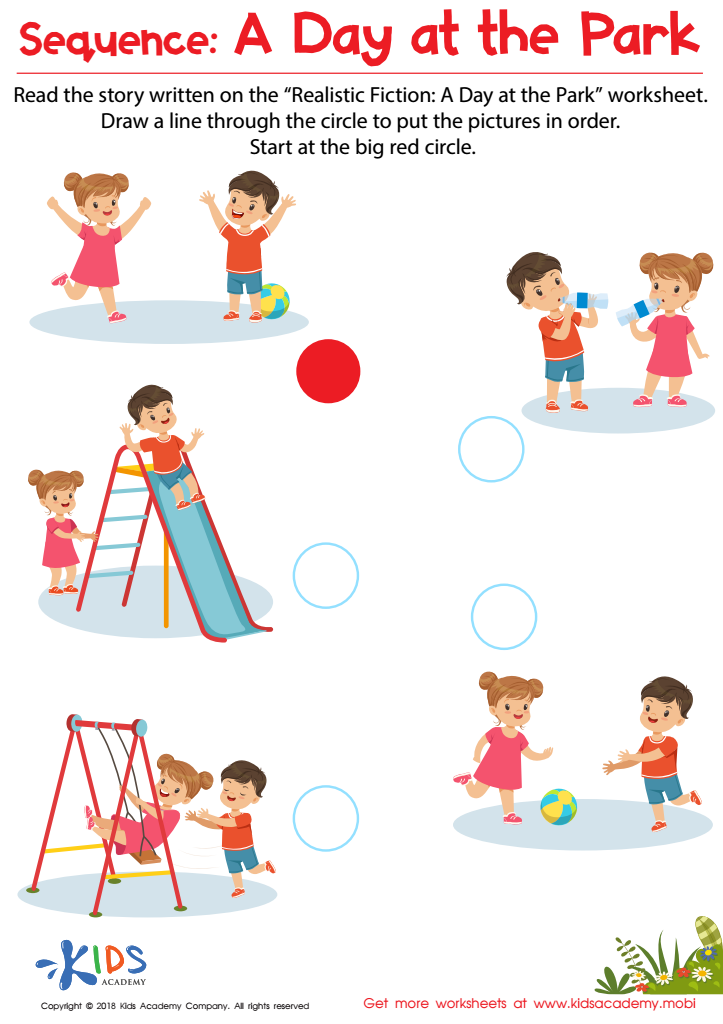
Sequence: A Day at the Park Worksheet
 Assign to My Students


.jpg)


Enhancing counting skills during the crucial ages of 5-9 is vital for several reasons. At this developmental stage, children begin to seek connections between numbers, quantities, and the world around them. Strong counting abilities form the foundation for future mathematical concepts such as addition, subtraction, and even problem-solving skills.
Parents and teachers should prioritize counting skills because they are essential not only for math but also for developing cognitive abilities. Engaging children in counting activities cultivates critical thinking, boosts memory skills, and enhances attention span. These activities can be both educational and fun, fostering a positive attitude toward learning.
Moreover, early counting proficiency encourages confidence and independence in children. When children gain mastery in counting, they are better equipped to tackle complex mathematical concepts as they move into higher grades. This solid foundation can reduce anxiety and aversion to math later in life.
Counting skills also extend beyond academic success; they aid in everyday life, helping children understand time, money, and reasoning in everyday situations. Involving parents in counting games and supportive learning activities can create a nurturing environment that leads to holistic growth, making it imperative for both parents and teachers to focus on enhancing counting skills.








