Observation skills Reading Worksheets for Ages 5-9
3 filtered results
-
From - To
Enhance your child’s reading ability with our engaging Observation Skills Reading Worksheets designed for ages 5-9! These worksheets encourage young learners to develop crucial observation skills by focusing on details, making connections, and improving comprehension. With colorful illustrations and age-appropriate activities, children will enjoy honing their abilities in a fun way. Our worksheets support various learning styles, making them perfect for classrooms or at-home learning. Educators and parents alike will appreciate the structured approach that fosters curiosity and critical thinking. Download our Observation Skills Reading Worksheets today and watch your child grow into an adept and confident reader!
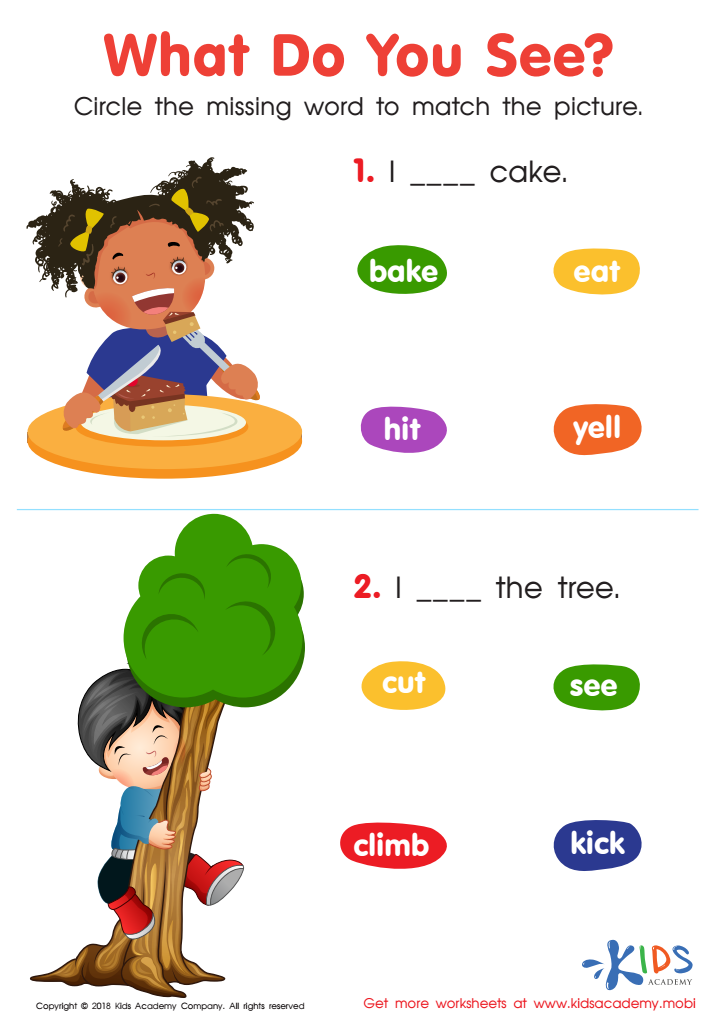
What Do You See? Reading Worksheet
 Assign to My Students
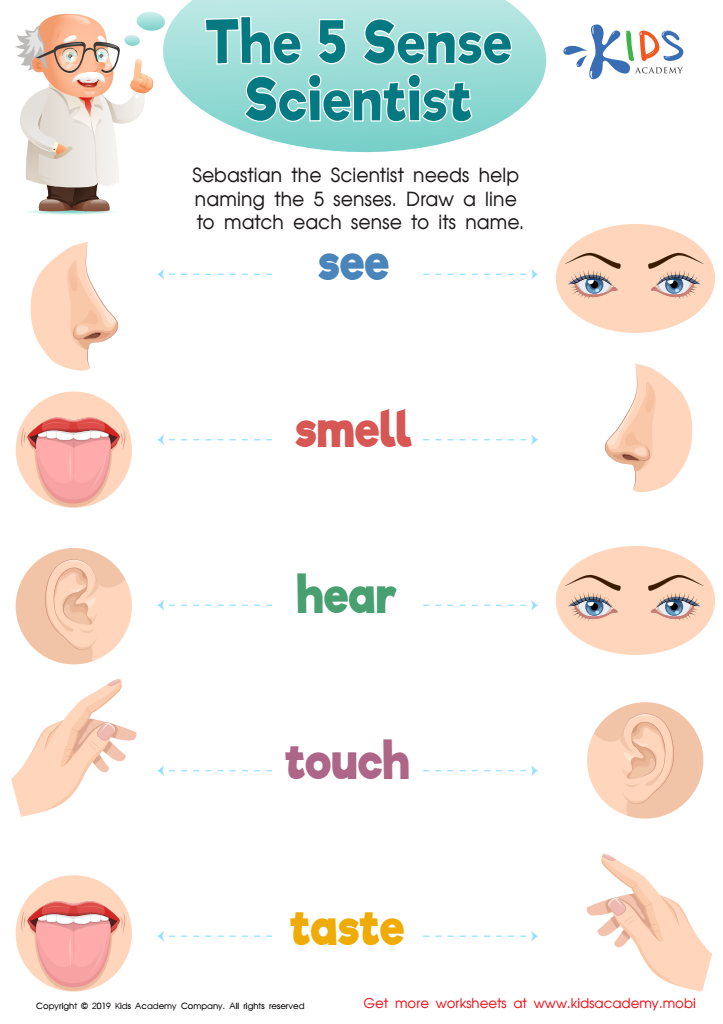
The 5 Sense Scientist Worksheet
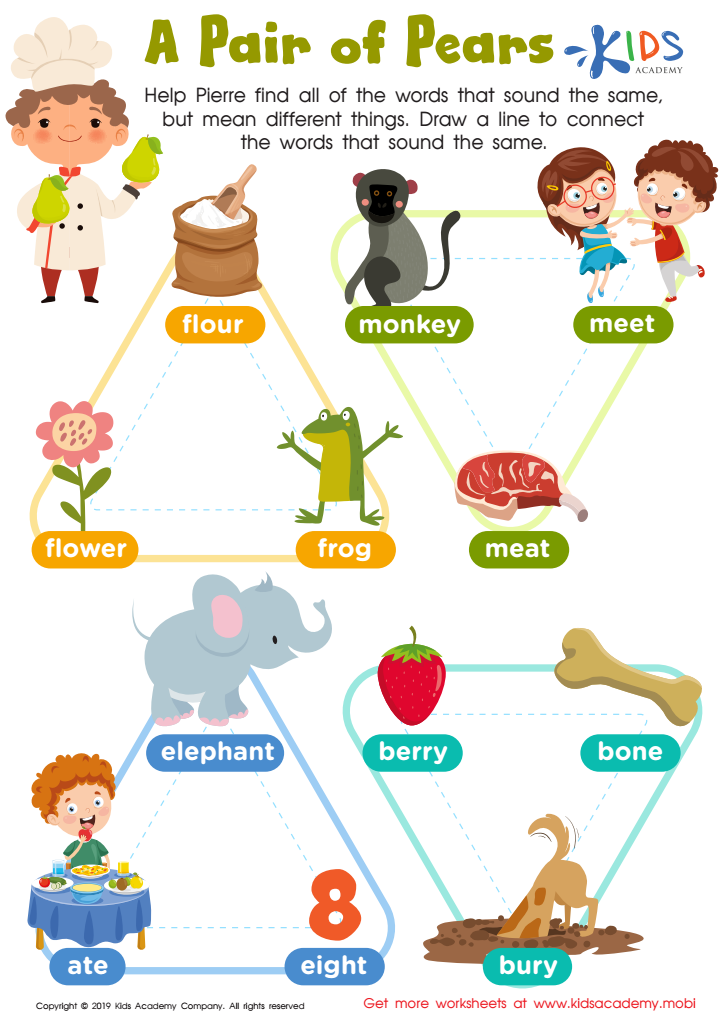
Pair Pears Worksheet








Observation skills are crucial for children aged 5-9 as they form the foundation for effective reading and comprehension. At this developmental stage, children are not only learning to read but also to interpret and engage with the world around them. Improving observation skills enhances their ability to notice details, identify patterns, and make connections, essential competencies for understanding texts.
Parents and teachers should prioritize these skills because children learn to derive meaning from illustrations and contextual clues, improving their ability to summarize, infer, and predict outcomes in stories. When children practice observation, they become active readers, engaging with content more critically rather than passively receiving information.
Moreover, robust observation skills promote curiosity and a love for learning, encouraging children to ask questions and explore beyond the pages of a book. This skill aids in academic success across subjects, laying the groundwork for lifelong learning.
Involving families in developing observation skills—through shared reading experiences, nature walks, or discussions about daily observations—enriches children's literacy journey. Ultimately, fostering these abilities equips young learners with essential tools for academic achievement and personal growth. Hence, both parents and teachers play vital roles in nurturing observation skills during these formative years.








