Visual Perception Skills Reading Worksheets for Ages 5-9
4 filtered results
-
From - To
Enhance your child's reading abilities with our expertly designed Visual Perception Skills Reading Worksheets for Ages 5-9. Tailored to young learners, these engaging worksheets support the development of critical visual perception skills necessary for reading success. Through fun and interactive exercises, kids improve their ability to recognize letters, identify patterns, match shapes, and discriminate between visual stimuli. Ideal for both classroom and at-home learning, these worksheets foster concentration, improve reading readiness, and boost overall literacy skills. Empower your child with the tools they need to become confident, proficient readers through targeted skill practice offered by these valuable educational resources.
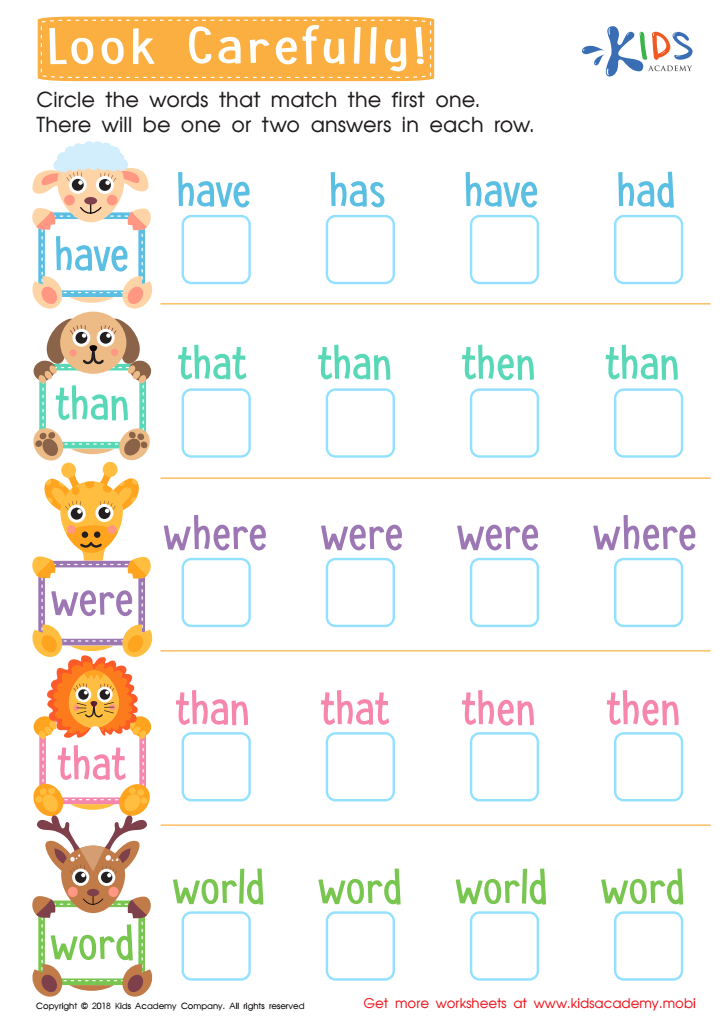
Look Carefully Worksheet
 Assign to My Students
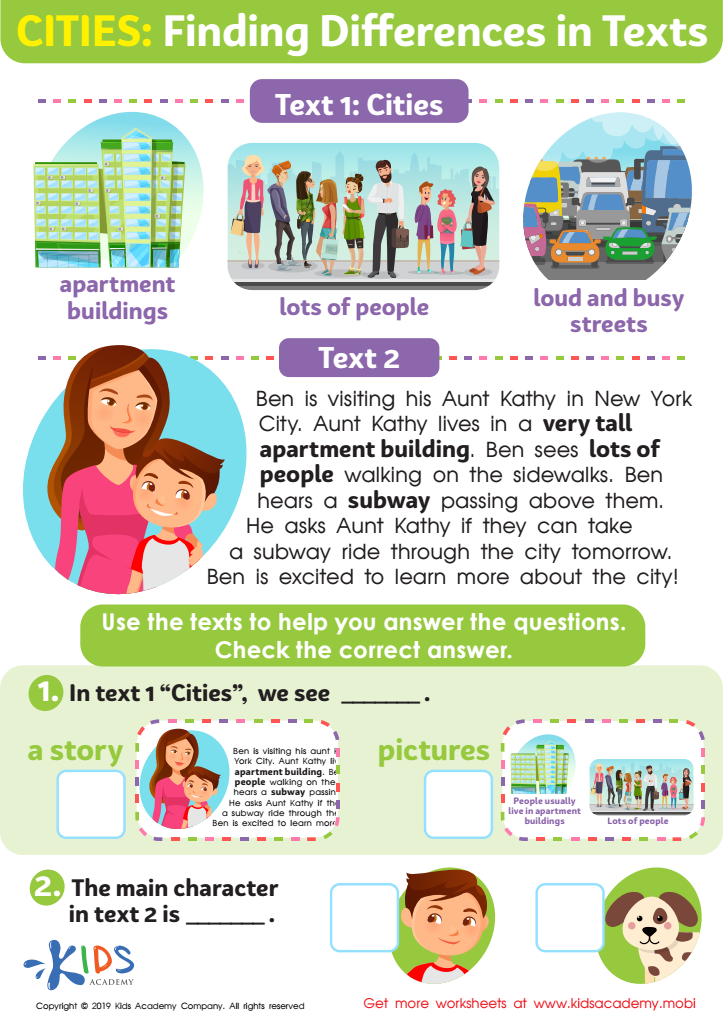
Cities: Finding Differences Worksheet
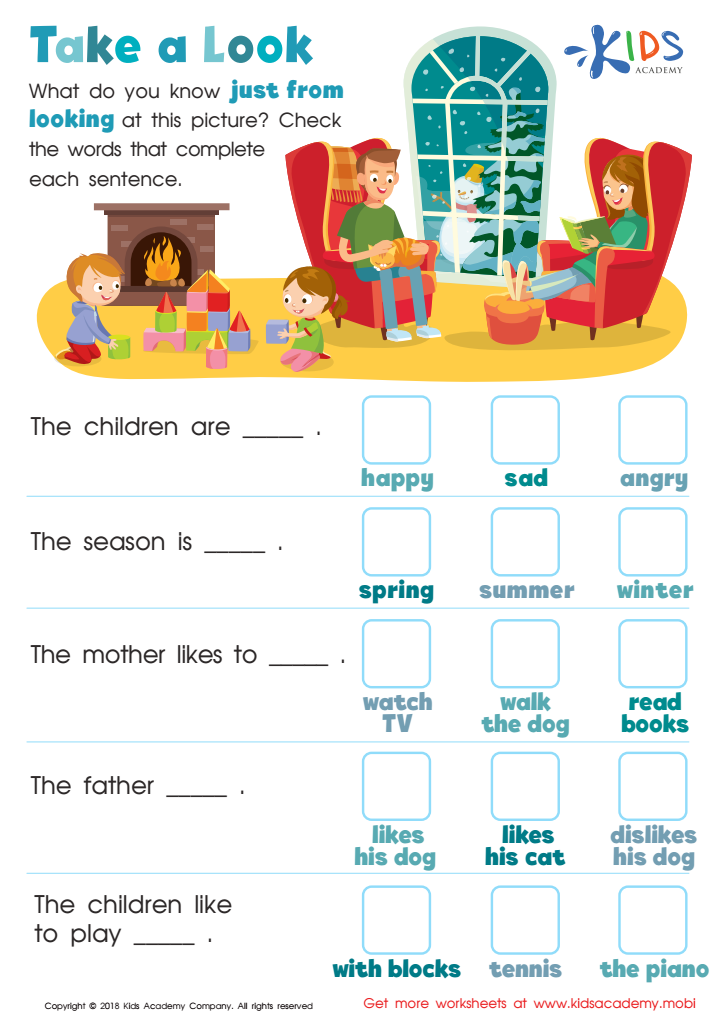
Take a Look - Part 1 Worksheet
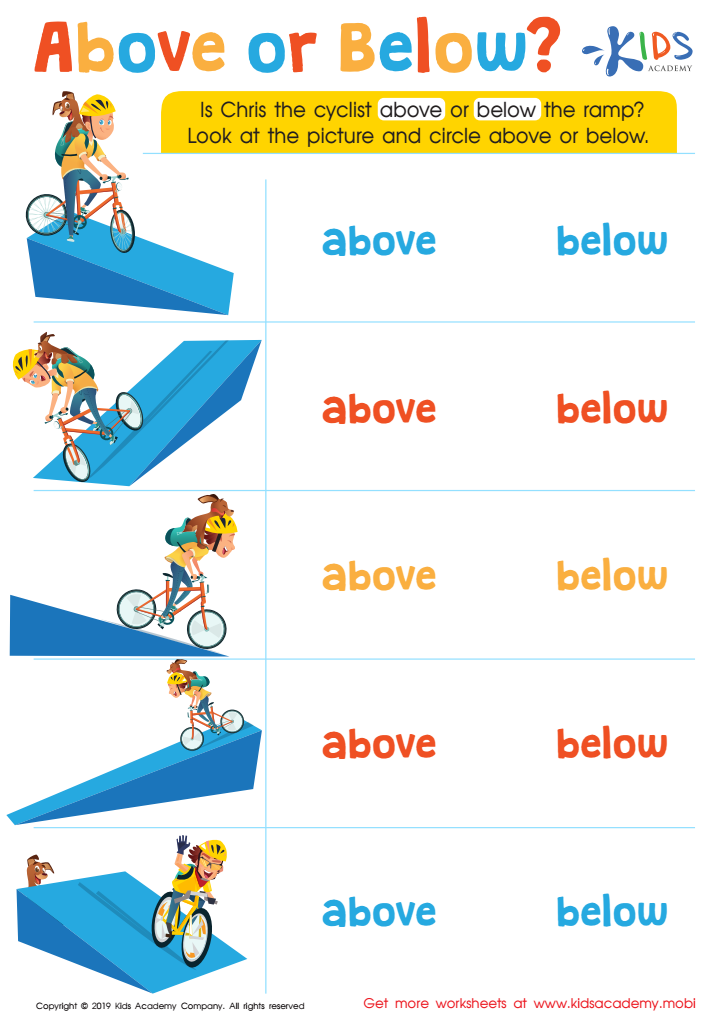
Above or Below? Worksheet







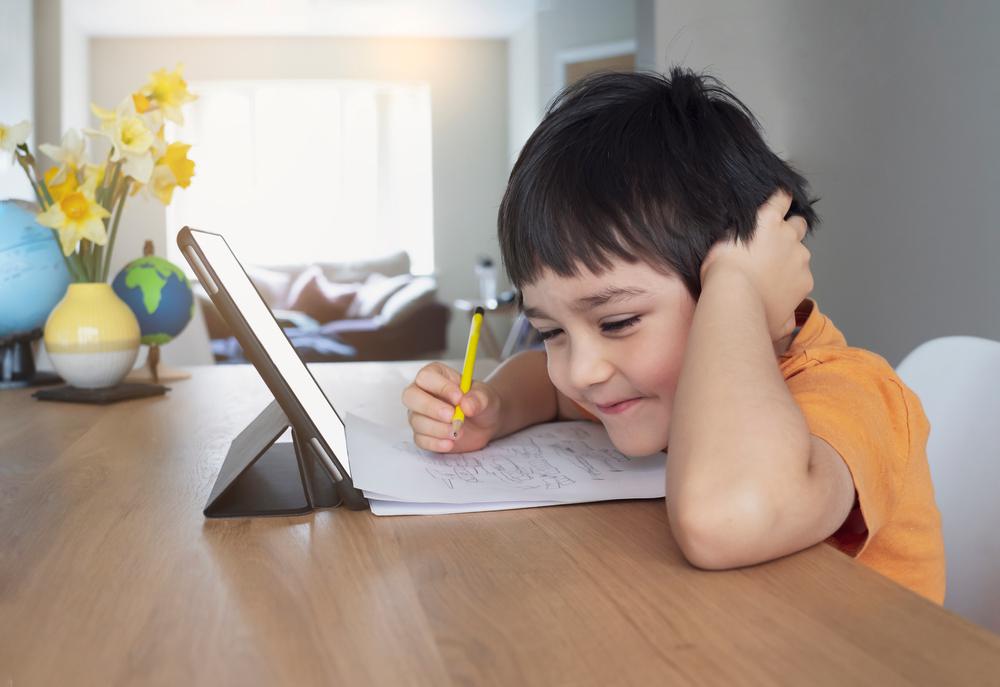
Parents and teachers should place great importance on developing visual perception skills in children aged 5-9 because these skills are fundamental to effective learning and overall academic success. Visual perception skills enable children to interpret and understand visual information from their environment, which directly impacts their ability to read, write, and perform everyday tasks. For young readers, the ability to distinguish between letters, recognize patterns, and understand spatial relationships is crucial for decoding words and sentences accurately.
Without well-developed visual perception skills, a child could experience difficulties with tasks such as recognizing letters or numbers, which can lead to frustrations and a lack of confidence in their abilities. Such difficulties may also manifest as poor handwriting, struggling with math concepts, or problems in understanding and following directions.
By focusing on enhancing visual perception skills, parents and teachers equip children with the tools needed for efficient information processing, promoting better academic performance and a more positive learning experience. Engaging children in activities that strengthen these skills, such as puzzles, drawing, and matching games, not only supports cognitive development but also fosters critical thinking and problem-solving abilities that are essential for lifelong learning. Ensuring strong visual perception skills builds a solid foundation for educational growth and personal development, ultimately setting children on a path towards future success.








