Answering questions Reading Fiction Worksheets for Ages 5-9
3 filtered results
-
From - To
Unlock your child’s love for storytelling with our "Answering Questions Reading Fiction Worksheets" designed for ages 5-9! These engaging worksheets encourage young readers to comprehend and reflect on the stories they read. Each worksheet features fun stories followed by thought-provoking questions, helping children develop critical thinking and reading comprehension skills. Perfect for home or classroom use, our resources promote interactive learning and spark meaningful discussions about character motives, plot details, and themes. Foster a lifelong passion for reading while enhancing your child's analytical abilities. Explore our collection today to elevate your child's literary journey!
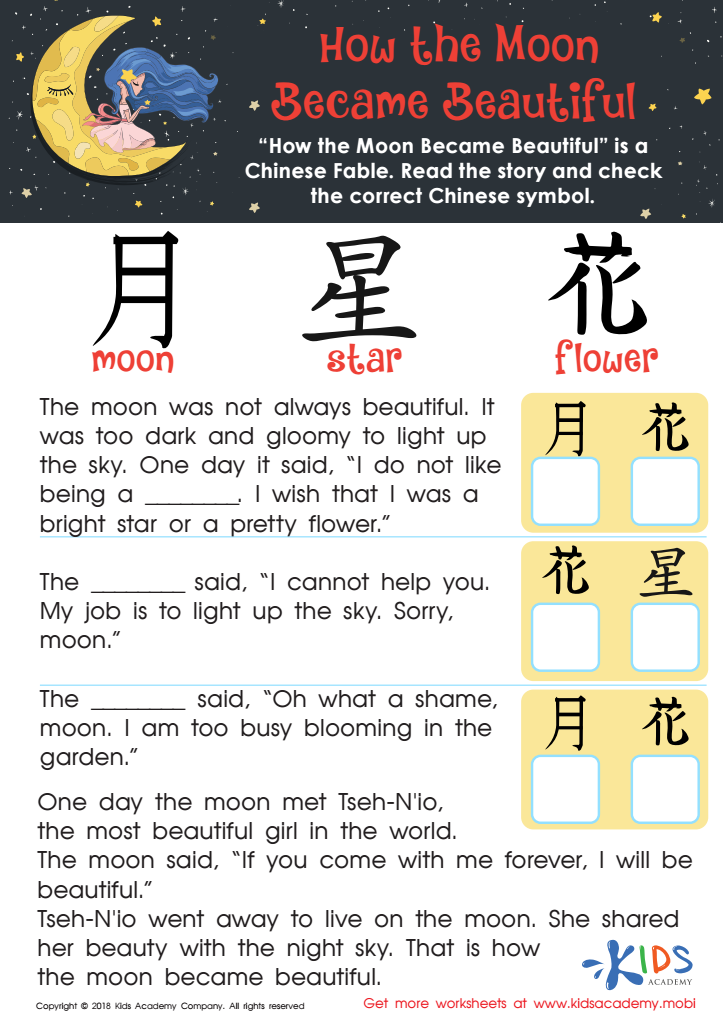
How the Moon Became Beautiful Worksheet
 Assign to My Students
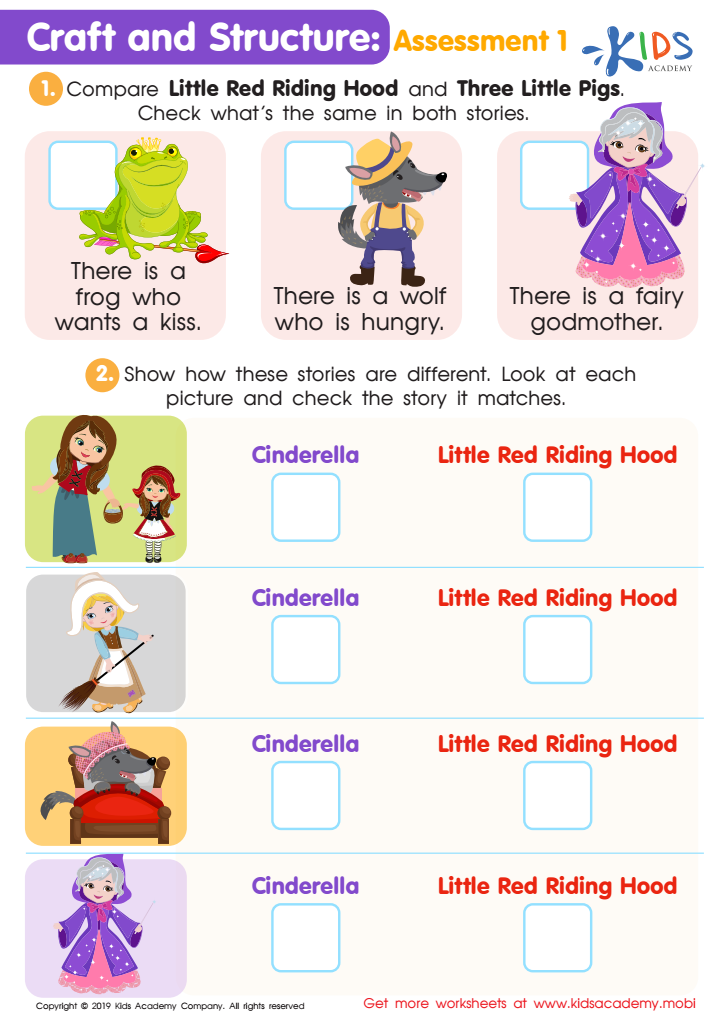
Craft and Structure: Assessment 1 Worksheet
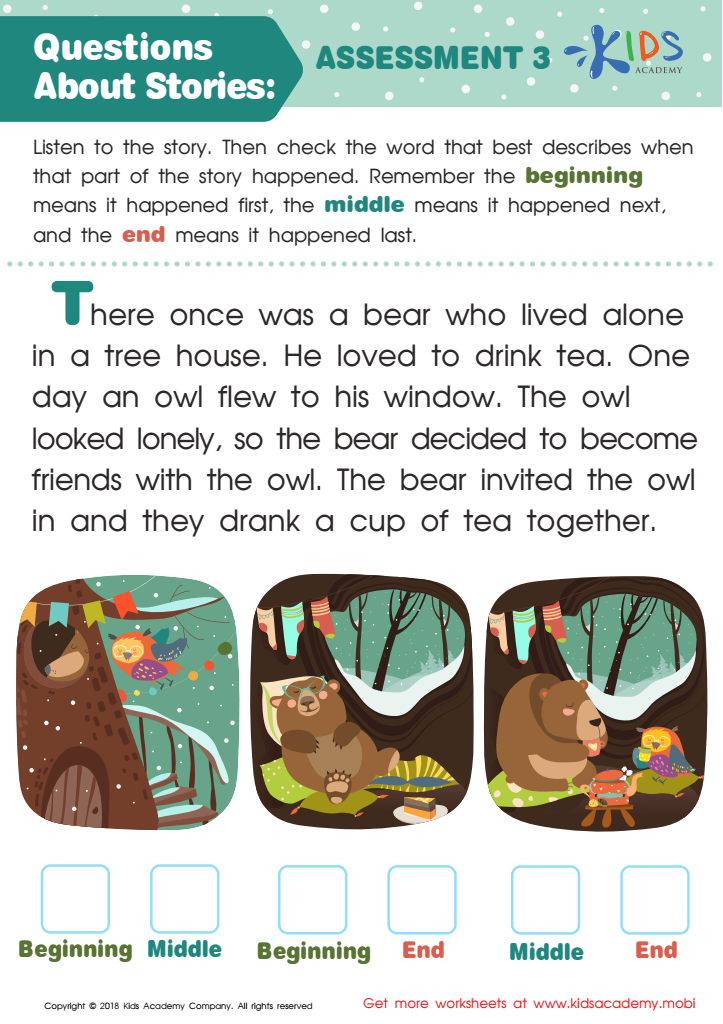
Questions About Stories: Assessment 3 Worksheet







Answering questions while reading fiction is crucial for ages 5-9 as it nurtures essential cognitive and social skills. During this developmental stage, children are rapidly expanding their language and comprehension abilities. Engaging with stories through questions not only enhances their understanding but also fosters critical thinking and analytical skills.
When parents or teachers encourage kids to ask and answer questions about fiction, they stimulate imagination and creativity. This interaction prompts children to think beyond the text, making connections to their own experiences and feelings. Moreover, it helps them develop empathy as they explore different characters' perspectives and emotions.
Discussing plot, characters, and moral lessons sharpens their comprehension, aiding in vocabulary acquisition and narrative skills. These skills are foundational for academic success in reading and writing.
Additionally, such interactions promote a love for reading, as children see it as an engaging activity rather than a chore. When parents and teachers actively participate, they establish strong bonds with children, making reading a shared joy.
In summary, prioritizing question-asking when reading fiction cultivates intellectual growth and emotional intelligence, laying a strong groundwork for lifelong learning and literacy. Engaging young readers in this manner creates thoughtful, empathetic individuals.








