Critical thinking development Reading Fiction Worksheets for Ages 5-9
4 filtered results
-
From - To
Enhance your child's critical thinking skills with our specially designed Reading Fiction Worksheets for ages 5-9. These engaging and educational worksheets from Kids Academy help young learners develop essential analytical abilities through captivating stories and thought-provoking questions. By interacting with diverse characters and scenarios, children practice making inferences, understanding motives, and drawing conclusions. Perfectly tailored for both classroom and home use, our worksheets foster a lifelong love for reading while building critical thinking and comprehension skills. Unlock your child's potential with our carefully crafted resources and watch their confidence soar! Visit Kids Academy for more details and start their learning journey today!
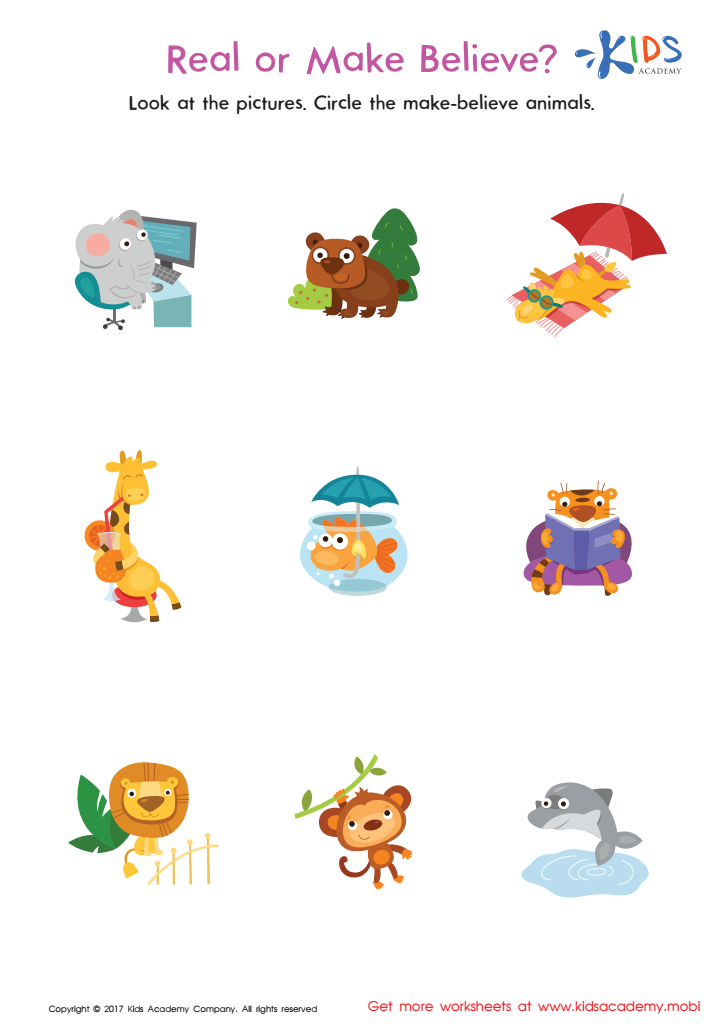
Fact or Make Believe Worksheet
 Assign to My Students
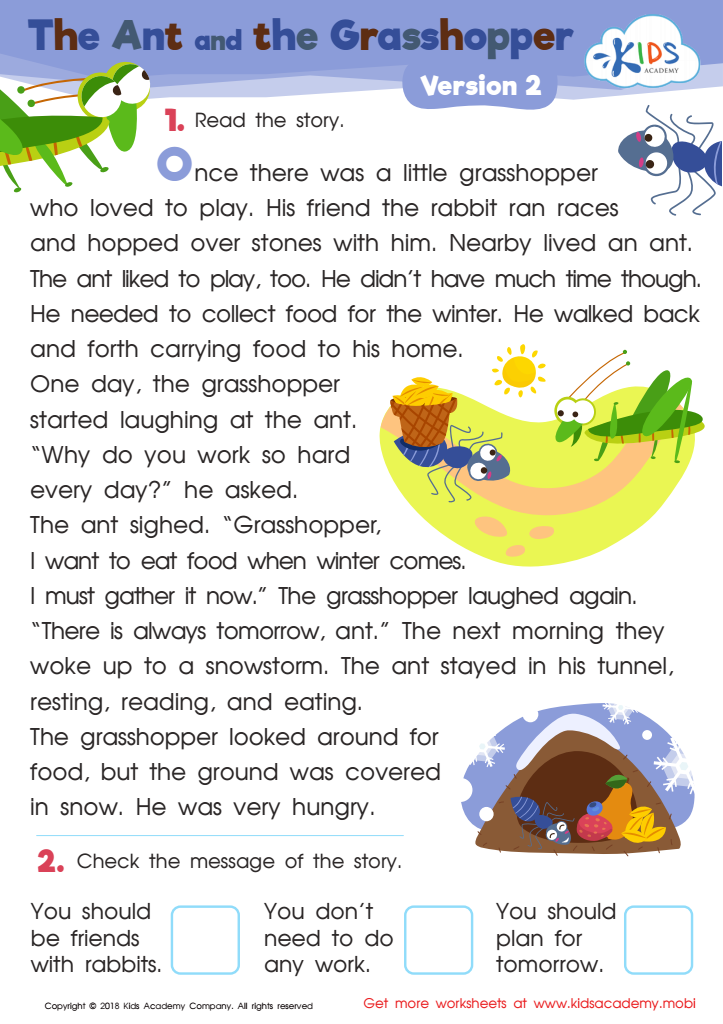
The Ant and The Grasshopper Version 2 Worksheet
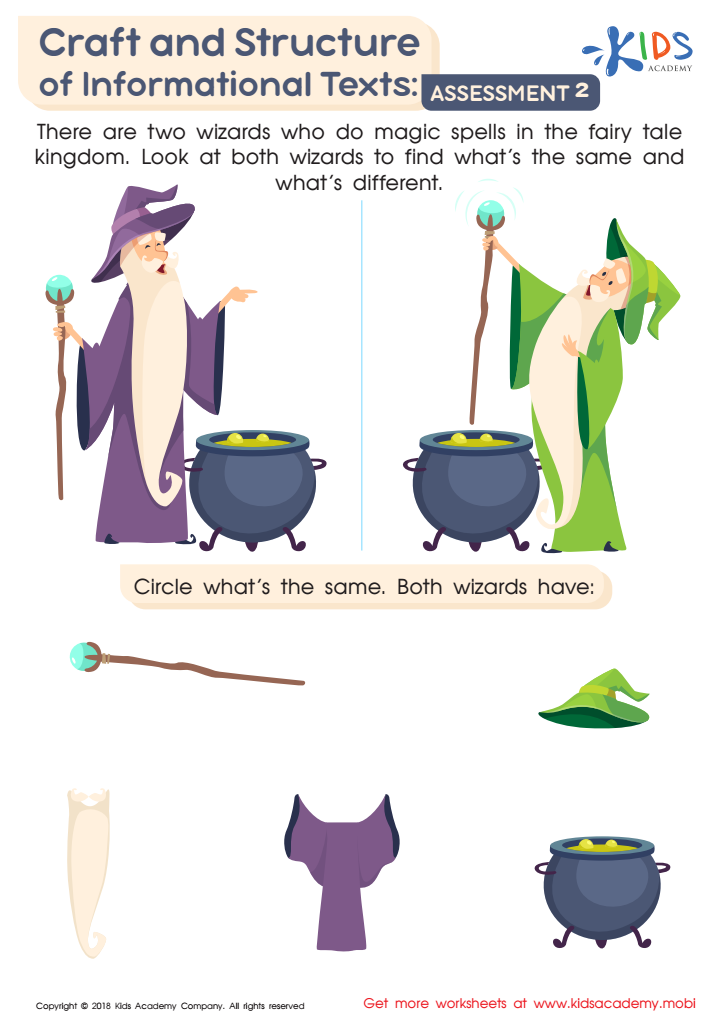
Craft and Structure of Informational Texts: Assessment 2 Worksheet
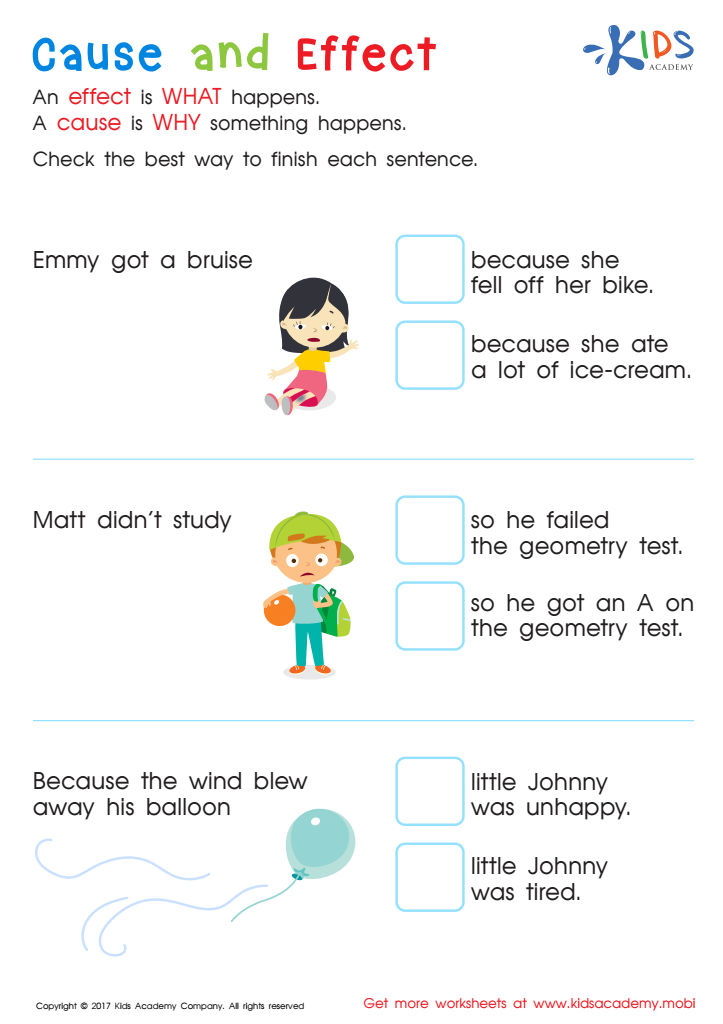
Cause and Effect Worksheet




.jpg)
.jpg)


Cultivating critical thinking through reading fiction for children aged 5-9 is crucial for several reasons. Firstly, this age group is in a developmental phase where their cognitive and emotional foundations are being established. Engaging with fiction helps children interpret scenarios, understand different viewpoints, and build empathy. Through stories, they encounter diverse situations that challenge their thinking and prompt them to ask questions, make predictions, and draw conclusions.
Moreover, fiction introduces children to complex language and diverse vocabulary, fostering improved language skills. As they navigate narratives, kids practice summarizing, inferencing, and recognizing cause and effect—key elements of critical thinking. Characters in stories often face problems and make decisions, prompting young readers to evaluate these choices, understand consequences, and consider alternative solutions. Such activities build decision-making skills.
Supporting critical thinking through fiction also enhances creativity. Children learn to imagine possibilities, innovate, and approach problems from multiple angles—a skill valuable in every aspect of life. In addition, fiction provides a safe space to discuss real-world issues and moral dilemmas, encouraging ethical reasoning and reflective thinking.
Therefore, parents and teachers should prioritize reading fiction as a vital tool in developing critical thinkers who are articulate, empathetic, and equipped to face an ever-changing world confidently.








