Enhancing vocabulary Reading Fiction Worksheets for Ages 5-9
4 filtered results
-
From - To
Welcome to our "Enhancing Vocabulary Reading Fiction Worksheets" for children ages 5-9! Designed to ignite a love for reading, these engaging worksheets aim to build essential vocabulary skills through the magical world of fiction. Each activity introduces captivating stories alongside targeted exercises that challenge young minds and broaden their word knowledge. From matching words to definitions to filling in the blanks, these worksheets make learning fun and interactive. Perfect for both classroom and home use, our resources foster a lifelong appreciation for reading while helping kids master new vocabulary effortlessly. Give your child the gift of language through exciting literary adventures!
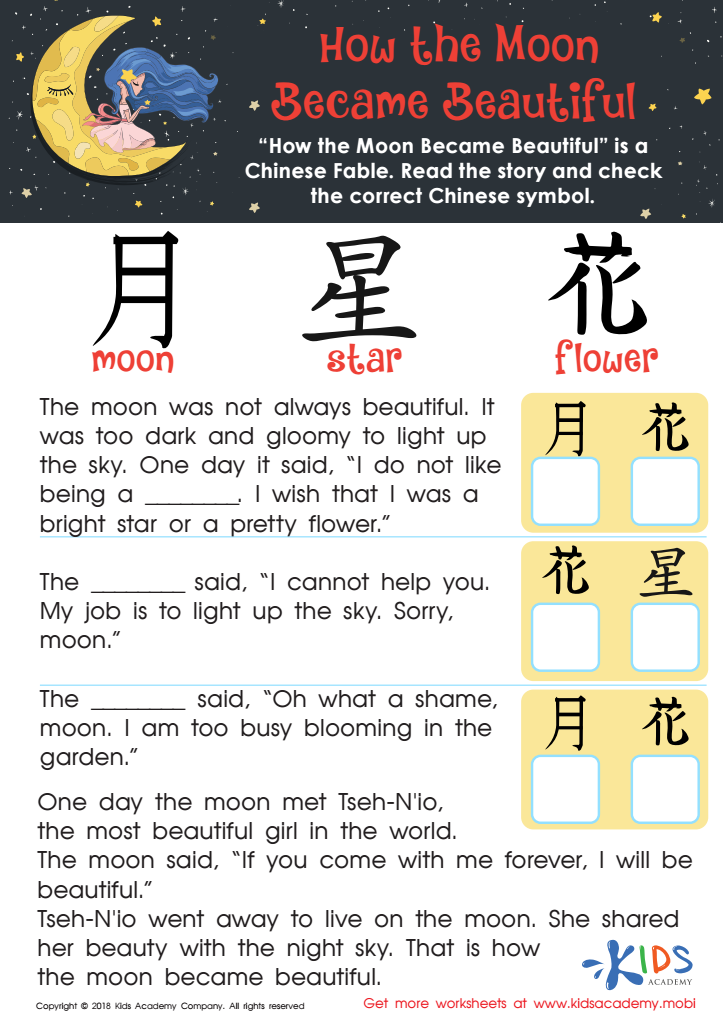
How the Moon Became Beautiful Worksheet
 Assign to My Students
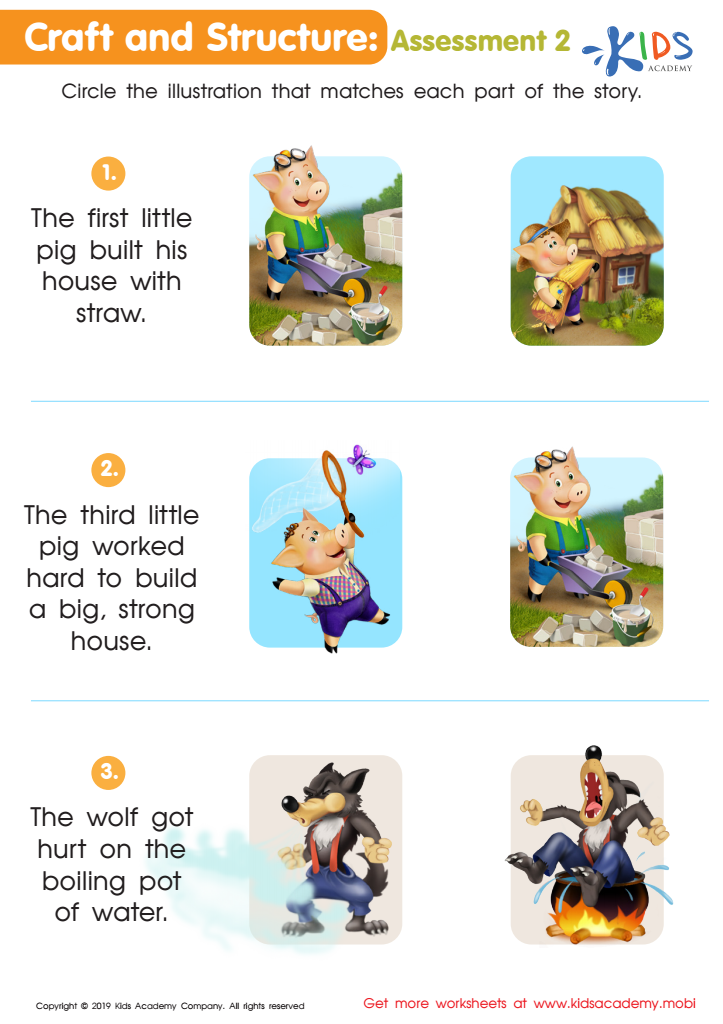
Craft and Structure: Assessment 2 Worksheet 2
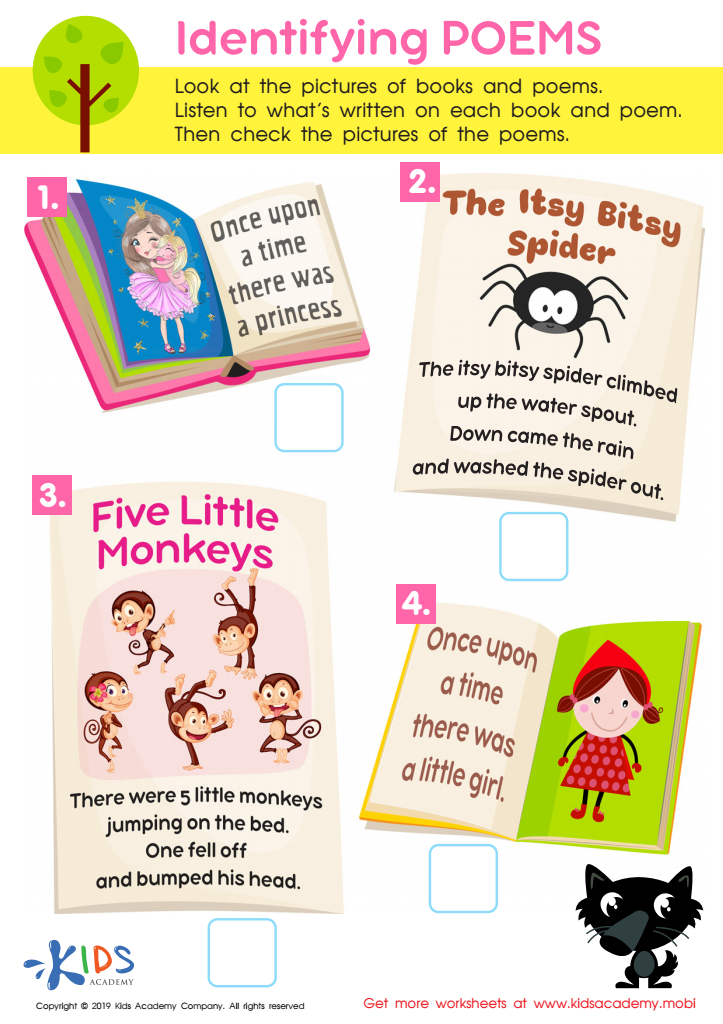
Identifying Poems Worksheet
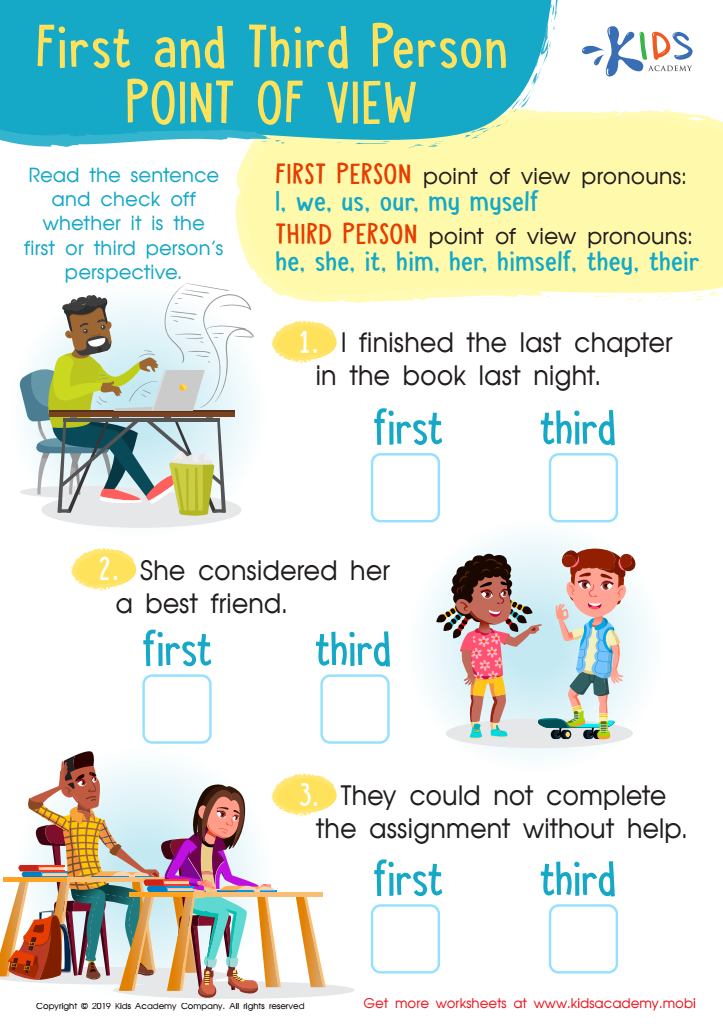
First and Third Person Point of View Worksheet







Enhancing vocabulary through reading fiction for ages 5-9 is crucial for several reasons. First, vocabulary development is closely tied to overall literacy skills. As children enrich their vocabulary, they become better readers, which directly influences their academic success. Fiction exposes young learners to a variety of words in context, helping them understand meanings and nuances that they might not encounter in everyday language.
Second, reading fiction not only broadens vocabulary but also fosters imagination and emotional intelligence. Through storytelling, children learn to empathize with characters, enhancing their social skills and understanding of diverse perspectives. This emotional engagement boosts their interest in reading, making them more likely to explore new genres and topics.
Moreover, developing a robust vocabulary at a young age lays the foundation for effective communication. Children who can articulate their thoughts and feelings clearly are generally more confident in expressing themselves, whether in speaking or writing.
Lastly, engaging in reading activities with their children helps parents and teachers build stronger relationships, as it creates opportunities for discussions and shared experiences. By prioritizing vocabulary development through fiction, adults can significantly contribute to a child’s growth, paving the way for lifelong learning and love of literature.








