Understanding perspectives Reading Fiction Worksheets for Ages 5-9
3 filtered results
-
From - To
Explore our "Understanding Perspectives" reading fiction worksheets designed for ages 5-9! These engaging resources help young learners develop critical thinking and empathy as they dive into various fictional worlds. By analyzing characters’ thoughts and feelings, children enhance their comprehension skills, fostering a deeper connection to the stories they read. Each worksheet is crafted to spark imagination and promote discussions about different viewpoints, ideal for both classroom settings and home learning. Let your child embark on an exciting journey of understanding others through literature with our thoughtfully designed worksheets that support a well-rounded early reading experience!
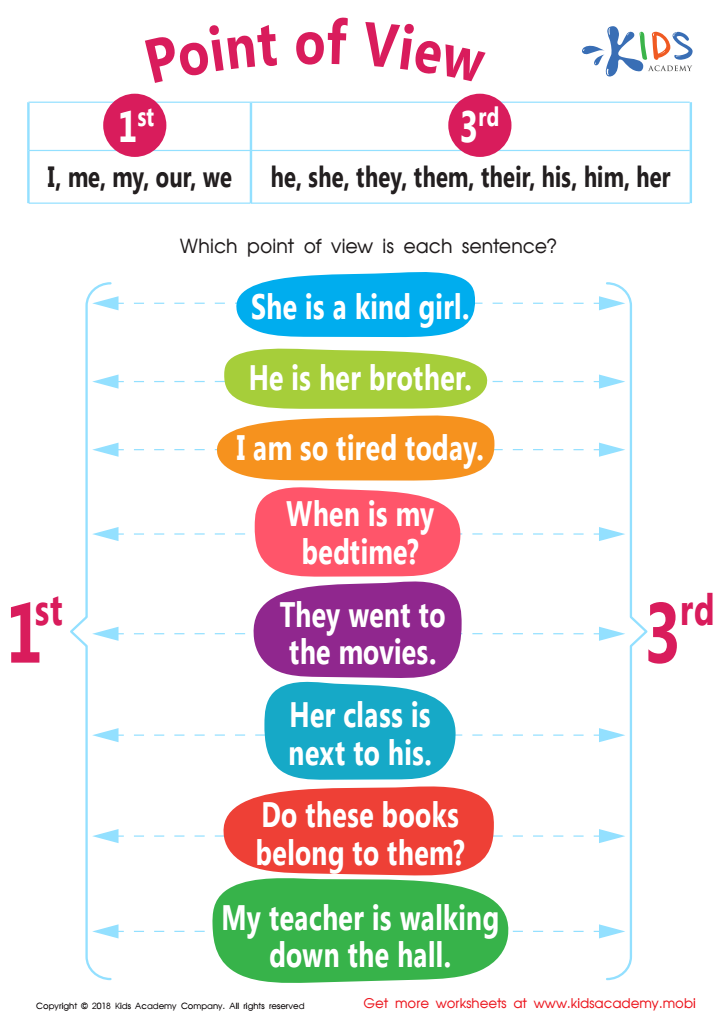
Point of View Worksheet
 Assign to My Students
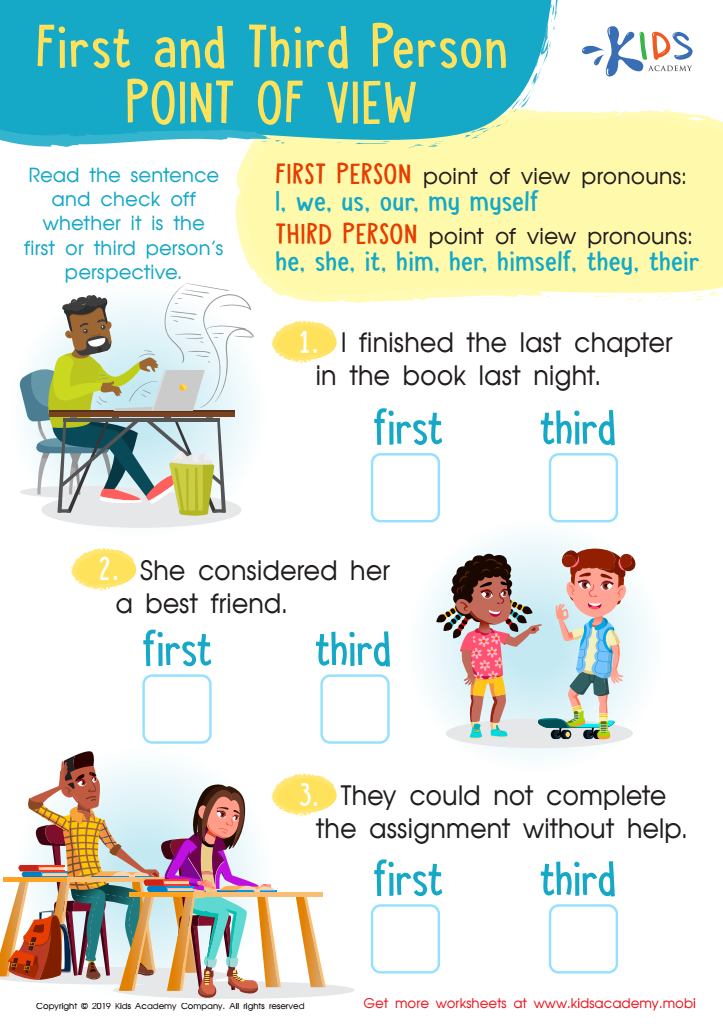
First and Third Person Point of View Worksheet
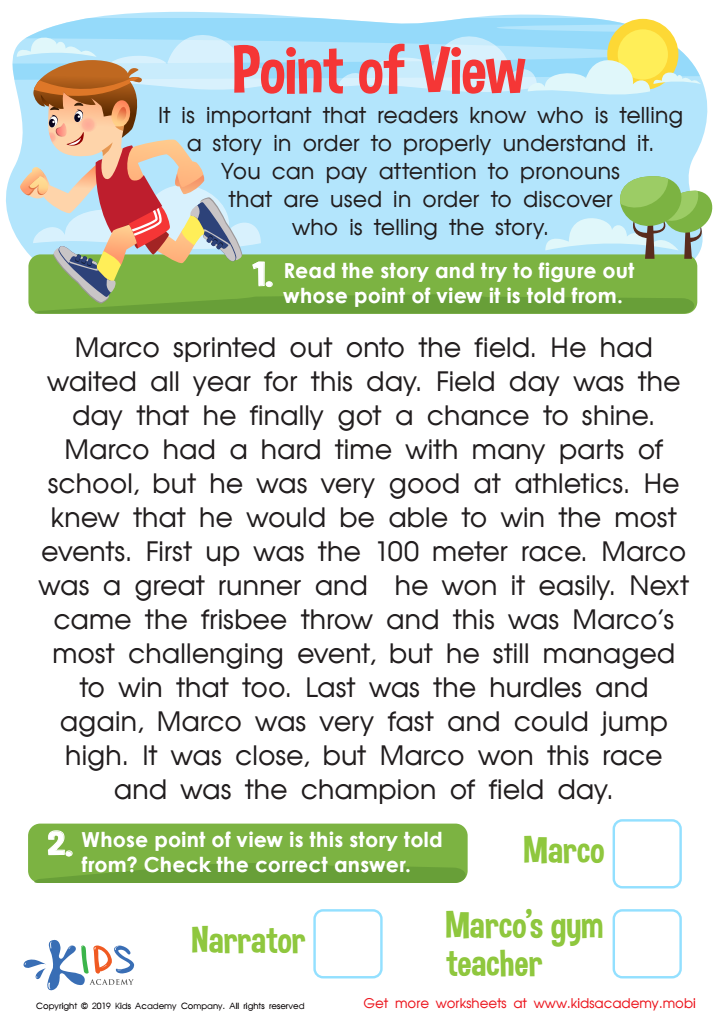
Point of View Worksheet







Understanding perspectives through reading fiction is crucial for children ages 5-9 as it develops empathy, critical thinking, and interpersonal skills. At this age, children are beginning to form their views of the world, often influenced by their immediate experiences. Fiction allows them to explore different viewpoints and cultural backgrounds, fostering an understanding and appreciation of diversity.
Reading stories introduces young readers to characters with varying emotions and life situations. When children engage with these characters, they learn to recognize and understand feelings that may differ from their own, enhancing their emotional intelligence. This is essential during early development, as it helps them forge healthy relationships with peers and adults.
Moreover, fiction helps improve critical thinking skills by inviting young readers to question motives, predict outcomes, and analyze situations. This cognitive engagement is integral to a child’s overall literacy development, aiding them in becoming more adept readers and thinkers.
By nurturing an appreciation for diverse perspectives through fiction, parents and teachers are not only enriching children’s literary experiences but also equipping them with invaluable life skills that will benefit them in social settings and throughout their lives. Cultivating these abilities early on lays the foundation for compassionate, thoughtful members of society.








