Understanding Sequences Reading Fiction Worksheets for Ages 5-9
3 filtered results
-
From - To
Enhance your child's reading comprehension with our "Understanding Sequences Reading Fiction Worksheets" designed for ages 5-9. These engaging and educational worksheets help young readers develop critical thinking and sequencing skills by exploring the order of events in their favorite stories. Perfect for both classroom settings and at-home learning, our worksheets feature age-appropriate fiction that captures young imaginations while reinforcing essential reading strategies. Through fun activities, children will learn to identify and arrange key plot points, improving their overall understanding and retention. Foster a love for learning and storytelling with these expertly crafted resources!
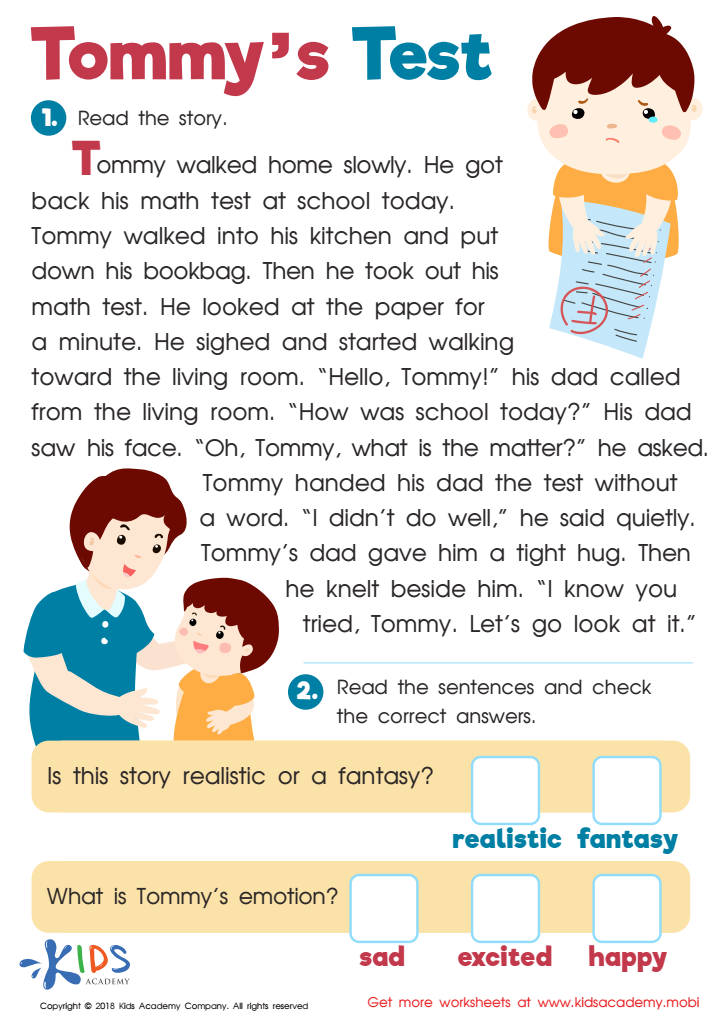
Tommys Test Worksheet
 Assign to My Students
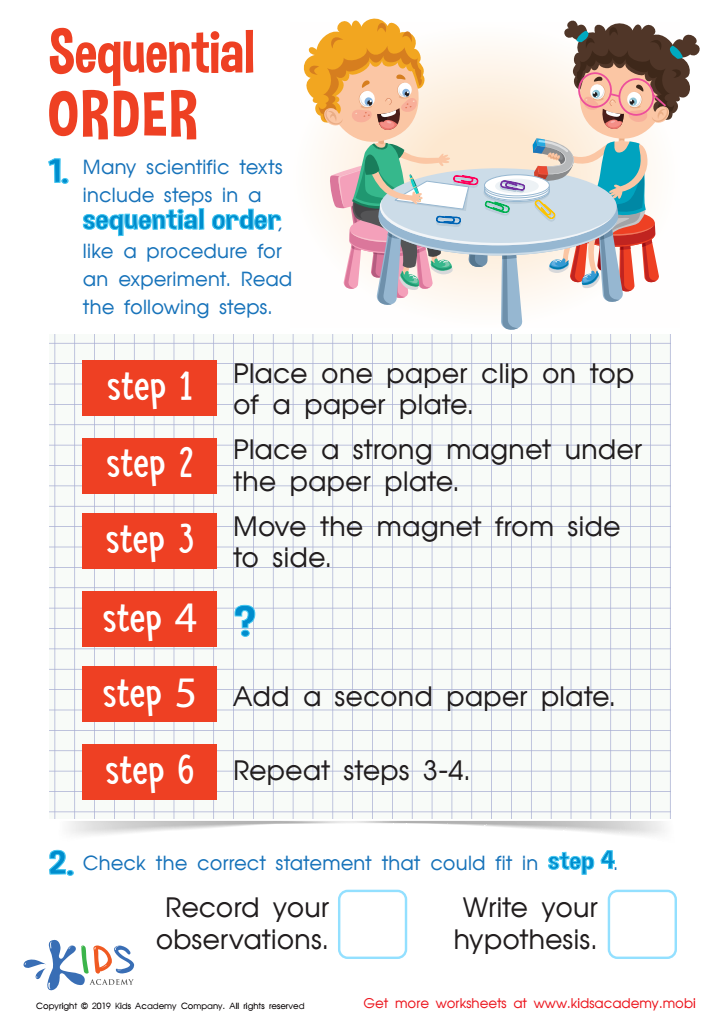
Sequencential Order Worksheet
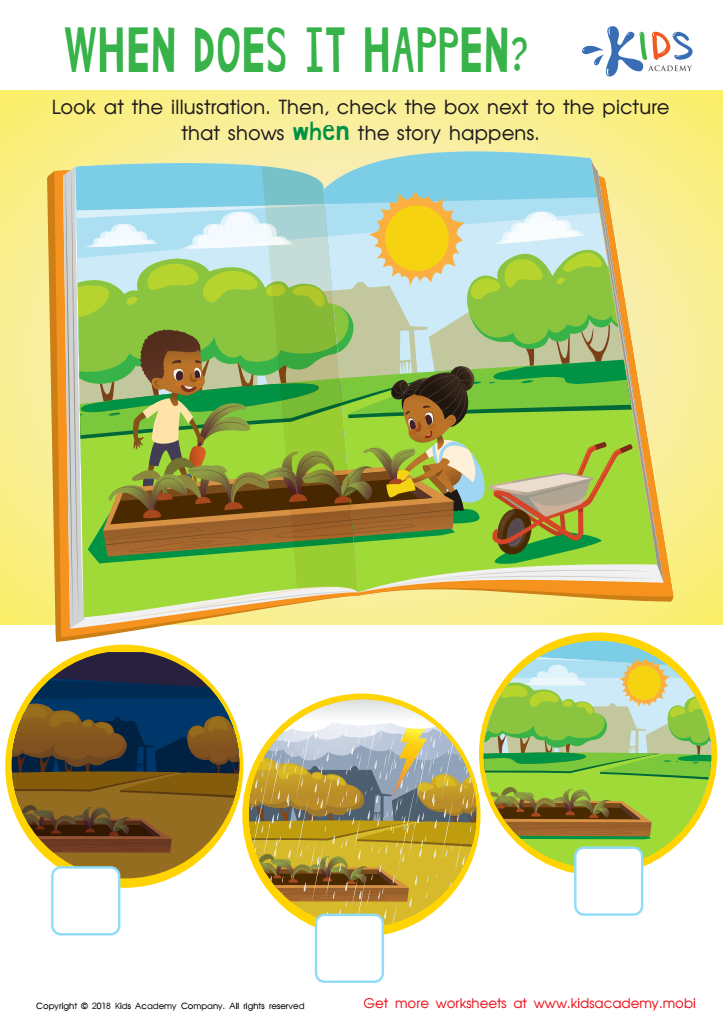
When Does It Happen? Worksheet








Understanding sequences in reading fiction is critical for young children, as it serves as a foundation for literacy and comprehensive development. For children ages 5-9, grasping sequences involves recognizing the beginning, middle, and end of a story, and understanding the logical order of events. This skill nurtures their ability to comprehend more complex texts in the future.
Parents and teachers should care about developing this skill because it significantly impacts a child’s reading comprehension and cognitive development. When children can identify sequences, they are better at predicting outcomes, understanding cause-and-effect relationships, and making inferences, all of which are essential for problem-solving and critical thinking. Moreover, mastering sequences helps children improve their storytelling and writing abilities, as they learn to organize their thoughts coherently.
Engaging with sequences also enhances a child’s memory and attention span. It encourages active reading and listening, as children must pay attention to detail to recall and relate different parts of a story. Moreover, such practice can be enjoyable and foster a love for reading. Books that feature sequences can captivate young minds, making learning both effective and enjoyable. As foundational literacy practices are crucial during early childhood, understanding sequences can bridge the gap between basic reading skills and more advanced literacy.








