Fine Motor Skills Sight Words Worksheets for Ages 5-9
11 filtered results
-
From - To
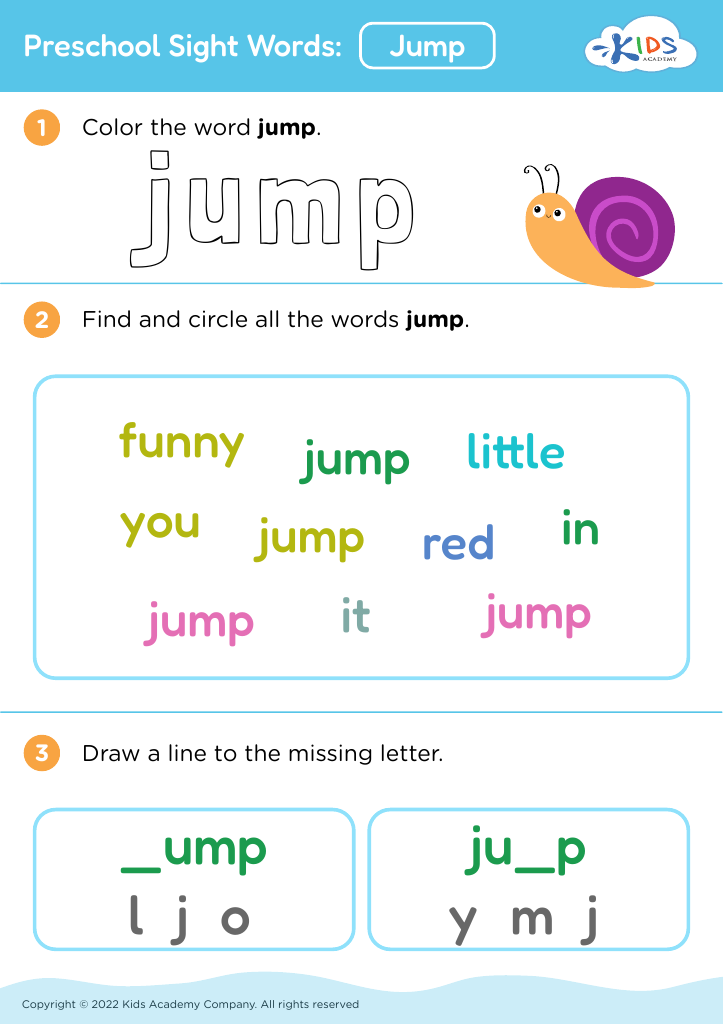
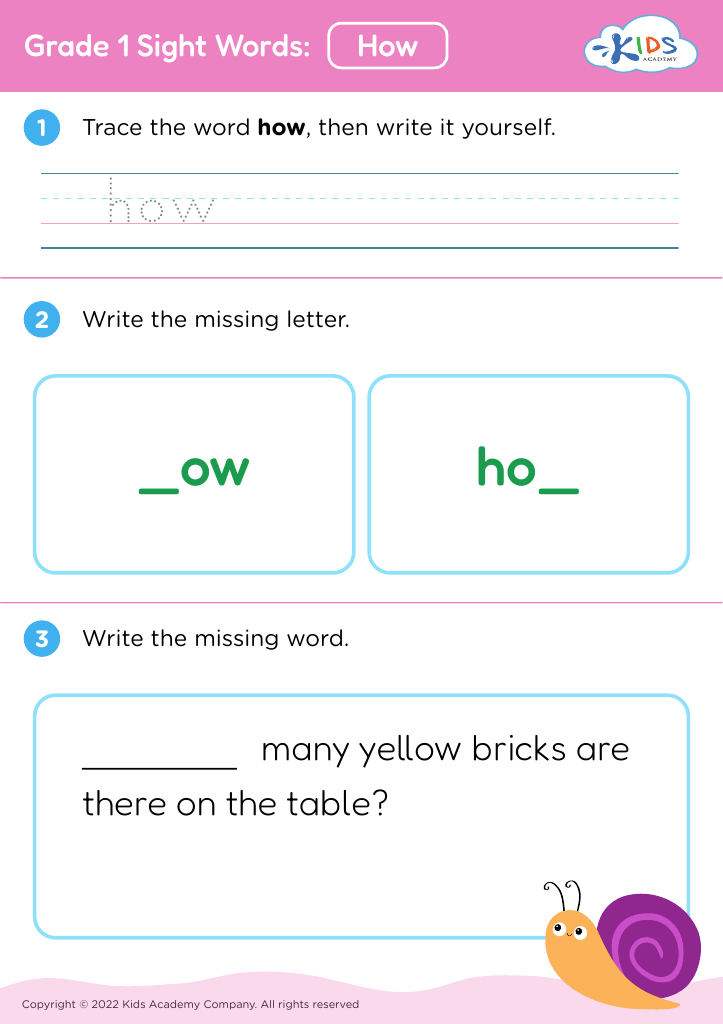
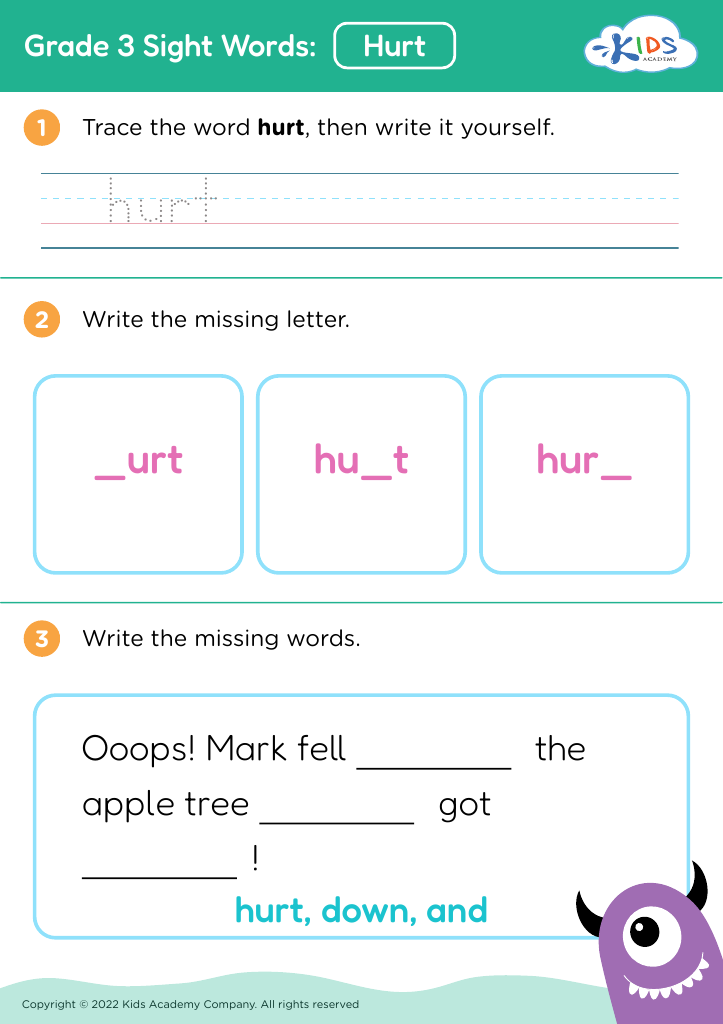
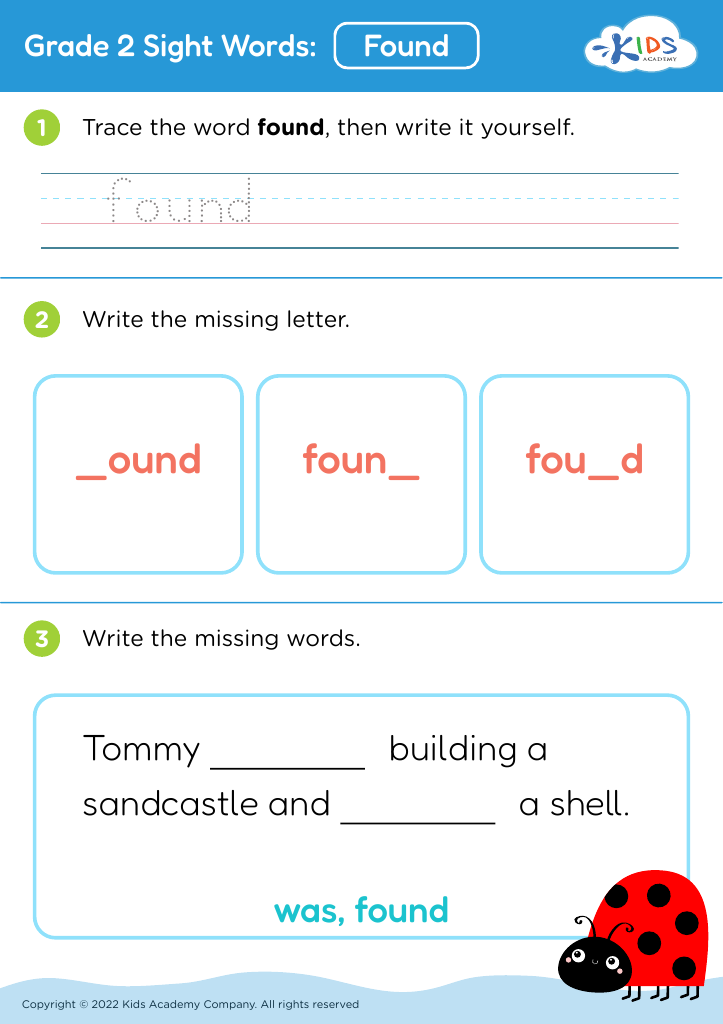
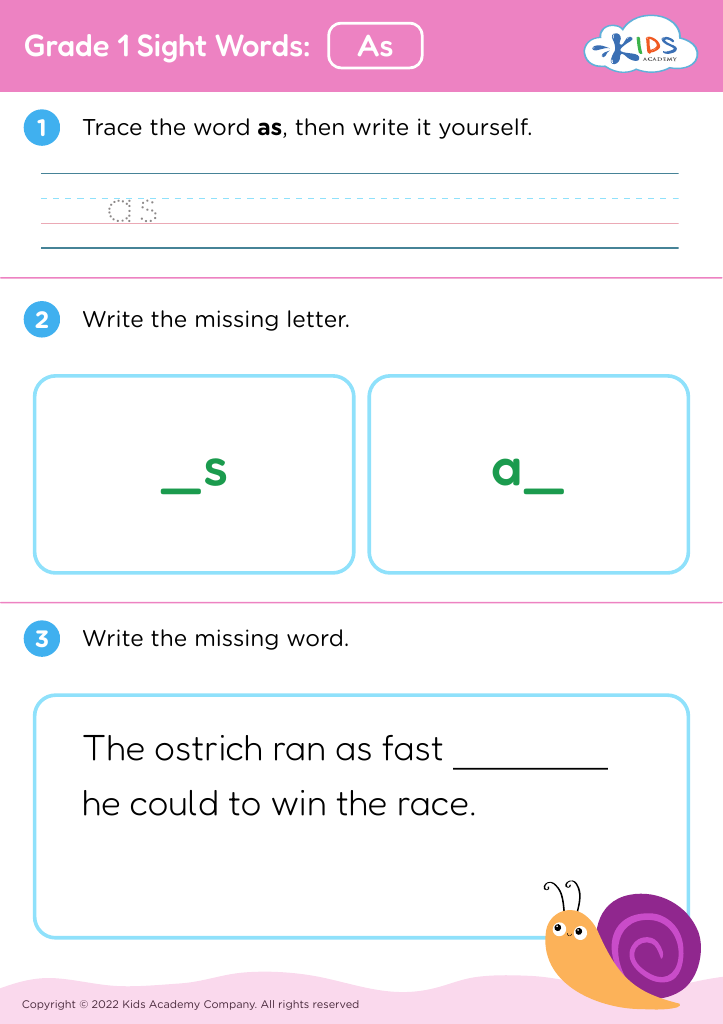
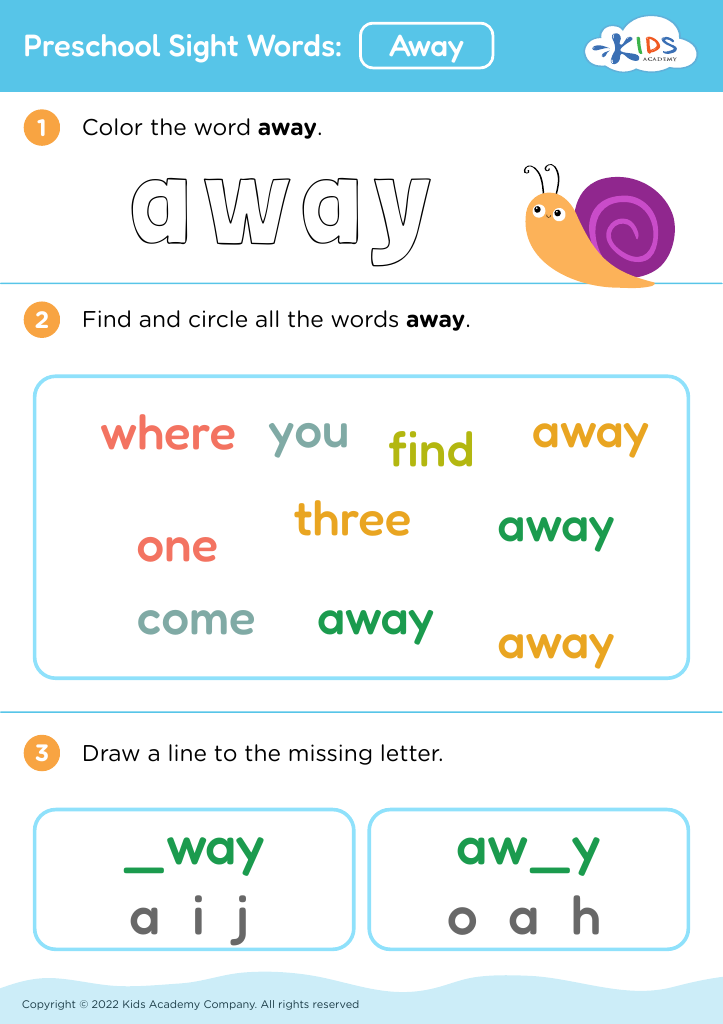
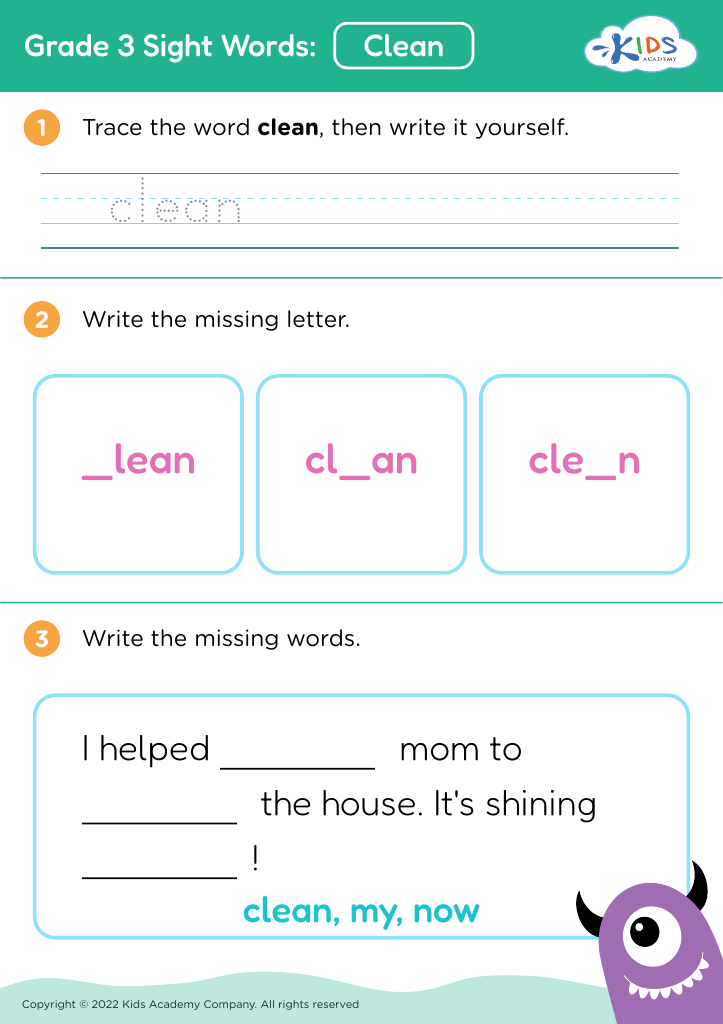
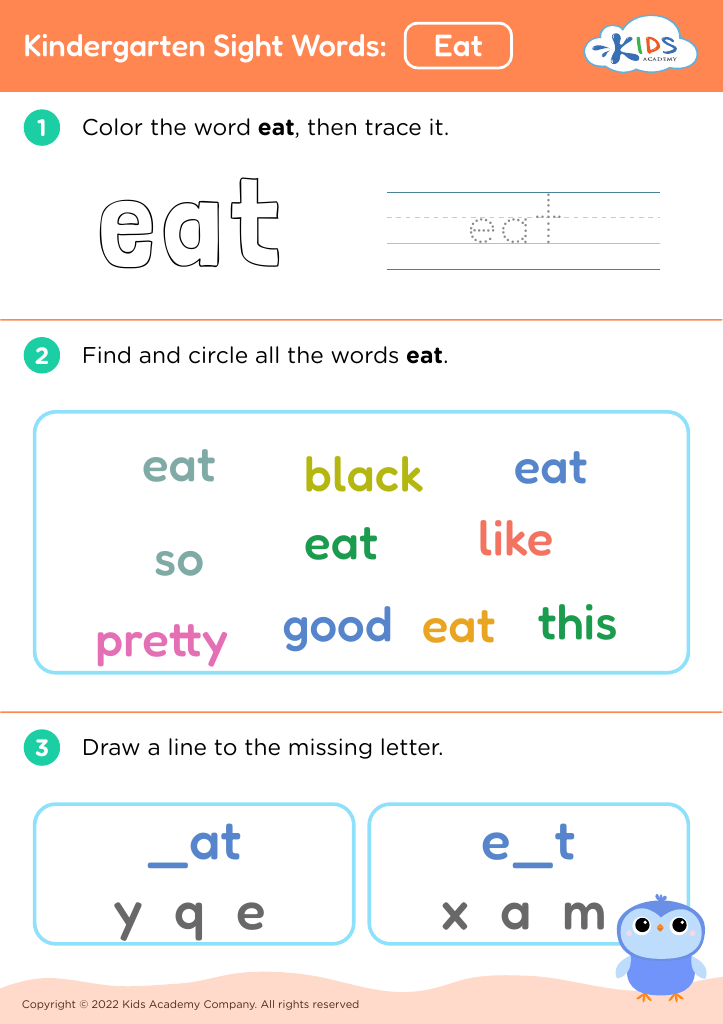
Enhance your child’s fine motor skills while improving their reading proficiency with our "Fine Motor Skills Sight Words Worksheets" designed for ages 5-9. Our engaging worksheets combine tracing, coloring, and writing exercises centered around essential sight words, making learning fun and interactive. As children practice their fine motor skills, they'll build confidence in reading early sights words, essential for literacy development. These worksheets promote hand-eye coordination and strengthen grip, ensuring a solid foundation for future writing and reading tasks. Perfect for home or classroom use, these resources create a rich learning experience that blends skill-building with essential vocabulary practice. Explore now!
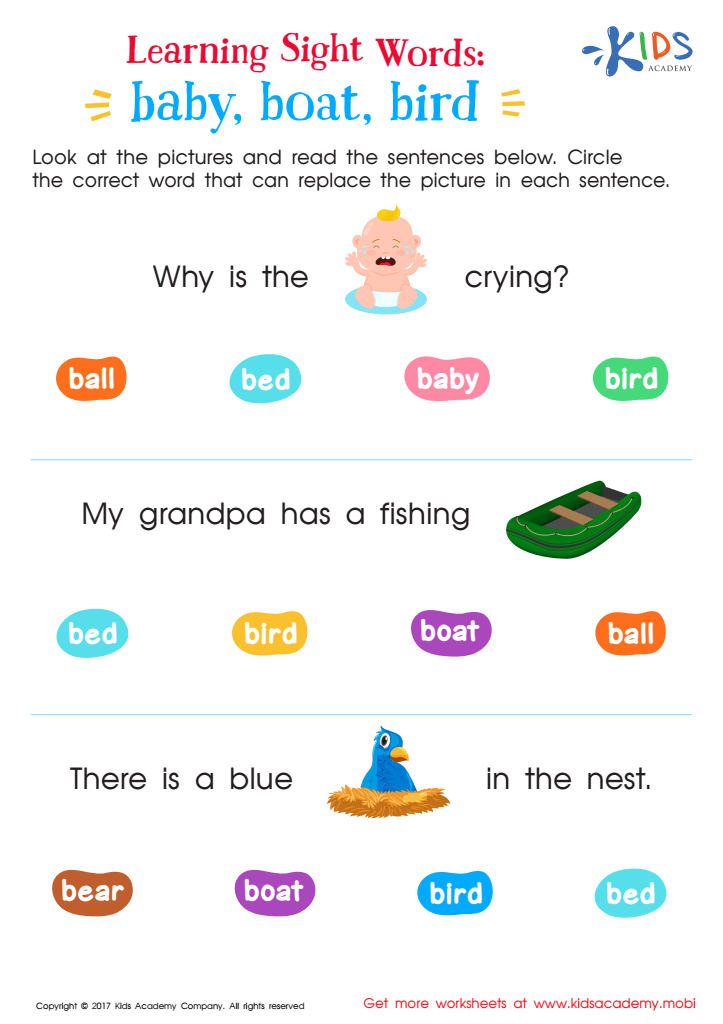
Baby, Boat, Bird Worksheet Sight Words Worksheet
 Assign to My Students











.jpg)





Fine motor skills and sight words are crucial components in the early development of children aged 5-9, and they play a vital role in fostering literacy and overall academic success. Fine motor skills involve the smaller movements of the hands and fingers, which are essential for tasks such as writing, cutting, and manipulating objects. When children develop these skills, they gain confidence in their ability to perform everyday activities, which lays a strong foundation for future learning.
Sight words, or high-frequency words that children are encouraged to recognize without phonetic decoding, further enhance literacy. Mastering these words increases reading fluency, allowing young learners to focus on comprehension rather than struggling with decoding. Once children become proficient in sight words, they can read more smoothly, which builds a love for reading and expands their vocabulary.
Parents and teachers should be invested in promoting these skills as they are interconnected; improved fine motor skills can enhance writing ability and, in turn, one’s ability to engage with reading materials. By prioritizing fine motor skills and sight word acquisition, adults can more effectively nurture children's cognitive development, contributing to their social, emotional, and academic growth. Investing in these areas sets children on a path to lifelong learning.