Simplifying Fractions Sight Words Worksheets for Ages 5-9
7 filtered results
-
From - To
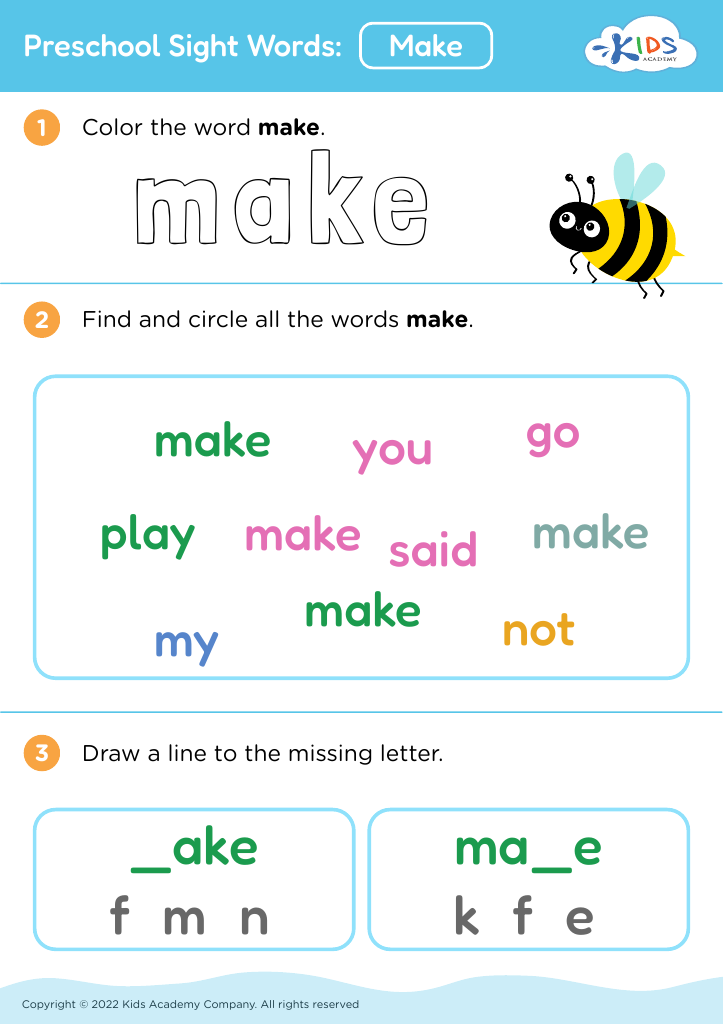
Discover our engaging "Simplifying Fractions Sight Words Worksheets" designed for ages 5-9! These specially crafted worksheets combine essential math skills with sight word recognition, making learning both fun and effective. Kids will develop their understanding of fractions while practicing key vocabulary, enhancing both literacy and numeracy. Our interactive activities help reinforce concepts through visual aids and straightforward instructions, perfect for young learners. Ideal for classroom use or home learning, these worksheets encourage independent practice and boost confidence. Get your students on the path to math mastery and reading fluency with our thoughtfully designed resources! Download today and make learning an adventure!











Simplifying fractions is a foundational math skill that young learners need to grasp before advancing to more complex mathematical concepts. For children aged 5-9, understanding how to simplify fractions directly contributes to their ability to work with numbers effectively. Integrating sight words into this process can further enhance comprehension and retention.
Parents and teachers should care about simplifying fractions sight words because it bridges language and math, making learning more holistic and engaging. Young learners benefit from experiencing math through a linguistic approach. By incorporating sight words—common words that children often see in math problems—teachers can cultivate a deeper understanding of the language of math, bolstering learners' confidence.
Additionally, strengthening this skill in early education promotes better problem-solving strategies and lays a solid groundwork for future math courses. Familiarity with both numeric and verbal representations of fractions fosters critical thinking and enables children to approach questions from multiple angles.
Ultimately, when young learners understand simplifying fractions and are comfortable with the associated sight words, they develop not only math fluency but also better overall communication skills, setting a solid foundation for lifelong learning and academic success.