Vocabulary Building Community Worksheets for Ages 5-9
4 filtered results
-
From - To
Unlock your child's potential with our "Vocabulary Building Community Worksheets for Ages 5-9." Designed to enhance language skills, these engaging worksheets introduce young learners to essential community-themed vocabulary. Children will explore words related to community helpers, places, and daily activities, fostering both reading comprehension and critical thinking. Our printable worksheets are colorful and interactive, ideal for both classroom use and home learning. Encourage your child to expand their vocabulary and understanding of the world around them. Dive into fun, educational activities that make learning a joyous adventure. Give your child the tools to succeed today!
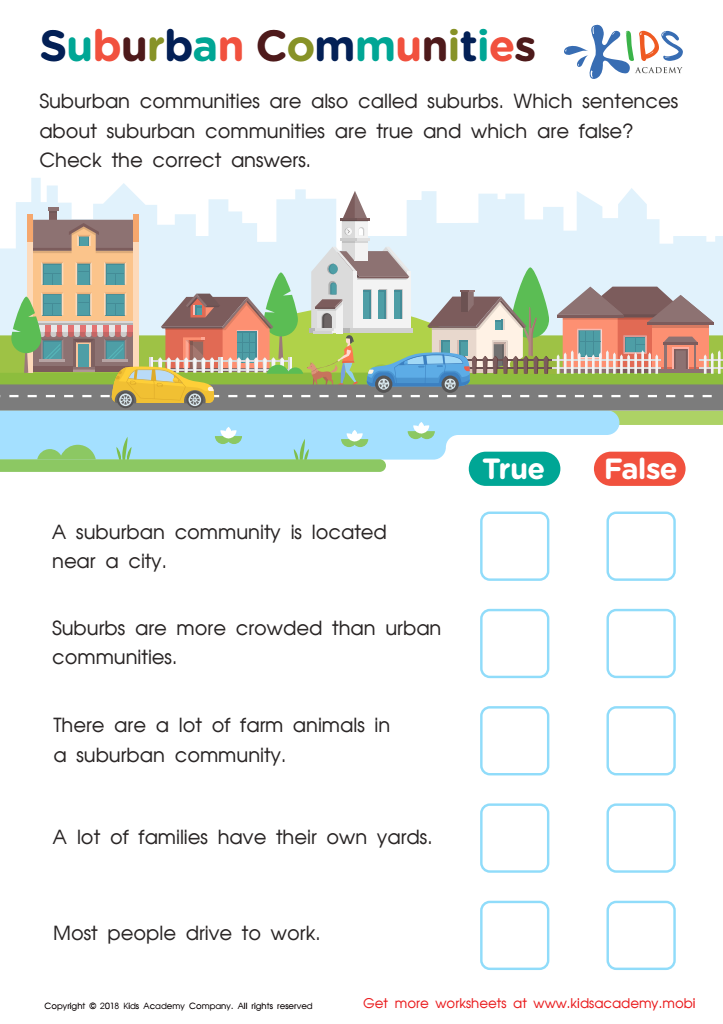
Suburban Communities Worksheet
 Assign to My Students
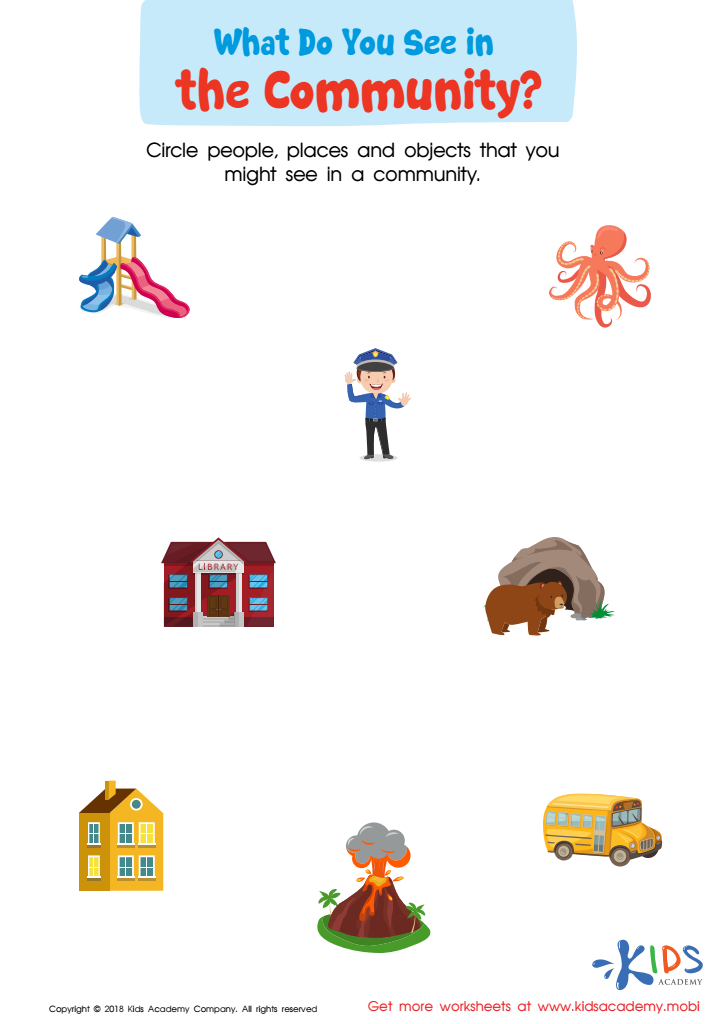
What Do You See in the Community Worksheet

What Do you See at the Library? Worksheet
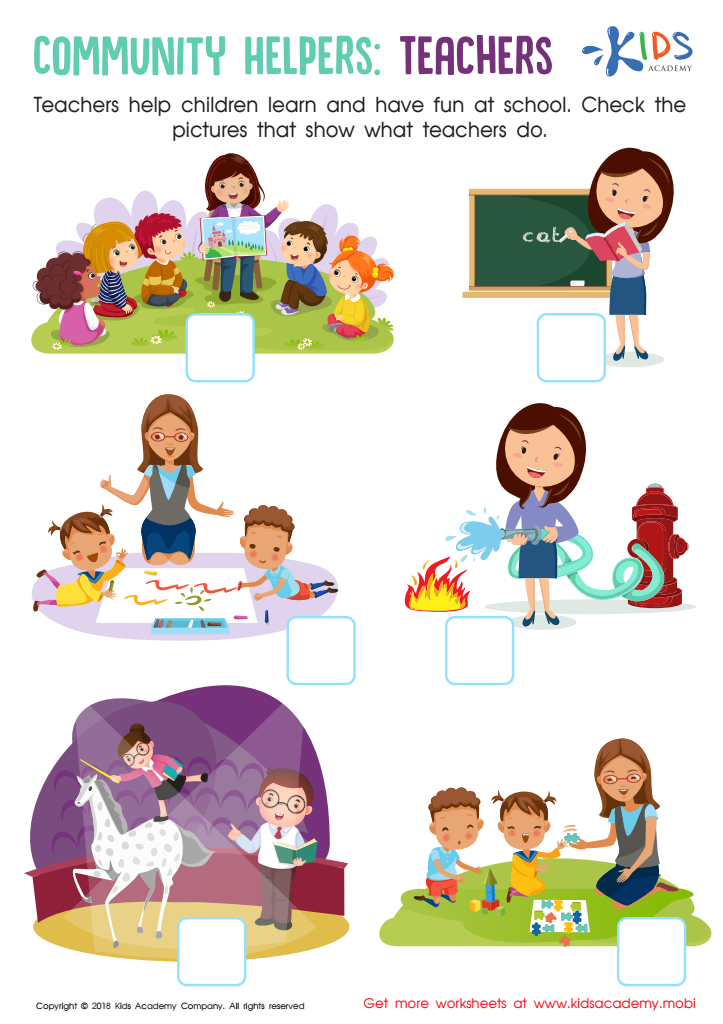
Teachers Community Helpers Worksheet








Parents and teachers should care about vocabulary-building communities for children aged 5-9 because early language development is crucial to a child's academic success and overall cognitive growth. At this critical stage, children's brains are highly receptive to learning new words and concepts. A rich vocabulary lays the foundation for effective communication, reading comprehension, and analytical thinking.
A community dedicated to vocabulary building not only provides structured and engaging activities but also encourages interaction among peers, fostering social skills and a love for learning. When kids work and play within such a community, they are exposed to diverse language models and a variety of contexts in which new words may be used. This exposure enhances their understanding and retention of vocabulary.
For teachers, incorporating a vocabulary-building community into their teaching strategy enriches the curriculum and provides additional resources and support. For parents, it offers an opportunity to actively participate in their child's learning journey, making it a collaborative effort. Family involvement in these communities can also create a consistent learning environment between home and school, reinforcing the new vocabulary in daily conversations.
Ultimately, investing time and effort in vocabulary-building communities empowers children with the linguistic tools they need to succeed academically and thrive socially, setting a strong foundation for lifelong learning.