Contextual understanding Grammar Worksheets for Ages 5-9
6 filtered results
-
From - To
Explore our engaging Contextual Understanding Grammar Worksheets specifically designed for children aged 5-9. These thoughtfully created resources enhance young learners' grasp of grammar in relatable contexts, making language learning both fun and effective. Each worksheet includes practical exercises that encourage kids to apply their knowledge in everyday scenarios, helping them develop essential skills in writing and comprehension. With vibrant illustrations and age-appropriate activities, our worksheets cater to diverse learners, fostering a love for language. Perfect for classroom use or at-home practice, these worksheets provide a strong foundation in grammar concepts while promoting critical thinking and creativity. Start your grammar journey today!
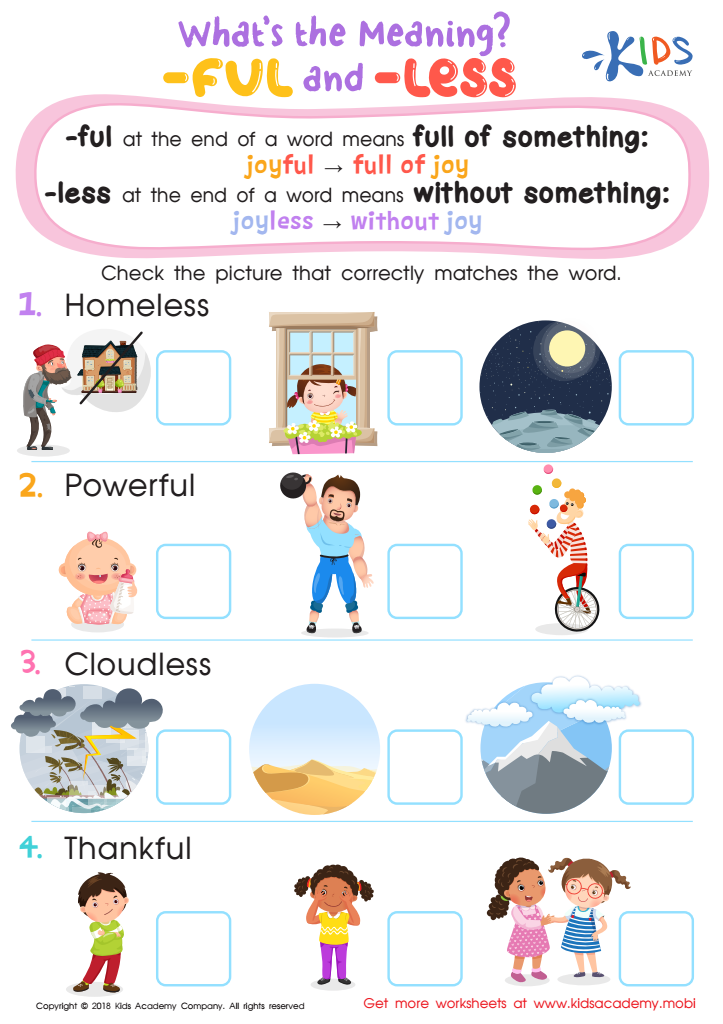
What's the Meaning? Worksheet
 Assign to My Students
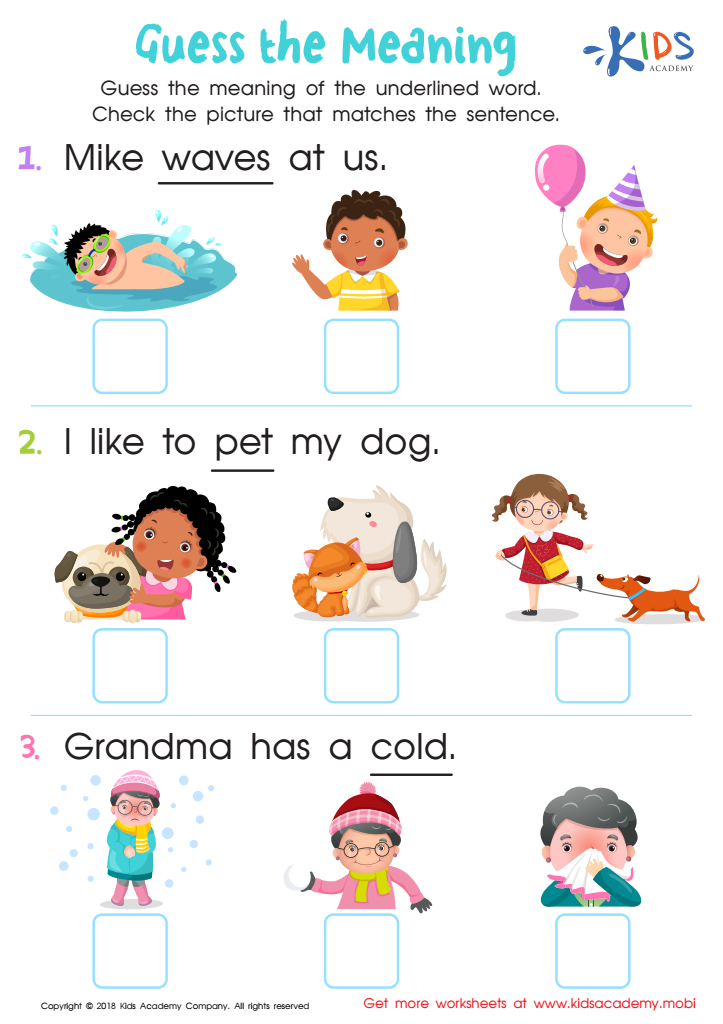
Guess the Meaning Worksheet
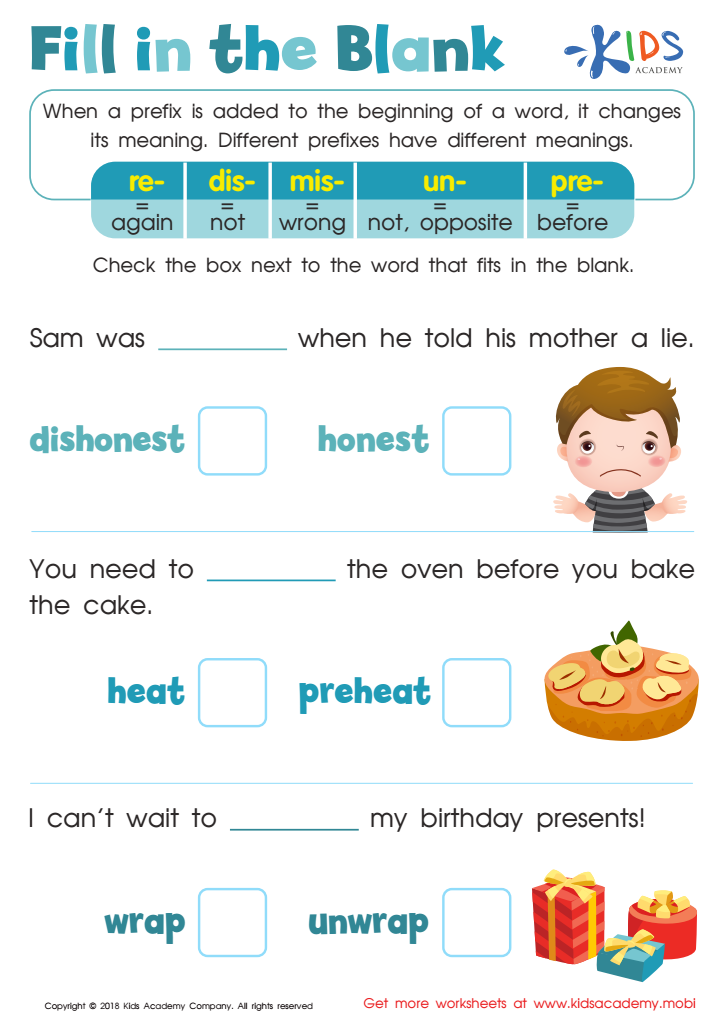
Reading: Fill in the Blank Worksheet
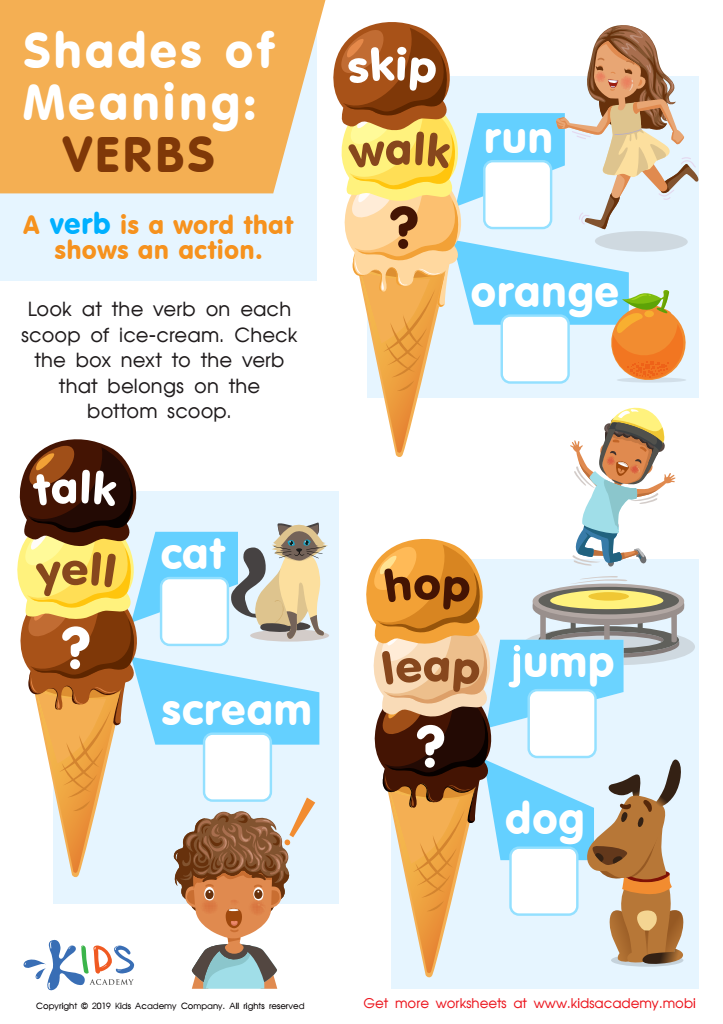
Shades of Meaning: Verbs Worksheet
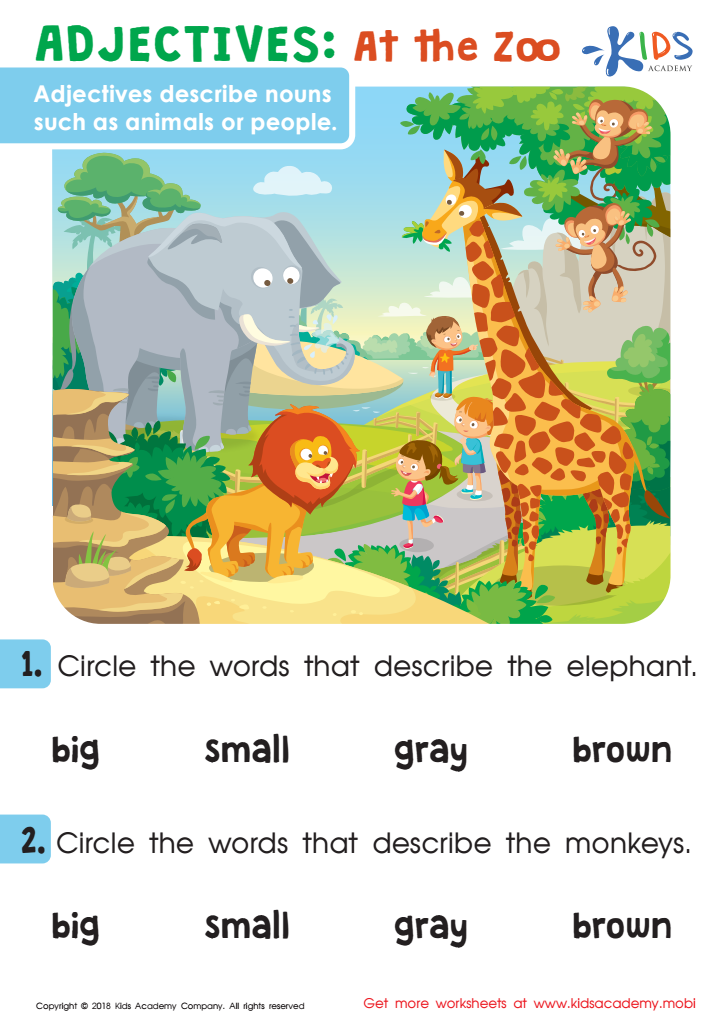
Adjectives: At The Zoo Worksheet
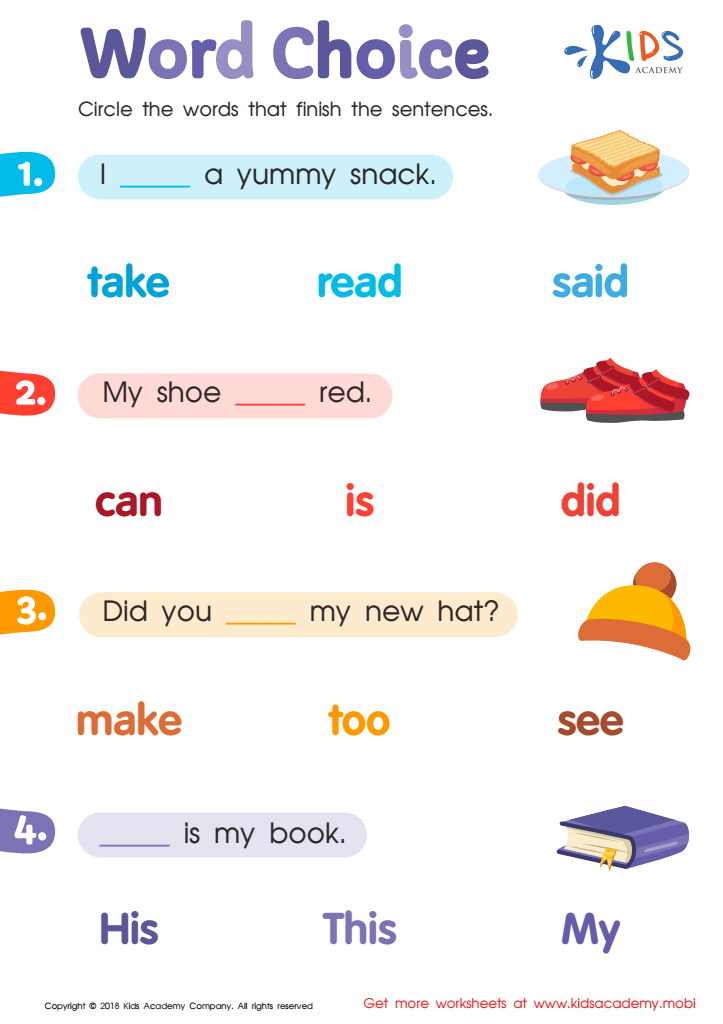
Word Choice Worksheet







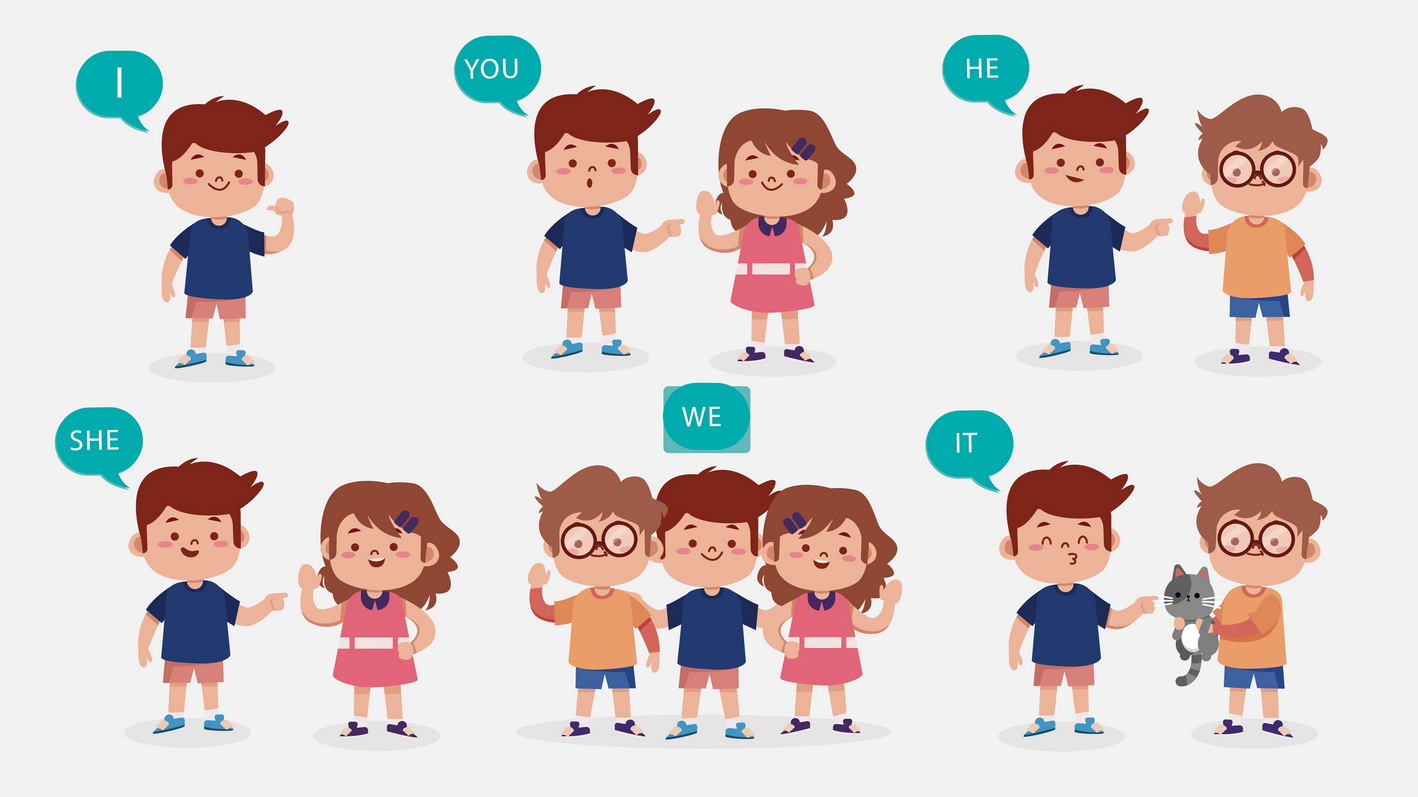
Contextual understanding of grammar is vital for children ages 5-9, as it fosters a deeper grasp of language that goes beyond memorizing rules. At this developmental stage, children are naturally curious and eager to communicate their thoughts and feelings. When parents or teachers prioritize contextual grammar, they equip children with the ability to decipher meaning based on situation and intent, rather than relying solely on structured rules.
By engaging children in dialogues and rich storytelling, educators can provide examples of how grammar shifts in various contexts. This approach not only cultivates more effective communication skills but also enhances critical thinking. Children learn to observe how different language structures convey subtle differences in meaning and emotion, promoting empathy and understanding in their interactions with others.
Moreover, contextual grammar supports reading comprehension. Young learners can make connections between spoken and written language, thereby improving their overall literacy skills. As they encounter new texts, they are better positioned to infer meaning and engage with age-appropriate literature.
Ultimately, nourishing grammatical understanding in context helps create confident speakers and readers, paving the way for successful academic journeys and effective social interactions, both crucial for their development and future opportunities.








