
Noun identification Grammar Worksheets for Ages 5-9
9 filtered results
Difficulty Level
Grade
Age
-
From - To
Subject
Activity
Standards
Unlock the power of language with our engaging Noun Identification Grammar Worksheets for children ages 5-9! Designed to make learning fun and effective, these worksheets help young learners identify and understand nouns in various contexts. With a variety of activities such as matching, fill-in-the-blank, and picture-based prompts, kids will enhance their grammar skills while boosting their creativity and critical thinking. Perfect for classrooms or home study, our resources cater to diverse learning styles. Foster a love for language and build a strong foundation in grammar today! Explore our worksheet collection and watch your child's confidence soar!
Favorites
With answer key
Interactive
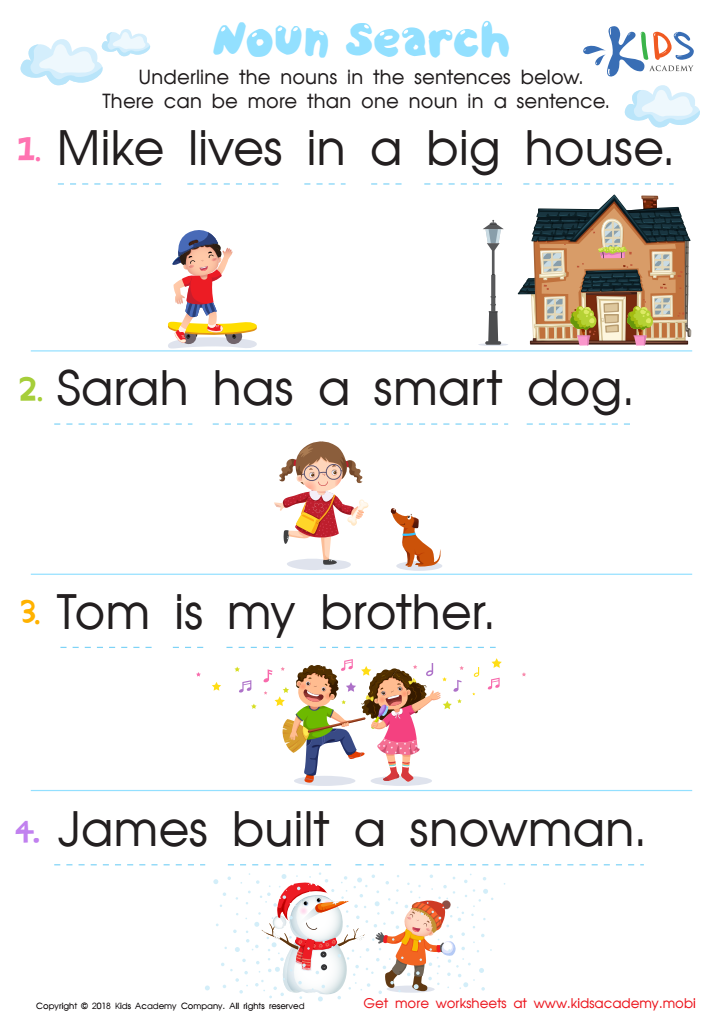
Noun Search Worksheet
To help your children learn the basics of grammar, start with nouns, verbs, adverbs and adjectives. This noun search worksheet will help your child understand the most common part of speech - the noun. Ask them to underline the nouns in each sentence. This is a great way to start learning proper grammar.
Noun Search Worksheet
Worksheet
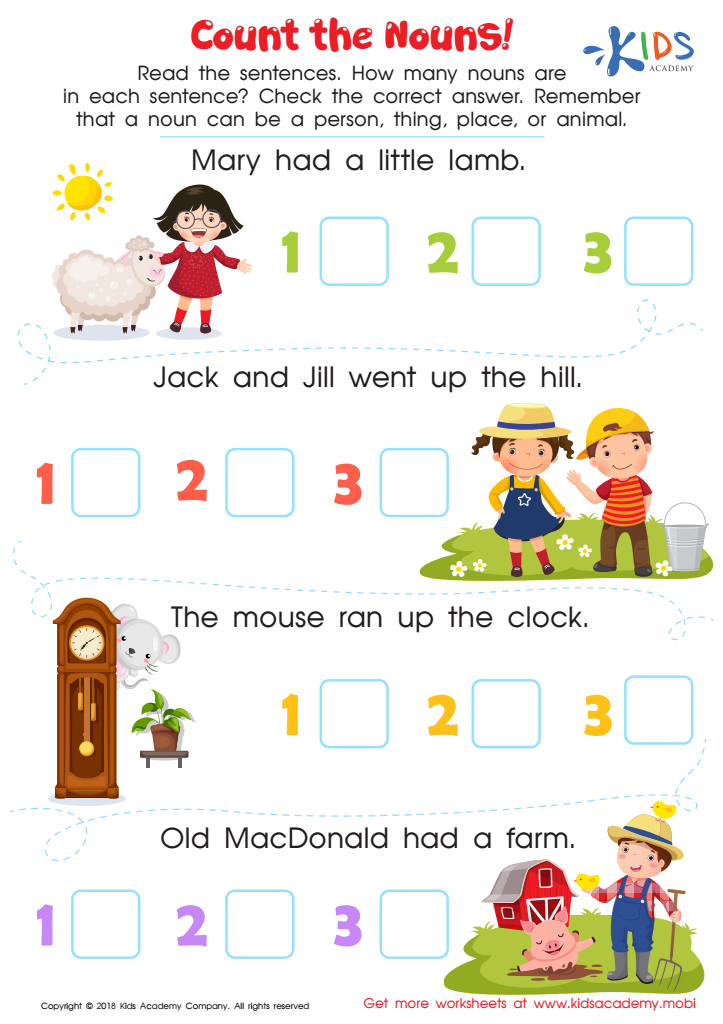
Count the Nouns Worksheet
Read the sentences with your children and ask them to find the nouns. Explain that nouns are names of people, animals, places or things. Point out the boxes with the answers to check.
Count the Nouns Worksheet
Worksheet
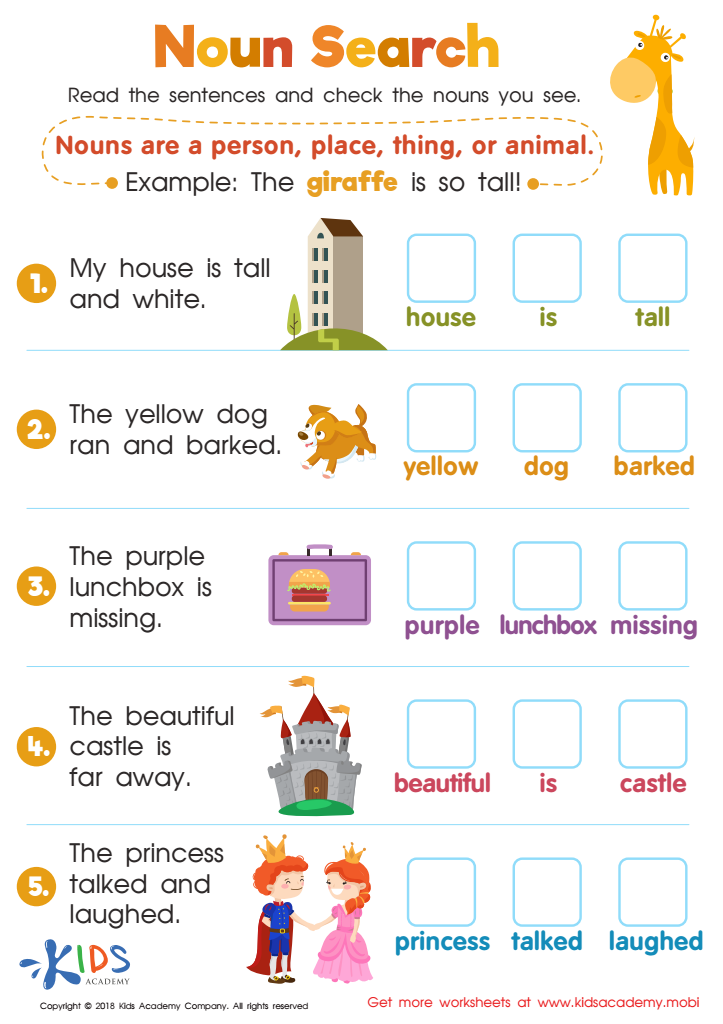
Noun Search Worksheet
Ask your kids what a noun is. If needed, remind them a noun is a name for a person, animal, place or thing. Give examples like 'dog', 'Sara', 'USA' and 'book'. Ask for more examples, then read the sentences in this worksheet and ask kids to check for nouns.
Noun Search Worksheet
Worksheet
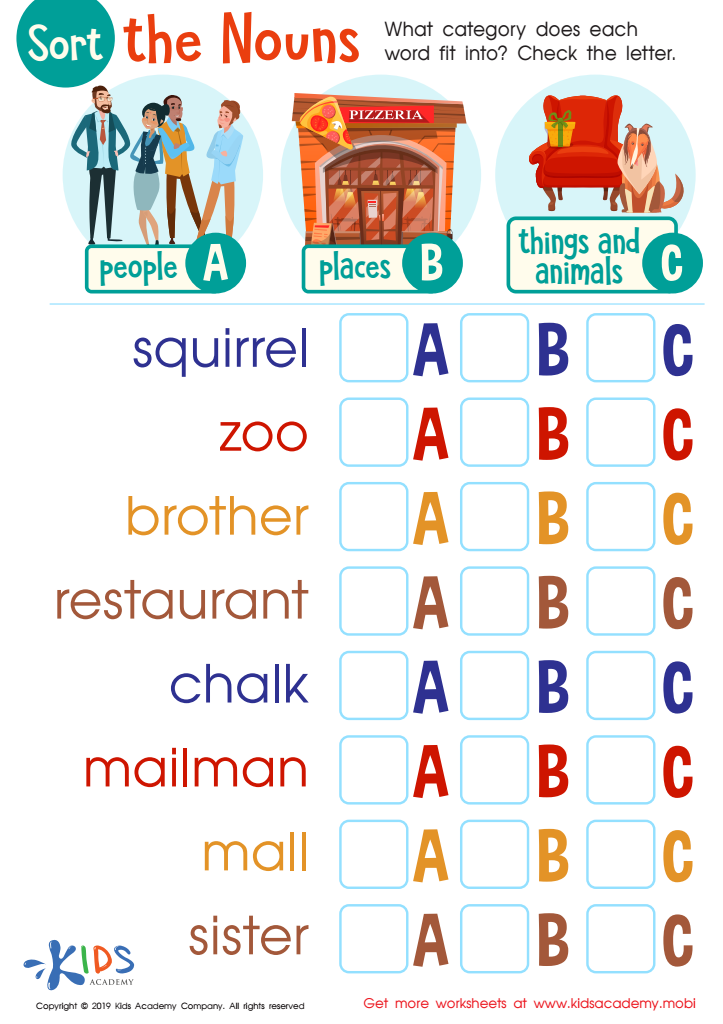
Sort the Nouns Worksheet
Nouns are words for people, places, things, and ideas. This worksheet helps kids focus on three categories: people, places, and things (including animals). All the words are nouns; the task is to match them to the correct category. Circle the answer for each!
Sort the Nouns Worksheet
Worksheet
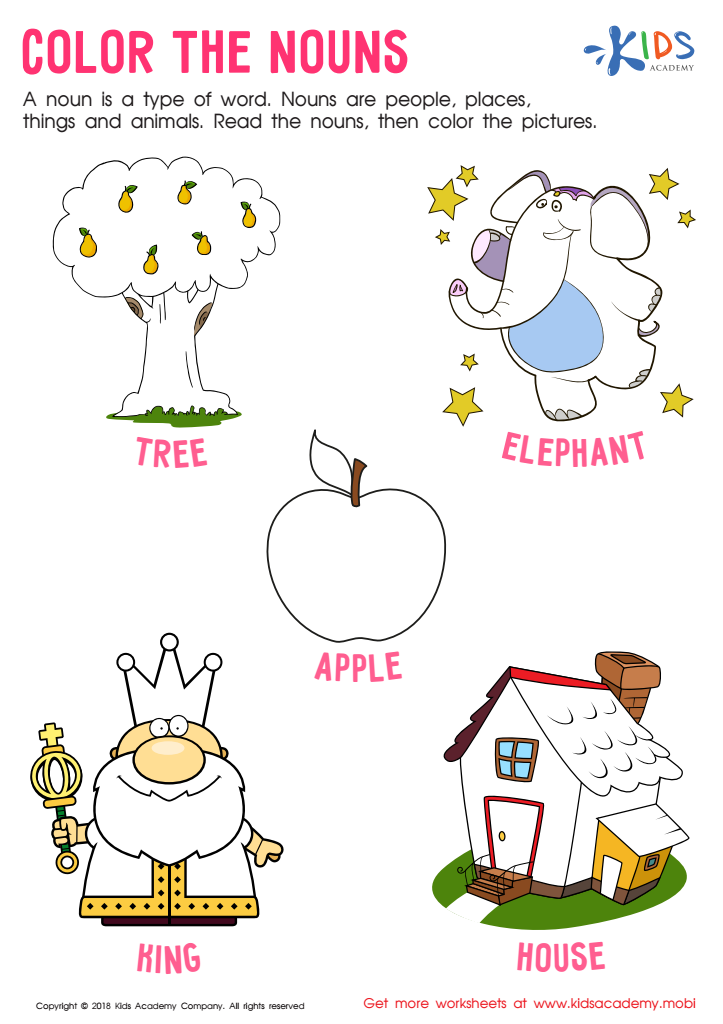
Color the Nouns Worksheet
Test your child's understanding of nouns with this downloadable worksheet. Explain that nouns are words for people, places, animals and things. With the coloring sheet, read each word and color the corresponding picture. By the end of it, your child should be able to recognize common nouns.
Download (PDF)
 Assign to My Students
Assign to My Students
Color the Nouns Worksheet
Worksheet
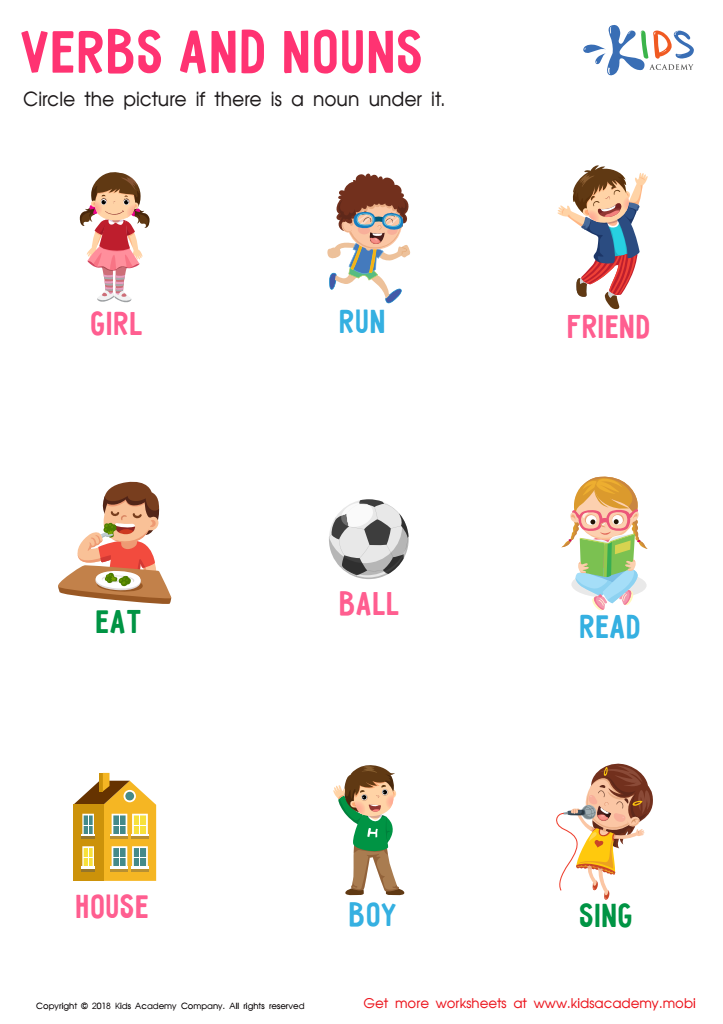
Verbs and Nouns Worksheet
Your child should have basic knowledge of verbs and nouns before starting this worksheet. Go through it with them and ask them to circle the pictures with nouns under them. This way, they'll become more familiar with parts of speech.
Verbs and Nouns Worksheet
Worksheet
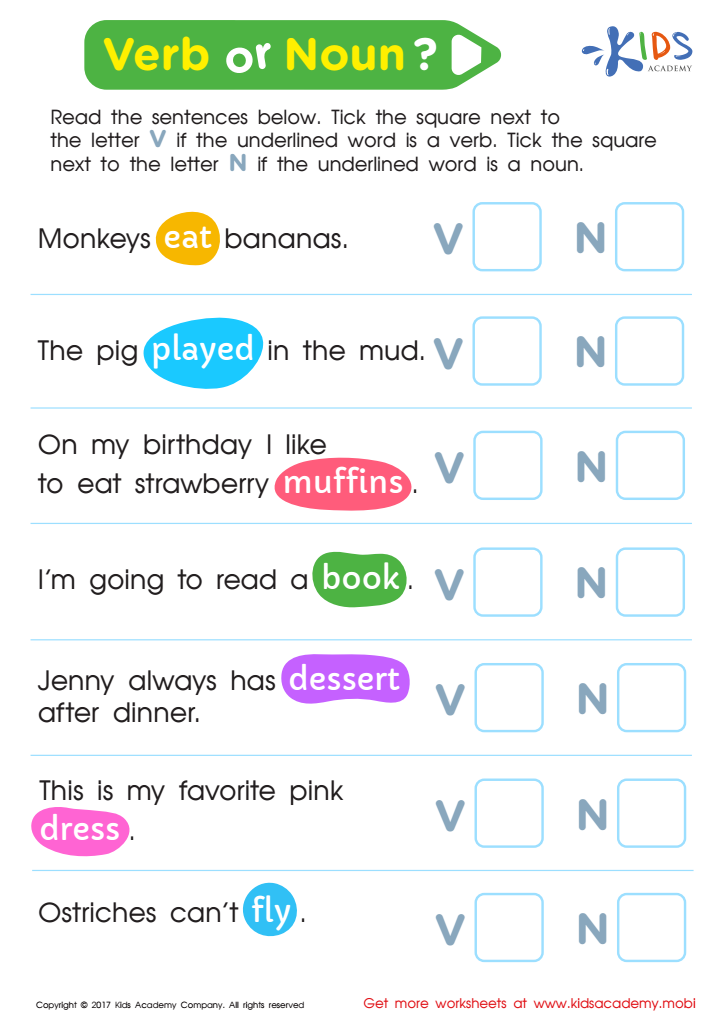
Verb or Noun Worksheet
This worksheet will help your child identify verbs and nouns quickly. With colorful highlights and simple sentences, they'll master parts of speech in no time! Get ahead of the game with this incredible worksheet.
Verb or Noun Worksheet
Worksheet
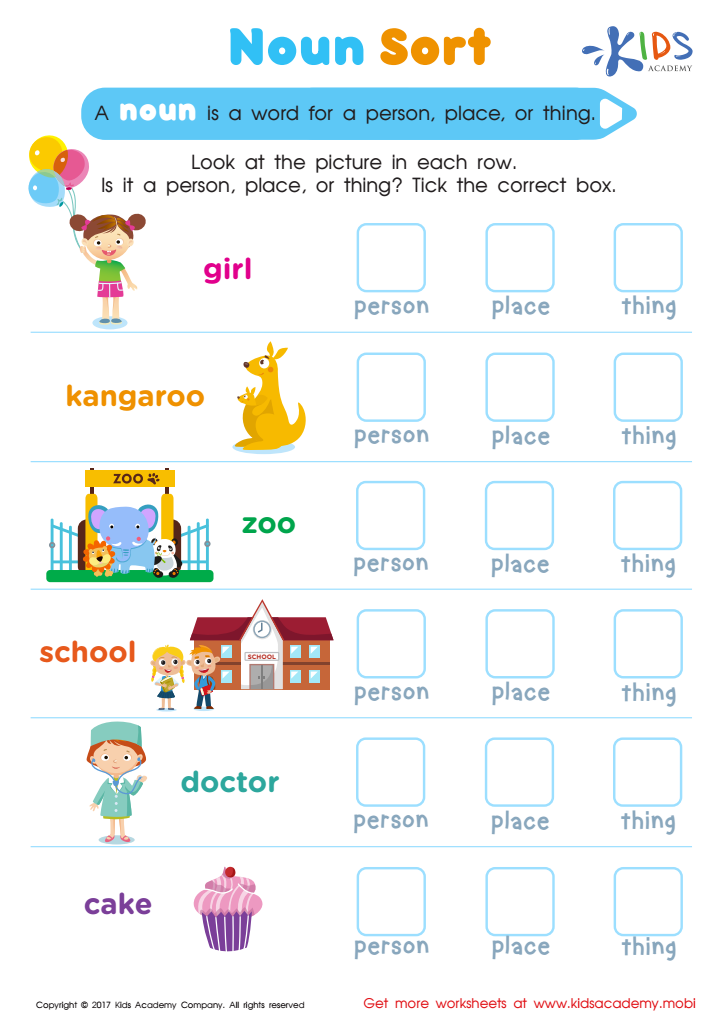
Noun Sort Printable
This printable worksheet helps kids sort nouns into person, place, or thing categories. Perfect for learning the basics of grammar!
This printable worksheet helps kids learn parts of speech by sorting nouns into person, place, or thing categories using familiar images. Perfect for mastering basic grammar!
Noun Sort Printable
Worksheet
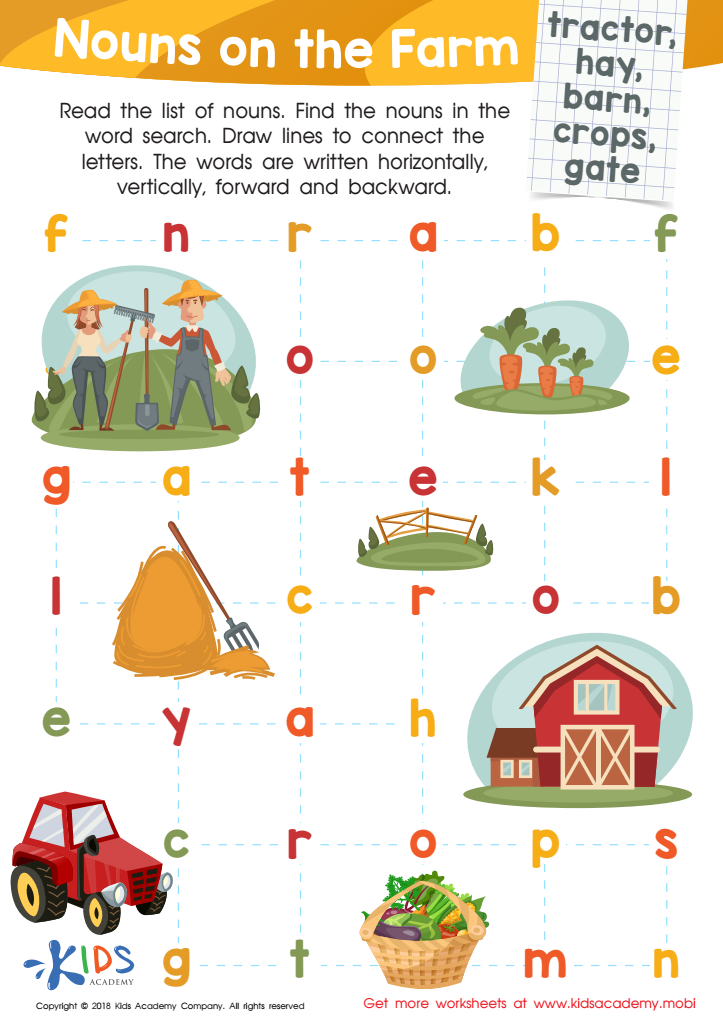
Nouns on the Farm Worksheet
Help your child learn nouns with this worksheet: Read the list to them and have them find the nouns in the word search. Draw lines to connect the letters, and explain the words can be found horizontally, vertically, forward, and backward.
Nouns on the Farm Worksheet
Worksheet
Join Kids Academy for Free
Who is primarily going to use this learning content?







Noun identification is a fundamental aspect of grammar that plays a crucial role in a child's language development during ages 5-9. Understanding nouns—words that name people, places, things, or ideas—helps children form the foundational building blocks for communication and literacy. When parents and teachers emphasize noun identification, they facilitate vocabulary expansion, enhance reading comprehension, and improve writing skills.
At this developmental stage, children are naturally curious and eager to express themselves. By learning to identify nouns, they can better articulate their thoughts, making their communication more effective. Furthermore, knowing how to recognize nouns enables students to create more complex sentences, fostering their overall language competency.
In addition, mastering noun identification equips children with the skills necessary for efficient reading. As they encounter texts, recognizing nouns allows young readers to grasp key concepts and context quickly, thereby improving comprehension.
Moreover, when educators and parents collaboratively support noun identification, they create a rich linguistic environment that fosters a love for learning. Engaging with grammar in fun and interactive ways promotes critical thinking and problem-solving skills essential for their academic journey. Ultimately, caring about noun identification lays the groundwork for future literacy success.








