
Vocabulary enhancement Elementary Phonics Worksheets for 5-Year-Olds
8 filtered results
Difficulty Level
Grade
Age
-
From - To
Subject
Activity
Standards
Boost your child's language skills with our engaging Vocabulary Enhancement Elementary Phonics Worksheets for 5-Year-Olds! Designed specifically for young learners, these fun, educational worksheets help children recognize, understand, and use new words effectively. Each worksheet features captivating activities that make learning phonics and expanding vocabulary an enjoyable experience. Perfect for developing early reading skills and fostering a love for language, our worksheets offer a variety of exercises, from alphabet practice to word recognition. Download now to give your child the advantage they need to excel in their phonics journey!
Favorites
With answer key
Interactive
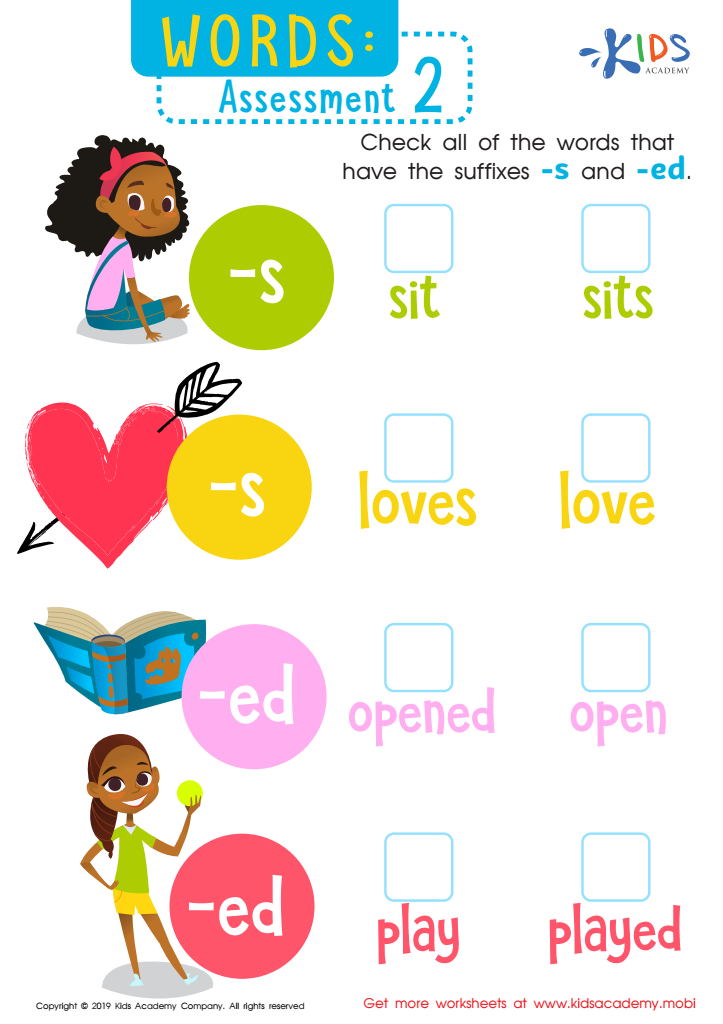
Words: Assessment 2 Worksheet
Test your child’s knowledge of -s and -ed word endings with this fun worksheet! They'll look at images and read the words, then choose the correct suffix to finish each one. Vivid illustrations make this an enjoyable learning experience!
 Assign to My Students
Words: Assessment 2 Worksheet
Worksheet
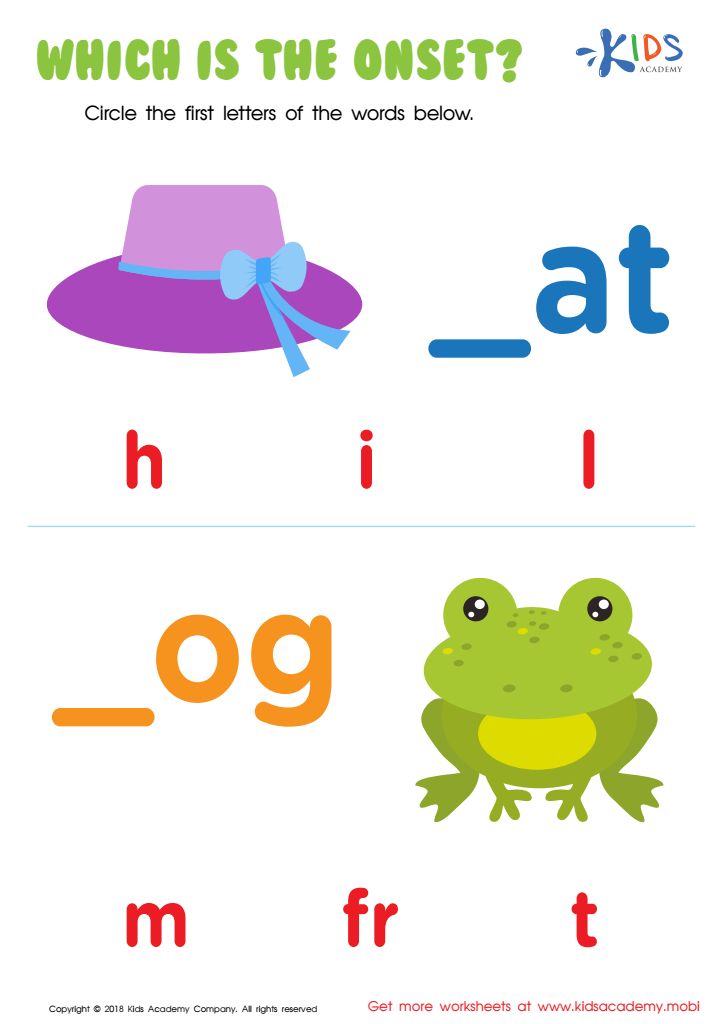
Which Is the Onset? Worksheet
Help your children learn to spell with this bright, fun worksheet. Struggling with spelling small words can make reading and writing sentences difficult. Encourage them to look at the pictures, say the names aloud and circle the correct first letter from the options. They will soon overcome any reluctance to spell.
Which Is the Onset? Worksheet
Worksheet
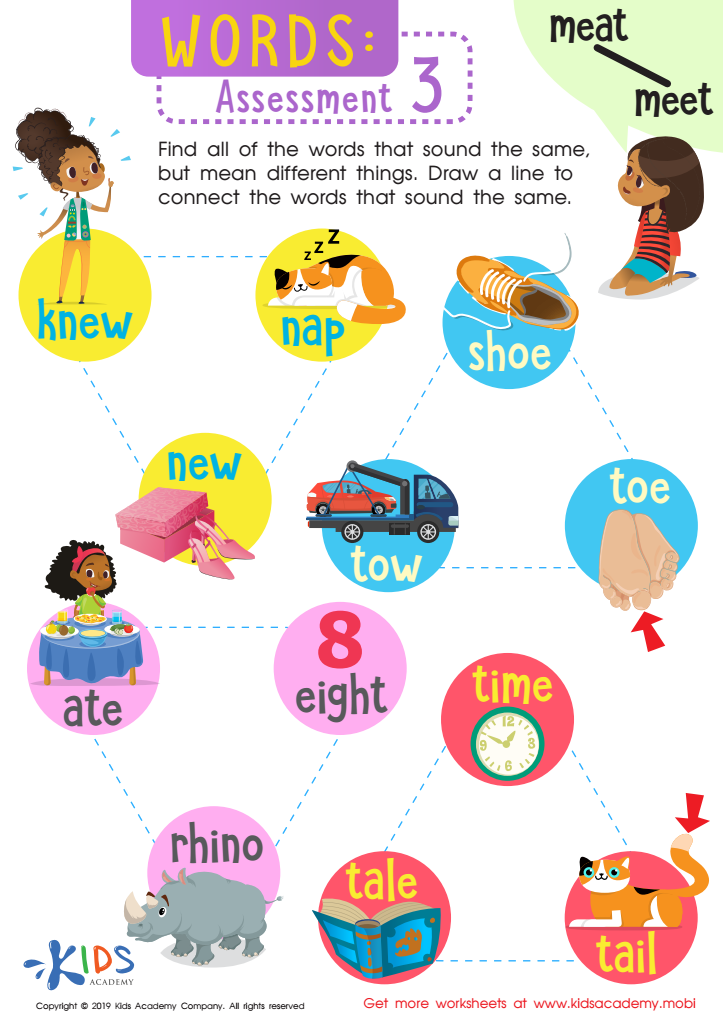
Words: Asessment 3 Worksheet
Assess your child's knowledge of homonyms with words like "toe" and "tow". This fun worksheet helps find words that sound the same but have different meanings and spellings. Use it to introduce homographs--words spelled the same with different meanings!
Words: Asessment 3 Worksheet
Worksheet
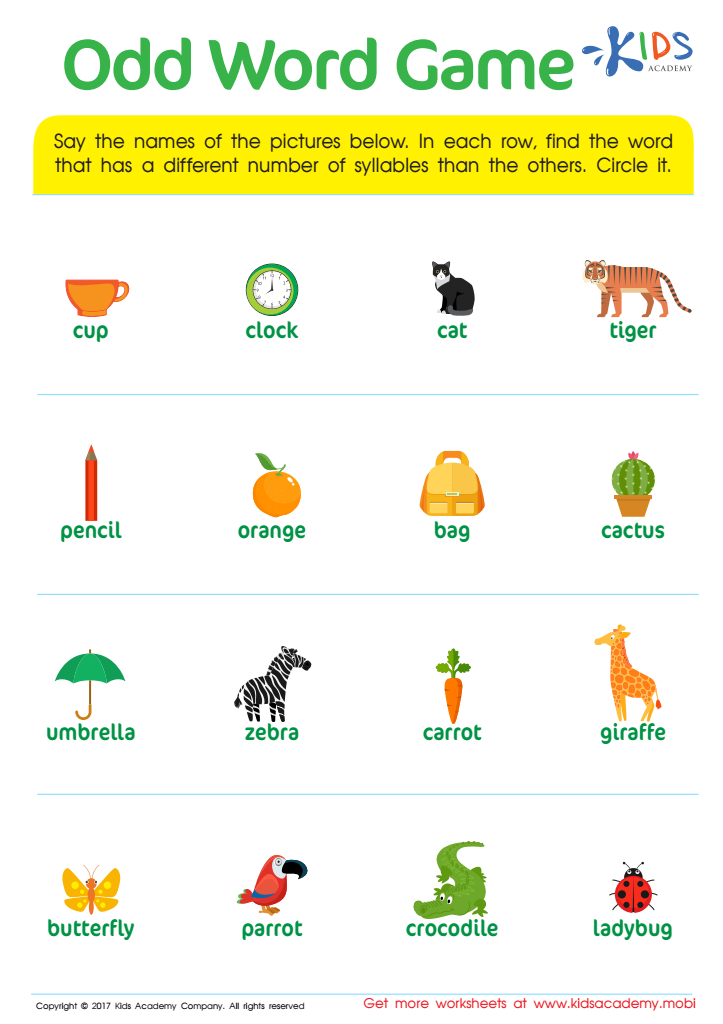
Count Syllables: Odd Word Game Worksheet
Counting syllables strengthens kids' decoding skills. This printable helps them say common item names and chunk words for fluency and accuracy. They don't even realize they're working on their reading! Bright colors make it fun, so it's a fast and easy way to practice.
Count Syllables: Odd Word Game Worksheet
Worksheet
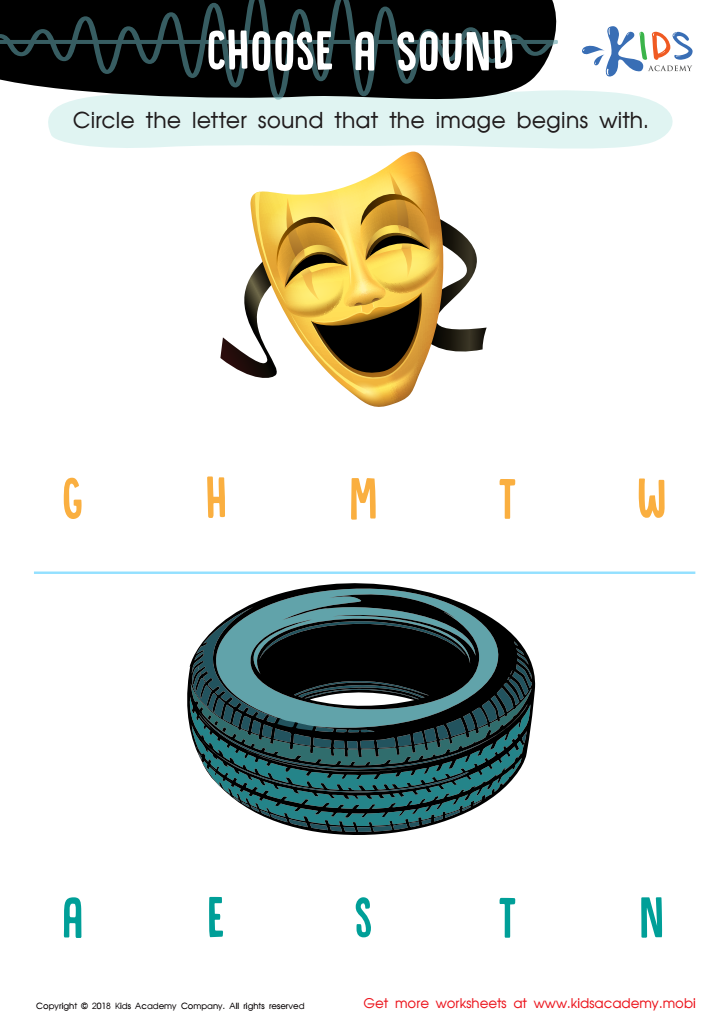
Choose a Sound Worksheet
Help your child hone pre-reading skills with this colorful worksheet! They'll practice tracing letter sounds, develop phoneme awareness, and gain confidence. Plus, it's a fun way to work on their fine motor skills.
Choose a Sound Worksheet
Worksheet
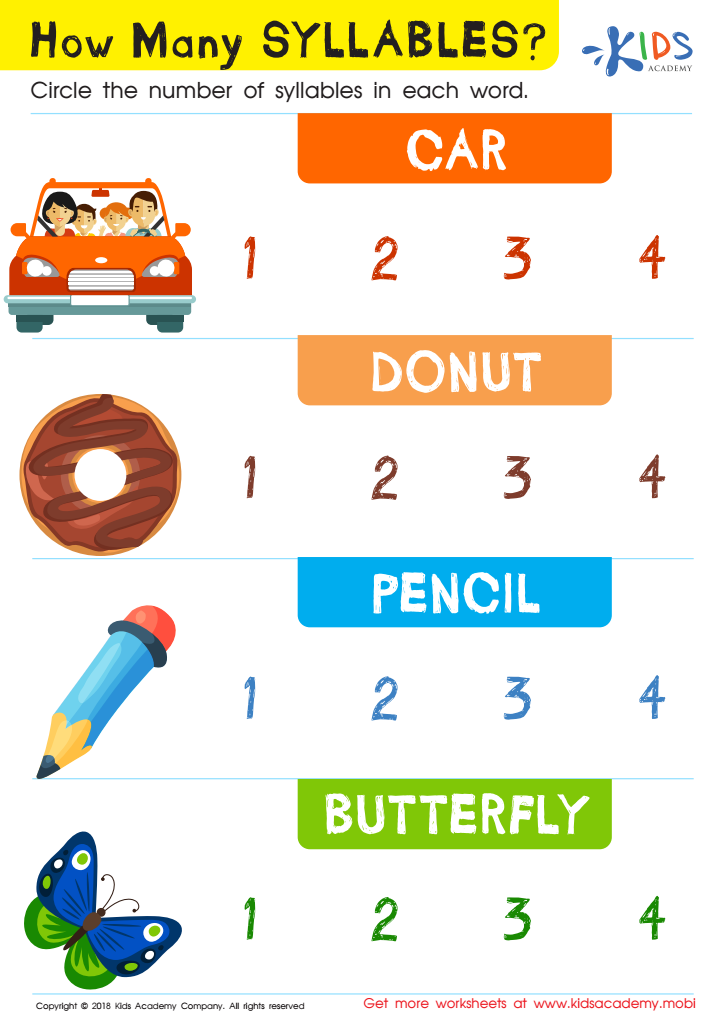
How Many Syllables? Worksheet
Syllabication or 'chunking' helps students decode words more quickly and increase fluency. This traceable worksheet is great for emerging readers, combining fun and fine motor practice with chunking words and counting syllables.
How Many Syllables? Worksheet
Worksheet
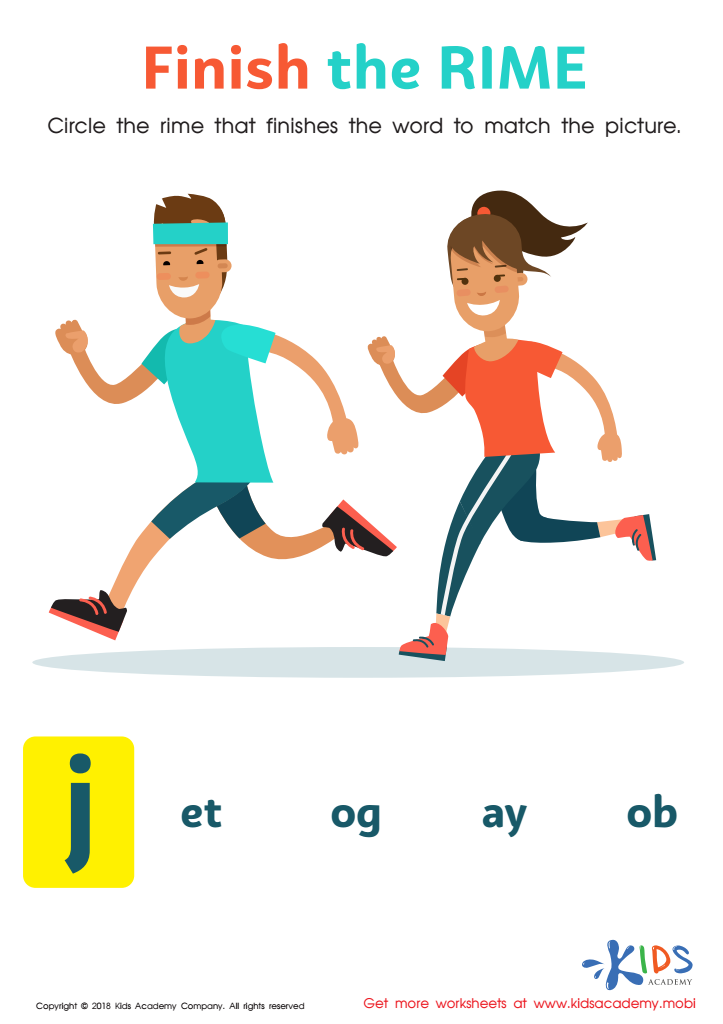
Finish the Rime Worksheet
Rimes help kids learn word families and spelling strategies. This PDF worksheet gives new readers practice with initial consonants, pictures, colors and motor skills. It's fun and cheery, and a great way to boost phonological awareness and rime identification.
Finish the Rime Worksheet
Worksheet
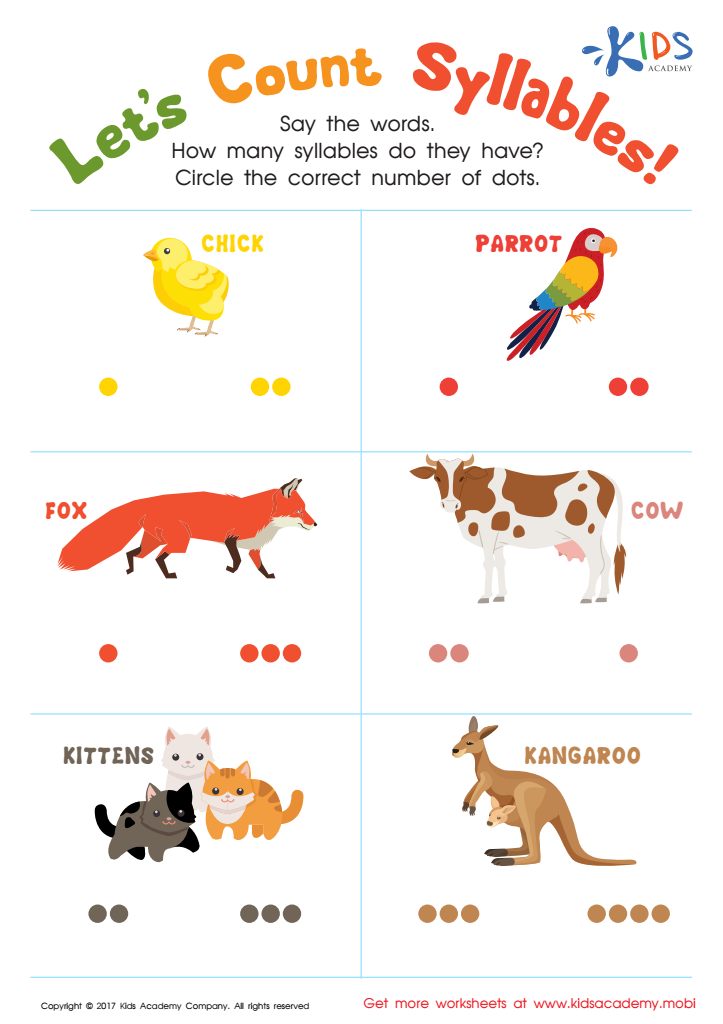
Lets Count Syllables Worksheet
This fun animal worksheet makes learning to read easier by breaking words into syllables. Bright, cheery pictures give context and help kids choose the right syllable count. Count together and enjoy as your child learns and gains success!
Lets Count Syllables Worksheet
Worksheet
Join Kids Academy for Free
Who is primarily going to use this learning content?




Vocabulary enhancement and elementary phonics are critical for 5-year-olds' development because they lay a strong foundation for successful reading and communication skills. At this age, children's brains are highly receptive and capable of absorbing new information rapidly, including new words and phonemic awareness—the ability to recognize and manipulate the sounds in words.
Vocabulary enhancement broadens a child's language skills, enabling them to express thoughts more clearly and understand others better. A rich vocabulary is linked to improved academic performance, as it supports reading comprehension and critical thinking. When children understand a variety of words, they can better grasp the meaning of texts, follow instructions, and engage in learning activities with greater ease.
Elementary phonics, the method of teaching how letters correlate with sounds, is equally important because it equips children with the skills needed to decode words for reading and writing. Phonics instruction improves a child's ability to read early on, which fosters a love for reading, stimulates imagination, and enhances cognitive development.
Therefore, parents and teachers should prioritize vocabulary enhancement and phonics to support children’s overall literacy development. Doing so not only primes them for academic success but also enriches their communication abilities, ultimately influencing their future learning endeavors and everyday interactions positively.







