Letter-sound correlation Alphabet Worksheets for 5-Year-Olds
6 filtered results
-
From - To
Discover our engaging Letter-Sound Correlation Alphabet Worksheets designed specifically for 5-year-olds! These interactive worksheets help young learners connect letters to their corresponding sounds, fostering essential early literacy skills. With vibrant illustrations and fun activities, children will gain confidence in their ability to recognize and articulate sounds associated with each letter. Our printable resources not only support phonetic awareness but also encourage critical thinking and creativity. Perfect for both classrooms and home learning, these worksheets provide a joyful and effective way to lay the foundation for reading success. Start your child’s literacy journey today with our thoughtfully crafted alphabet worksheets!
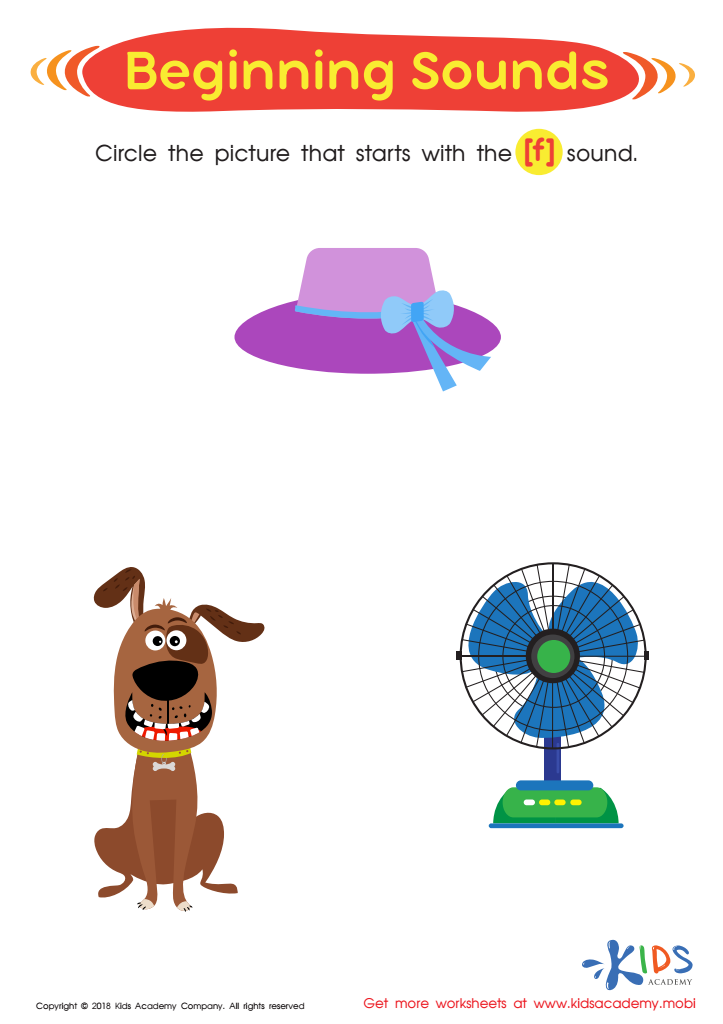
Beginning Sounds Assessment Printable
 Assign to My Students
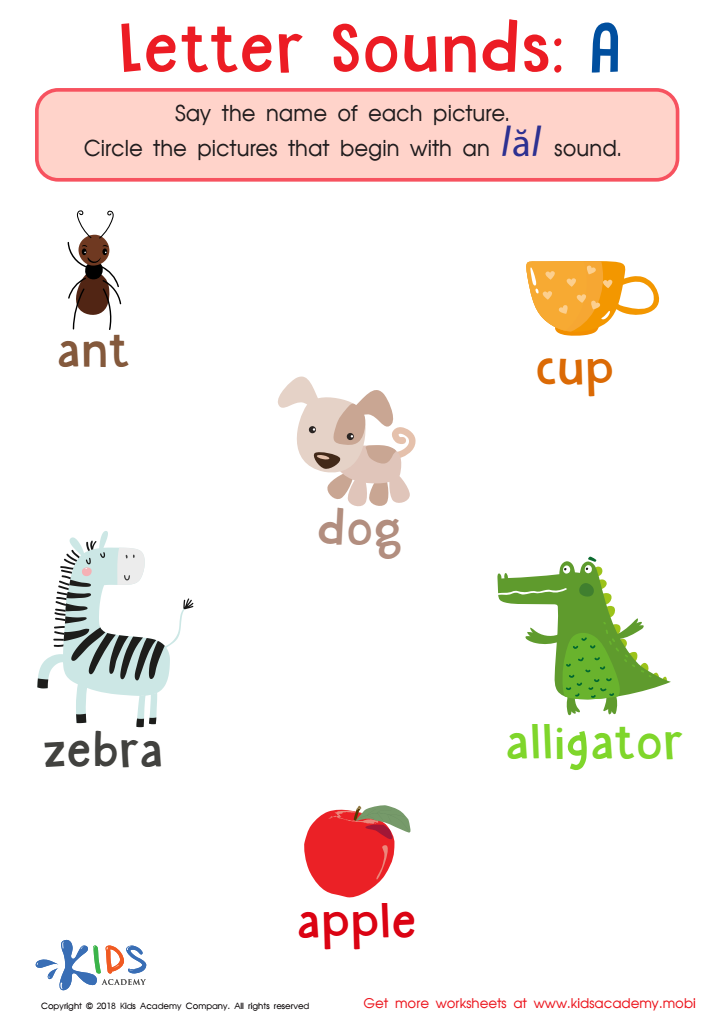
Letter A Sounds Worksheet
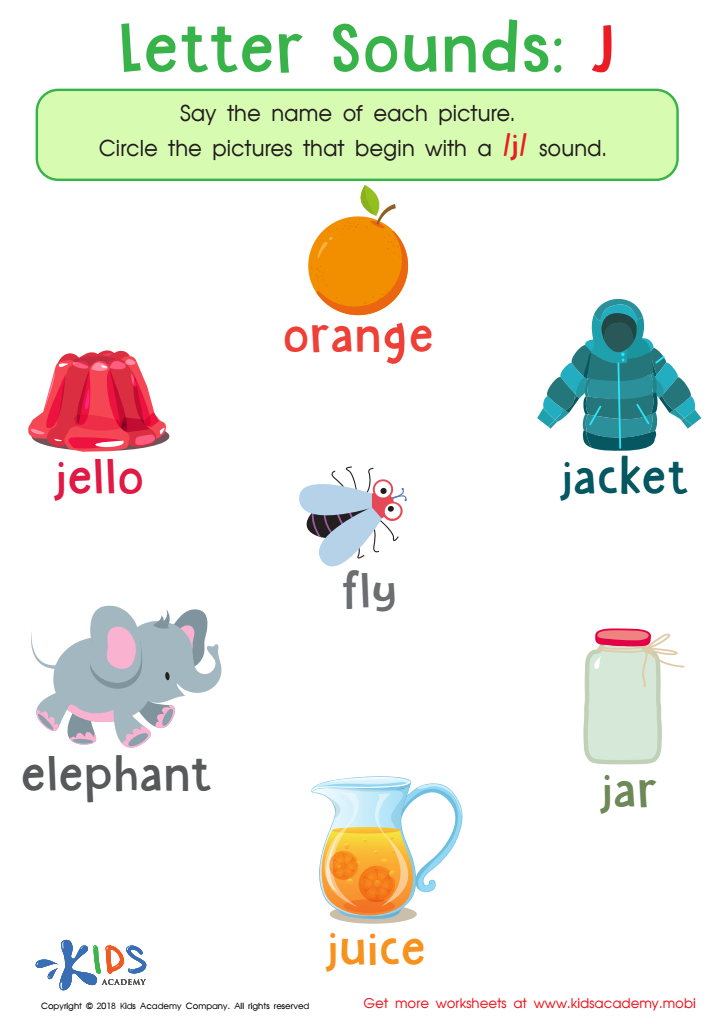
Letter Sounds: J Printable Worksheet
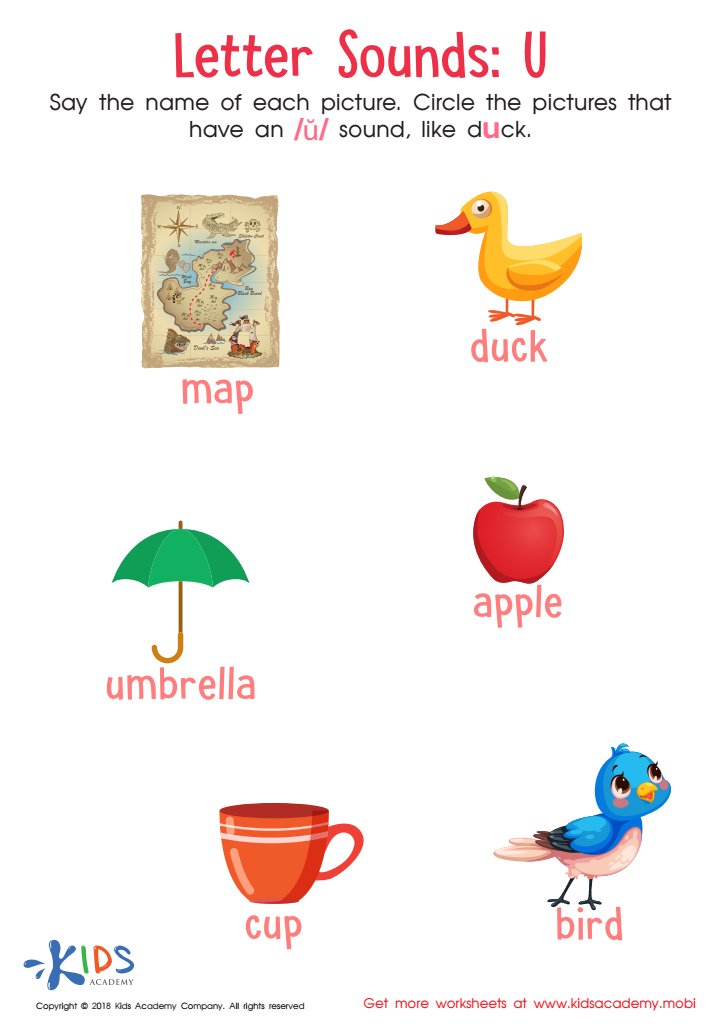
Letter U Sounds Worksheet
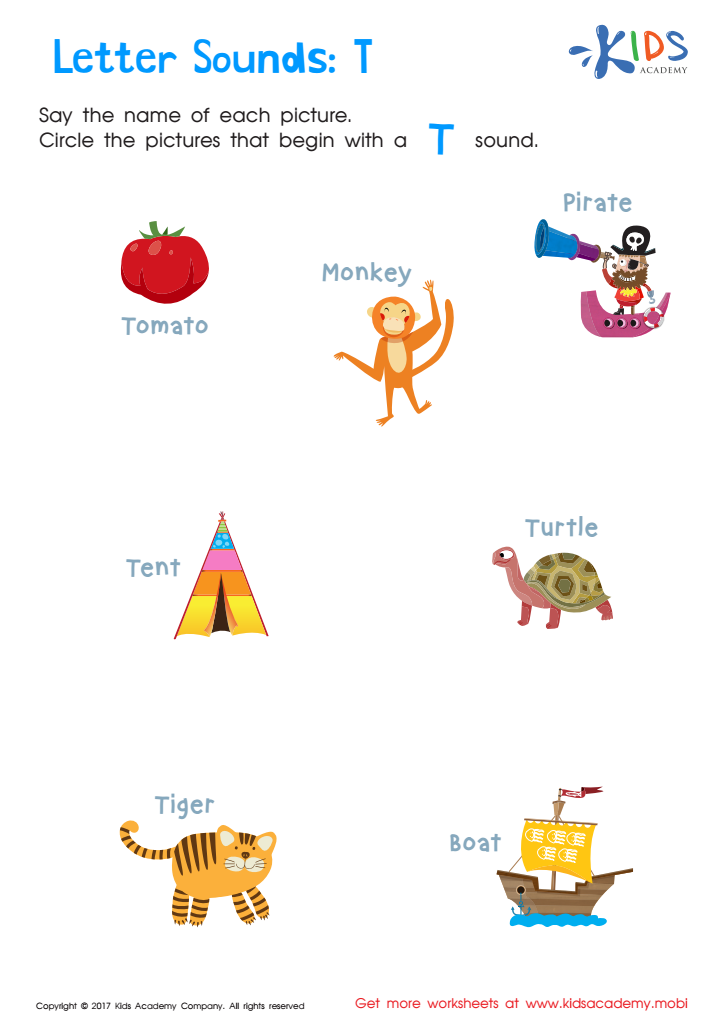
Letter T Sounds Worksheet
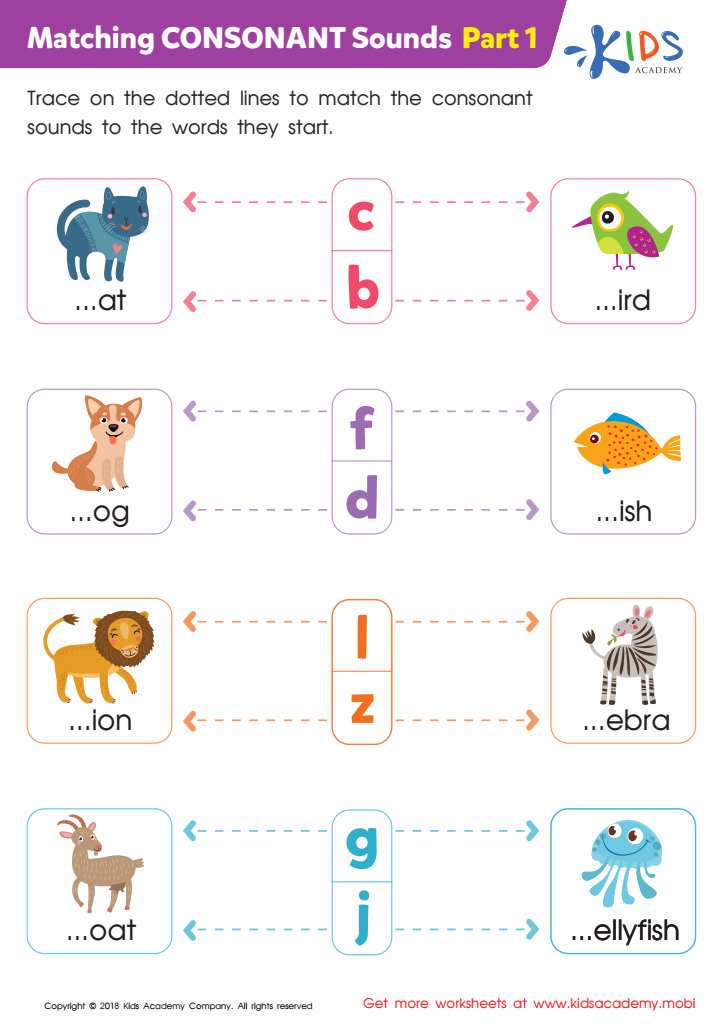
Matching Consonant Sounds: Part 1 Worksheet


.jpg)





Understanding letter-sound correlations is crucial for 5-year-olds as it serves as the foundation for reading and writing skills. When parents and teachers emphasize this relationship, children begin to recognize that letters represent sounds, empowering them to decode words independently. This foundational skill boosts their confidence and motivation, encouraging a lifelong love for reading.
Moreover, addressing letter-sound correlations aids in phonemic awareness, which is the ability to hear and manipulate sounds in words. This skill is instrumental in helping children spell and develop their writing abilities. When children learn to associate letters with sounds, they also become adept at blending and segmenting words, vital components of fluent reading.
Additionally, parents and teachers play a significant role in supporting literacy through engaging activities. With encouragement and practice, children can transition from viewing letters as mere symbols to understanding them as tools for communication.
Incorporating letter-sound correlation in playful, interactive lessons cultivates a rich language environment that fosters creativity and curiosity. Thus, by prioritizing this concept, parents and teachers are actively investing in their child's cognitive development, enhancing academic outcomes, and instilling the essential skills needed for future educational success.







