Hand-eye Coordination Letter Recognition Worksheets for 5-Year-Olds
9 filtered results
-
From - To
Boost your child’s literacy with our Hand-eye Coordination Letter Recognition Worksheets designed for 5-year-olds! These engaging printables combine fun activities with educational content to enhance hand-eye coordination and letter recognition skills. Each worksheet features exercises such as tracing, matching, and coloring to make learning the alphabet enjoyable and effective. With vibrant illustrations and diverse tasks, children stay motivated while developing essential kindergarten readiness skills. Start your young learner on the path to literacy success with our expertly crafted worksheets that transform education into a playful adventure! Suitable for both classroom and at-home use.

Letter A Tracing Page
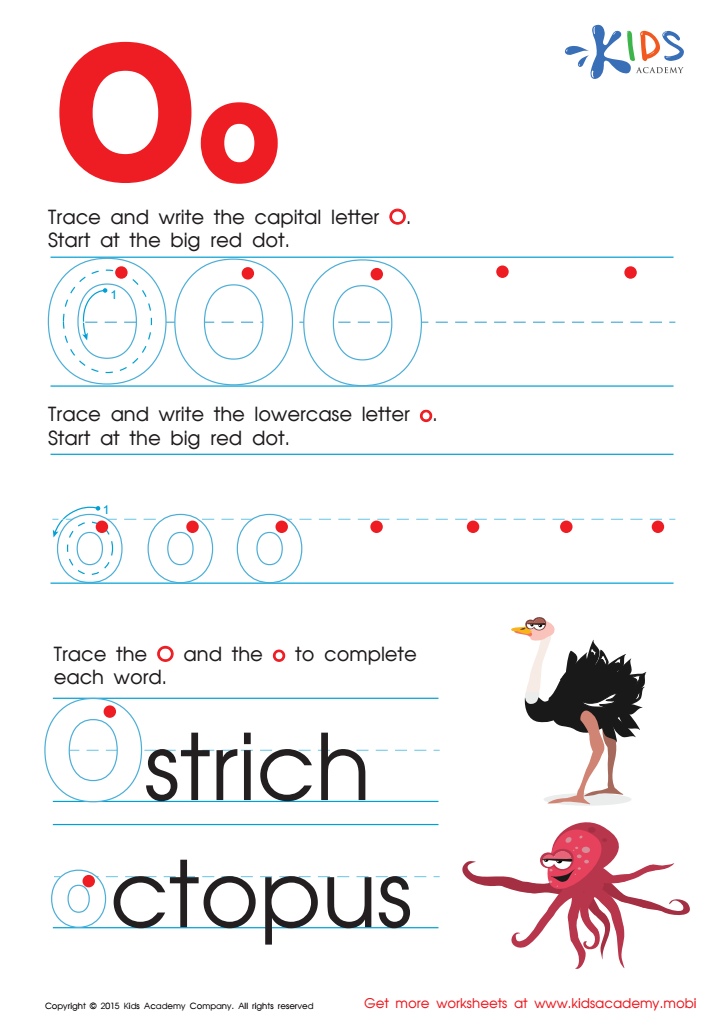
Letter O Tracing Page
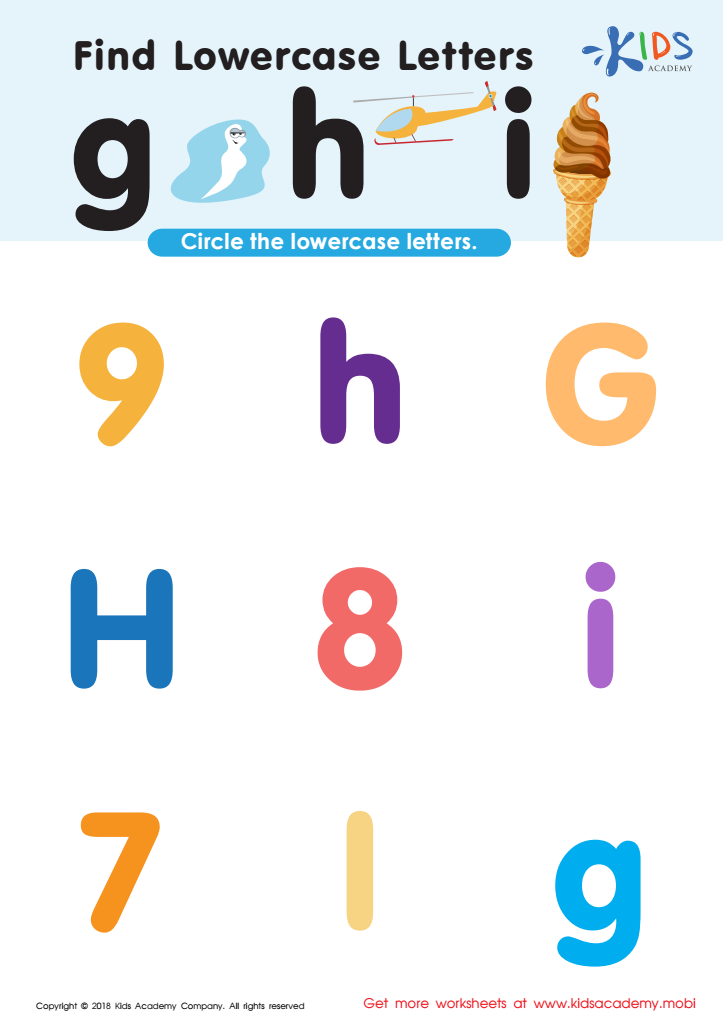
Find Lowercase Letters g h i Worksheet

Letter P Tracing Page
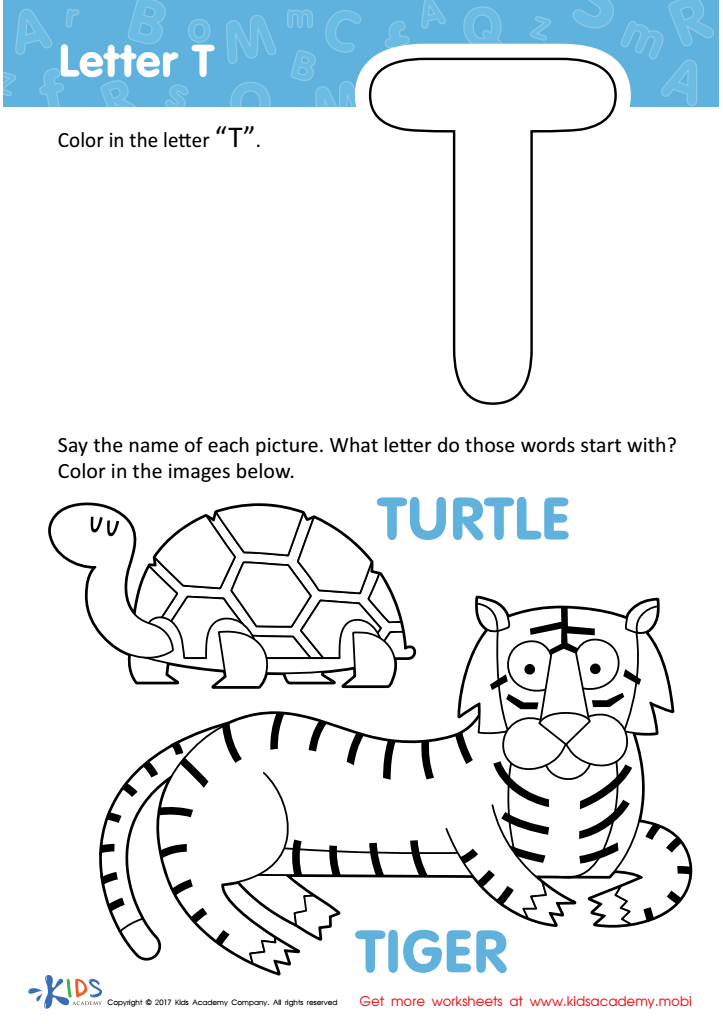
Letter T Coloring Sheet
 Assign to My Students

Letter H Tracing Page
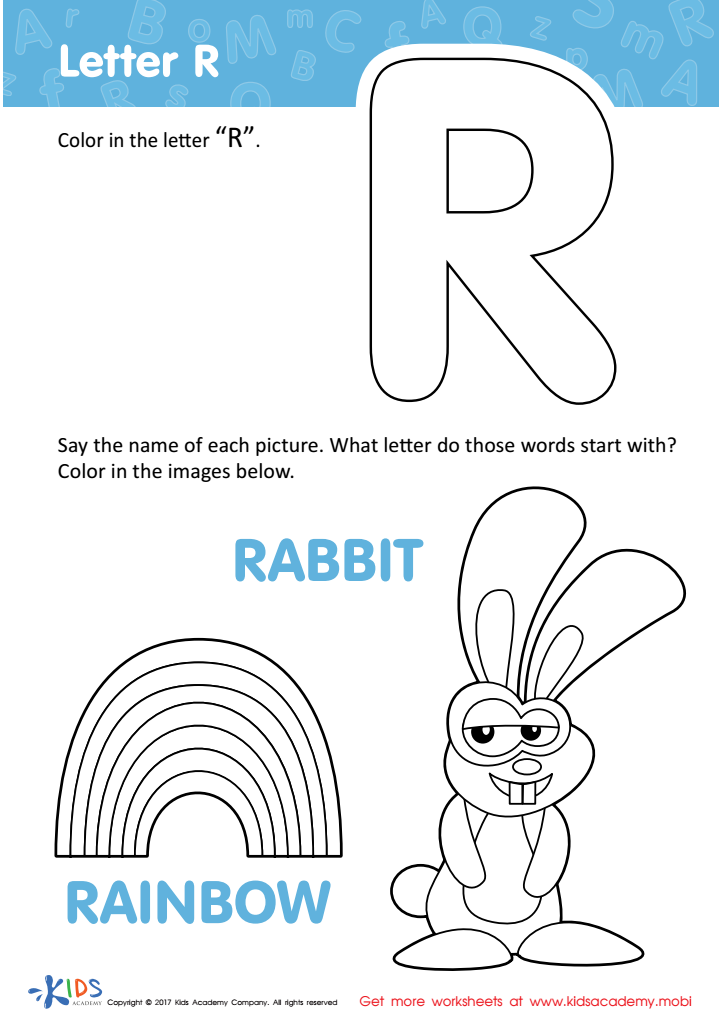
Letter R Coloring Sheet
Assign to My Students
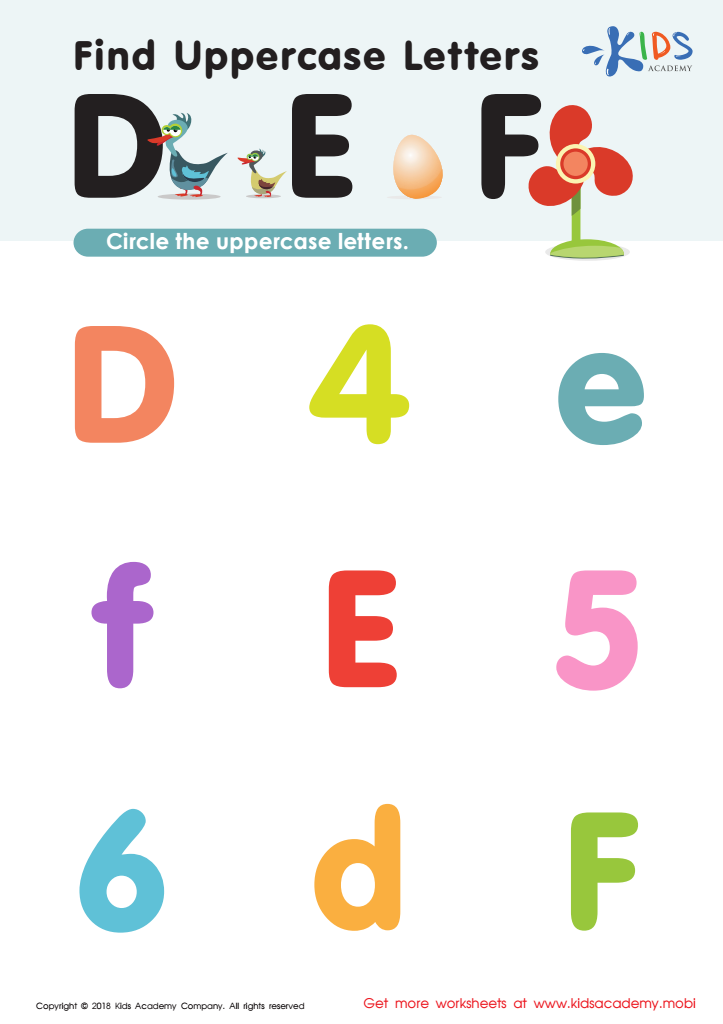
Find Uppercase Letters D, E, and F Worksheet

Letter D Tracing Page








Hand-eye coordination and letter recognition are foundational skills crucial for 5-year-olds as they embark on their educational journey. Hand-eye coordination is the harmonious relationship between the eyes and hands where one's movements are guided by visual input. For young learners, this skill is essential in tasks like writing, drawing, and manipulating objects, which lays the groundwork for fine motor skills development. Children with strong hand-eye coordination are better equipped to handle more complex tasks as they grow, leading to greater academic and extracurricular success.
Letter recognition, on the other hand, is a critical early literacy skill. It involves identifying letters, understanding their shapes, and associating them with specific sounds. This recognition is vital for reading fluency, as children begin to decode words, enhance their vocabulary, and gain comprehension skills.
Parents and teachers should care about fostering these skills because they interconnect and complement one another. Engaging children in activities that promote both—like tracing letters in sand, playing alphabet matching games, or assembling simple puzzles—helps solidify their cognitive and motor development concurrently. Recognizing and cultivating these abilities early on not only makes learning to read and write more enjoyable and less stressful for children but also sets the stage for future academic success and a lifelong love of learning.







