Sound Association Letter Recognition Worksheets for 5-Year-Olds
5 filtered results
-
From - To
Enhance your 5-year-old's early literacy skills with our Sound Association Letter Recognition Worksheets! Designed to make learning fun and interactive, these worksheets help young learners connect letters to their corresponding sounds, fostering essential phonemic awareness. Through engaging activities like matching letters to images and tracing, children will develop the foundational skills necessary for reading and writing. Our age-appropriate resources support diverse learning styles, ensuring that every child can grasp the exciting world of letters and sounds. Download our printable worksheets today and watch your little one gain confidence as they embark on their literacy journey! Perfect for home or classroom use.
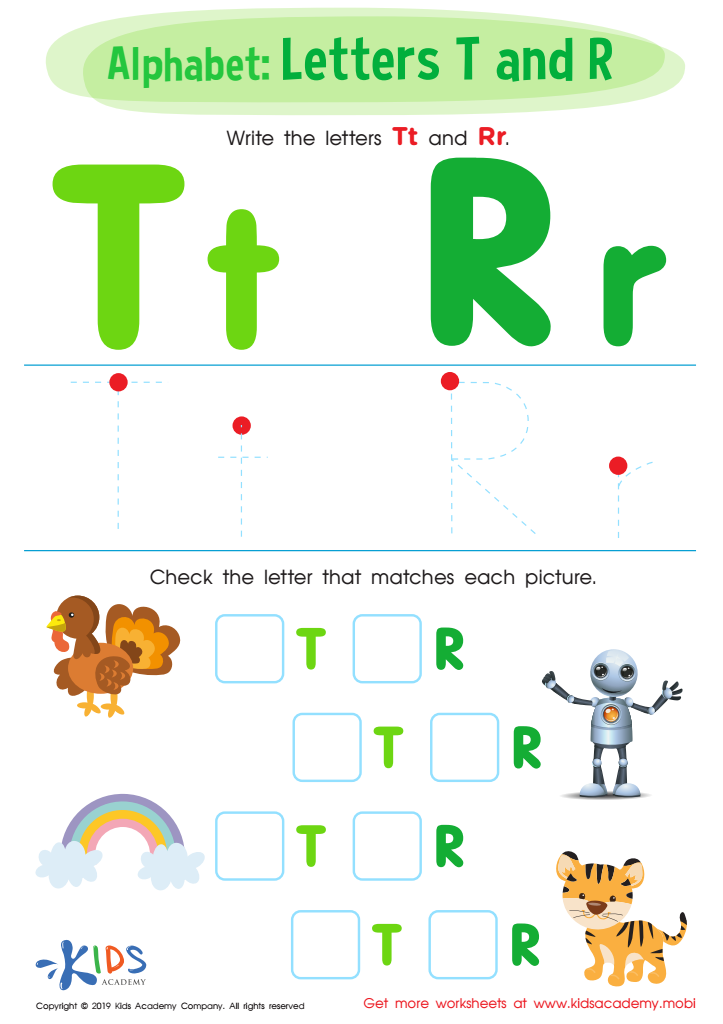
Letters T and R Worksheet
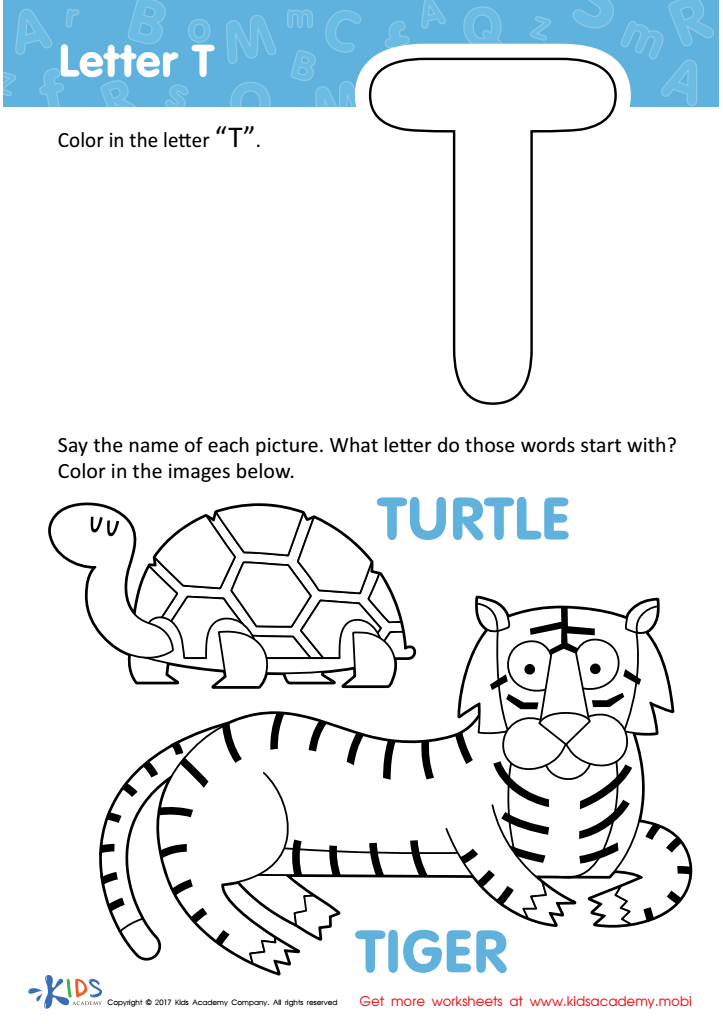
Letter T Coloring Sheet
 Assign to My Students
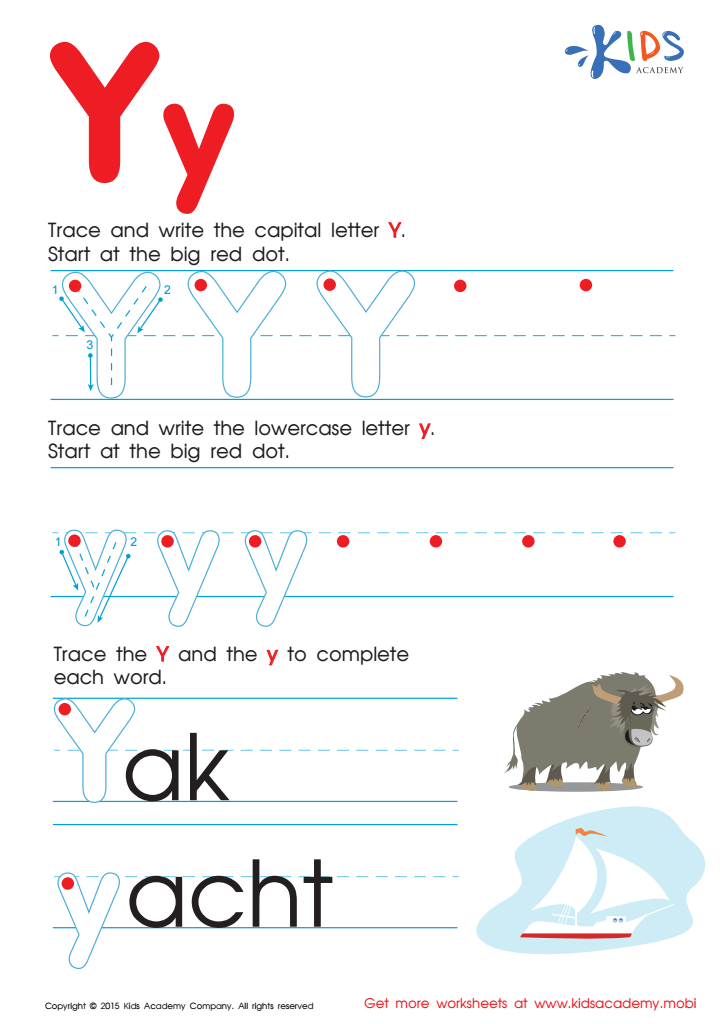
Letter Y Tracing Page
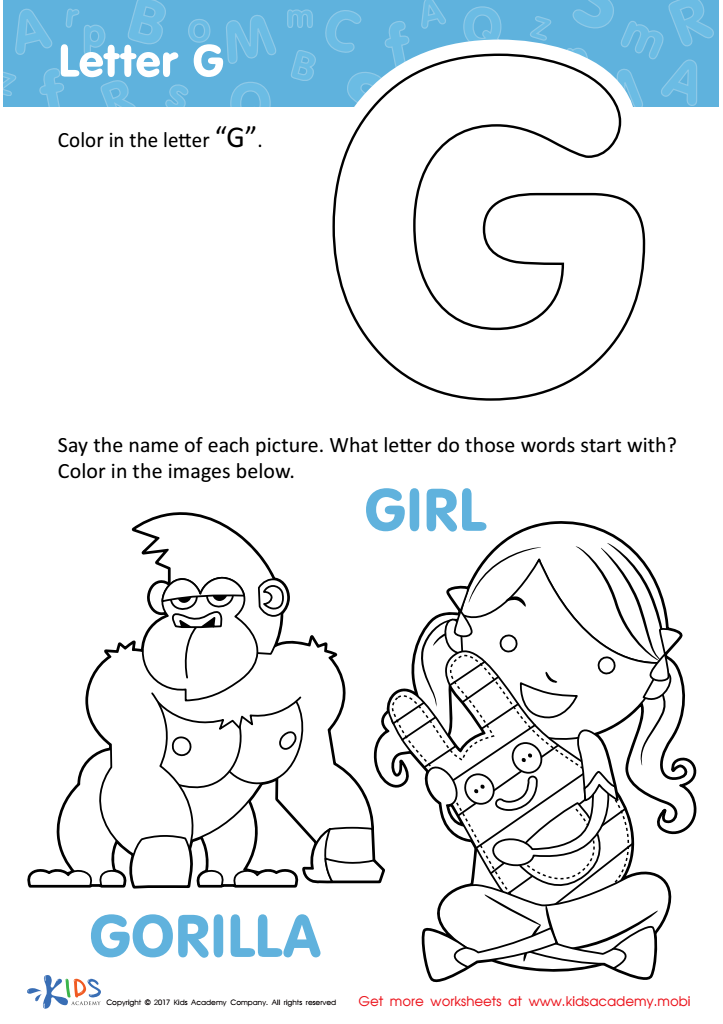
Letter G Coloring Sheet
Assign to My Students
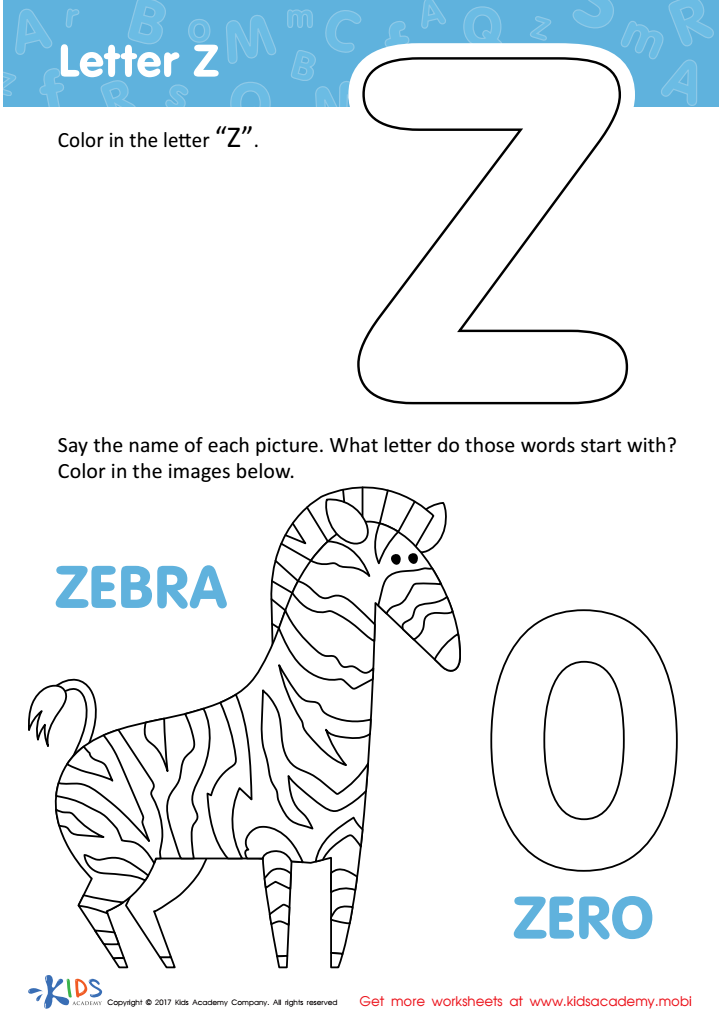
Letter Z Coloring Sheet
Assign to My Students








Sound Association Letter Recognition is a crucial developmental milestone for 5-year-olds, intertwining their ability to connect sounds with written letters, which forms the foundation for reading and writing skills. Parents and teachers should care about this concept for several reasons:
Firstly, it enhances literacy skills. Mastering sound-letter associations helps children decode words, fostering early reading habits that are essential for academic success. Children who grasp these associations develop the confidence to approach reading tasks, significantly impacting their long-term learning journey.
Secondly, it supports language development. Engaging with letters and sounds enriches vocabulary and promotes phonemic awareness, crucial elements in understanding language. This can lead to improved communication skills, paving the way for effective expression and comprehension.
Moreover, early mastery of sound-letter coordination contributes to overall cognitive development. It stimulates critical thinking and problem-solving abilities as children learn to differentiate and manipulate sounds.
Finally, recognizing and nurturing this skill helps identify children who may need additional support. Early intervention is key to addressing potential literacy challenges, ensuring every child can succeed.
In summary, promoting Sound Association Letter Recognition is vital in developing foundational literacy, supporting language growth, and fostering holistic cognitive advancements, making it a priority for parents and educators alike.







