Sound identification Phonics Worksheets for 5-Year-Olds
4 filtered results
-
From - To
Discover our engaging Sound Identification Phonics Worksheets designed specifically for 5-year-olds! Ideal for early learners, these interactive worksheets help children recognize and isolate sounds, laying a solid groundwork for reading skills. Each worksheet features fun, colorful illustrations and a variety of activities that make learning enjoyable. Kids will practice identifying the beginning sounds of words while enhancing their phonemic awareness. Perfect for teachers and parents alike, our resources encourage independent learning and offer valuable support during literacy development. Unlock the joy of reading with our creative Sound Identification Phonics Worksheets, perfect for enhancing your child’s phonics knowledge and boosting confidence!
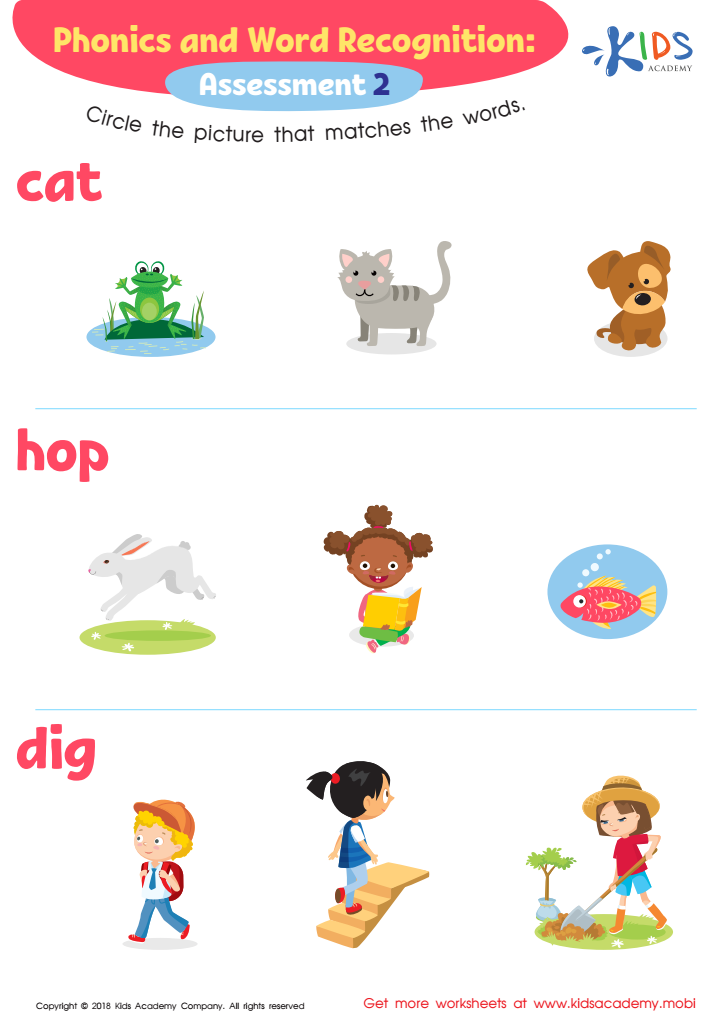
Phonological Awareness: Assessment 2 ELA Worksheet
 Assign to My Students
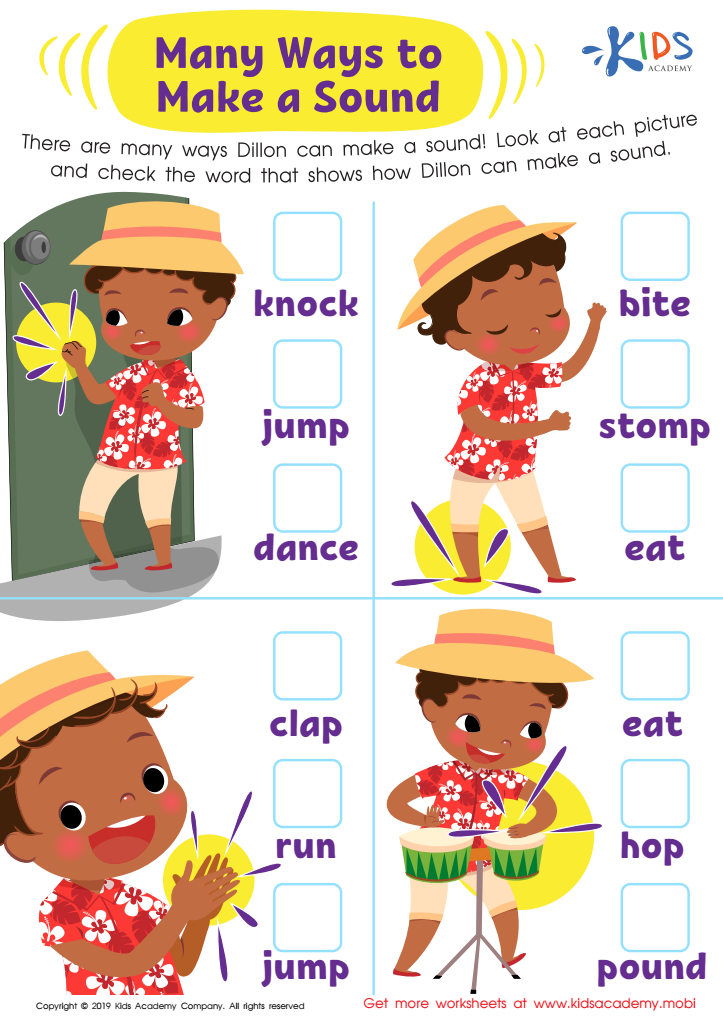
Many Ways to Make a Sound Worksheet
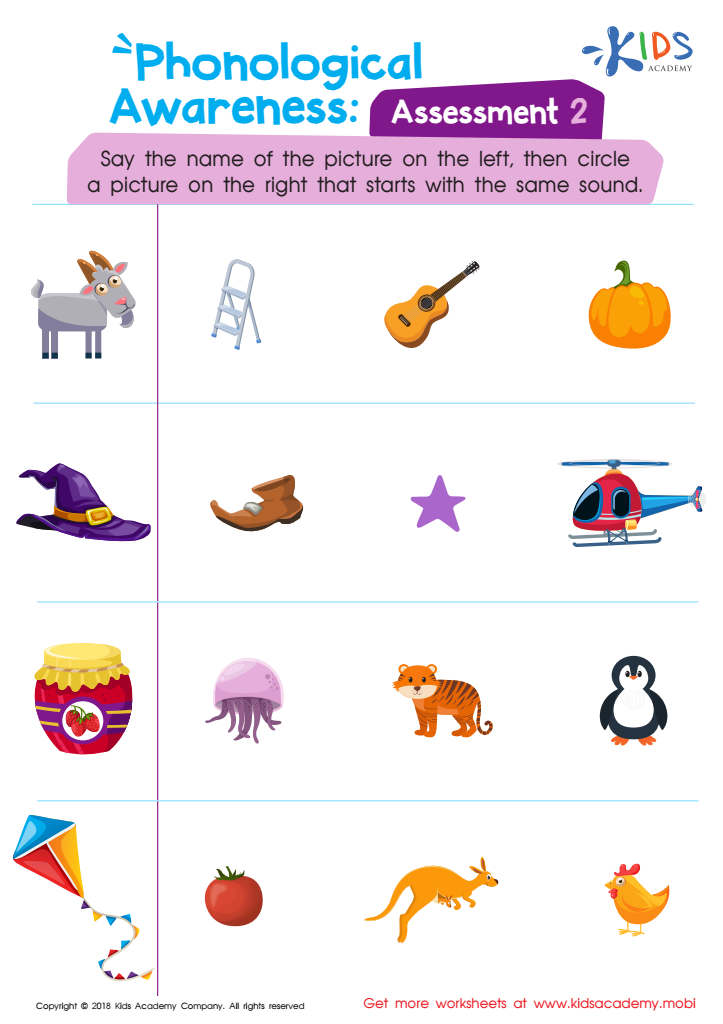
Phonological Awareness: Assessment 2 Worksheet
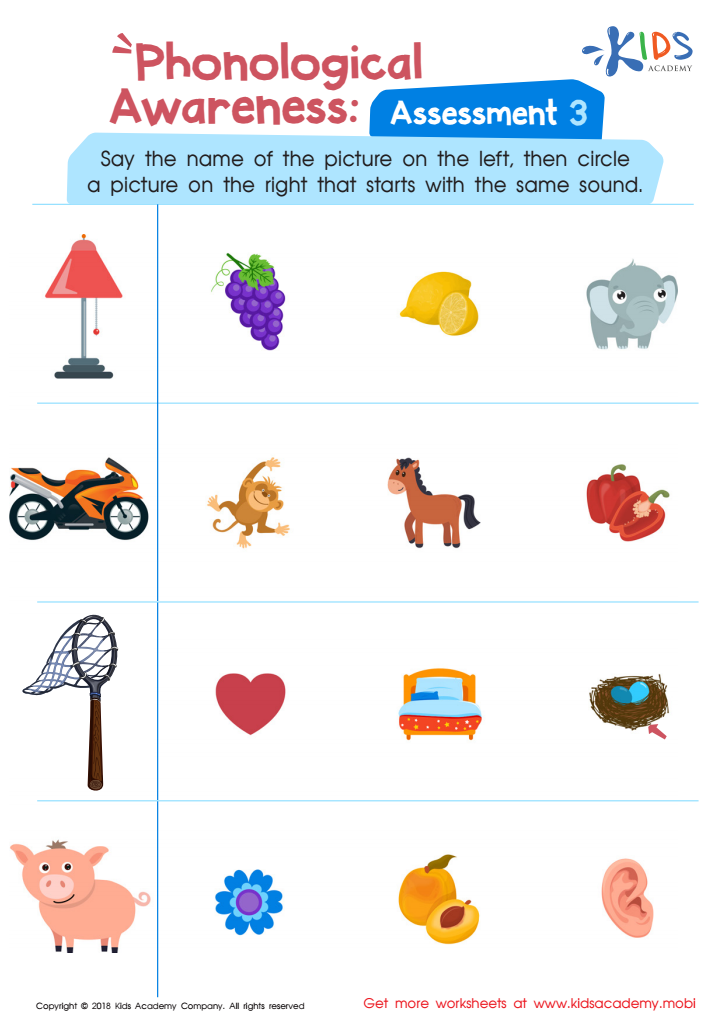
Phonological Awareness: Assessment 3 Worksheet








Sound identification phonics is a crucial skill for 5-year-olds as it forms the foundation for reading and literacy development. When children learn to identify sounds associated with letters, they begin decoding words, which is essential for reading fluency. This skill promotes not just the ability to read but also to comprehend and enjoy stories, which significantly influences a child's overall education.
Teachers and parents should care about sound identification phonics because it enhances a child's confidence and fosters a love for learning. Recognizing sounds helps children connect with language, making it easier for them to participate in classroom discussions and engage in written expression. Early mastery of phonics can result in long-lasting academic success and reduce the likelihood of reading difficulties later on.
Moreover, phonics instruction supports vocabulary development, as children become more aware of how words are formed and pronounced. Engaging in phonics activities encourages critical thinking and problem-solving skills as children learn to manipulate sounds and blend them into words. Ultimately, investing time and resources in sound identification phonics sets children on a positive trajectory for lifelong literacy and learning, making it a priority for parents and teachers alike.







