Lowercase identification Upper & Lowercase Letters Worksheets for 5-Year-Olds
5 filtered results
-
From - To
Help your 5-year-old master letter recognition with our "Lowercase Identification Upper & Lowercase Letters Worksheets." These engaging and educational printables are designed to enhance early literacy skills, aiding young learners in distinguishing between uppercase and lowercase letters effortlessly. Our worksheets feature fun activities, including matching, coloring, and tracing exercises, making learning enjoyable. Perfect for at-home practice or classroom use, these resources support the foundational skills needed for reading and writing. Boost your child's confidence and ability to identify letters in different forms with our expertly crafted worksheets. Visit Kids Academy now and watch your child thrive in their learning journey!
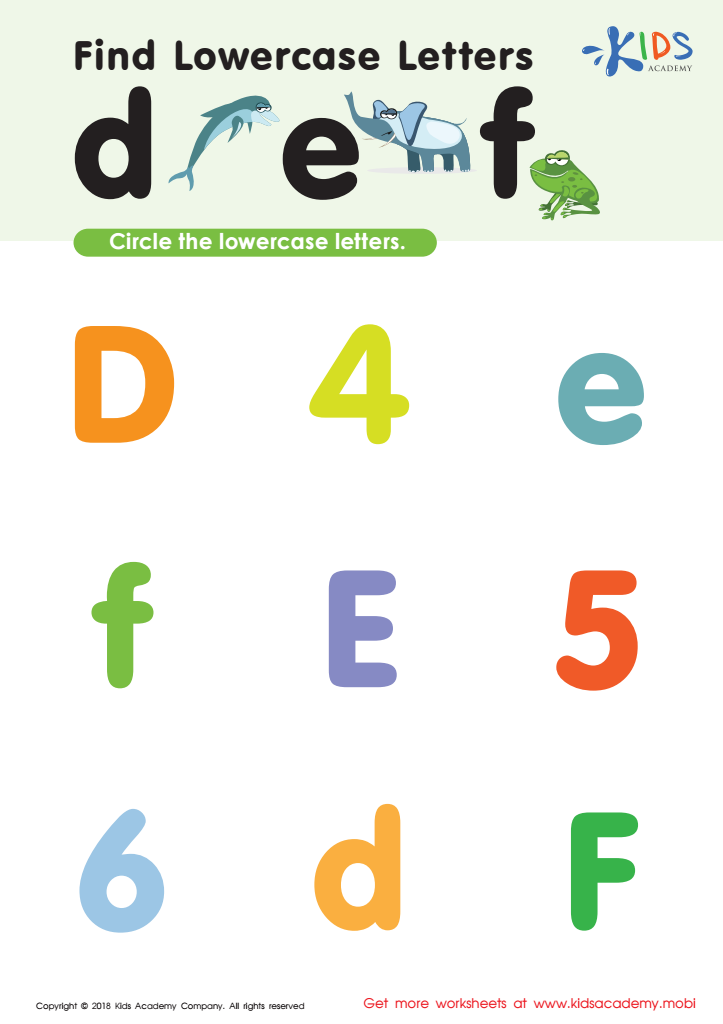
Find Lowercase Letters d e f Worksheet
 Assign to My Students



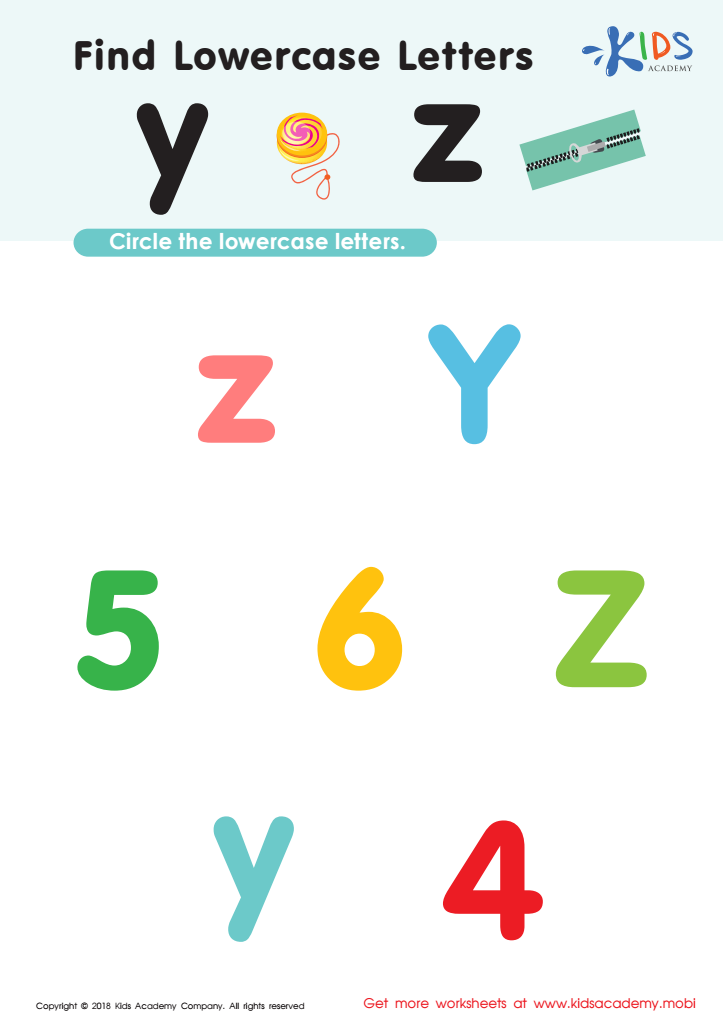
Find Lowercase Letters y z Worksheet
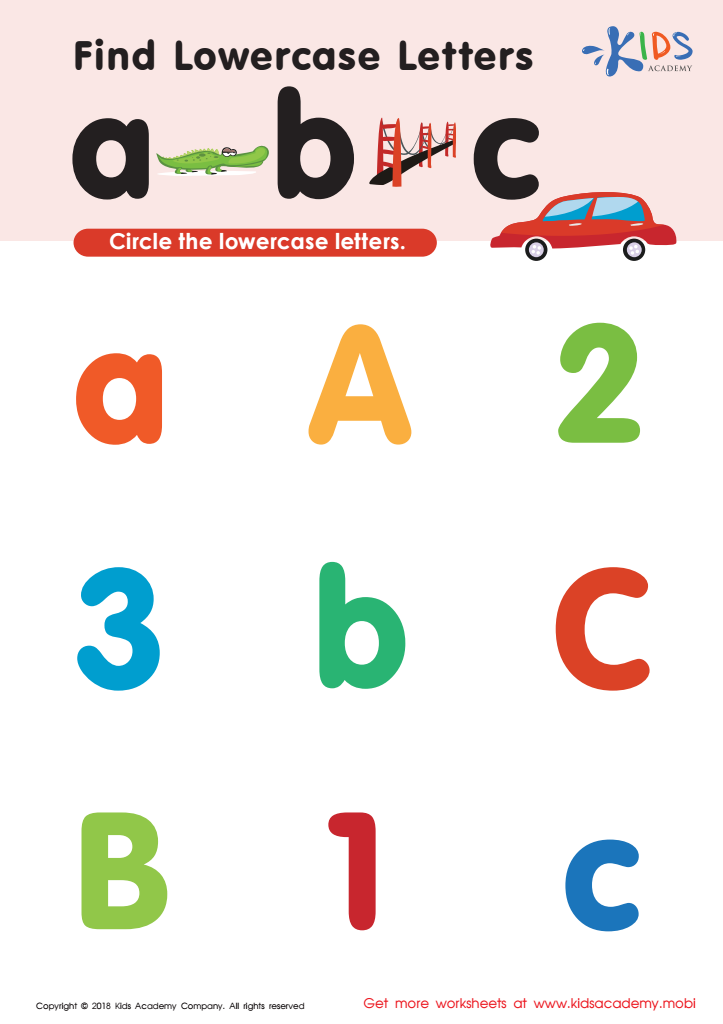
Find lowercase letters a b c Worksheet
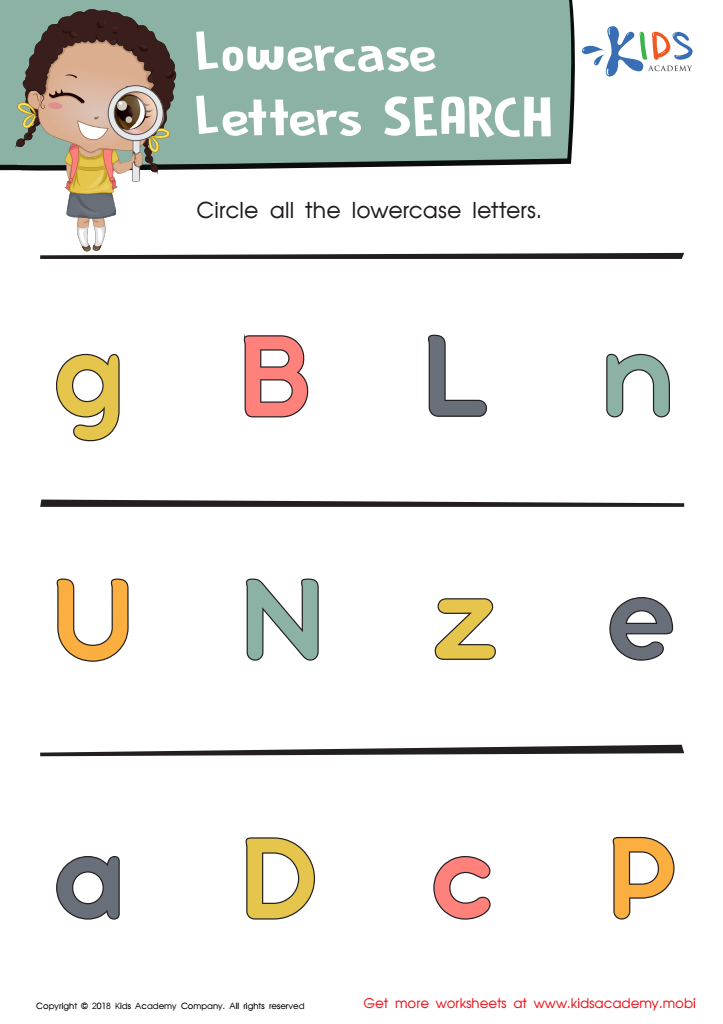
Lowercase Letters Search: Assessment Worksheet
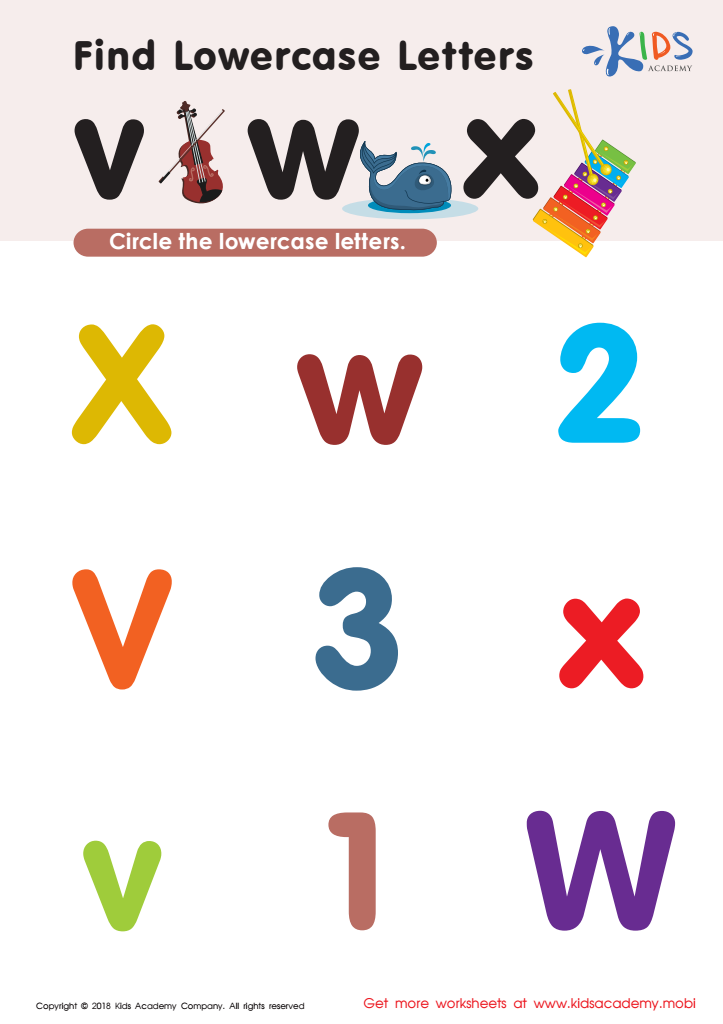
Find Lowercase Letters v w x Worksheet






Understanding the difference between uppercase and lowercase letters at the age of five is a crucial foundational skill for young learners. During the early stages of reading and writing development, recognizing and differentiating lowercase and uppercase letters is integral to literacy. This knowledge aids in smoother transitions from phonetic recognition to actual reading fluency, as children encounter both types of letters across various texts.
Parents and teachers should emphasize lowercase identification because lowercase letters constitute the majority of written text. Without this familiarity, a child may struggle to read common stories, sentences, or even write their name correctly. Furthermore, differentiating between letter cases helps children to understand grammar rules associated with capital letters, such as the beginning of sentences and proper nouns, which are critical for writing proficiently.
From a developmental perspective, engaging with both types of letters enhances a child's cognitive and visual processing skills. Activities focusing on uppercase and lowercase identification support memory development, hand-eye coordination, and fine motor skills through writing and tracing exercises. Thus, giving attention to these early literacy skills sets a foundation for academic success, making the role of parents and teachers imperative in fostering an environment where these skills are supported and encouraged.







