
Basic Counting Worksheets for 5-Year-Olds
6 filtered results
Difficulty Level
Grade
Age
-
From - To
Subject
Activity
Standards
Discover engaging and educational Basic Counting Worksheets designed specifically for 5-year-olds at Kids Academy! Our worksheets combine fun activities with essential counting exercises to help young learners build a strong mathematical foundation. With colorful visuals and interactive tasks, children will enjoy practicing counting objects, recognizing numbers, and reinforcing number sequences. These worksheets enhance cognitive skills, improve focus, and boost confidence in early math. Whether at home or in the classroom, make learning to count a delightful experience for your little ones. Visit Kids Academy to access a variety of printable worksheets that make counting an exciting adventure!
Favorites
With answer key
Interactive
 Assign to My Students
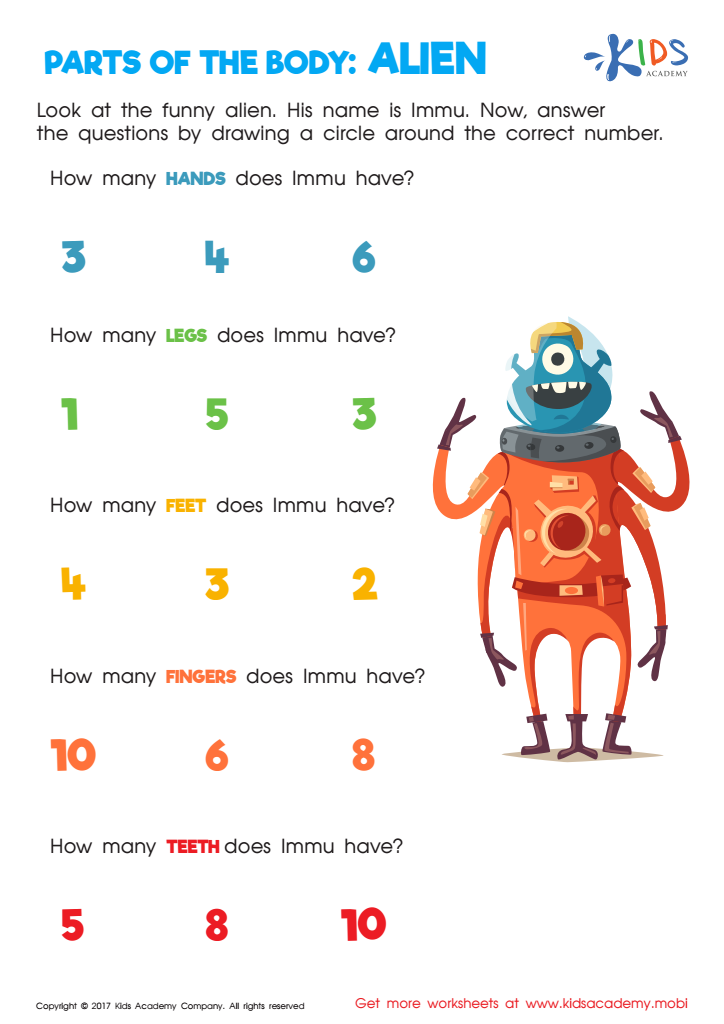
Alien Worksheet
Take your child on an out-of-this-world learning adventure with Immu, our friendly alien! This worksheet helps your child practice counting, recognize body parts and sharpen problem solving skills. Get started with this fun, educational activity today and watch as they learn and grow. Print it now and blast off to outer space!
Alien Worksheet
Worksheet
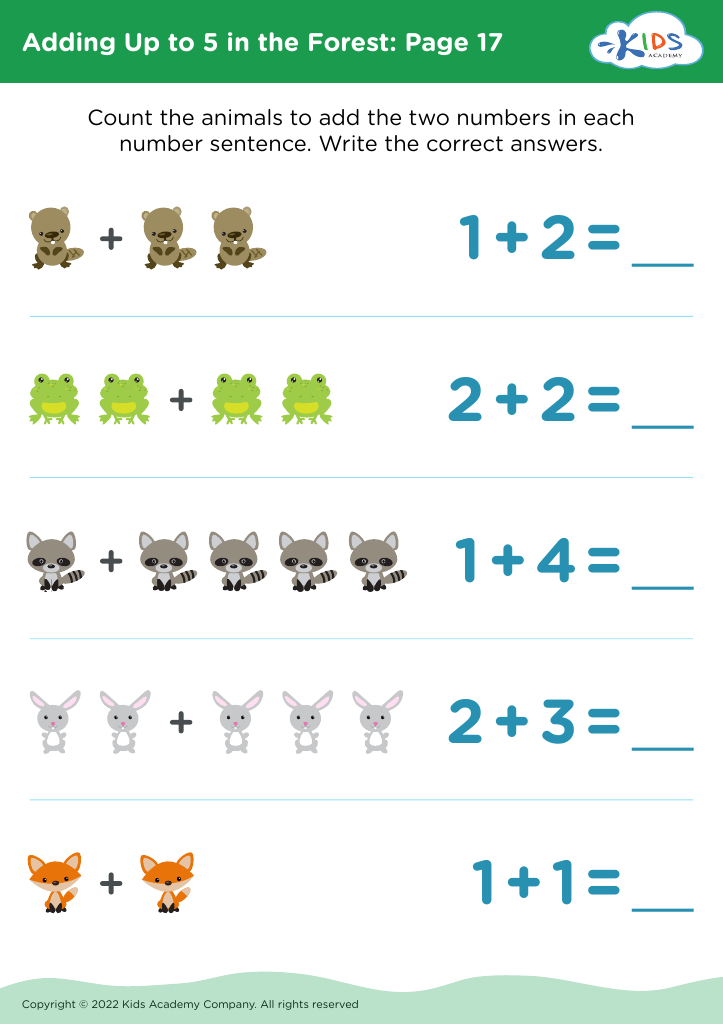
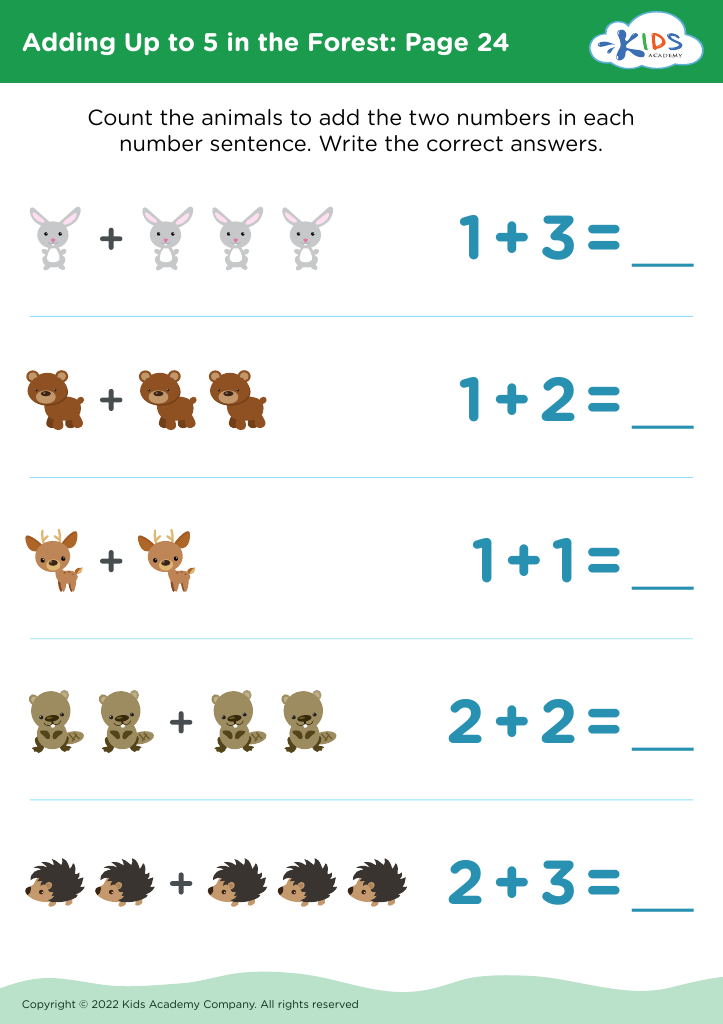
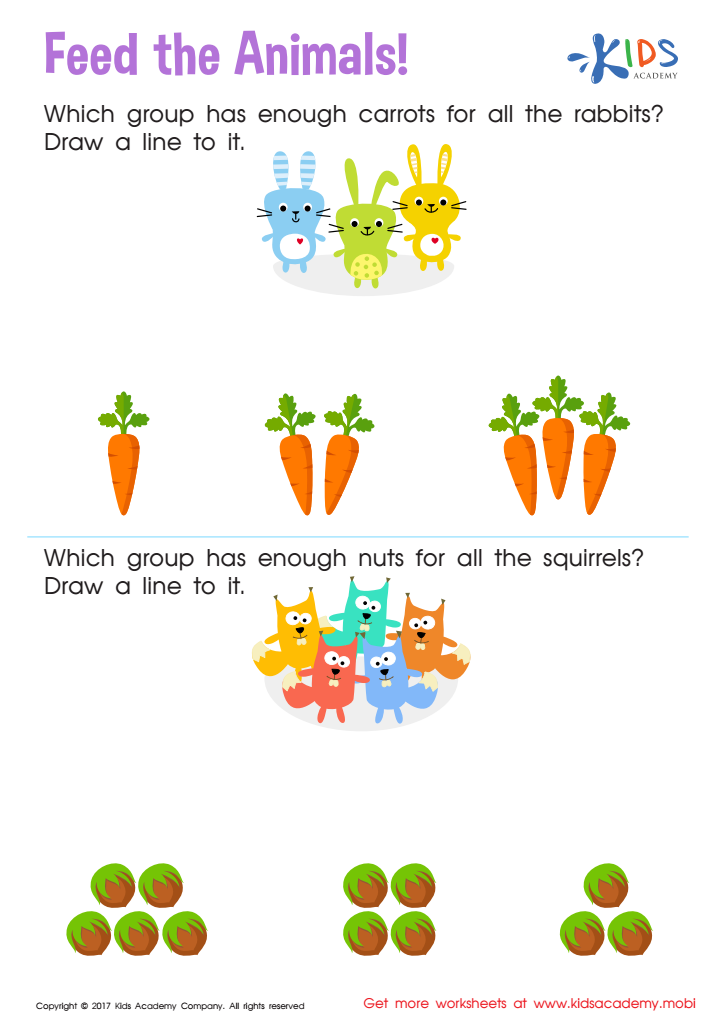
Count and Match: Feed the Animals Worksheet
Learning and growing involves more than just numbers, phonics and comparison. This Feed the Animals worksheet helps kids to exercise their reasoning skills. They must work out how many rabbits and carrots there are, and then repeat the process for the squirrels. This encourages problem solving and counting skills.
Count and Match: Feed the Animals Worksheet
Worksheet
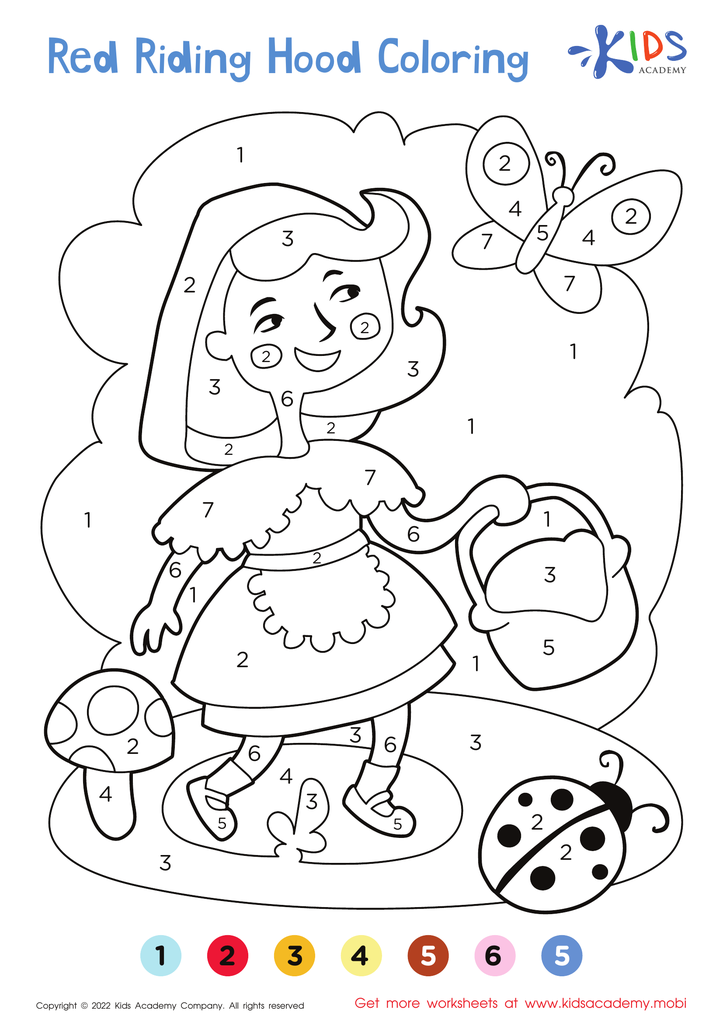
Little Red Riding Hood – Coloring by Numbers
Download this free PDF page and enjoy coloring Little Red Riding Hood. It's an easy and fun activity that everyone can do - just follow the numbers! Get your colored pencils ready and have a blast. 80 words.
Little Red Riding Hood – Coloring by Numbers
Worksheet
Join Kids Academy for Free
Who is primarily going to use this learning content?







Basic counting skills are a fundamental aspect of early childhood education. For 5-year-olds, mastering these skills forms the cornerstone for future mathematical understanding and capability. When parents and teachers focus on teaching basic counting, they help children develop number sense, which is the ability to understand, relate, and connect numbers. This foundation is crucial as it sets the stage for more complex mathematical concepts like addition, subtraction, and problem-solving.
Counting also enhances cognitive development. As children learn to count objects and recognize number patterns, they improve their memory and attention span. Furthermore, counting is not restricted to rote memorization—it includes recognizing quantities, comparing amounts, and developing logical thinking, which are essential skills across all subjects.
For parents, participating in their child’s early counting activities fosters a supportive learning environment, strengthening the parent-child bond and building confidence. Teachers, on the other hand, can create engaging educational experiences that make learning fun and interactive, thereby inspiring a lifelong interest in mathematics.
In essence, emphasizing basic counting for 5-year-olds equips them with essential life skills that are indispensable in both academic and everyday contexts. Investing time and effort into these foundational exercises ensures that children are better prepared to face future educational challenges.








