Comparing objects Worksheets for 5-Year-Olds
6 filtered results
-
From - To
Explore our engaging "Comparing Objects Worksheets for 5-Year-Olds," designed to enhance early math skills! These fun, printable worksheets encourage children to identify similarities and differences between various items. By participating in activities like sorting, matching, and comparing sizes, kids strengthen their critical thinking and observational skills. Ideal for home or classroom use, our worksheets also promote language development as children describe the objects they compare. With vibrant illustrations and age-appropriate tasks, these resources make learning enjoyable and interactive. Empower your child's understanding of comparison and measurement today with our comprehensive and enjoyable worksheets tailored specifically for young learners!
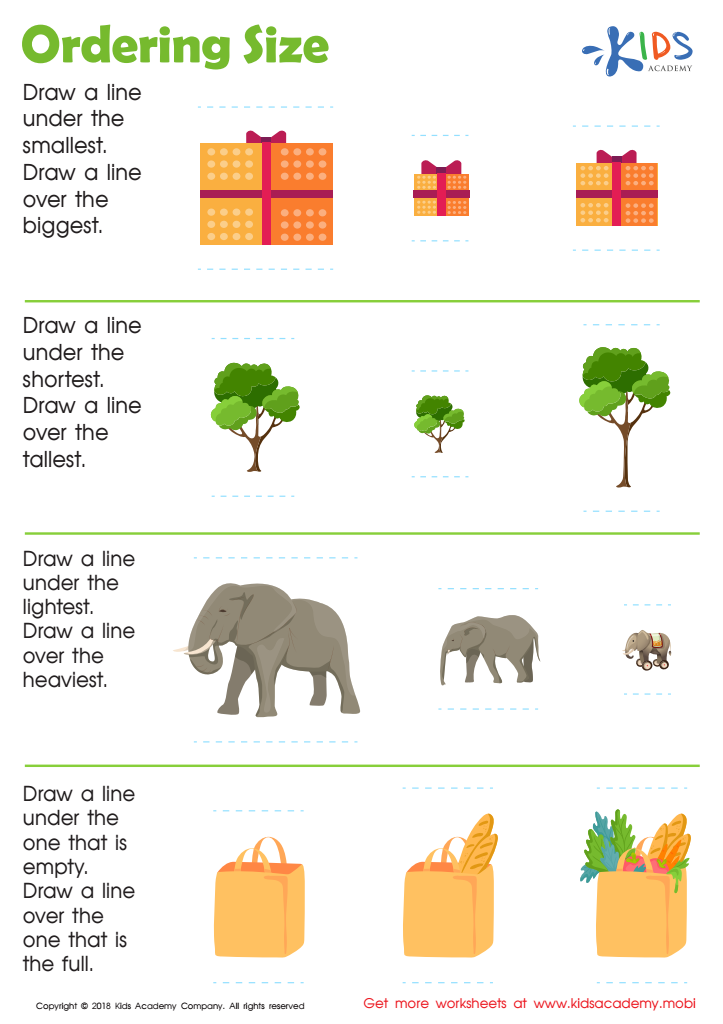
Ordering Size Worksheet
 Assign to My Students
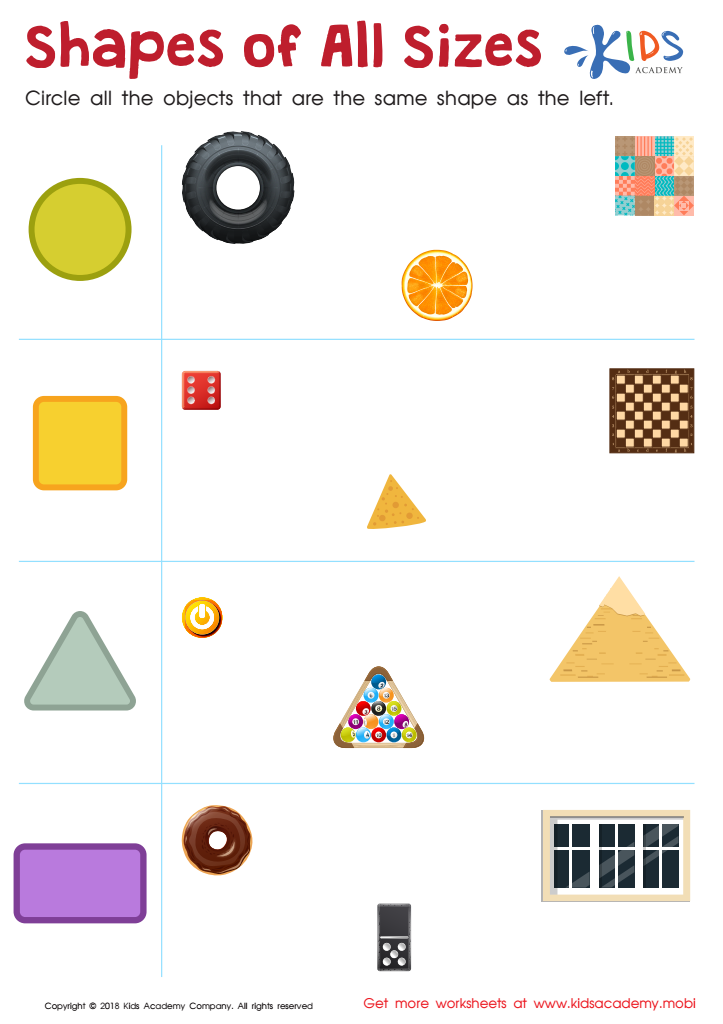
Shapes of All Sizes Worksheet
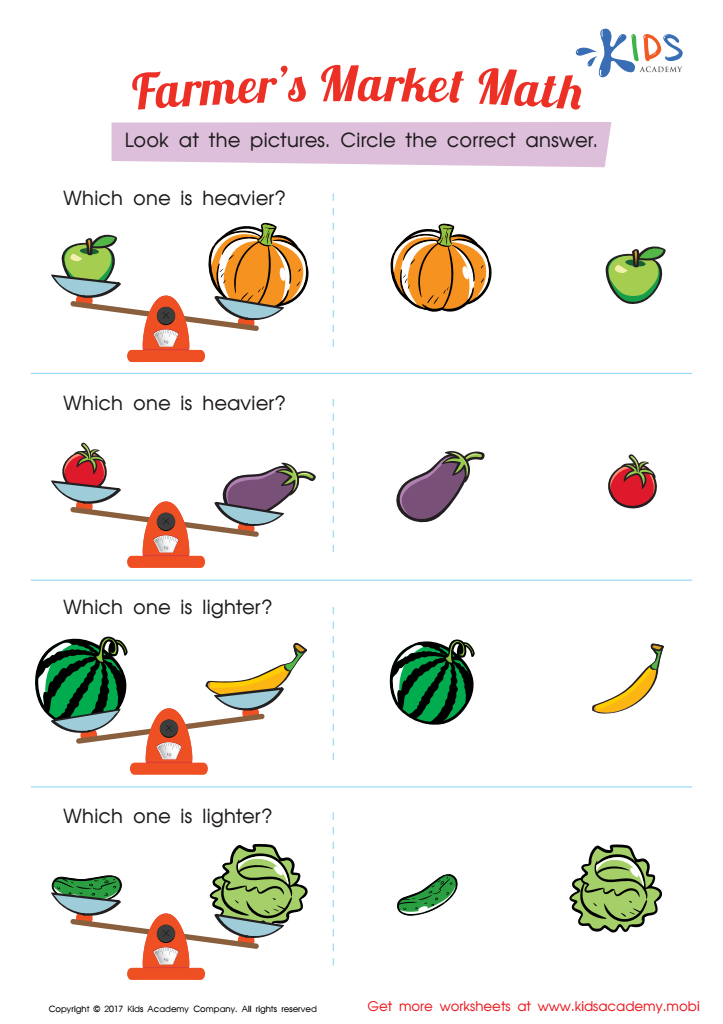
Which One Is Heavier Worksheet
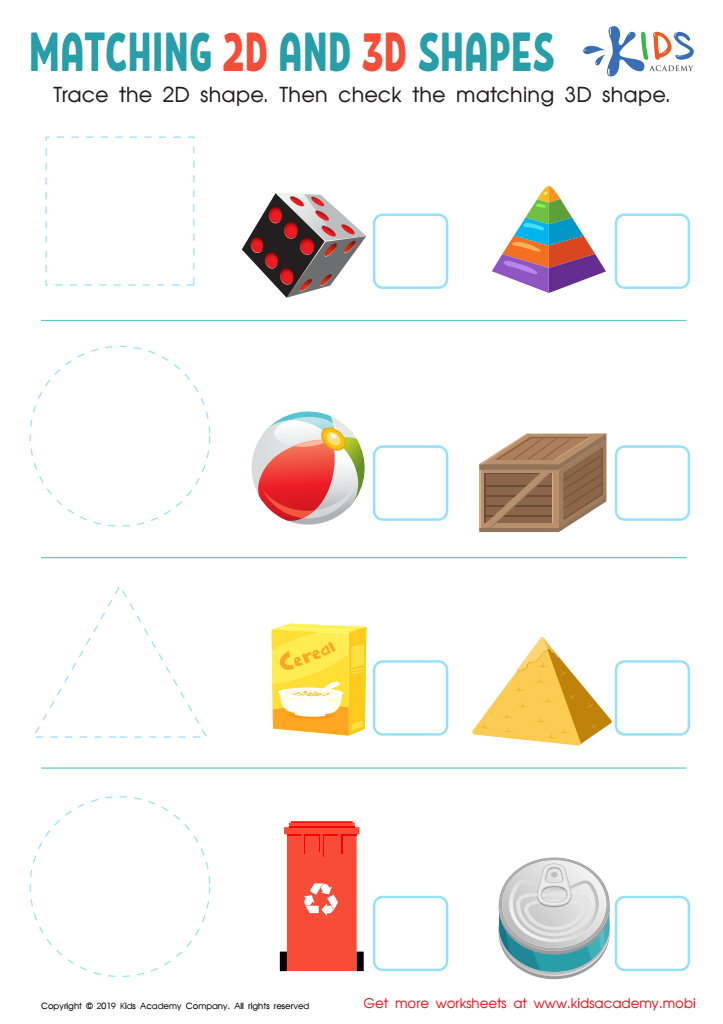
Matching 2D and 3D Shapes Worksheet
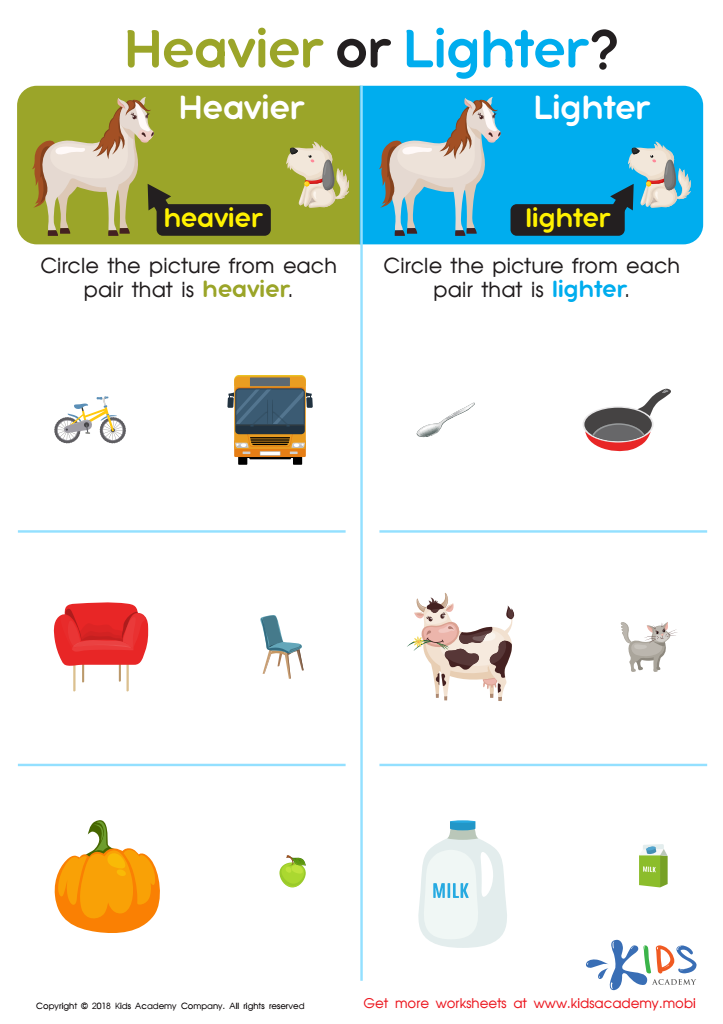
Heavier or Lighter? Worksheet
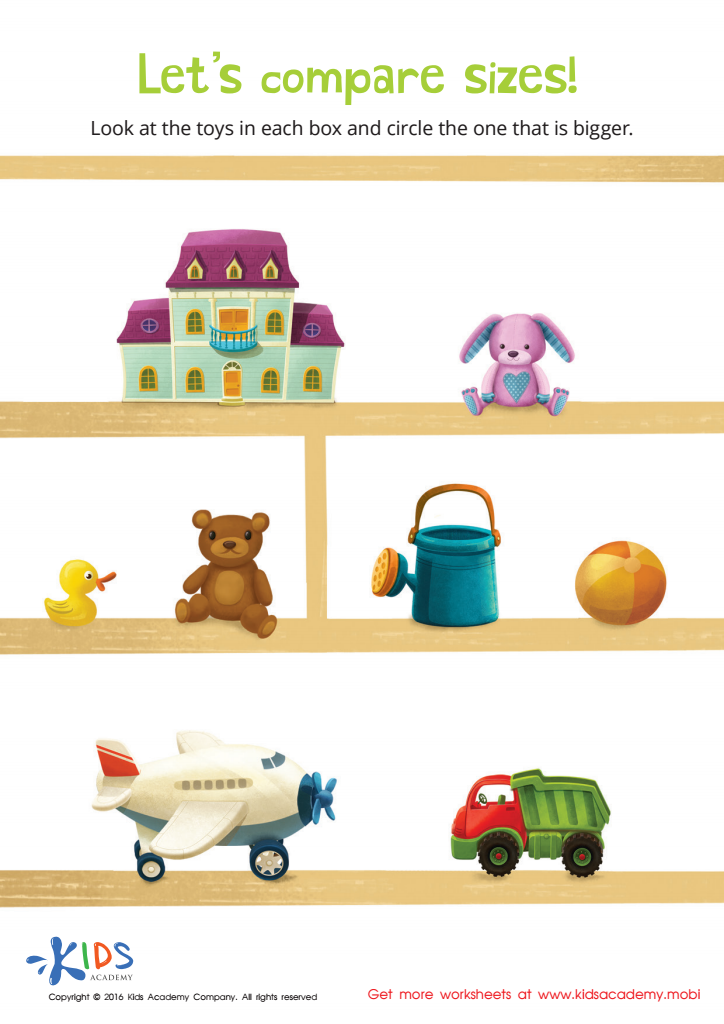
Classifying by Size Sorting Worksheet






Comparing objects is a fundamental skill that plays a vital role in a 5-year-old’s cognitive development and understanding of the world. This essential concept helps children develop critical thinking skills, as they learn to recognize similarities and differences among various items, such as size, shape, and color.
When parents and teachers encourage comparison, they foster important mathematical abilities, such as sorting and measuring, which are foundational for future learning in math and science. For instance, comparing lengths or heights can introduce children to basic measurement concepts. Furthermore, this activity enhances vocabulary, as youngsters learn descriptive words that articulate their observations and improve their communication skills.
Moreover, engaging in comparison encourages exploration and curiosity, prompting children to ask questions and make observations about their environment. This interactive process nurtures social skills as children often compare objects collaboratively, learning to express opinions and negotiate differences with peers.
Overall, comparing objects is not just a fun activity but an opportunity for holistic development. It equips children with essential cognitive, language, and social skills that will lay the groundwork for their academic journey and everyday problem-solving abilities. By fostering a love for comparison, parents and teachers play a crucial role in shaping well-rounded learners.








