Comparison Skills Worksheets for 5-Year-Olds
6 filtered results
-
From - To
Enhance your child's cognitive development with our engaging Comparison Skills Worksheets for 5-Year-Olds! Designed to promote critical thinking, these worksheets introduce concept comparisons through fun visuals and interactive activities. They encourage young learners to identify similarities and differences, fostering essential analytical skills. Each worksheet is crafted to align with early learning standards, making it perfect for classroom use or at-home learning. With vibrant images and age-appropriate tasks, children will enjoy exploring concepts like size, color, and quantity. Help your child build a strong foundation in comparison skills while they play and learn simultaneously. Download your worksheets today and watch their skills flourish!
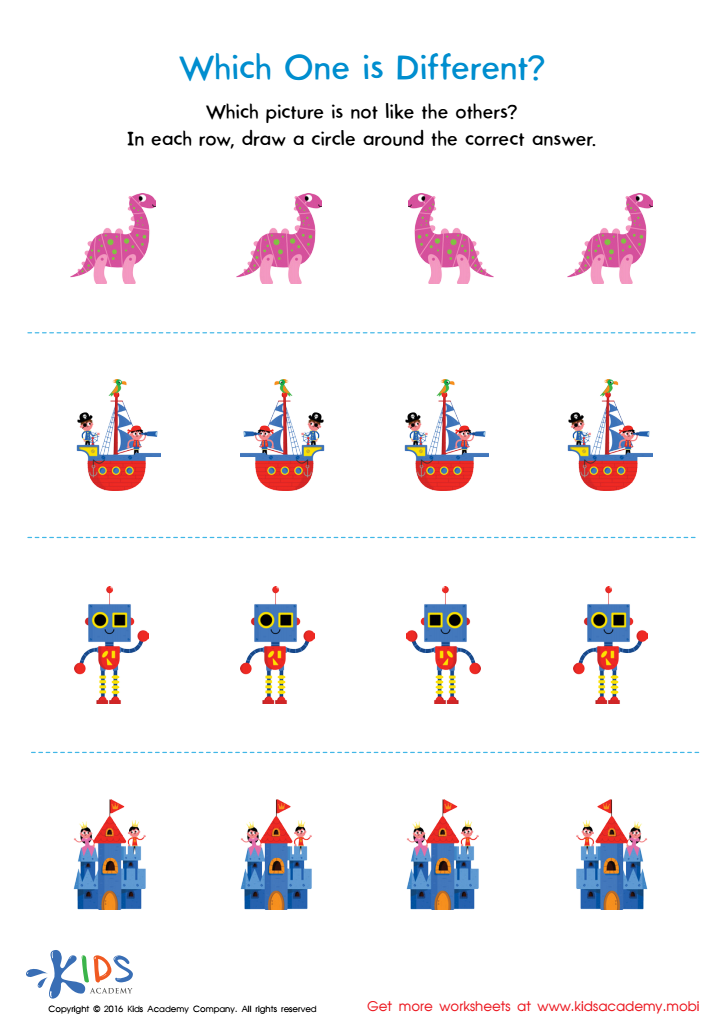
Which One Is Different Worksheet
 Assign to My Students
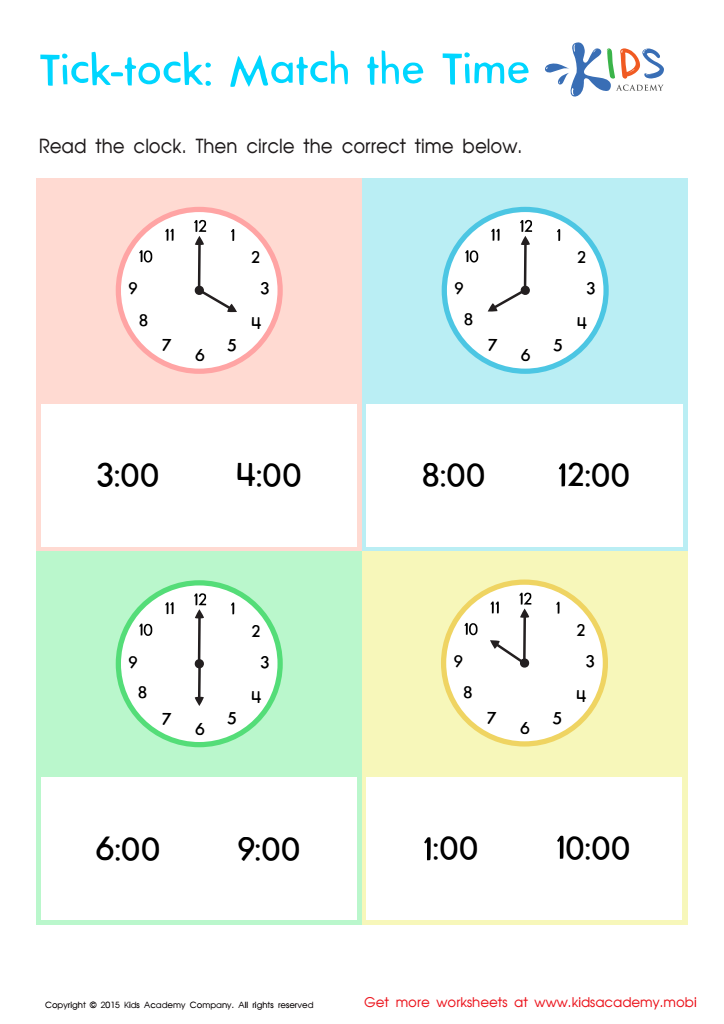
Telling The Time Worksheet: Part 4
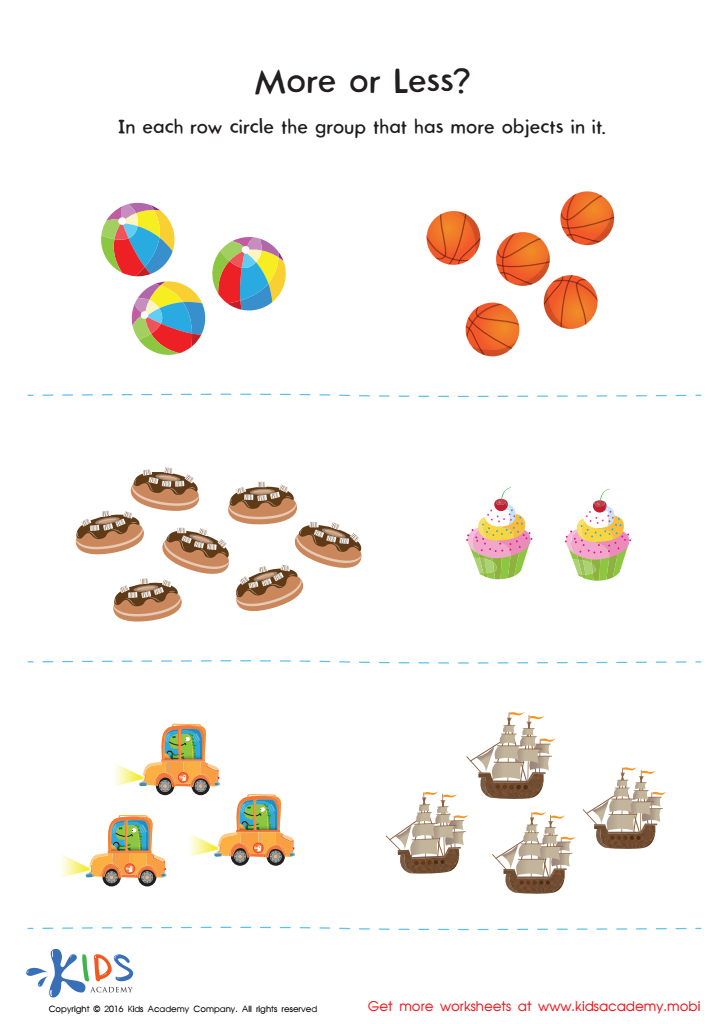
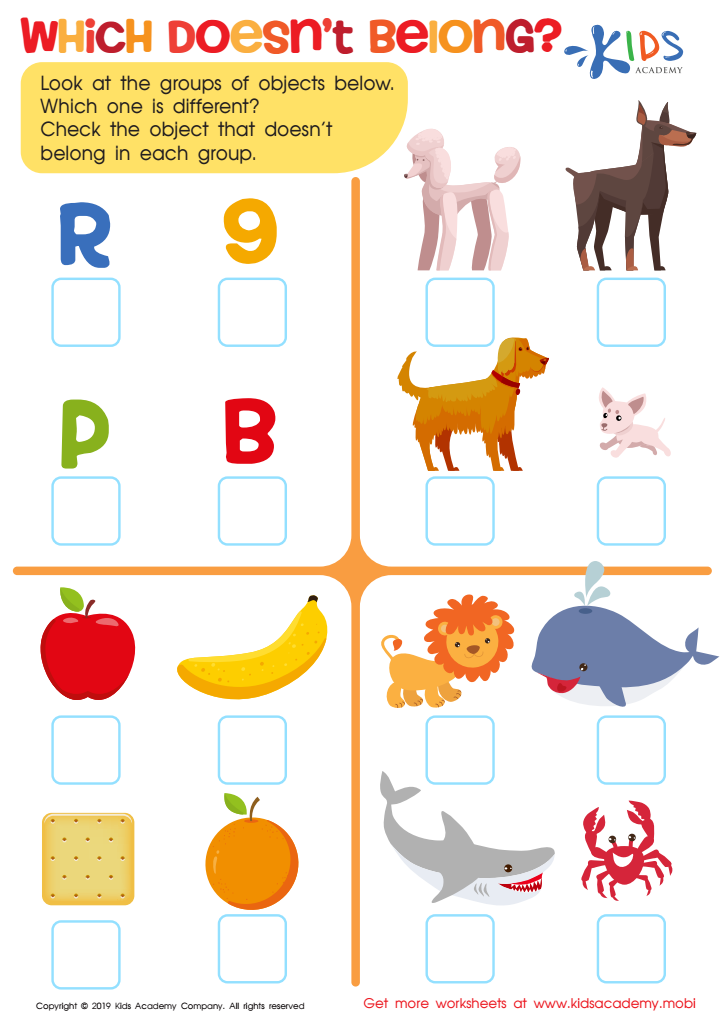
Which Doesn't Belong? Worksheet
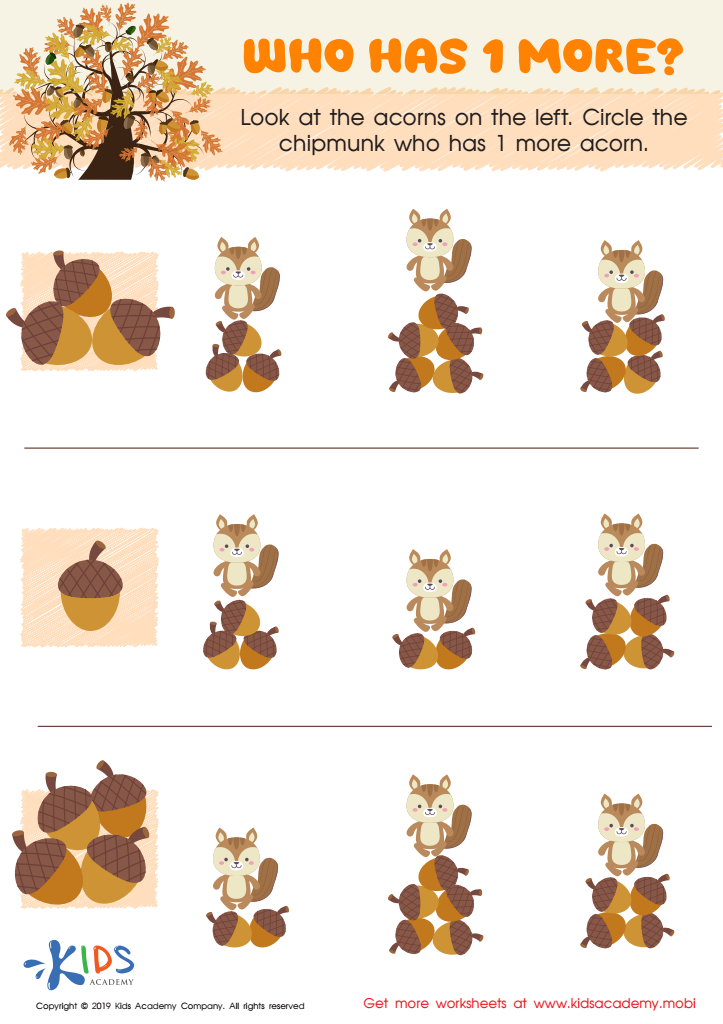
Who Has 1 More? Worksheet
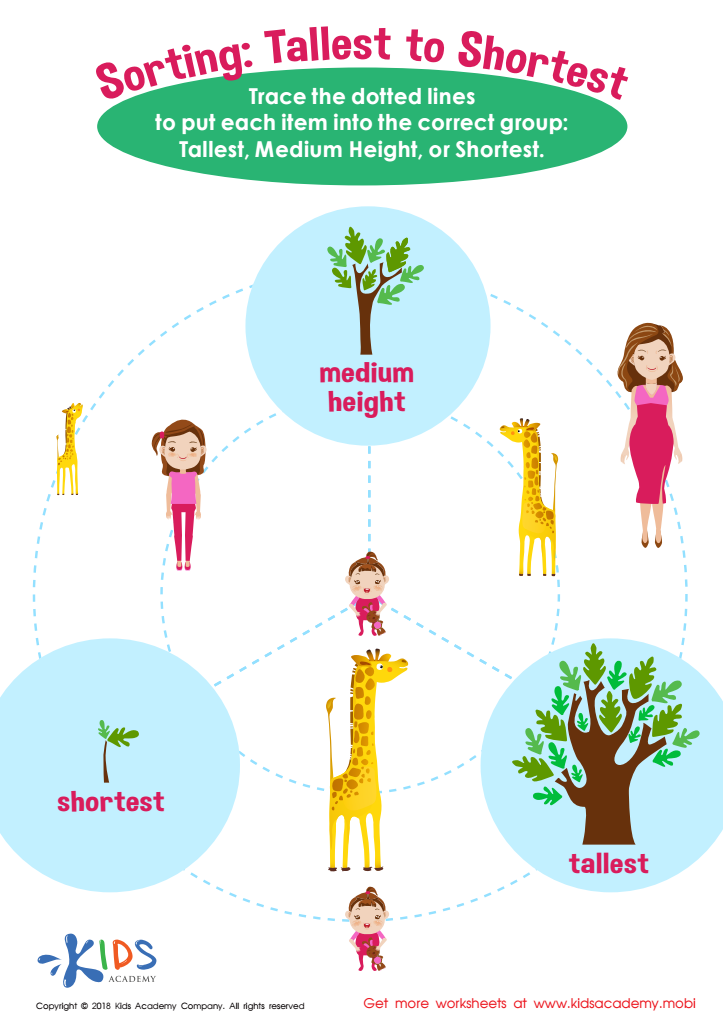
Sorting: Tallest to Shortest Worksheet






Comparison skills are essential for the developmental growth of 5-year-olds, and both parents and teachers should prioritize fostering these abilities. At this age, children are naturally curious and eager to understand the world around them. Comparison skills help them classify, differentiate, and understand relationships among objects, which enhances their critical thinking and cognitive development.
By learning to compare sizes, colors, quantities, and other attributes, children can develop their problem-solving skills. These foundational skills support scientific reasoning as children begin to observe, hypothesize, and conclude based on their comparisons. For instance, if a child compares two toys, they learn to articulate ideas such as "bigger," "smaller," or "more," aiding language development.
Moreover, comparison skills support early math understanding, which is vital for later academic success. By recognizing patterns and relationships, children gain the ability to perform basic operations and understand numerical concepts.
In social contexts, comparison skills promote emotional intelligence, as children learn to navigate relationships by comparing social norms and behaviors. Thus, by actively engaging in activities that promote comparison skills, parents and teachers help children build a strong foundation for academic learning, social interactions, and lifelong analytical abilities.








