Directional understanding Worksheets for 5-Year-Olds
4 filtered results
-
From - To
Discover our engaging Directional Understanding Worksheets designed specifically for 5-year-olds! These fun, interactive activities help young learners grasp essential directional concepts like "up," "down," "left," and "right." By using colorful illustrations and relatable scenarios, these worksheets promote spatial awareness and critical thinking. Ideal for both classroom and home use, each worksheet encourages kids to follow instructions, enhance problem-solving skills, and boost their confidence. Our user-friendly format ensures that teachers and parents can easily integrate these resources into their educational routines. Explore our collection and watch your child navigate their world with improved directional skills! Perfect for early childhood development!
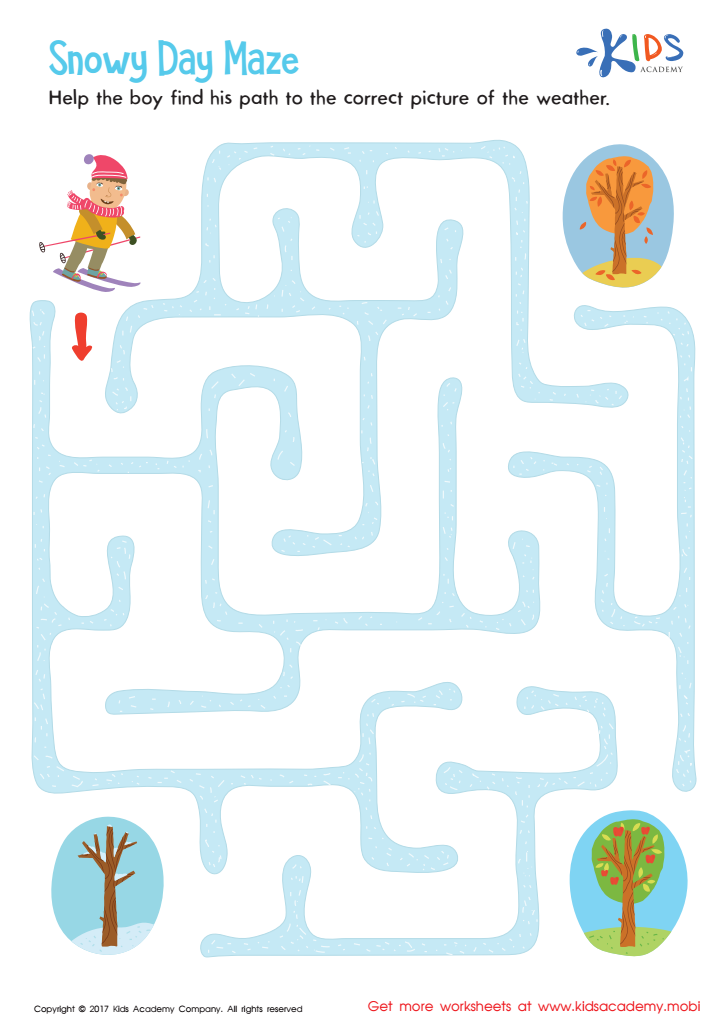
 Assign to My Students
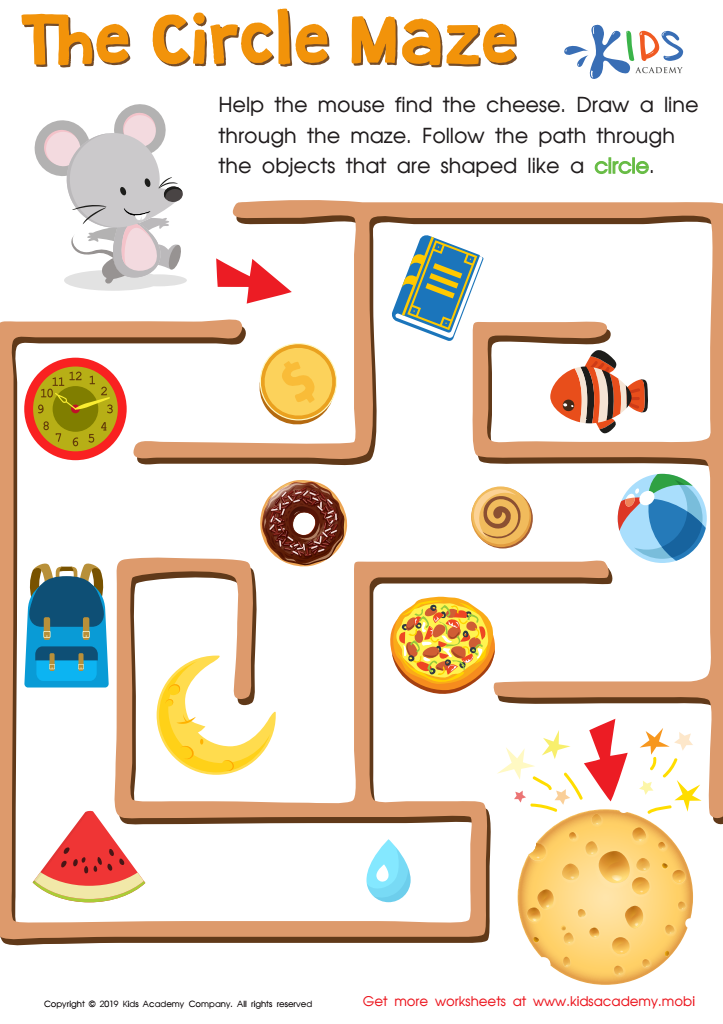
The Circle Maze Worksheet
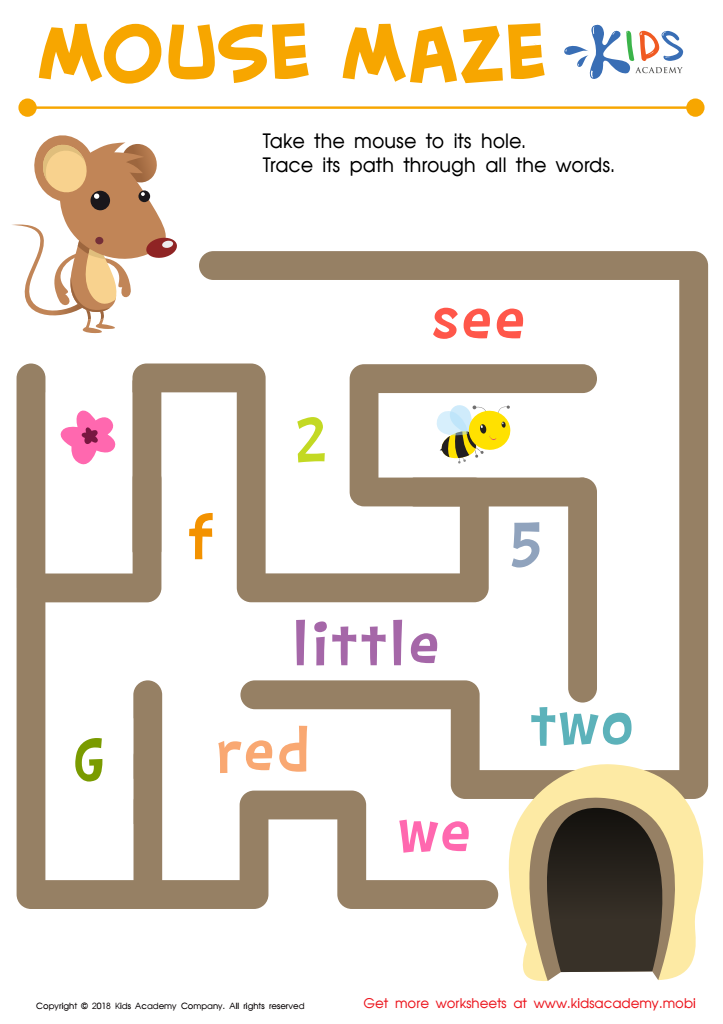
Find Words Mouse Maze Worksheet
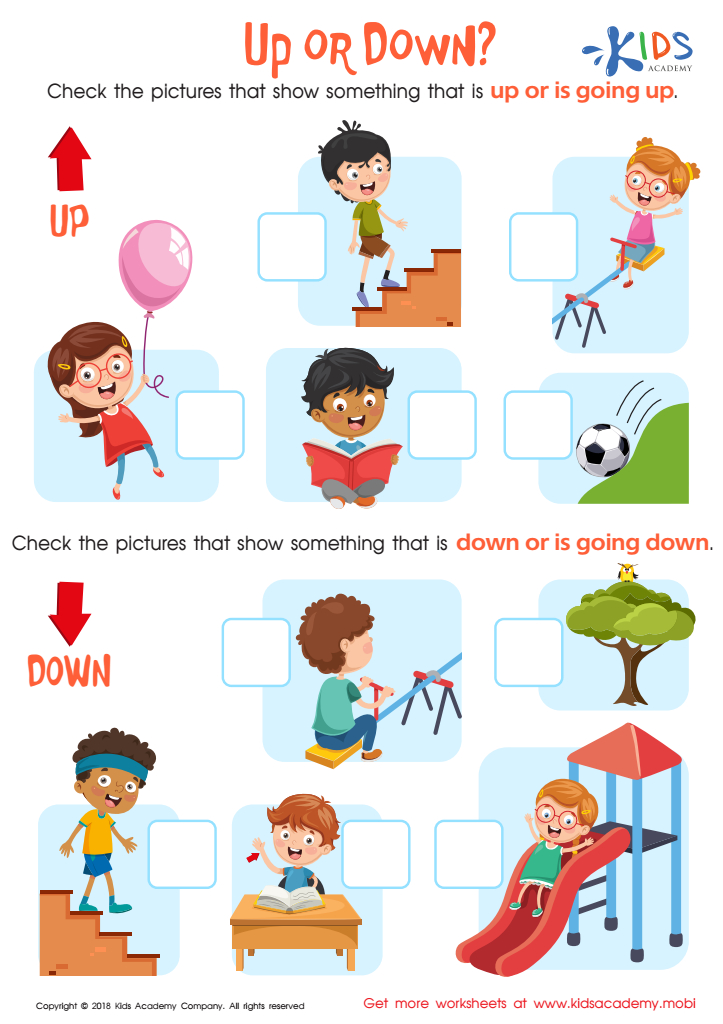
Up or Down Worksheet







.jpg)
Directional understanding is crucial for 5-year-olds as it forms the foundation for various cognitive and physical skills. At this age, children are developing spatial awareness, which is essential for everyday tasks and overall learning. Understanding directions like left, right, up, and down aids in critical thinking and problem-solving. For instance, following directions helps children navigate their environment, play games, and participate in group activities, fostering social skills and cooperation.
Additionally, strong directional skills are linked to future success in subjects like mathematics and reading. For example, recognizing patterns and shapes and following sequences are directly influenced by spatial understanding. Teachers and parents can support this development through engaging activities, such as storytelling that incorporates directional language, interactive games that involve following instructions, and outdoor play that requires movement and exploration.
Ignoring this aspect of child development can impact a child's ability to follow instructions, resulting in frustration and decreased self-confidence. By nurturing directional skills, caregivers set the stage for improved academic performance, better physical coordination, and enhanced social interactions, making it essential for parents and teachers to actively engage with and support children’s directional understanding.








