Letter recognition Worksheets for 5-Year-Olds - Page 5
99 filtered results
-
From - To
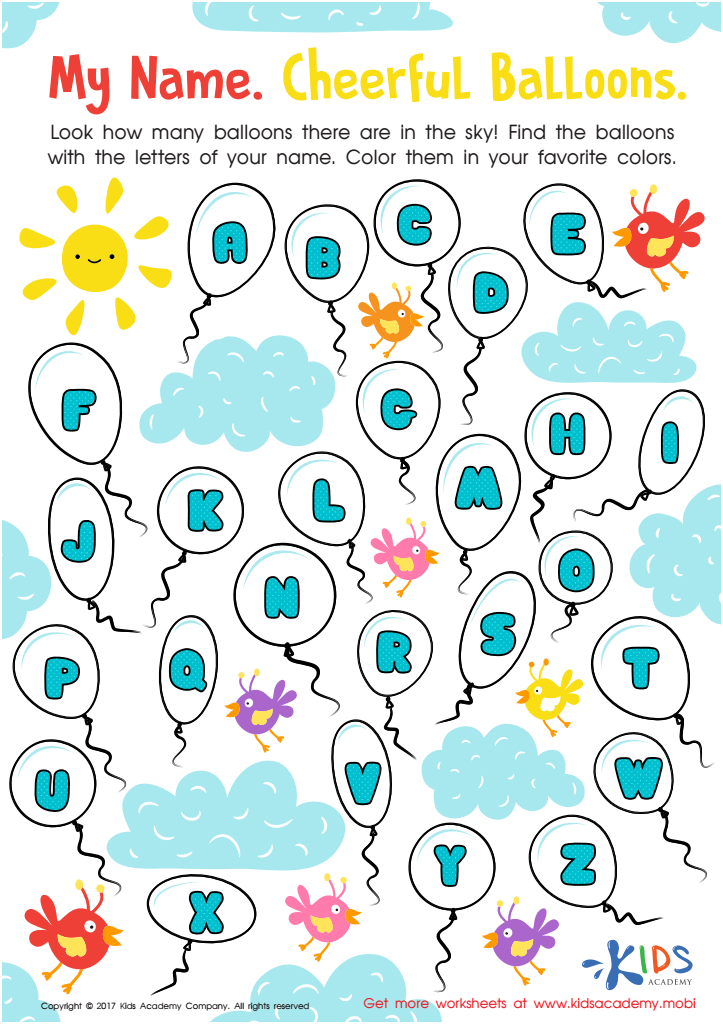
My Name: Cheerful Balloons Worksheet
 Assign to My Students
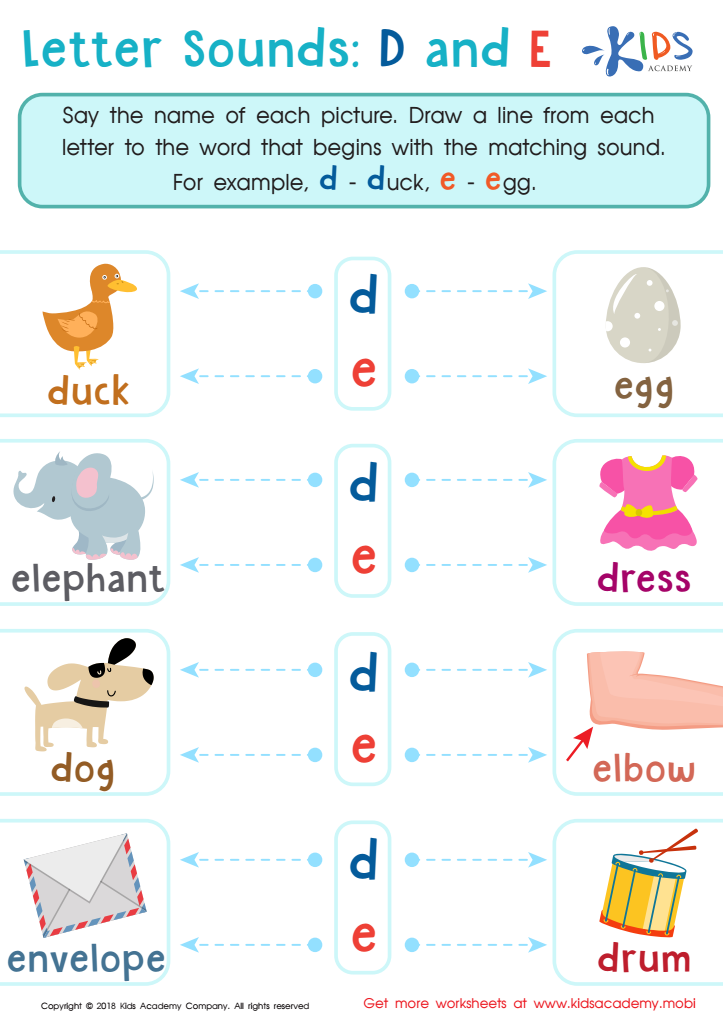
Letter D and E Sounds Worksheet
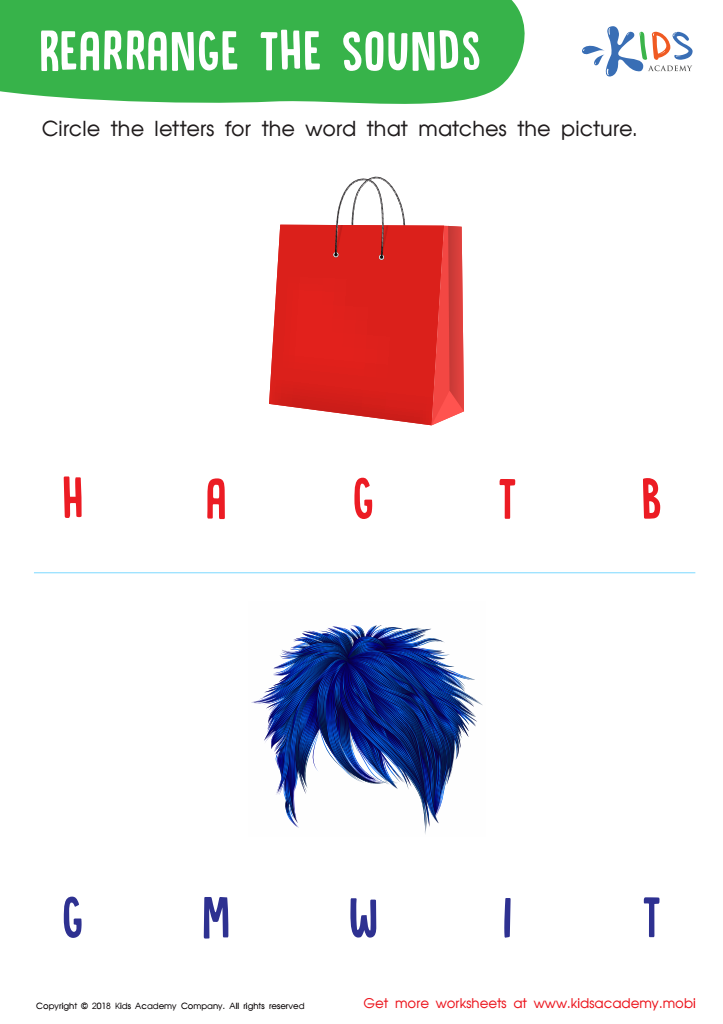
Rearrange the Sounds Worksheet








Letter recognition is a fundamental skill for 5-year-olds that serves as the building block for literacy development. Parents and teachers should prioritize this skill because it lays the groundwork for reading and writing proficiency. Early mastery of letter recognition helps children understand the relationship between sounds and symbols, an essential component of phonemic awareness.
When children recognize letters, they begin to engage with texts more meaningfully. This engagement fosters a love for reading, as they start to decode words and explore storytelling. Moreover, recognizing letters also contributes to vocabulary expansion, as children can connect letters to words they hear and use in conversation.
Furthermore, letter recognition helps enhance cognitive development. As children identify letters, they strengthen their memory and visual discrimination skills—capabilities that are vital not only in reading but also in various learning contexts.
Ultimately, supporting letter recognition in young children creates a foundation for academic success and boosts their confidence in their abilities. By encouraging this early skill, parents and teachers are investing in a child's future literacy, critical thinking, and overall communication skills, setting them on a path toward lifelong learning.








