Lowercase identification Worksheets for 5-Year-Olds
5 filtered results
-
From - To
Our "Lowercase Identification Worksheets for 5-Year-Olds" provide engaging and educational activities designed to strengthen early reading skills. Perfectly tailored for young learners, these worksheets help children recognize and match lowercase letters through fun-filled exercises and games. By incorporating colorful illustrations and interactive elements, we make learning lowercase letters an exciting adventure. These resources foster confidence in literacy foundations, aiding in the development of essential skills such as letter recognition, phonetics, and vocabulary building. Ideal for both classroom and home settings, these printable worksheets are a valuable tool in promoting early literacy success for kindergarteners.
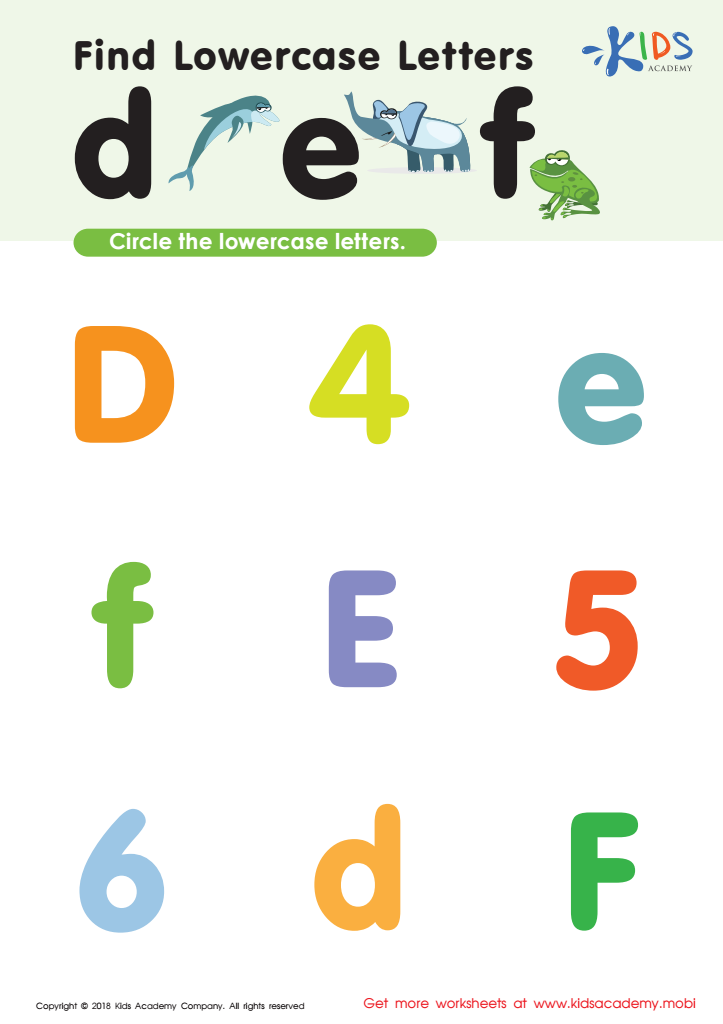
Find Lowercase Letters d e f Worksheet
 Assign to My Students
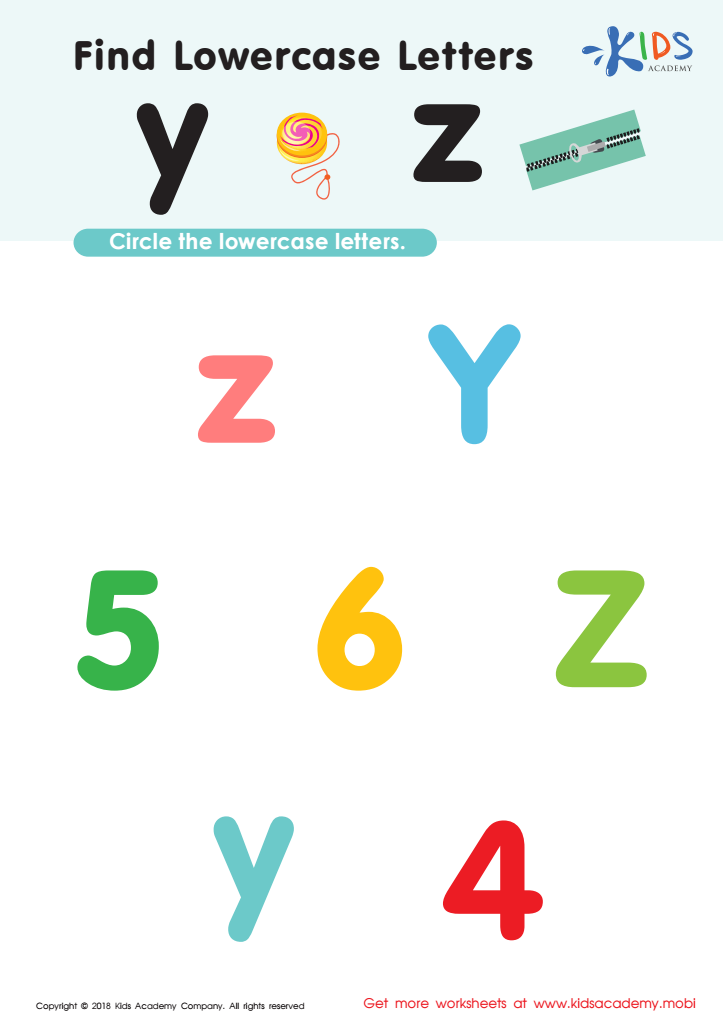
Find Lowercase Letters y z Worksheet
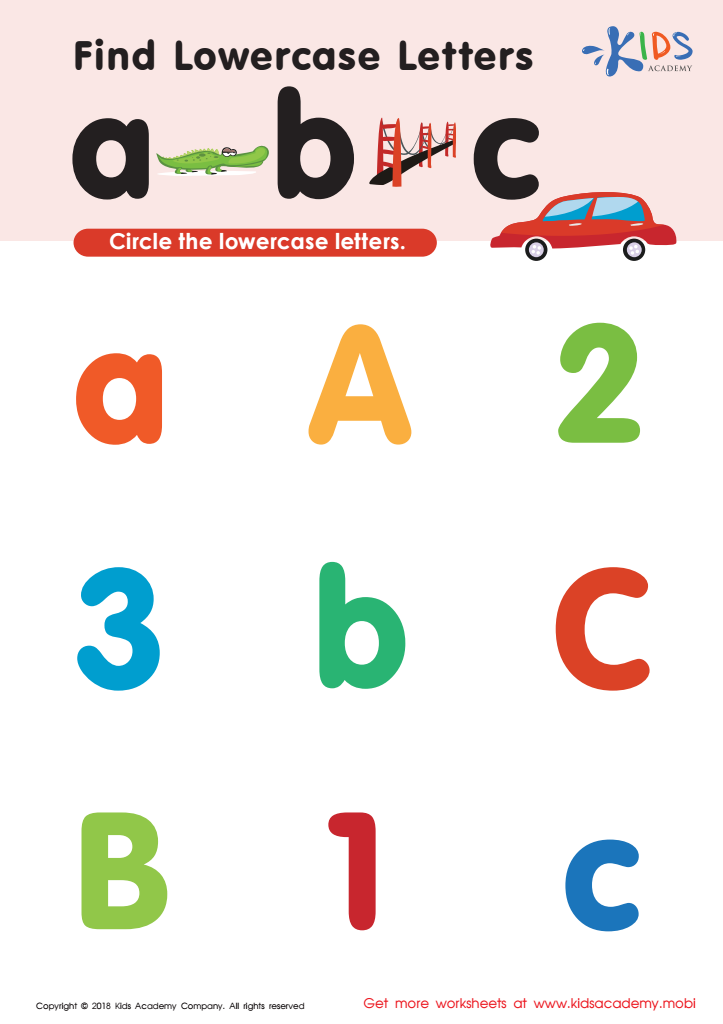
Find lowercase letters a b c Worksheet
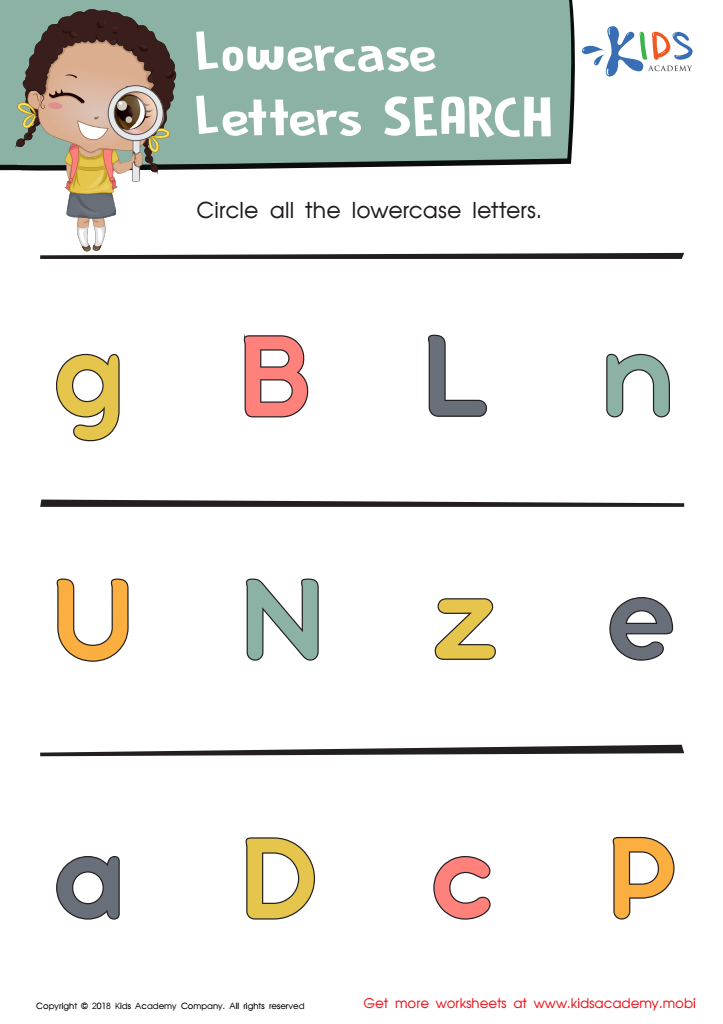
Lowercase Letters Search: Assessment Worksheet
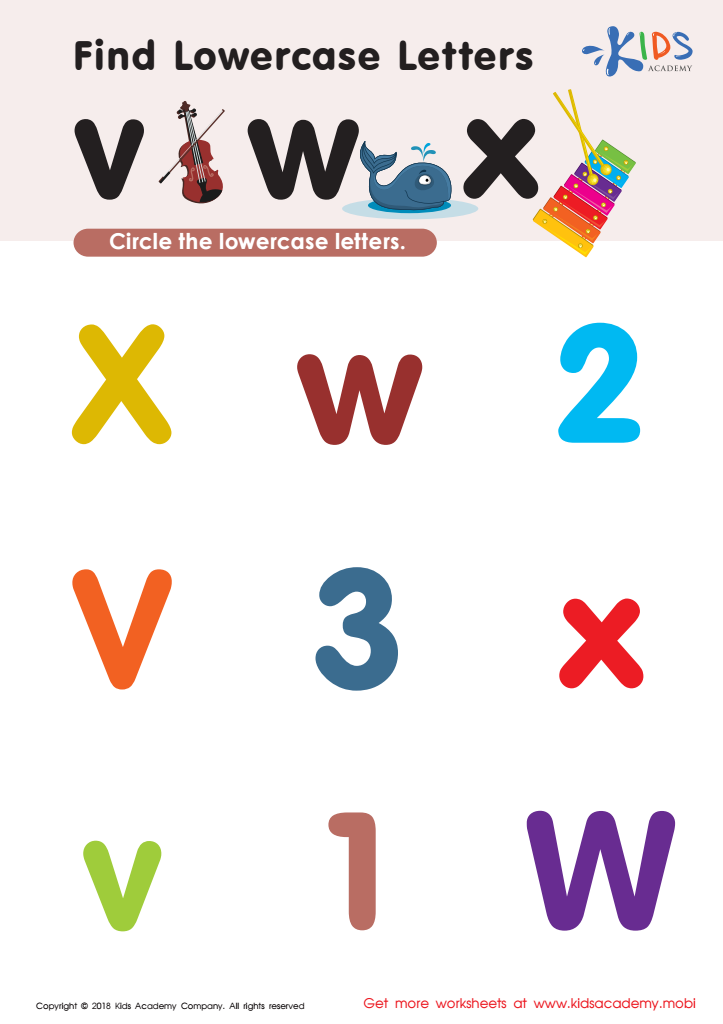
Find Lowercase Letters v w x Worksheet








Teaching 5-year-olds to identify lowercase letters is crucial in early literacy development. First and foremost, lowercase letters are used more frequently than uppercase letters in reading and writing. When children can recognize lowercase letters, they can read books, signs, and instructions more fluently and with greater ease.
Furthermore, mastering lowercase letters early on builds a solid foundation for children’s reading skills, influencing their ability to decode words accurately. This, in turn, boosts their confidence and motivation to read—a key factor in fostering a love for learning. Additionally, children who recognize lowercase letters can better understand sentence structure and grammar rules, as these often involve lowercase letters in sentence formation and punctuation.
Lowercase letter identification also supports writing skills, helping children to write more legibly and efficiently. Without this fundamental skill, kids might struggle with writing tasks, becoming frustrated or disengaged.
Moreover, connecting letter shapes to sounds assists in phonemic awareness, essential for spelling and reading skills. When educators and parents prioritize lowercase letter identification, they equip children with the tools needed for broader academic success. In summary, this early focus on lowercase letter recognition sets children on a positive path toward becoming proficient readers and writers, ultimately shaping their overall educational journey.








