Number counting Worksheets for 5-Year-Olds
3 filtered results
-
From - To
Discover our engaging number counting worksheets designed specifically for 5-year-olds! These fun and interactive activities help young learners develop essential numeracy skills through counting exercises, visual aids, and colorful illustrations. Our worksheets promote hands-on learning, encouraging children to practice counting objects, matching numbers, and completing sequences. Perfect for at-home learning or classroom activities, our resources are tailored to capture the interest of young minds while laying a solid foundation in mathematics. Explore our collection and watch your child's confidence and love for numbers flourish as they embark on an exciting learning journey!
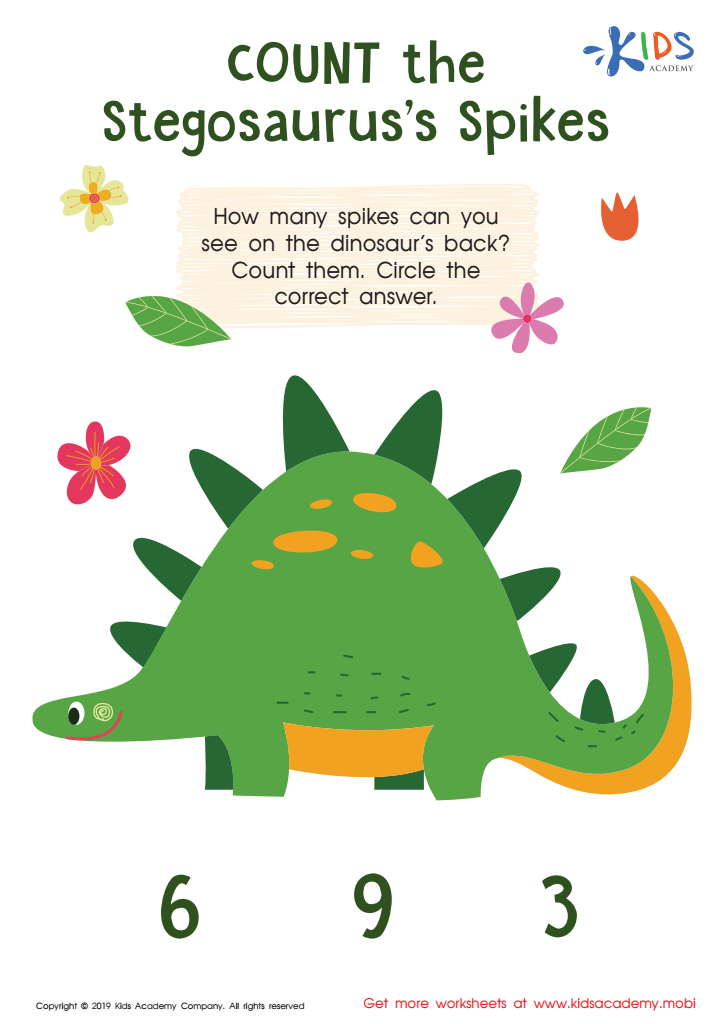
Count the Stegosaurus's Spikes Worksheet
 Assign to My Students
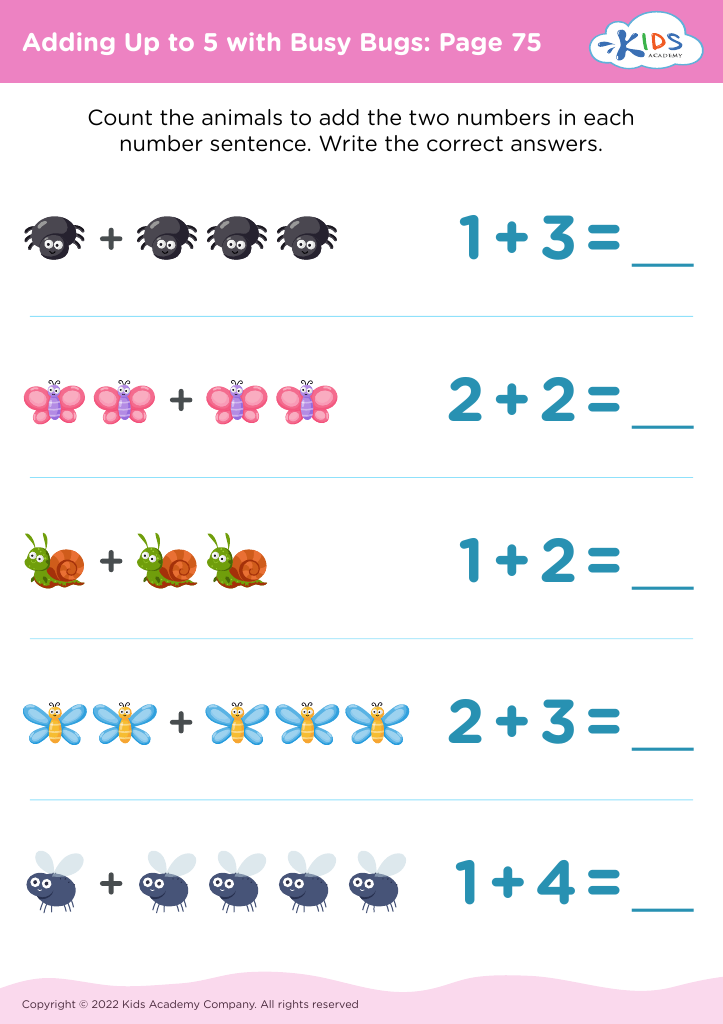
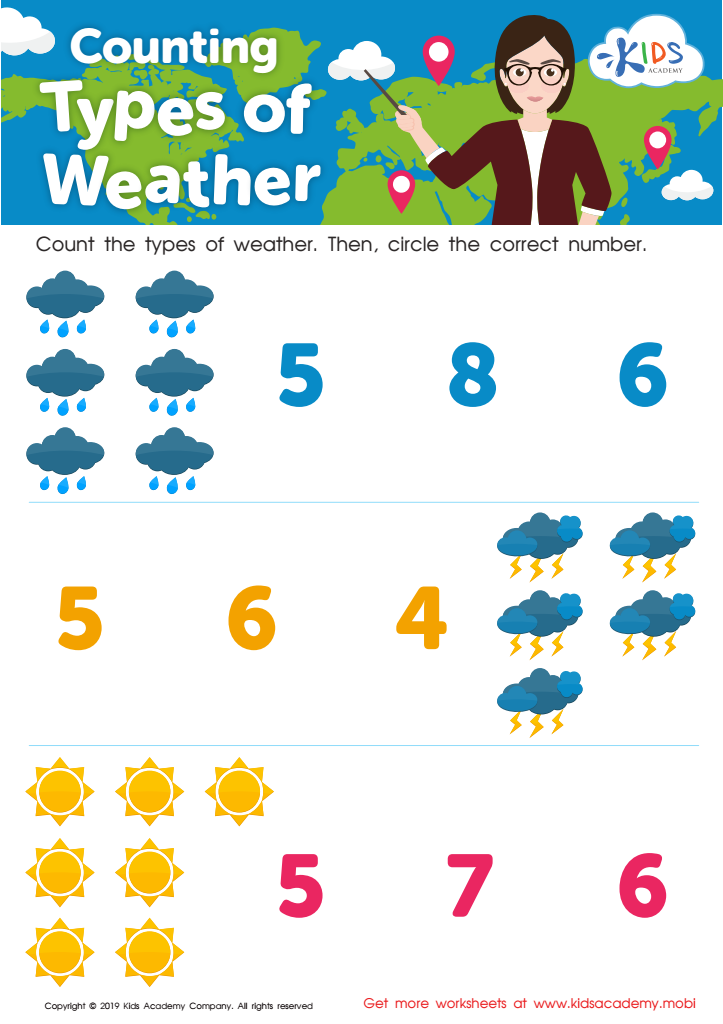
Counting Types of Weather Worksheet






Number counting is a fundamental skill that plays a crucial role in a child's early education and development. For 5-year-olds, mastering counting lays the groundwork for later mathematical concepts, including addition, subtraction, and problem-solving. It enhances their understanding of quantities, patterns, and sequences, which are essential for logical reasoning.
When parents and teachers prioritize counting, they are fostering critical cognitive skills. Counting activities promote not only numerical proficiency but also fine motor skills, as children often engage in hands-on activities such as sorting and grouping objects. These experiences bolster language development too, as children learn to express numbers verbally, enhancing their communication abilities.
Furthermore, counting provides children with a sense of accomplishment and confidence in their capabilities, influencing their overall attitude towards learning. Engaging parents and teachers in counting games and real-world applications encourages a nurturing environment that blends fun with education, making learning more impactful.
By emphasizing counting in everyday situations—like grocery shopping or playing games—parents and teachers reinforce its importance. Ultimately, an early focus on counting equips children with essential skills for academic success and life beyond the classroom. Building a strong numerical foundation will empower children to navigate future challenges with confidence.








