Number formation Worksheets for 5-Year-Olds
3 filtered results
-
From - To
Welcome to our Number Formation Worksheets for 5-Year-Olds! These engaging worksheets are designed to help young learners master the essential skills of number writing. Featuring fun illustrations and step-by-step guides, our resources encourage children to practice proper stroke order as they form numbers 0-9. Tailored for preschoolers and kindergarteners, these worksheets enhance fine motor skills while making learning enjoyable. Utilize our playful visual aids to capture young imaginations, ensuring a strong foundation in math skills. Begin your child's counting journey today with our vibrant and interactive number formation worksheets, perfect for at-home or classroom learning!
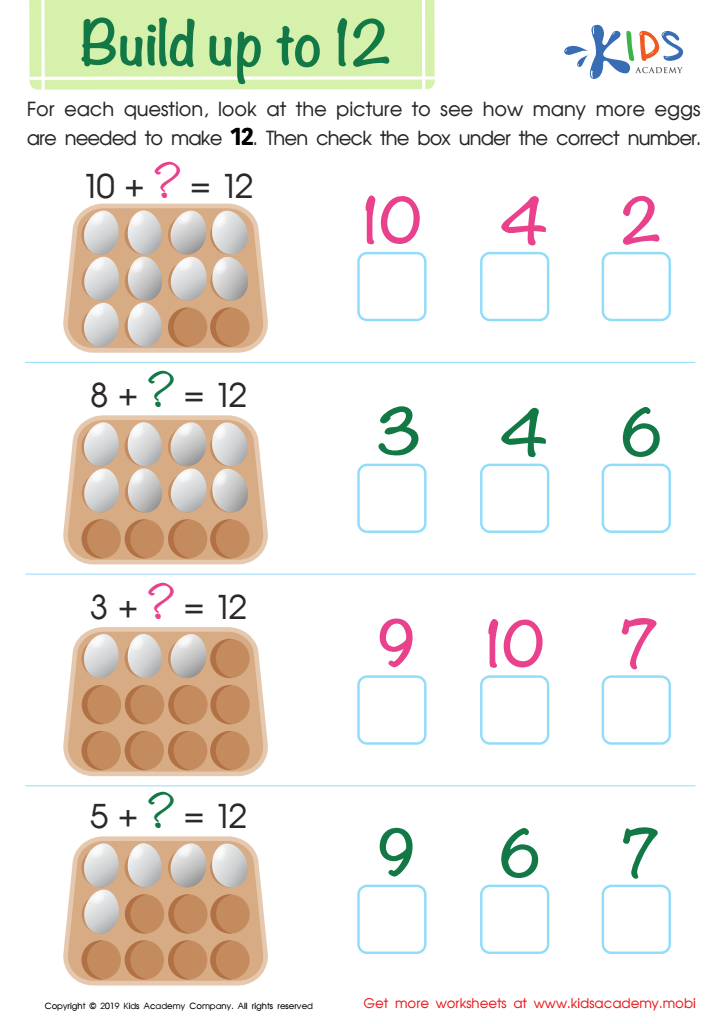
Build up to 12 Worksheet
 Assign to My Students
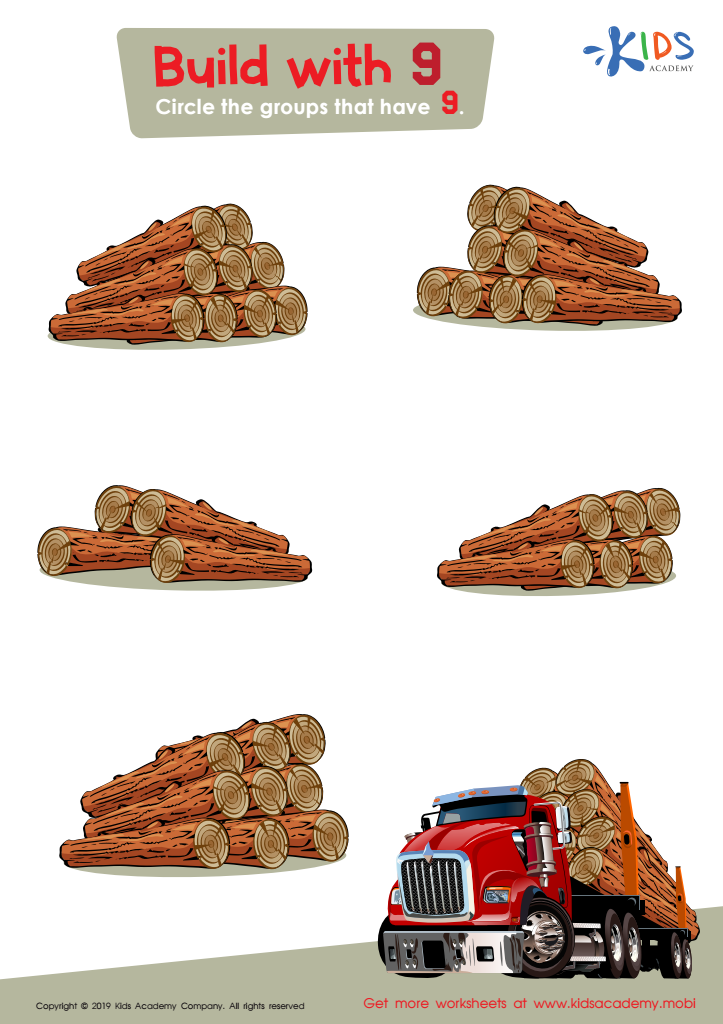
Build with 9 Worksheet







Number formation is a crucial skill for 5-year-olds as it lays the groundwork for their mathematical understanding. At this age, children are in a critical stage of cognitive development where their fine motor skills are improving, and they start recognizing numbers. Teaching them proper number formation not only enhances their writing skills but also aids in number recognition, which is fundamental for math fluency later on.
When parents and teachers focus on number formation, they instill good habits early. Proper formation prevents confusion that can arise from poorly written numbers, which can lead to misunderstanding during mathematical operations. Moreover, well-formed numbers foster positive attitudes toward math—children are more likely to engage with the subject if they feel confident in their abilities.
Practicing number formation encourages mindfulness and concentration, developing focus that is essential for learning overall. By making number formation a priority, adults can create a structured environment that nurtures a child's love for learning and establishes a foundation for more complex mathematical concepts in the future. Ultimately, investing time in number formation is investing in a child's cognitive and academic development, setting them up for success in school and beyond.








