
Observational skills Worksheets for 5-Year-Olds
12 filtered results
Difficulty Level
Grade
Age
-
From - To
Subject
Activity
Standards
Enhance your 5-year-olds' observational skills with our engaging worksheets! Designed to captivate young learners, these activities promote critical thinking and attention to detail through fun tasks. Kids will enjoy exploring colors, shapes, patterns, and daily life scenarios, all while improving their ability to notice and interpret their surroundings. Our worksheets are user-friendly, featuring vibrant illustrations that make learning exciting. Ideal for both home and classroom settings, these worksheets help develop foundational skills necessary for future learning. Start fostering your child's observation skills today with our enriching resources that blend education and play seamlessly! Download now for endless learning adventures!
Favorites
With answer key
Interactive
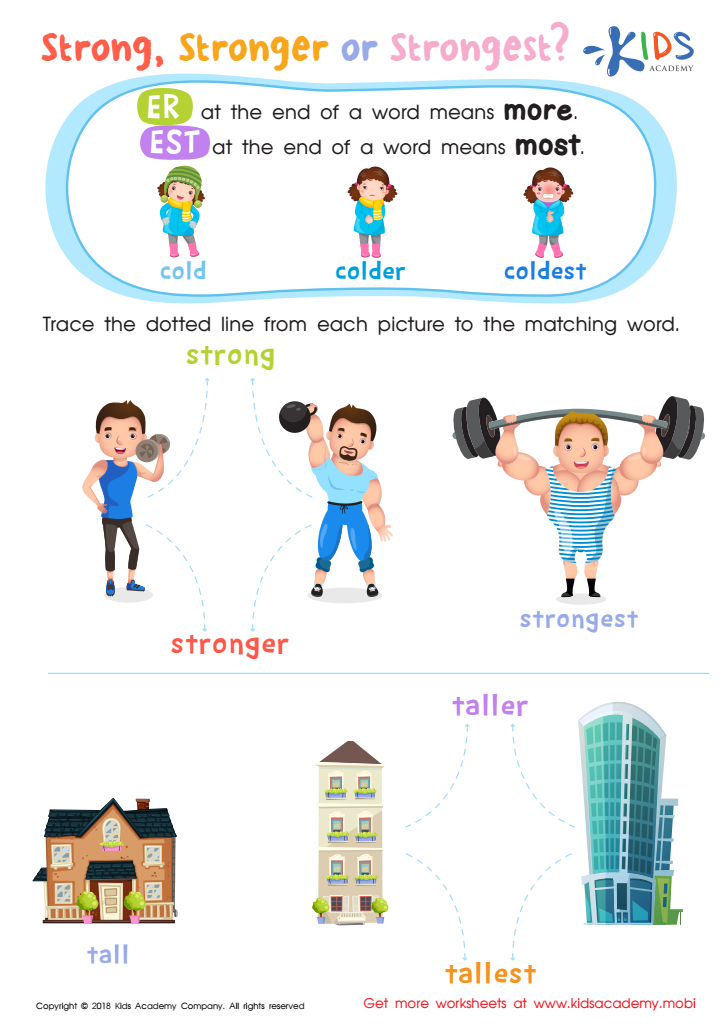
Strong or Stronger? Worksheet
Help your child understand the concept of size gradients with a fun worksheet. Explain to them that adding "-er" to words means "more" and "-est" means "most". Point to the pictures and have your little one trace the dotted line to the corresponding words to learn the concept of highest and lowest.
Strong or Stronger? Worksheet
Worksheet
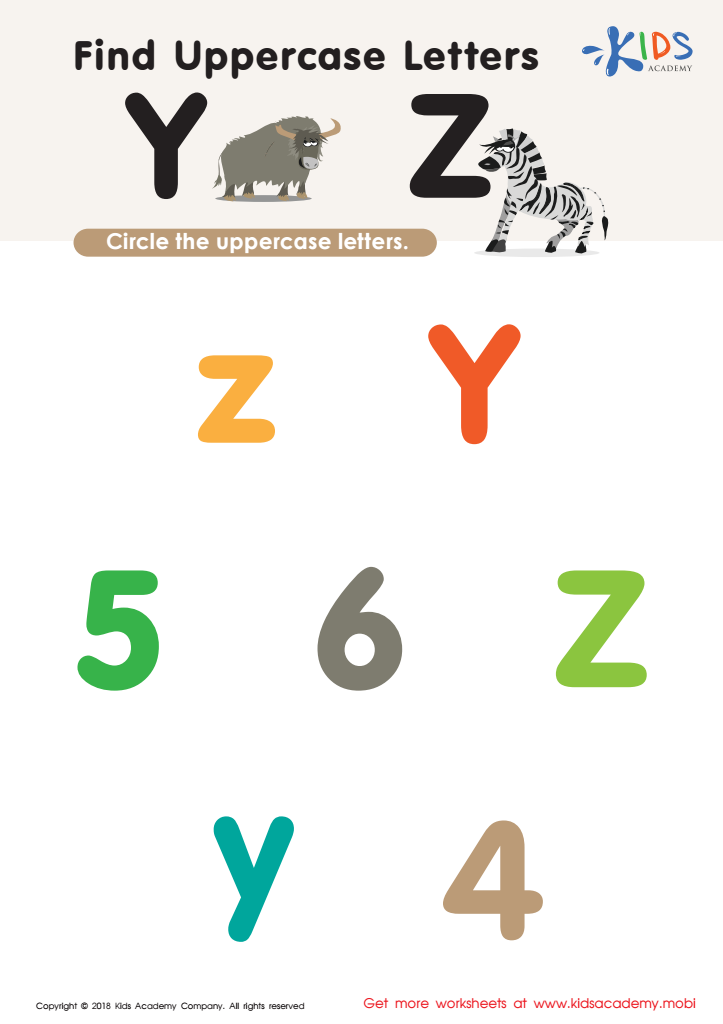
Find Uppercase Letters Y Z Worksheet
Download the worksheet! Help your youngster to learn the alphabet and distinguish uppercase from lowercase letters by having them circle the uppercase ones. It's an important first step towards reading and writing success!
Find Uppercase Letters Y Z Worksheet
Worksheet
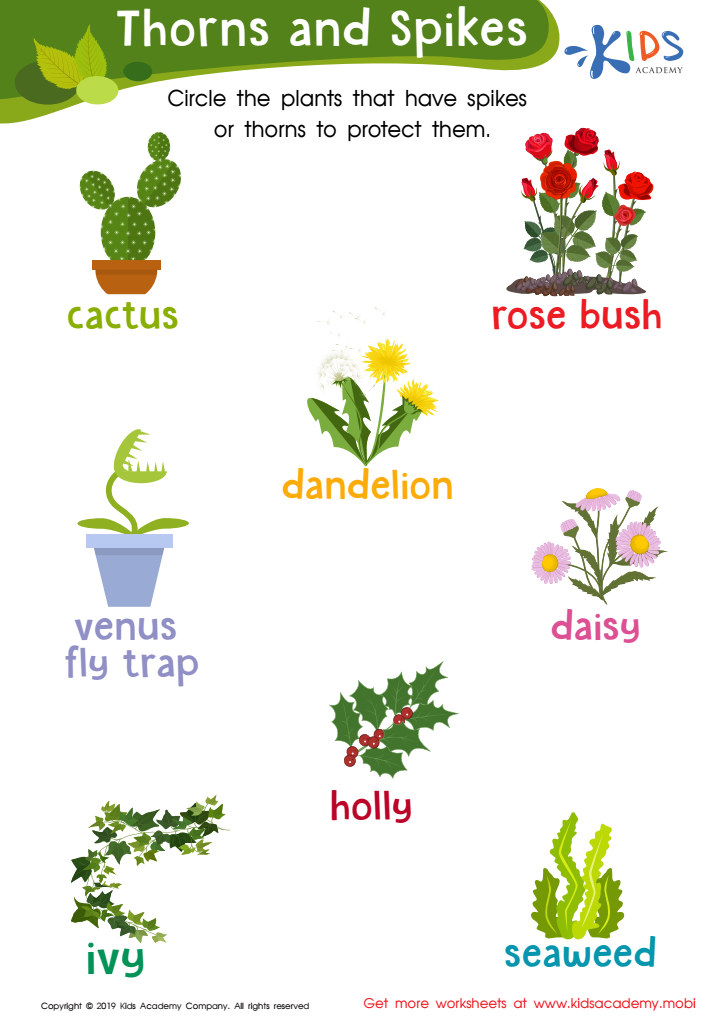
Thorns and Spikes Worksheet
Can your students name and identify the plants and flowers in this worksheet? Ask them to read out the names and circle the ones with spikes or thorns. Help them appreciate nature's beauty and understand how plants protect themselves.
Thorns and Spikes Worksheet
Worksheet
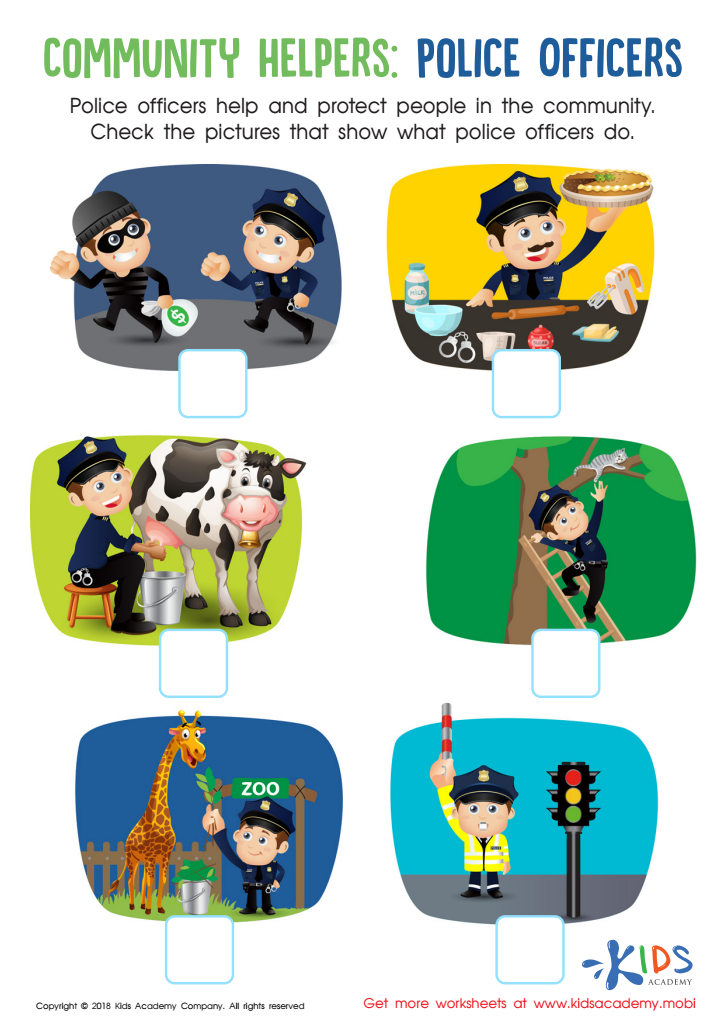
Police Officers Community Helpers Worksheet
Ask your child about police officers and how they help the community. Reference this worksheet to test their knowledge of police duties by asking them to name what the officers are doing in the pictures. Check which pictures correctly depict the duties of a police officer. Answering these questions together can help your child understand how police officers keep the community safe.
Police Officers Community Helpers Worksheet
Worksheet
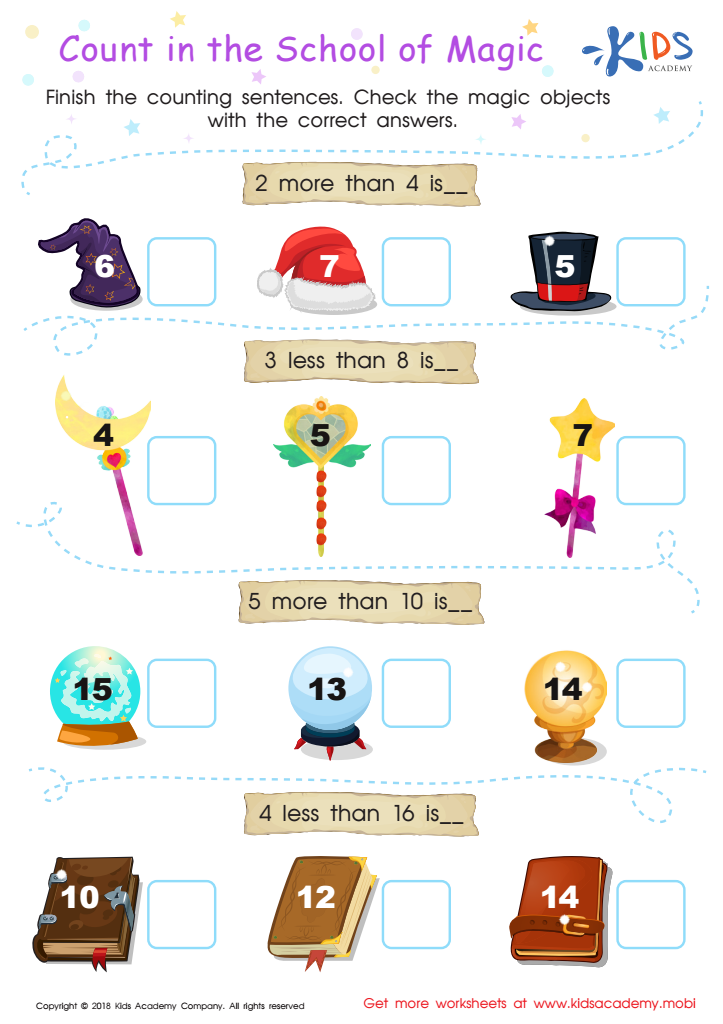
Count in the School of Magic Worksheet
Your math learners can explore the School of Magic with this worksheet. They'll read equations with addition and subtraction numbers under 20, count back and forth to find the answer, then complete the counting sentences. Fun pictures and easy accuracy make it an enjoyable and successful learning experience.
Count in the School of Magic Worksheet
Worksheet
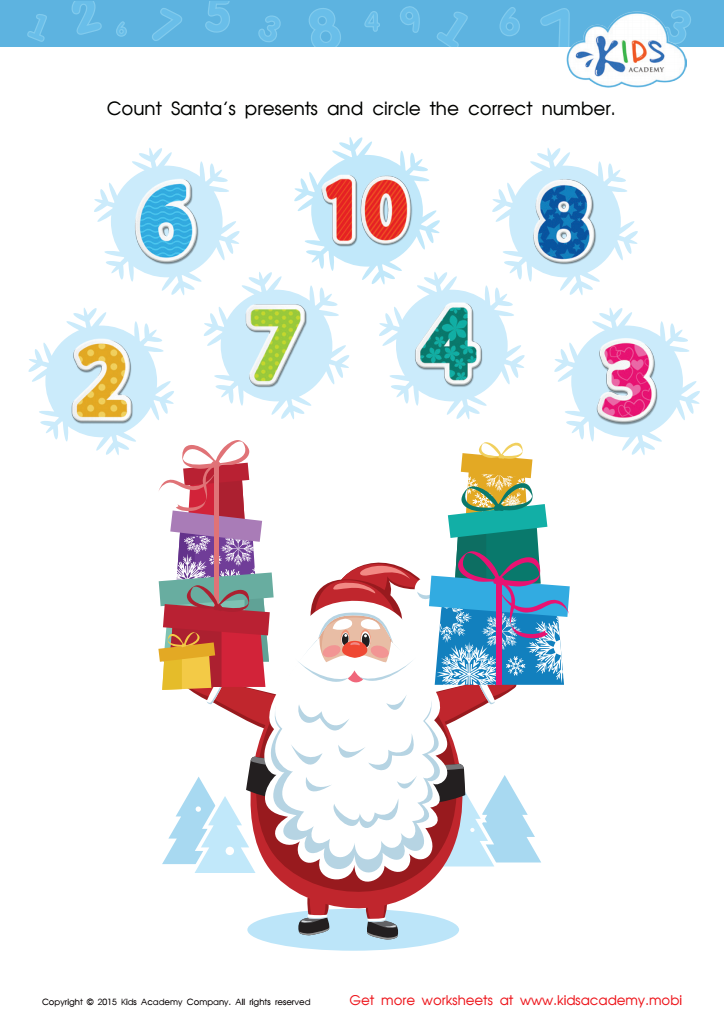
Count Santa's Presents Worksheet
With Kids Academy's free Christmas math worksheet, your kindergartener can help Santa count presents. The worksheet encourages recognizing and counting numbers, fostering the Christmas spirit. Print it out, have fun, and get ready to circle the right number! Get more math printables to learn numbers in a fun way.
Count Santa's Presents Worksheet
Worksheet
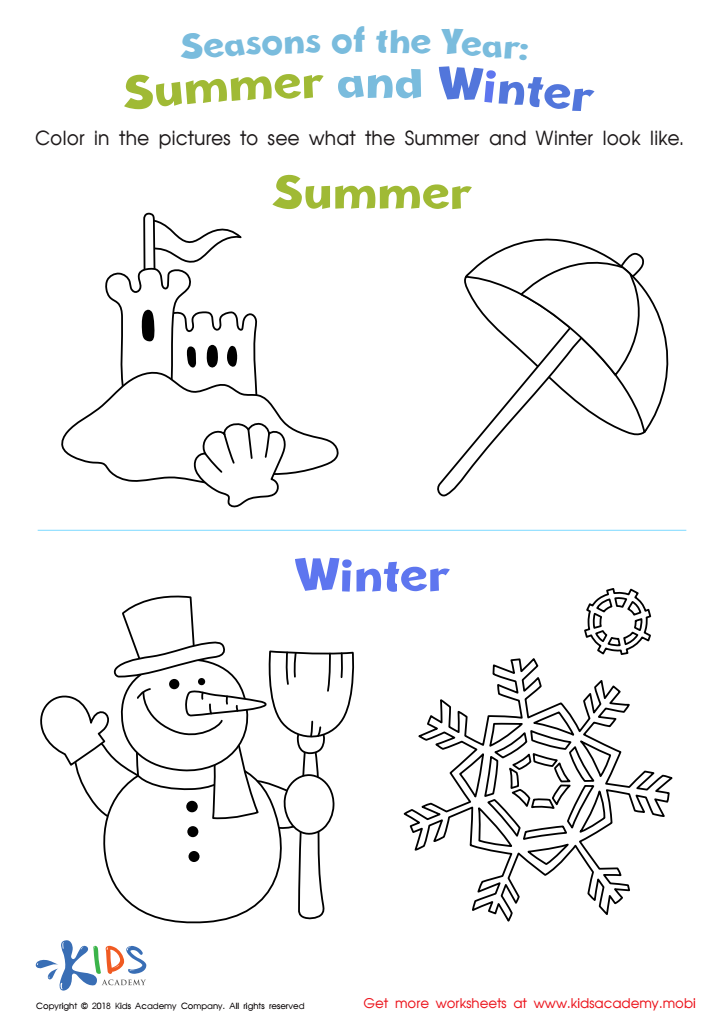
Summer and Winter Worksheet
Ask your child what they associate with winter and summer. What do they look forward to in winter? What colors do they see most? What do they love doing in summer? Help them color in the pictures of winter and summer in the worksheet, choosing the colors they think best represent each season.
Download (PDF)
 Assign to My Students
Assign to My Students
Summer and Winter Worksheet
Worksheet
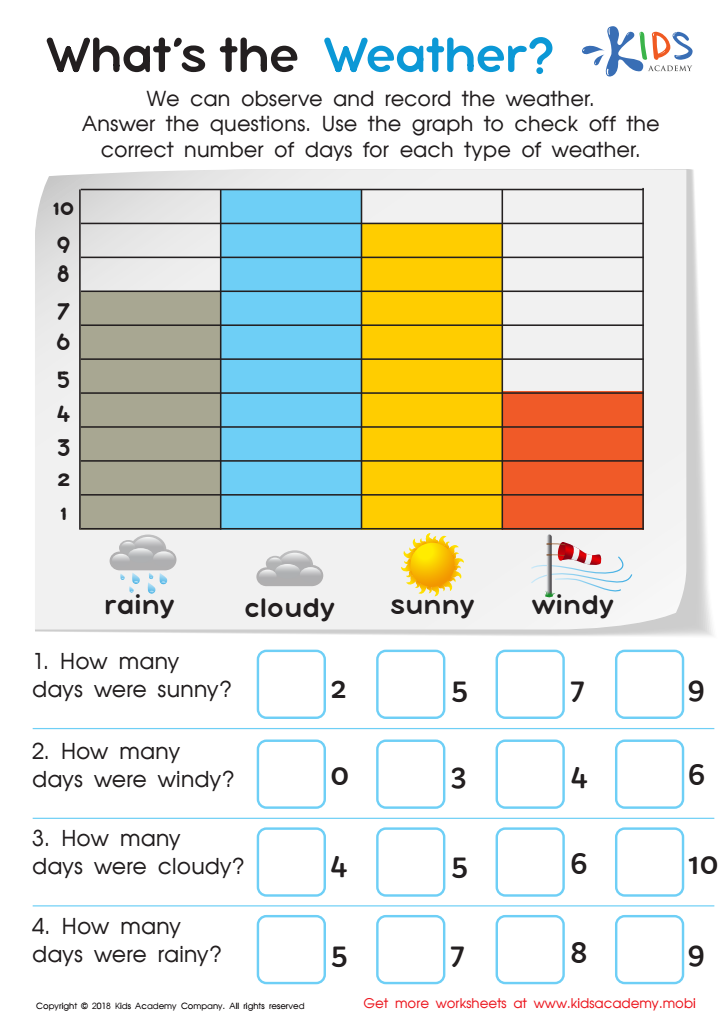
What's the Weather? Worksheet
Check the weather outside. Help kids learn and practice science and math by tracking different types of days using this printable worksheet. Have them count bars next to weather types like cloudy, sunny, windy, and rainy. Answer the questions and take the lesson further by creating a bar graph to show the monthly weather.
What's the Weather? Worksheet
Worksheet
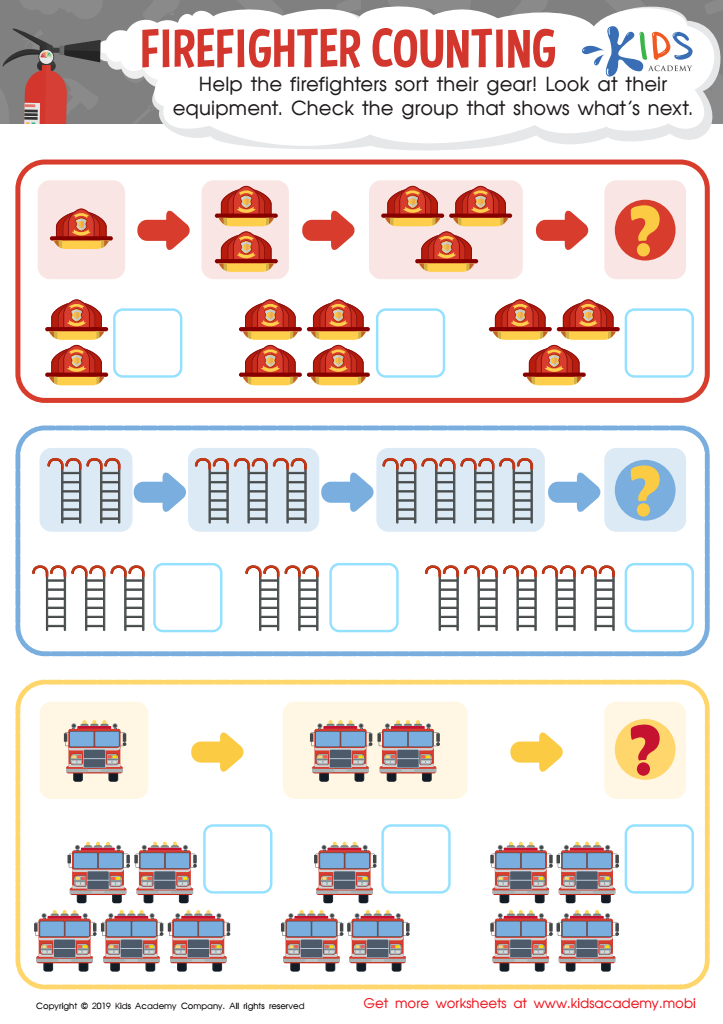
Firefighter Counting Worksheet
Firefighters are a vital part of any community. When a fire breaks out, they respond promptly to protect citizens and extinguish the blaze. Wearing specialized gear, they not only make the job easier, but safer too. Get your kids involved and help the firefighters sort their gear. Count the equipment, and check the group for the next steps.
Firefighter Counting Worksheet
Worksheet
Join Kids Academy for Free
Who is primarily going to use this learning content?


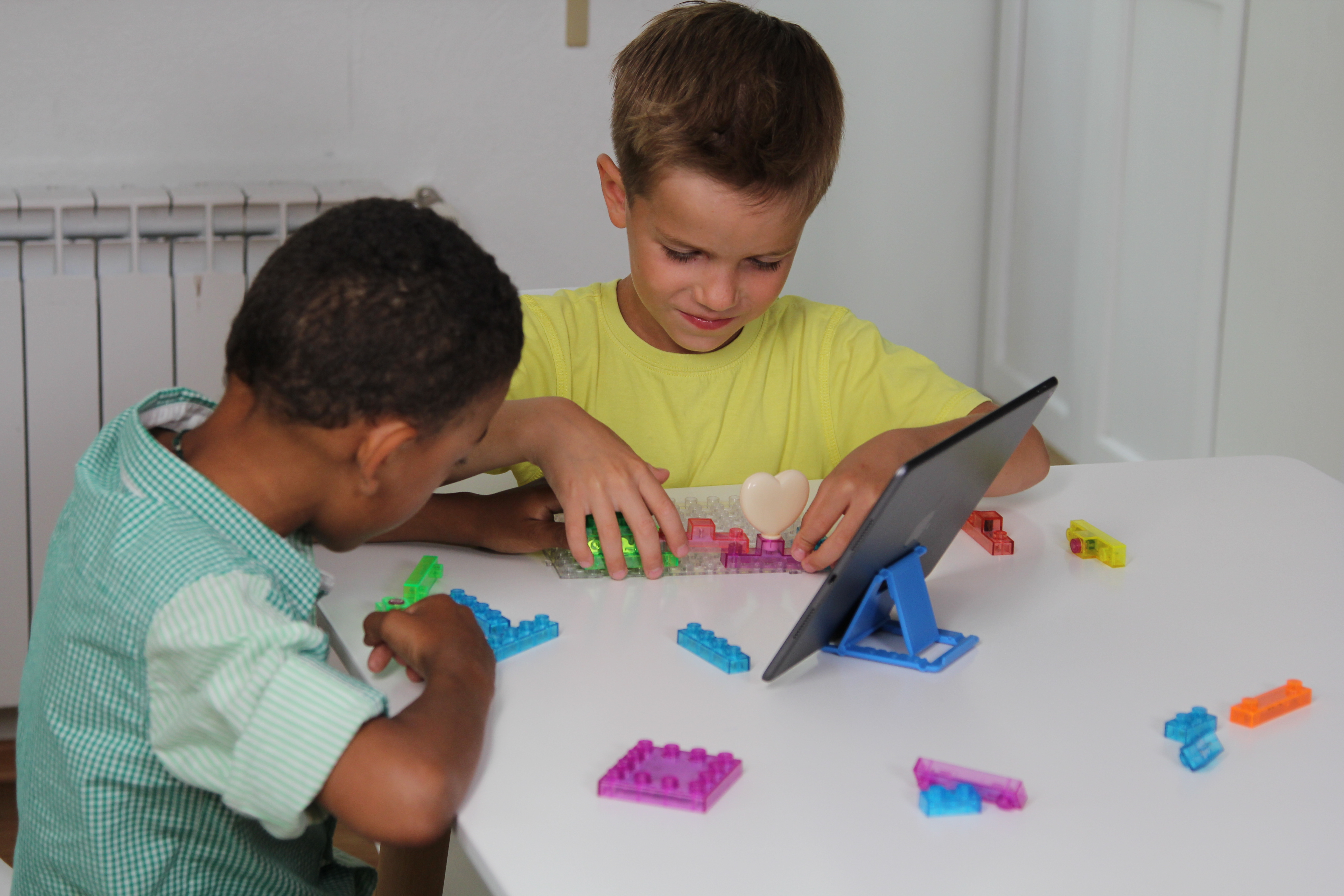





Observational skills are crucial for the development of 5-year-olds, serving as a foundational element in their learning journey. Parents and teachers should prioritize these skills because they enhance a child's ability to engage with the world around them. At this developmental stage, children are naturally curious, and effective observation can foster critical thinking by helping them notice details in their environment, whether it be in nature, social interactions, or problem-solving scenarios.
When children develop strong observational skills, they improve their ability to understand and interpret situations, leading to more nuanced thinking. These skills also support language development, as they enable children to describe their observations, ask questions, and express their thoughts. Furthermore, enhancing observational skills encourages independence; children learn to notice things for themselves, honing their self-confidence and decision-making abilities.
Moreover, observant children can better interpret social cues, promoting empathy and interpersonal relationships. By recognizing emotions and actions in others, they learn to navigate social contexts more effectively. In essence, strong observational skills are essential for fostering cognitive, emotional, and social development, making it imperative for both parents and teachers to instill and support these abilities in young children.








