
Pattern identification Worksheets for 5-Year-Olds
4 filtered results
Difficulty Level
Grade
Age
-
From - To
Subject
Activity
Standards
Discover our engaging Pattern Identification Worksheets designed specifically for 5-year-olds! These fun, interactive printables help young learners develop critical thinking and analytical skills as they recognize and extend various patterns. With colorful visuals and age-appropriate challenges, our worksheets encourage creativity while making pattern exploration enjoyable. Perfect for parents and educators alike, these resources promote foundational math skills in a playful manner. Whether at home or in the classroom, our pattern worksheets provide an exciting way for little learners to enhance their cognitive abilities while having fun. Start your child’s journey into pattern recognition today!
Favorites
With answer key
Interactive
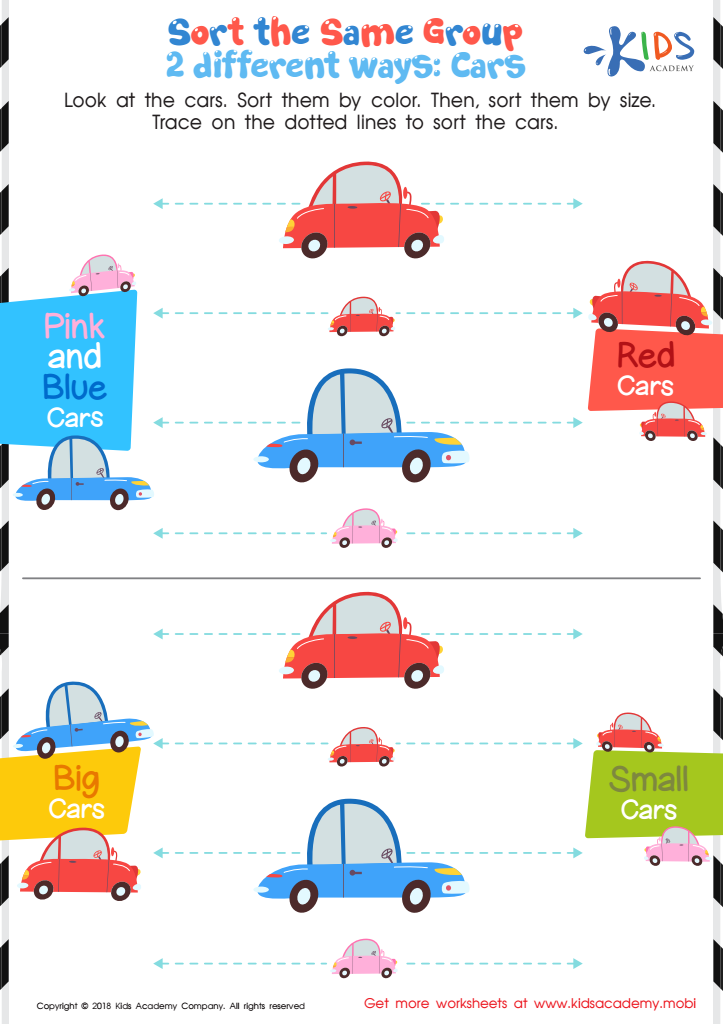
Sort the Same Group 2 Different Ways: Cars Worksheet
Look at the pictures with your child. Can they identify the objects? Ask them to sort the cars first by color and then size. Assist them to trace the dotted lines to sort the cars by color and size. This worksheet lets you easily assess your child's color and size organization skills.
 Assign to My Students
Sort the Same Group 2 Different Ways: Cars Worksheet
Worksheet
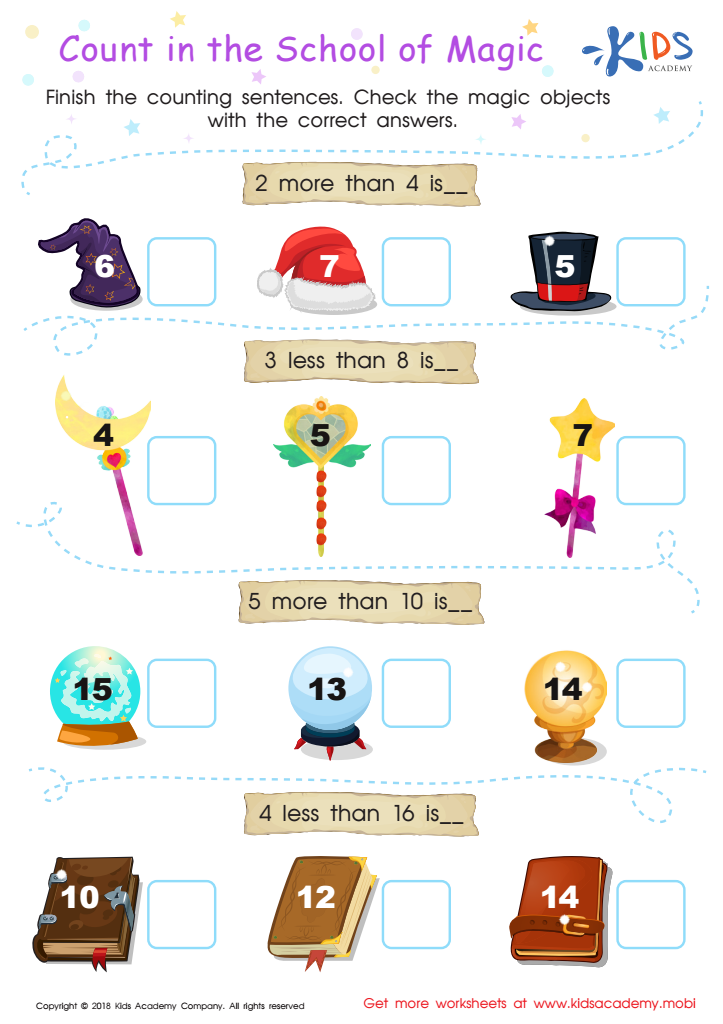
Count in the School of Magic Worksheet
Your math learners can explore the School of Magic with this worksheet. They'll read equations with addition and subtraction numbers under 20, count back and forth to find the answer, then complete the counting sentences. Fun pictures and easy accuracy make it an enjoyable and successful learning experience.
Count in the School of Magic Worksheet
Worksheet
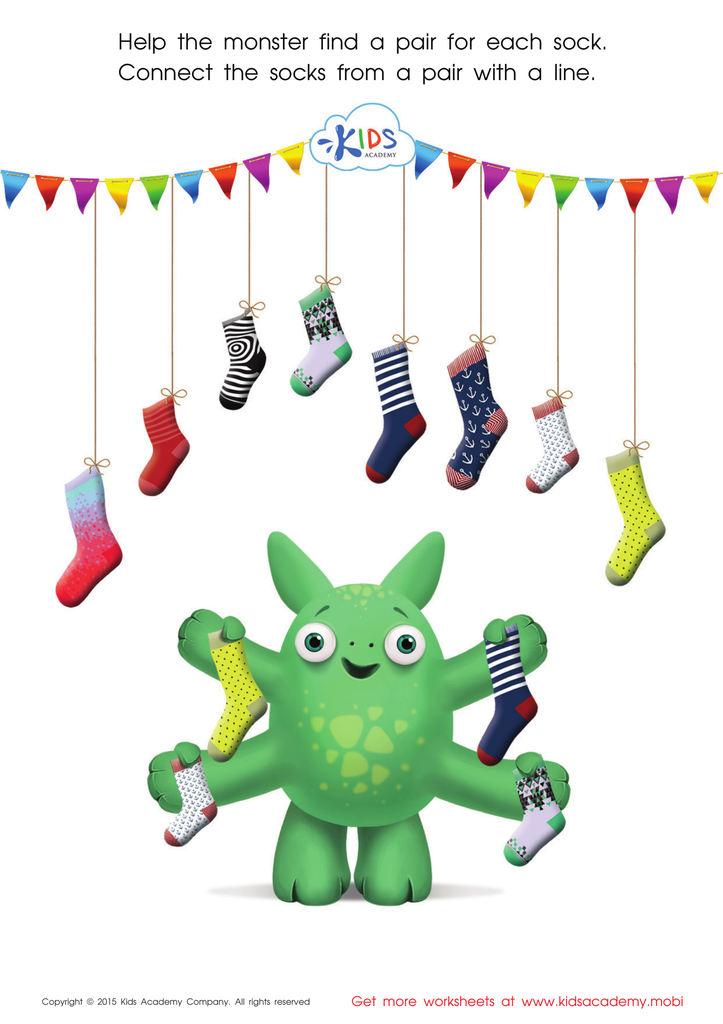
Math Matching Pairs Game: Monsterв's Socks Worksheet
Let your child learn, concentrate and practice sorting skills with this fun kindergarten worksheet. Matching polka dots, anchors, geo shapes and stripes on Monster's socks will help improve fine motor skills. Download and print this free worksheet and several others on different topics.
Math Matching Pairs Game: Monsterв's Socks Worksheet
Worksheet
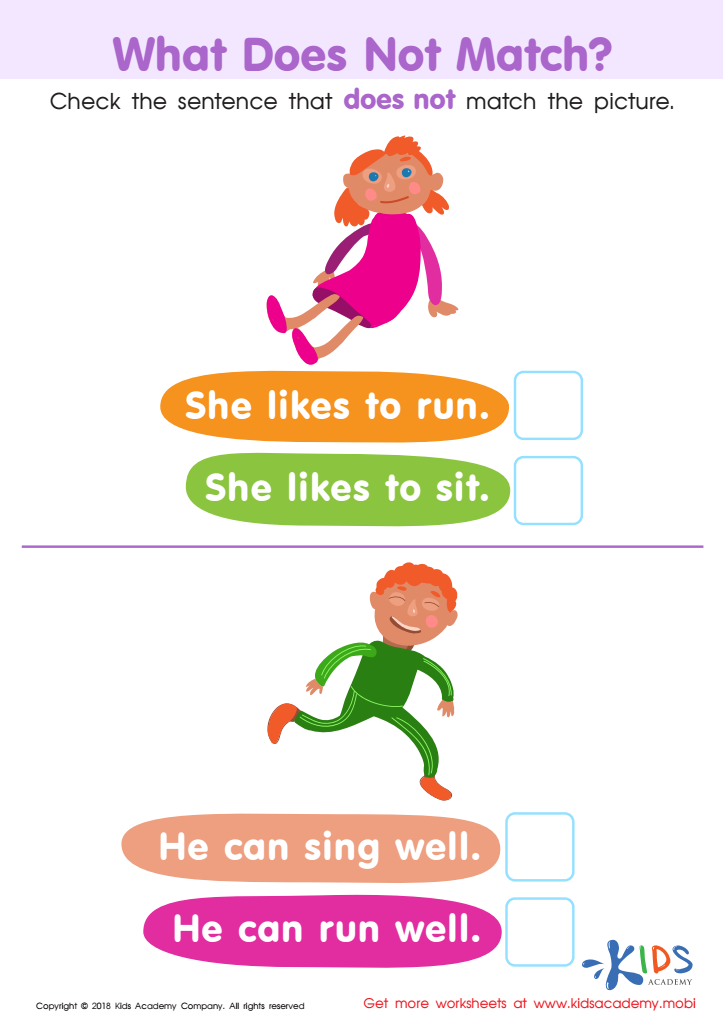
What Does Not Match? Worksheet
Emerging readers need to practice using visual cues and repetitive text. This colorful PDF provides them with an opportunity to look at pictures, use discrimination and discern which phrase does not match. It also enables them to gain familiarity with high-frequency words to aid decoding longer sentences.
What Does Not Match? Worksheet
Worksheet
Join Kids Academy for Free
Who is primarily going to use this learning content?






.jpg)
Pattern identification is a crucial skill for 5-year-olds as it lays the foundation for cognitive development and problem-solving abilities. At this age, children are not only exploring their environment but also making sense of it through the recognition of patterns. These patterns can be found in shapes, colors, numbers, and even daily routines. When parents and teachers emphasize pattern identification, they promote critical thinking and enhance children's ability to categorize and organize information, which is essential for later learnings in mathematics and literacy.
Understanding patterns also encourages creativity. Children who identify and create patterns can express themselves through art and music, tapping into their imagination. Additionally, recognizing patterns aids in social development, as children learn to anticipate behaviors and reactions in others, fostering better communication skills.
Furthermore, early exposure to patterns contributes to mathematical fluency. Skills such as counting, sorting, and measuring can be more easily grasped when children understand the concept of repeating sequences—key components in mathematics. By nurturing pattern recognition at an early age, parents and teachers are equipping children with strategies to face academic challenges, thus setting them on a course for lifelong learning and emotional intelligence.








