Syllable identification Worksheets for 5-Year-Olds
3 filtered results
-
From - To
Discover our engaging syllable identification worksheets designed specifically for 5-year-olds! These fun and educational printables help young learners break words into syllables, fostering essential early literacy skills. Each worksheet features colorful images, simple words, and interactive activities that captivate children's interest. These exercises are perfect for classroom use or at-home practice, enhancing phonological awareness, which is crucial for reading and spelling development. Equip your little ones with the tools they need to succeed in their literacy journey with our expertly crafted syllable identification worksheets—providing a strong foundation for lifelong learning.
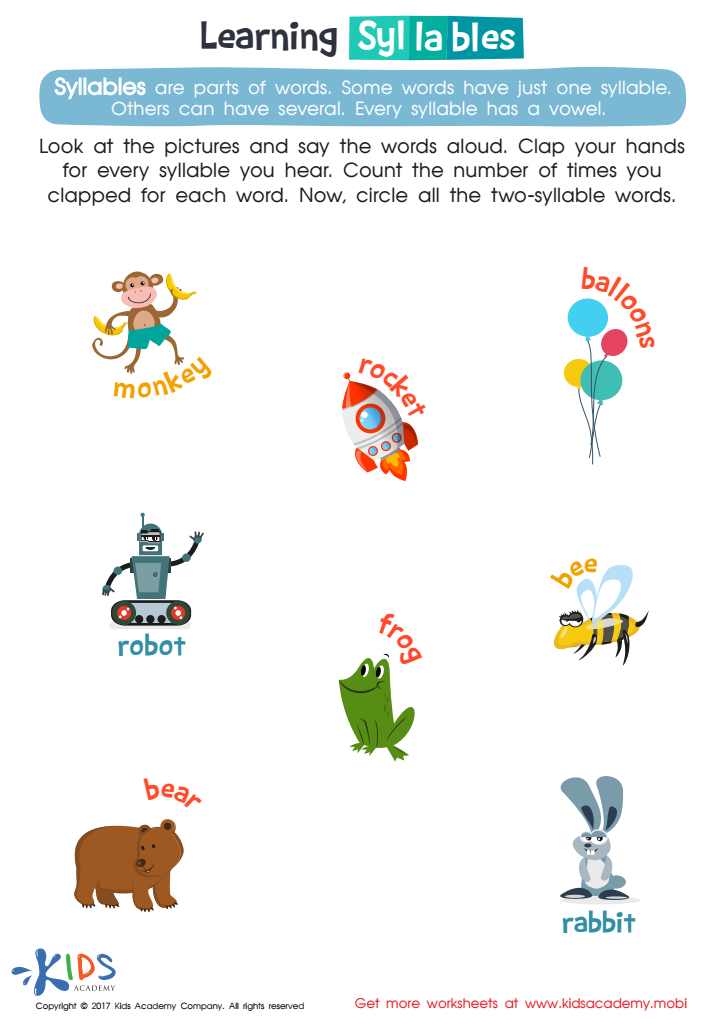
Learning Syllables Word Structure Worksheet
 Assign to My Students
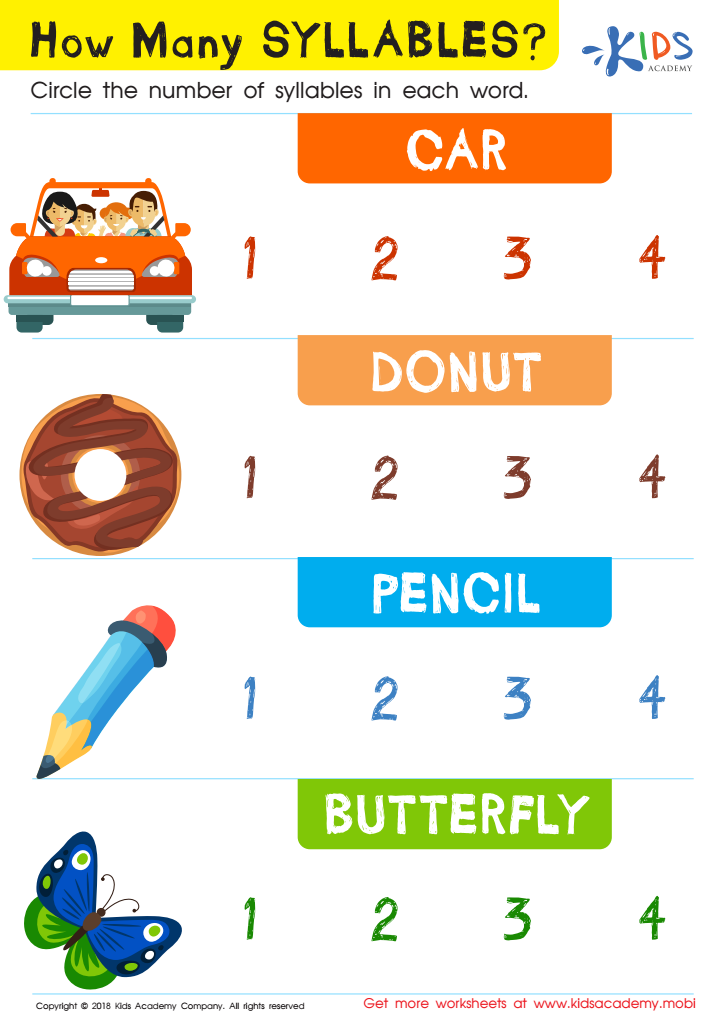
How Many Syllables? Worksheet
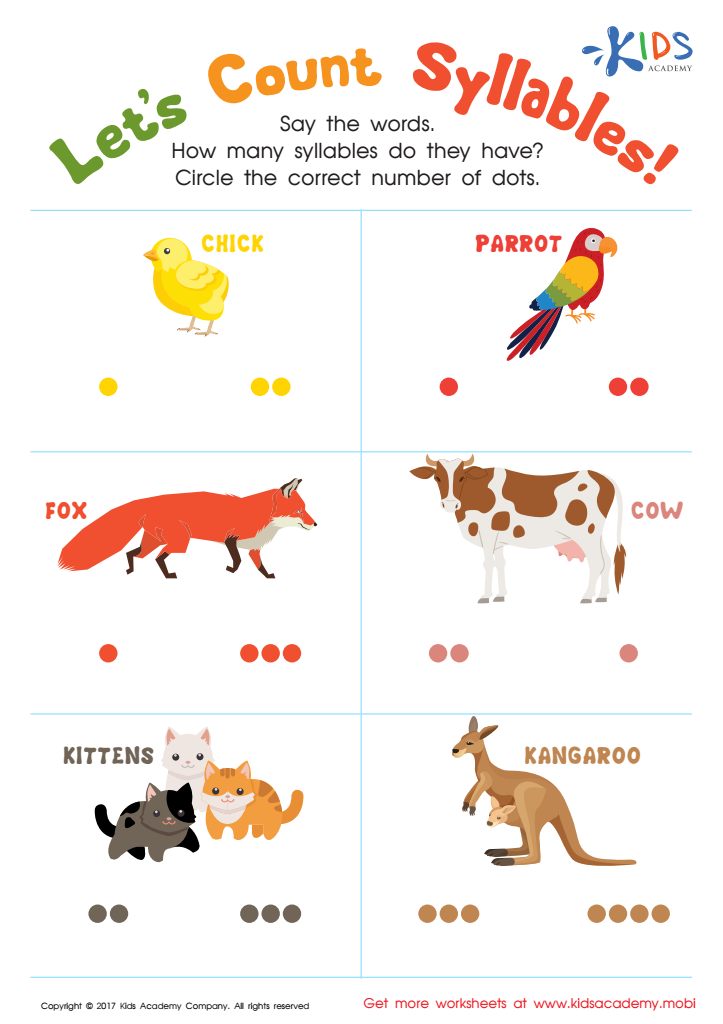
Lets Count Syllables Worksheet







Syllable identification is fundamental to early literacy development for 5-year-olds, laying the groundwork for proficient reading and writing skills. Parents and teachers should prioritize this aspect because it directly supports phonological awareness, which is critical for decoding words. When young children learn to identify syllables, they gain the ability to break down words into smaller, more manageable chunks, enhancing their ability to recognize and pronounce words accurately.
This skill also facilitates better spelling, as children who understand syllables can more easily remember and reproduce the sequences of sounds in words. Furthermore, syllable identification helps improve listening skills, as recognizing different syllable patterns requires attentive auditory processing. This is crucial for language development and effective communication.
Additionally, engaging children in activities that highlight syllable patterns makes learning more interactive and fun, fostering a positive attitude towards reading from an early age. This enthusiasm can then translate into a lifelong love for literature and continual academic improvement. Investing time in syllable identification not only equips children with essential tools for literacy but also builds their confidence as emerging readers and writers, ensuring a smoother transition into more complex language tasks.








