Pattern recognition 2D Shapes Worksheets for 5-Year-Olds
3 filtered results
-
From - To
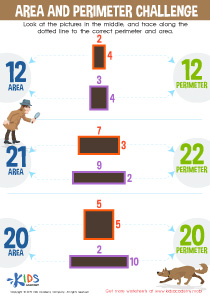
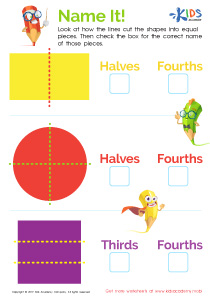
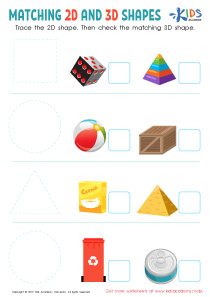
Our "Pattern Recognition 2D Shapes Worksheets for 5-Year-Olds" foster critical thinking and foundational math skills. Carefully tailored for young learners, these engaging and colorful worksheets introduce children to identifying, analyzing, and completing patterns with various 2D shapes. As kids embark on these fun activities, they enhance their problem-solving abilities, improve hand-eye coordination, and build essential skills for future math success. Designed by educational experts, these printables ensure age-appropriate challenges that preview a solid understanding of foundational geometry concepts in the most playful and effective manner. Give your child a head start in math with these enriching worksheets!
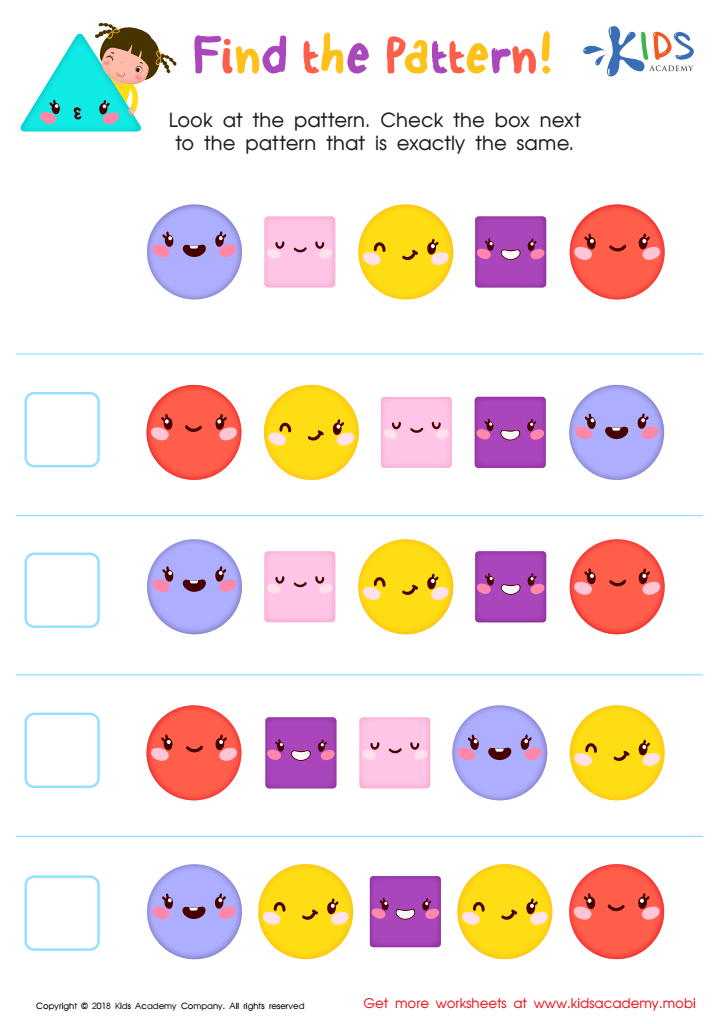
Find the Pattern Worksheet
 Assign to My Students


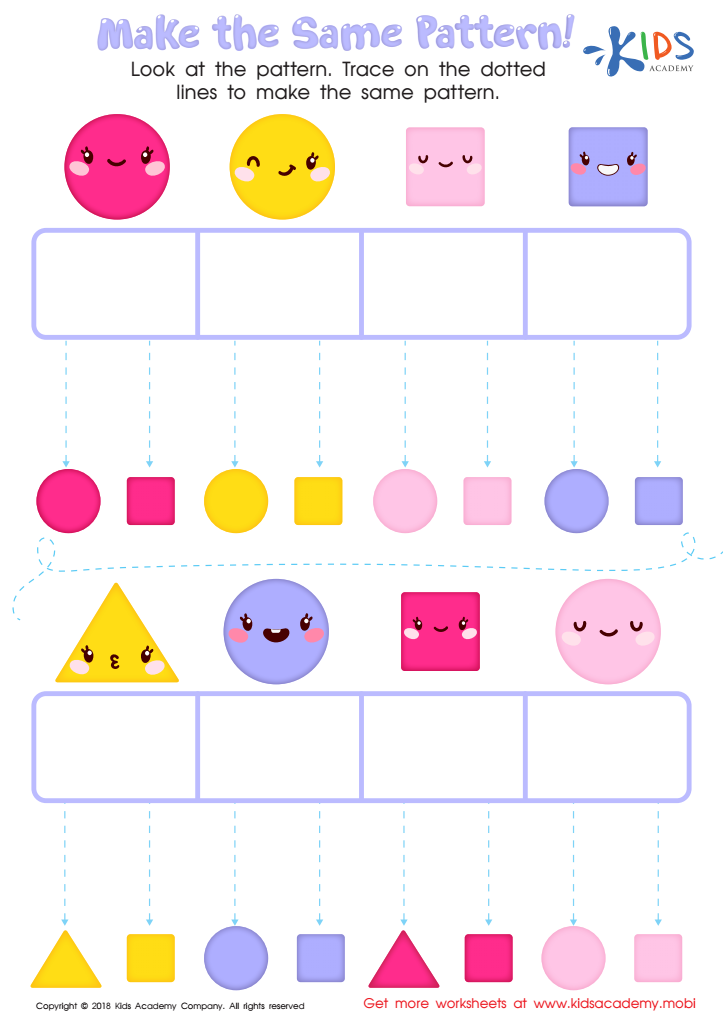
Make the Same Pattern Worksheet
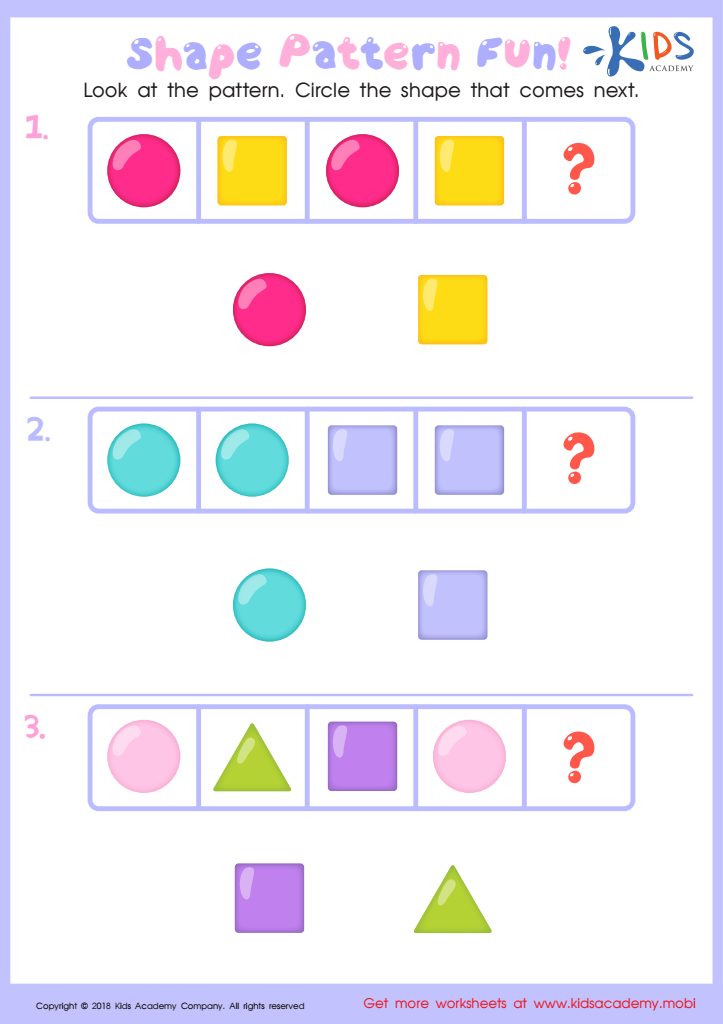
Shape Pattern Fun Worksheet








Pattern recognition and understanding 2D shapes are fundamental skills for 5-year-olds, serving as building blocks for cognitive development and various academic disciplines. When children learn to recognize patterns, they hone their analytical thinking and problem-solving capabilities. These skills are crucial for subjects like mathematics, where spatial awareness and sequential thought processes are fundamental. By identifying and understanding 2D shapes — such as circles, squares, and triangles — children acquire early geometry skills, enhancing their ability to understand more complex mathematical concepts later on.
Moreover, pattern recognition helps in language development. Recognizing patterns can lead to better comprehension and decoding of written language, aiding in reading and writing skills. In addition, these skills extend to more abstract areas, such as music or rhythm, boosting auditory processing abilities.
Furthermore, engaging in activities involving patterns and shapes fosters fine motor skills through drawing, tracing, or assembling puzzles, aiding hand-eye coordination. In a social context, kids often encounter these activities in groups, facilitating teamwork, communication, and cooperative play. Hence, pattern recognition and understanding 2D shapes lay a holistic foundation for educational growth and skill acquisition, making it imperative for parents and teachers to prioritize these early learning experiences.