Fine Motor Skills Adding at the Zoo Worksheets for 5-Year-Olds
4 filtered results
-
From - To
Discover our "Fine Motor Skills Adding at the Zoo" worksheets, designed specifically for 5-year-olds to enhance their fine motor development while learning basic math. These engaging activities combine the excitement of a zoo setting with fun addition problems tailored for young learners. As children color, trace, and manipulate the worksheets, they will improve their hand-eye coordination and dexterity while reinforcing essential math skills. Perfect for preschool or homeschooling environments, these worksheets promote interactive learning, making math enjoyable. Encourage your child's budding mathematician with our thoughtfully crafted worksheets, designed to foster both academic and physical development in a playful way!
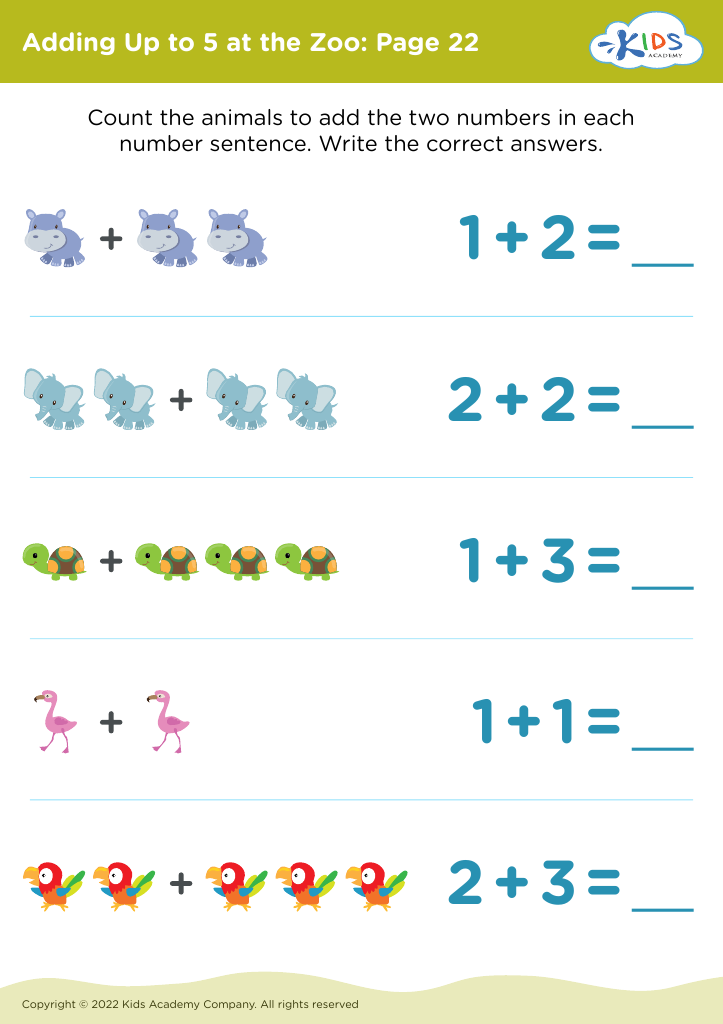
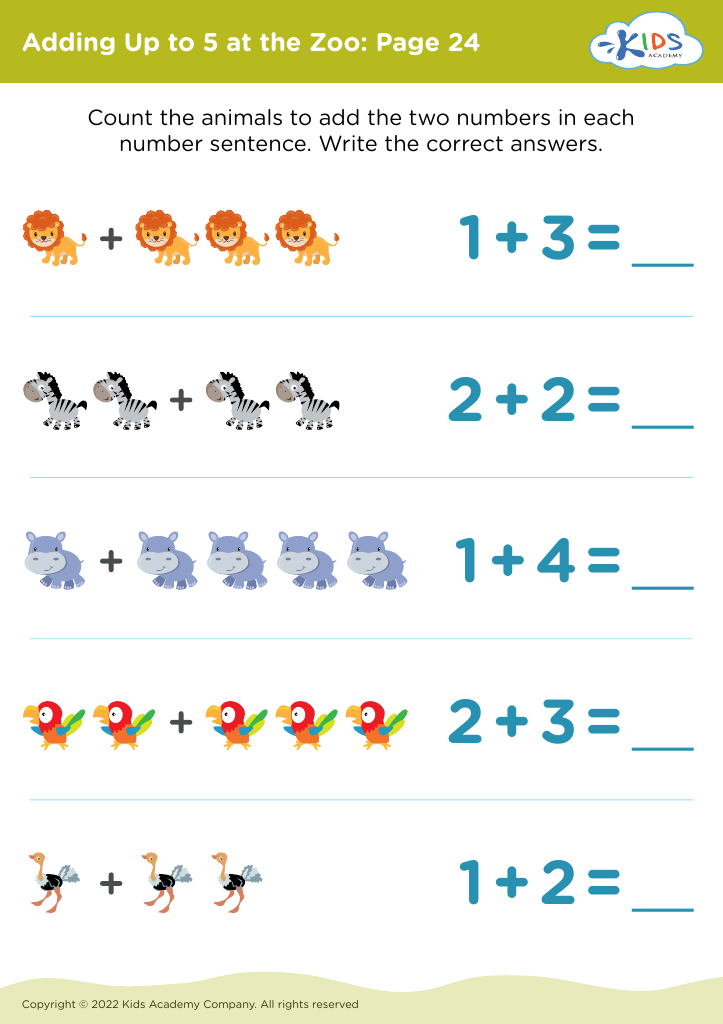
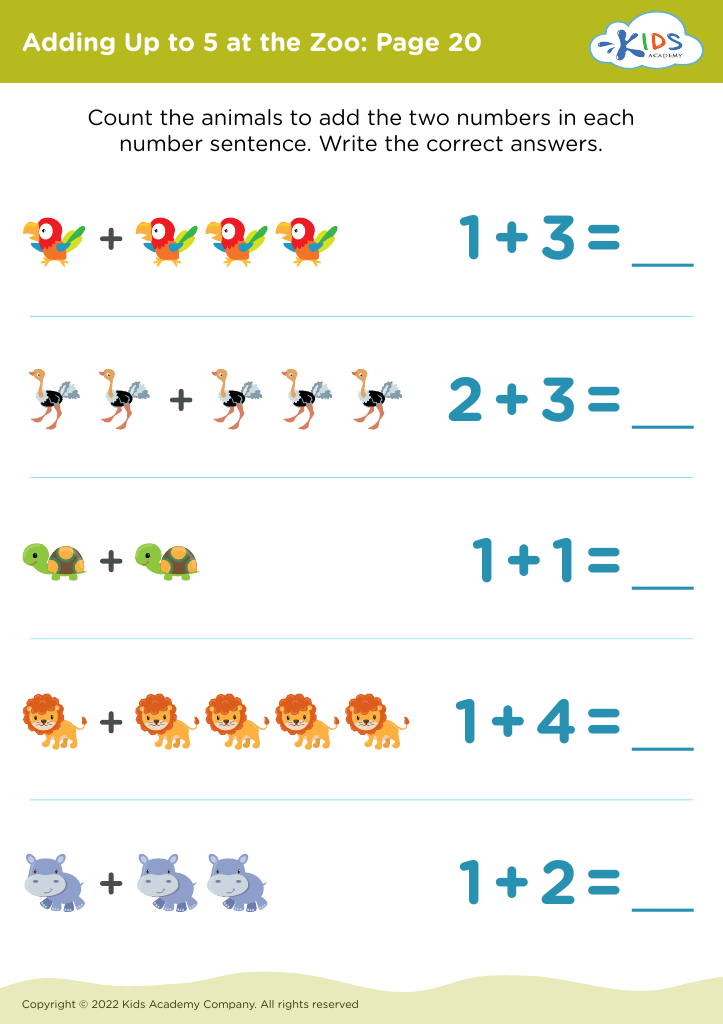
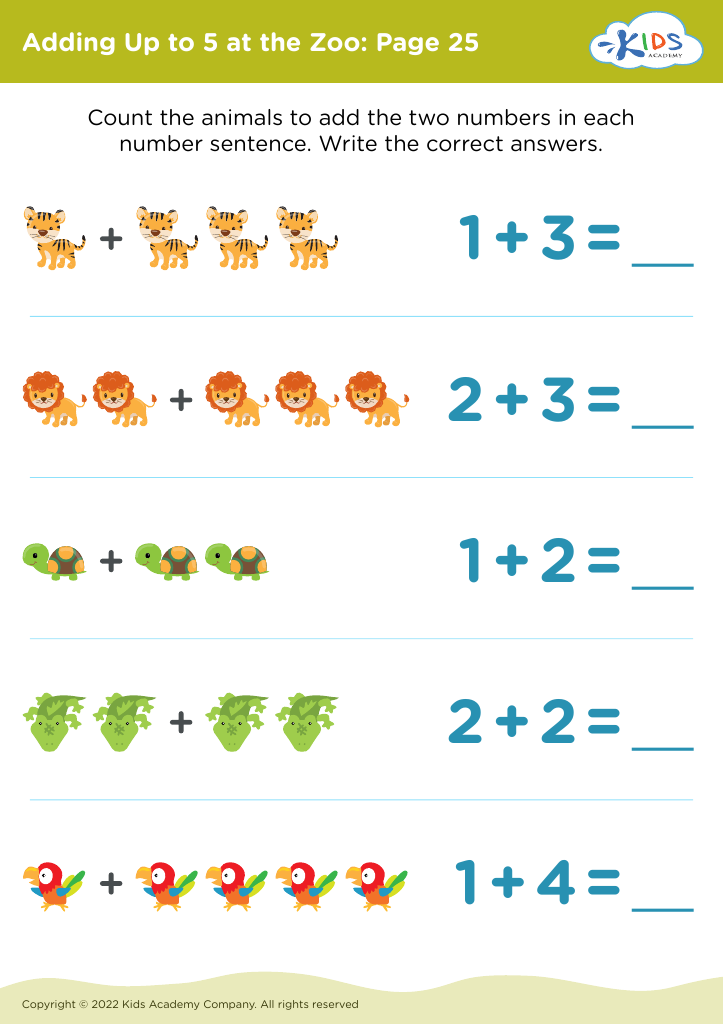



Fine motor skills are essential for the overall development of young children, particularly for 5-year-olds. These skills involve the precise movements of small muscles in the hands and fingers, which are crucial for tasks such as writing, buttoning clothes, and pouring liquids. Engaging activities like "Fine Motor Skills Adding at the Zoo" can enhance these abilities while making learning fun.
By focusing on fine motor skills through interactive activities, parents and teachers create opportunities for children to develop coordination, hand-eye coordination, and dexterity. The zoo theme captures children's interest, promoting engagement while they practice counting and adding using animal figures or tokens. Such playful methods help reinforce connections between cognitive learning and physical tasks.
Moreover, strong fine motor skills lay the foundation for academic success. They correlate with better writing abilities, which is vital as children progress in their education. Additionally, these activities foster patience and perseverance, important traits for lifelong learning.
In summary, by nurturing fine motor skills through purposeful play like "Fine Motor Skills Adding at the Zoo," adults can support young learners in developing essential competencies, ensuring they are well-equipped for future challenges in both school and life.