Addition Practice Adding in the Sea Worksheets for 5-Year-Olds
12 filtered results
-
From - To
Dive into fun with our "Addition Practice Adding in the Sea" worksheets, crafted especially for 5-year-olds! These colorful and engaging printables transform basic math practice into a captivating underwater adventure. Your child will join delightful sea creatures to enhance their addition skills through stimulating and interactive exercises. Ideal for developing essential early math foundations, these worksheets not only build numerical confidence but also bring the ocean's magic right to your home or classroom. Spark curiosity and boost arithmetic proficiency with our charming marine-themed addition practice tools, perfect for young learners. Download today and make math learning enjoyable!
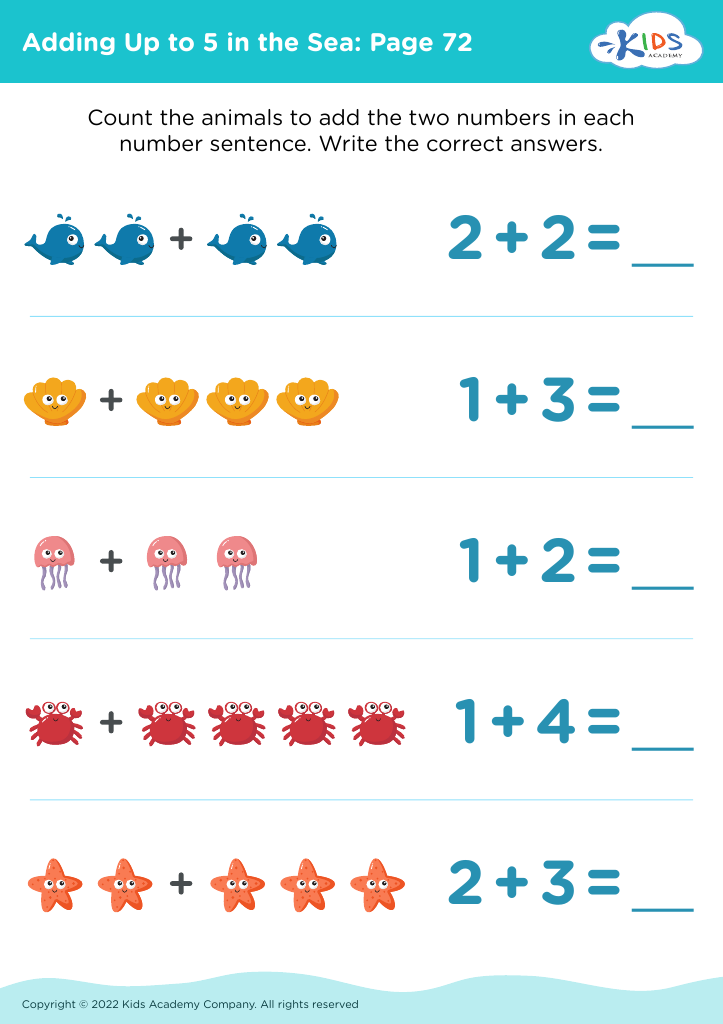
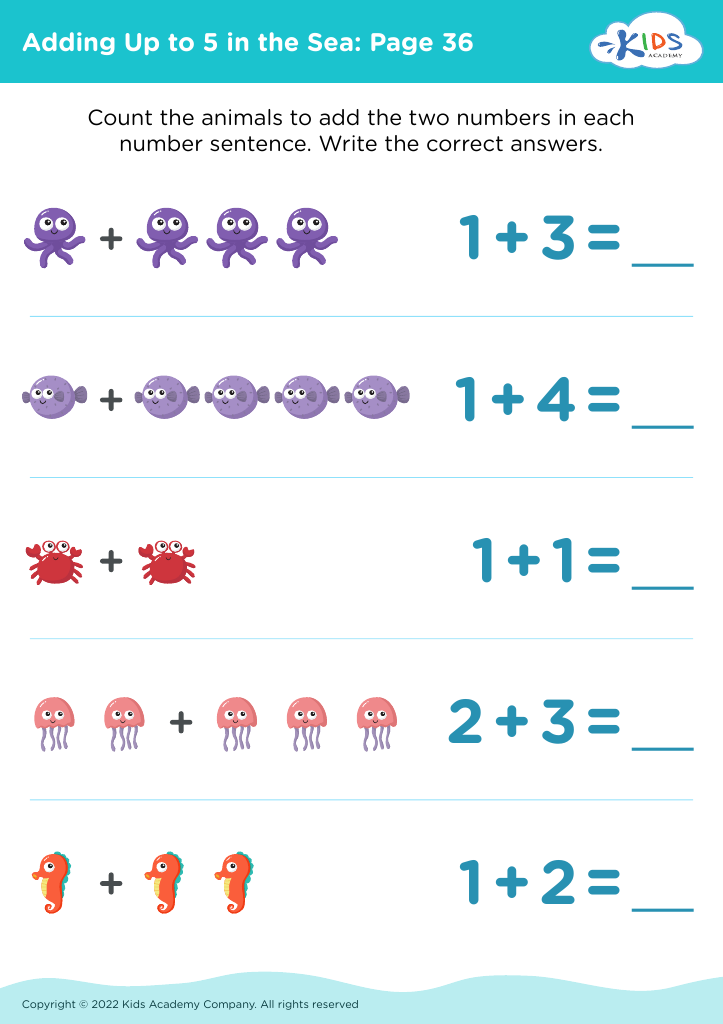
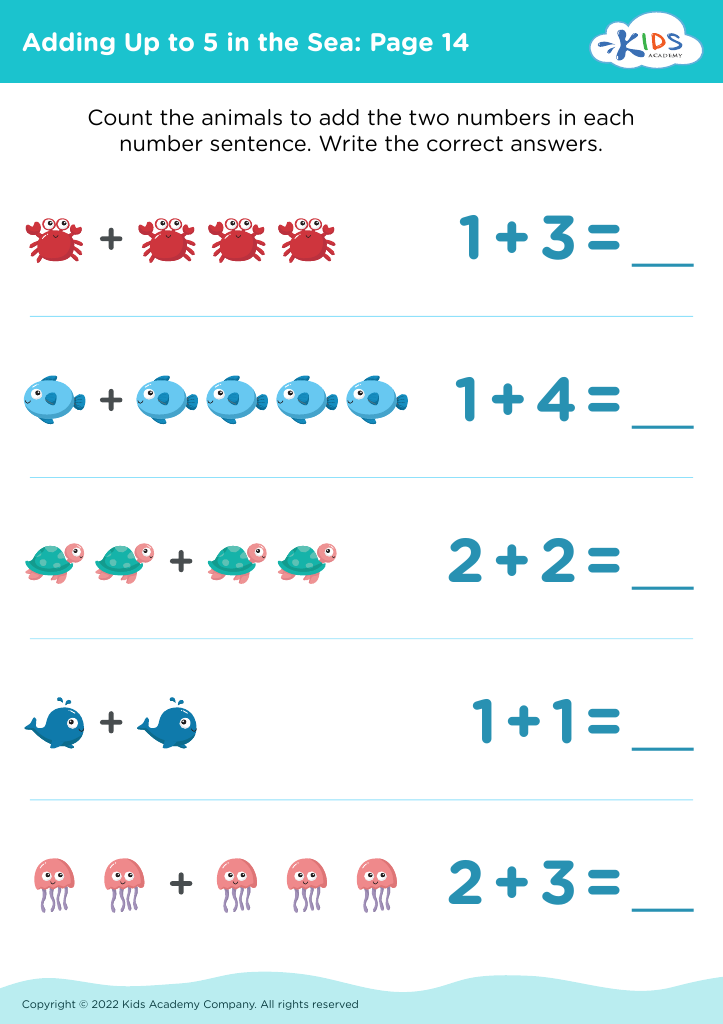
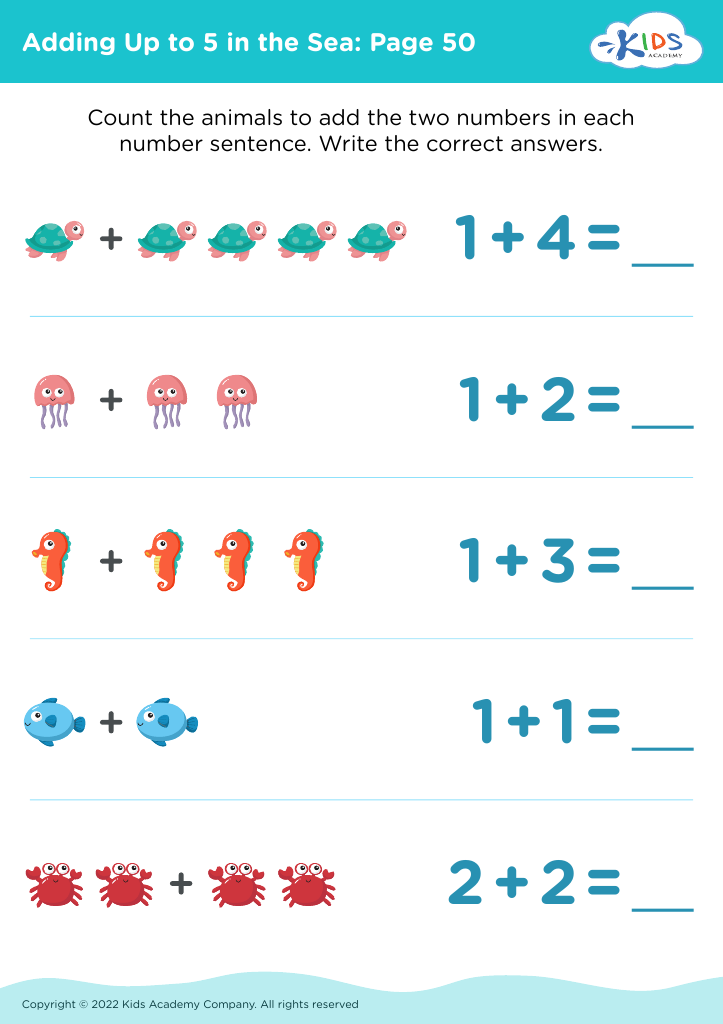
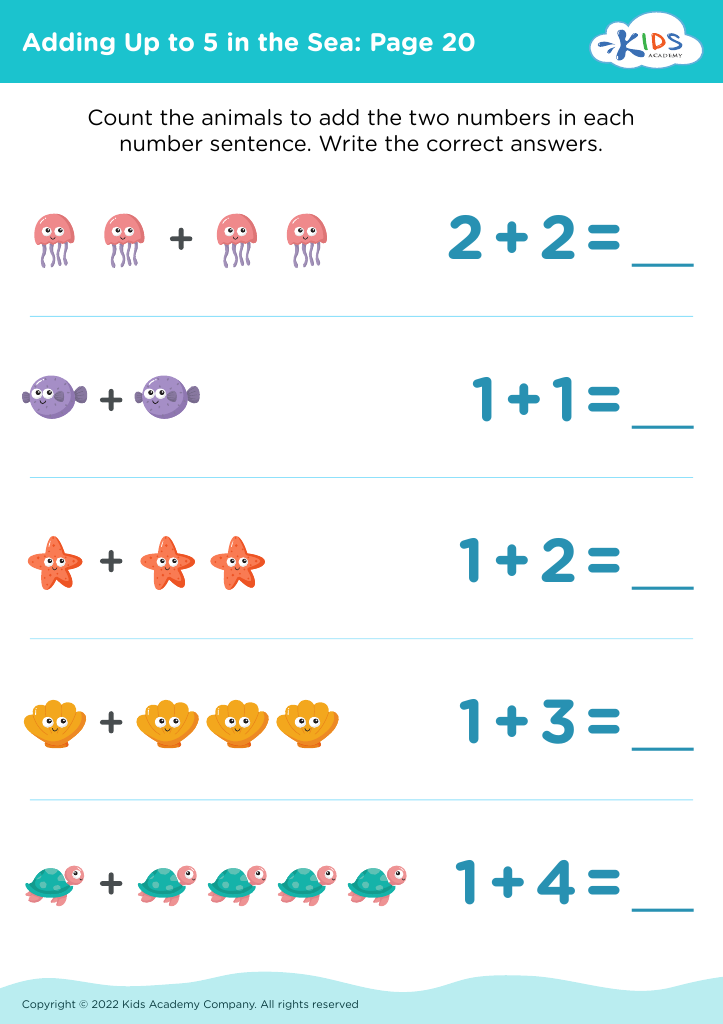
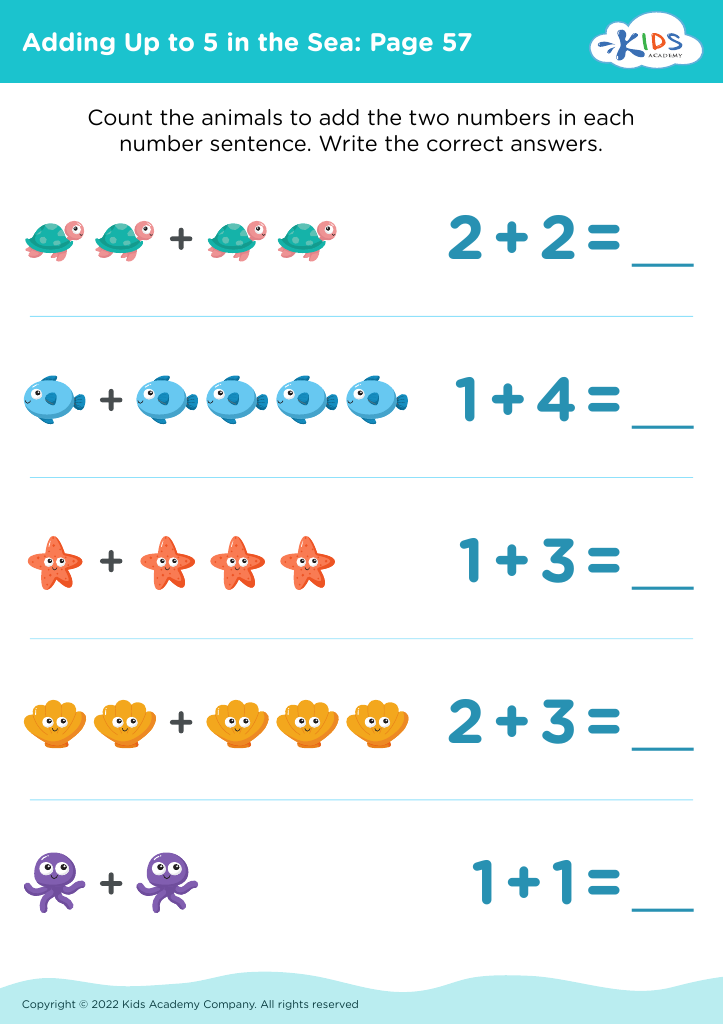
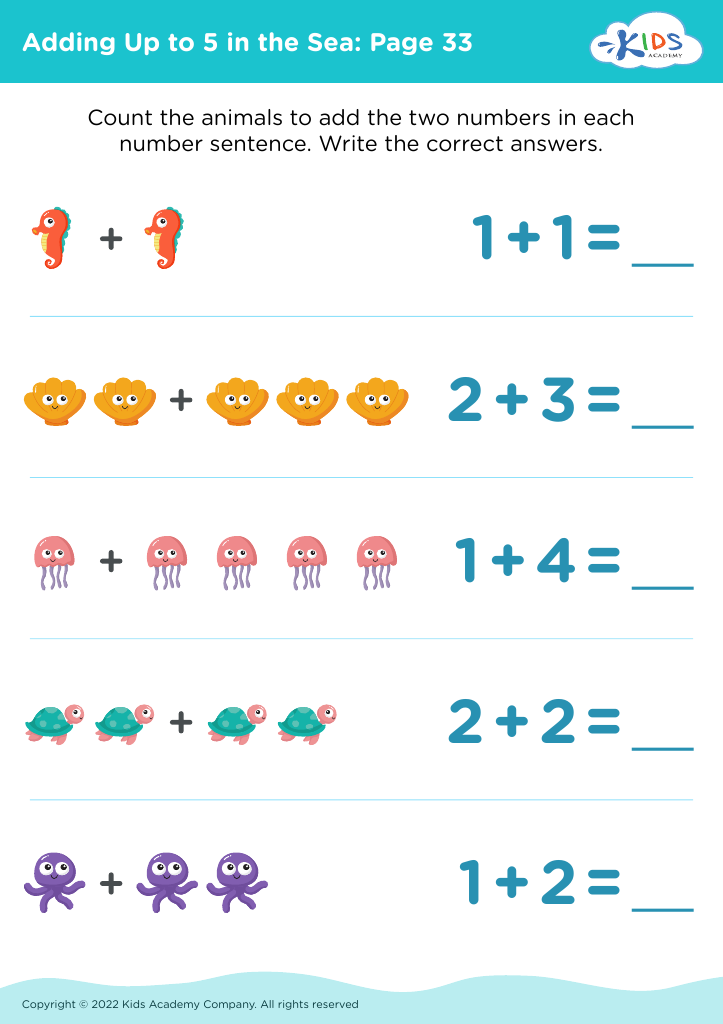
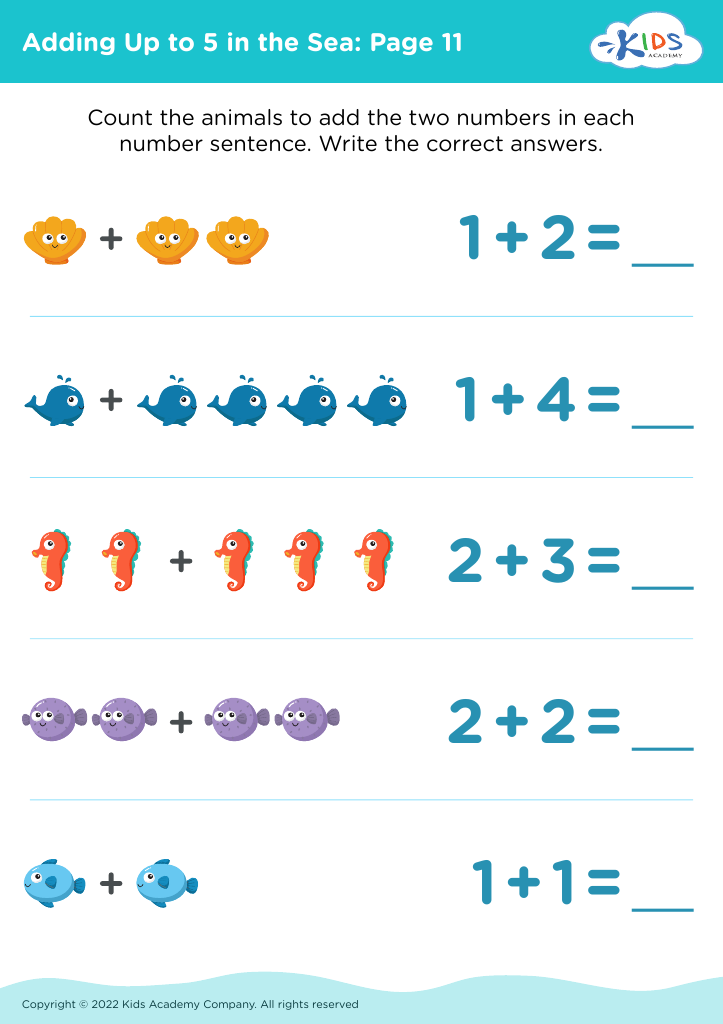
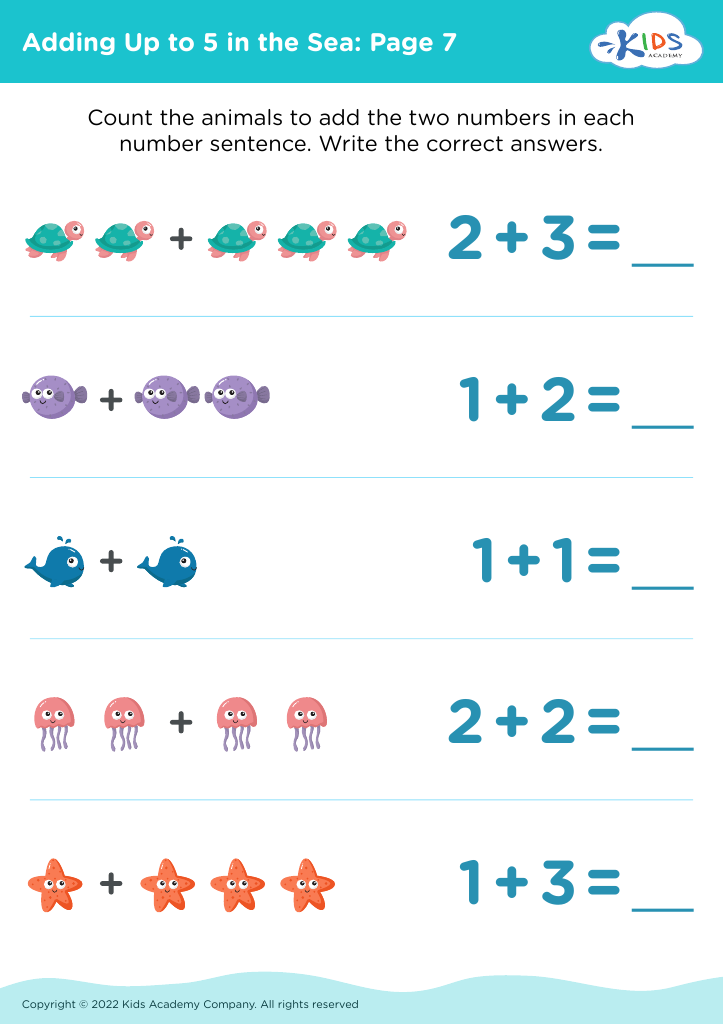
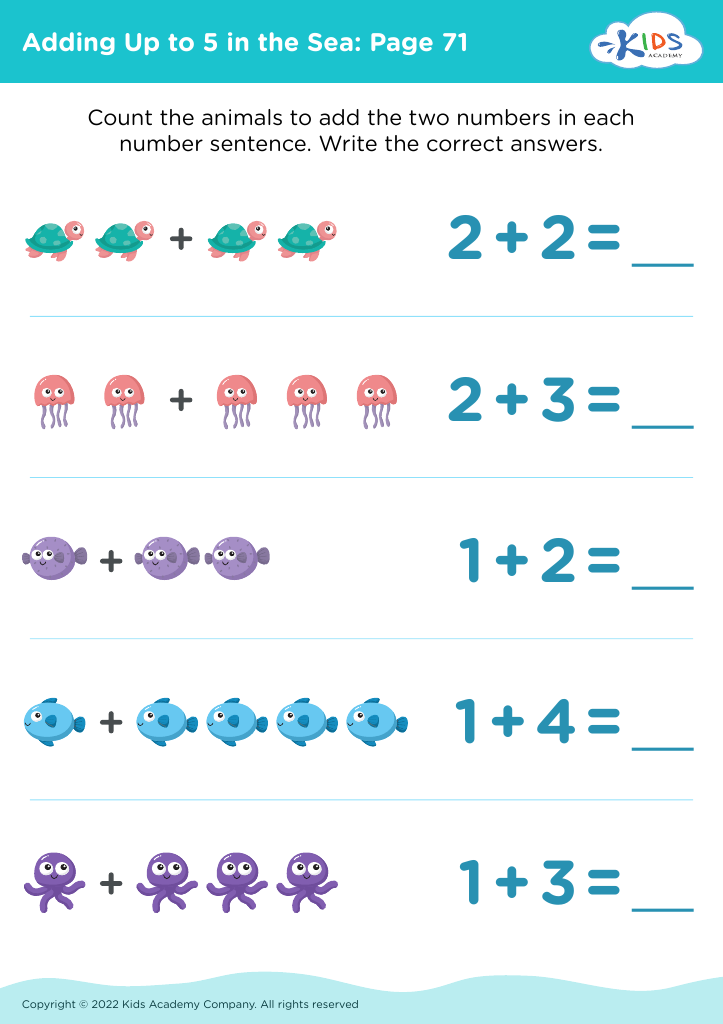
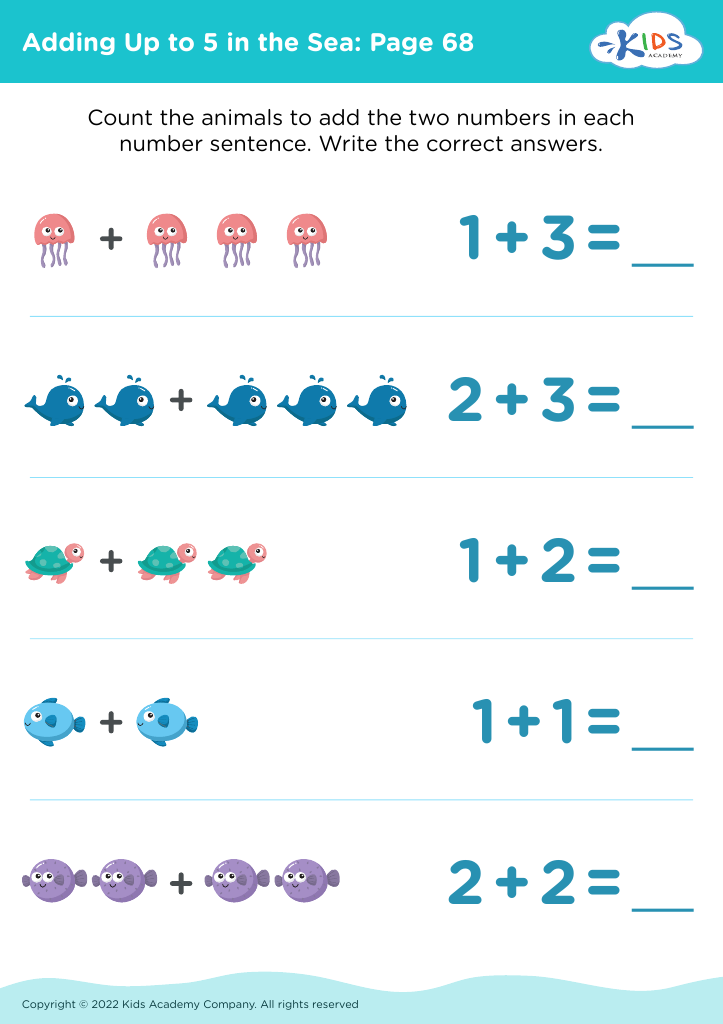
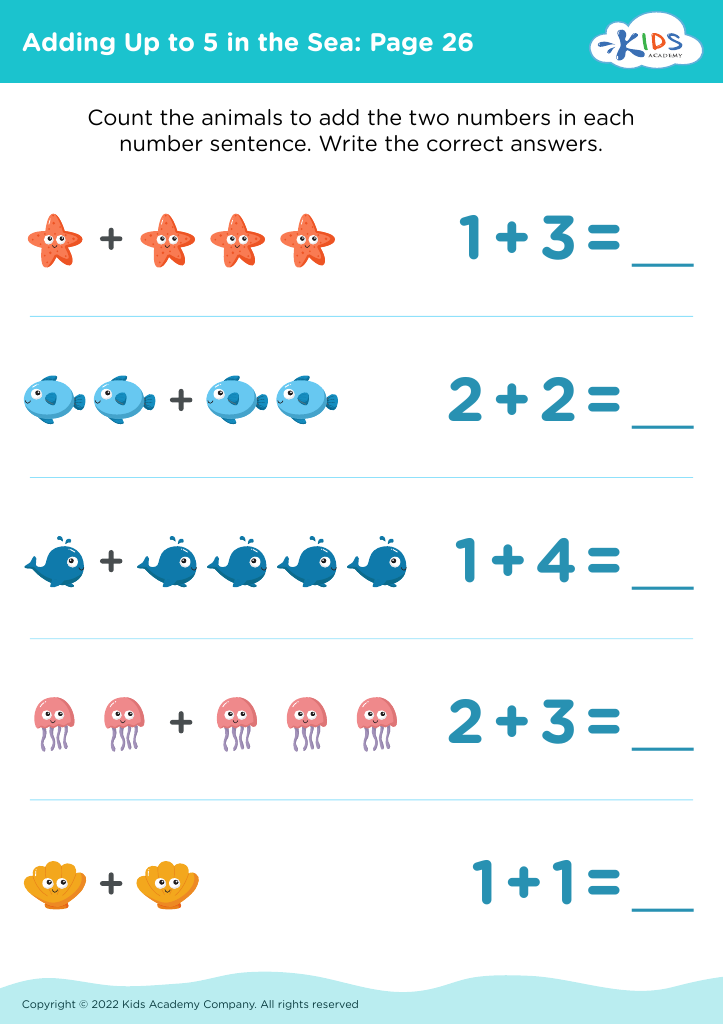



Engaging 5-year-olds in addition practice through interactive and themed contexts, like "Addition in the Sea," offers multiple developmental benefits, crucial both for their academic foundation and overall cognitive growth. At this early stage, children are naturally curious and possess an intrinsic love for play. Integrating math practice with playful themes involving sea creatures transforms learning into an enjoyable and memorable experience. This method not only captures their interest but also helps in associating math with positive emotions, which is essential for long-term educational motivation.
Early exposure to addition sets a sturdy foundation for future mathematical concepts. It enhances numerical fluency, sharpens problem-solving skills, and establishes patterns that scaffold more complex operations, such as subtraction, multiplication, and division. Engaging in themed addition activities also aids in the development of critical thinking as children learn to approach and solve problems in diverse contexts.
Moreover, these activities support the development of fine motor skills, especially when they involve hands-on elements like counting shells or drawing sea creatures. Interactive and cooperative learning with themes promotes social skills as well, fostering teamwork and communication among peers.
Parents and teachers should care about such practices because they lay the groundwork for a child's academic success, foster a lifelong love for learning, and support well-rounded cognitive and social development.