Addition Practice Adding Up to 5 Worksheets for 5-Year-Olds - Page 2
50 filtered results
-
From - To
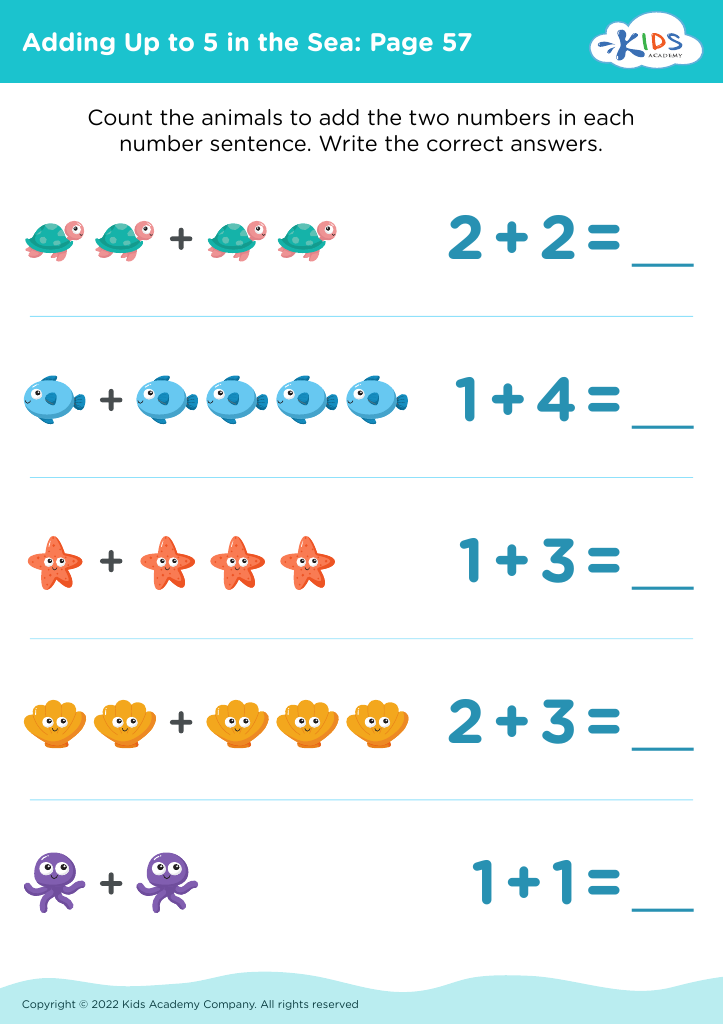
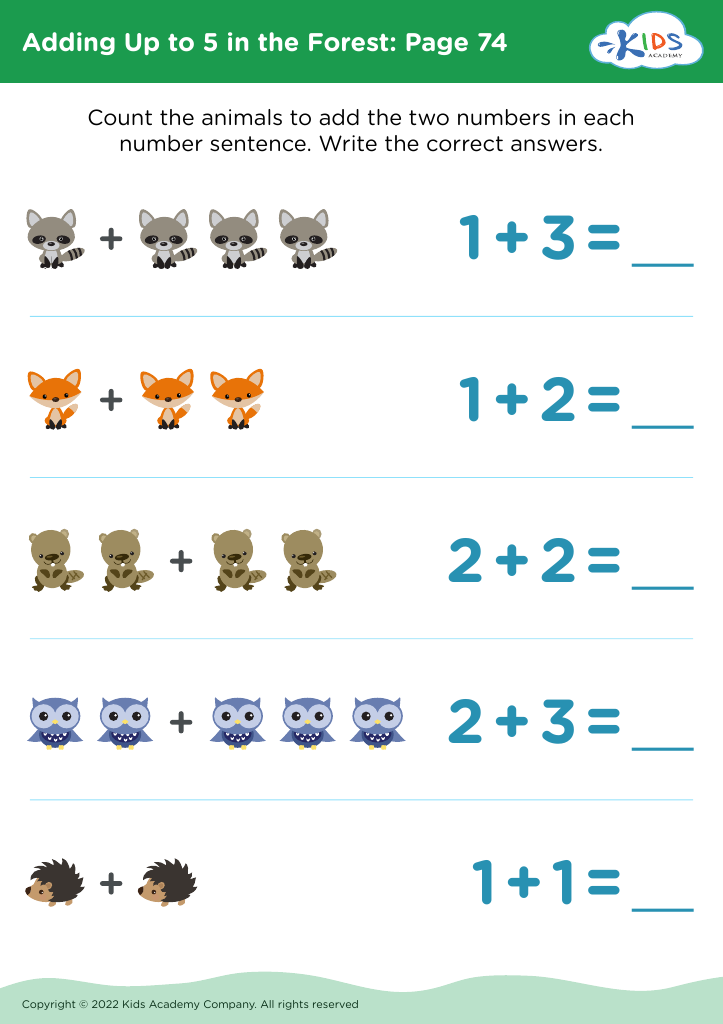
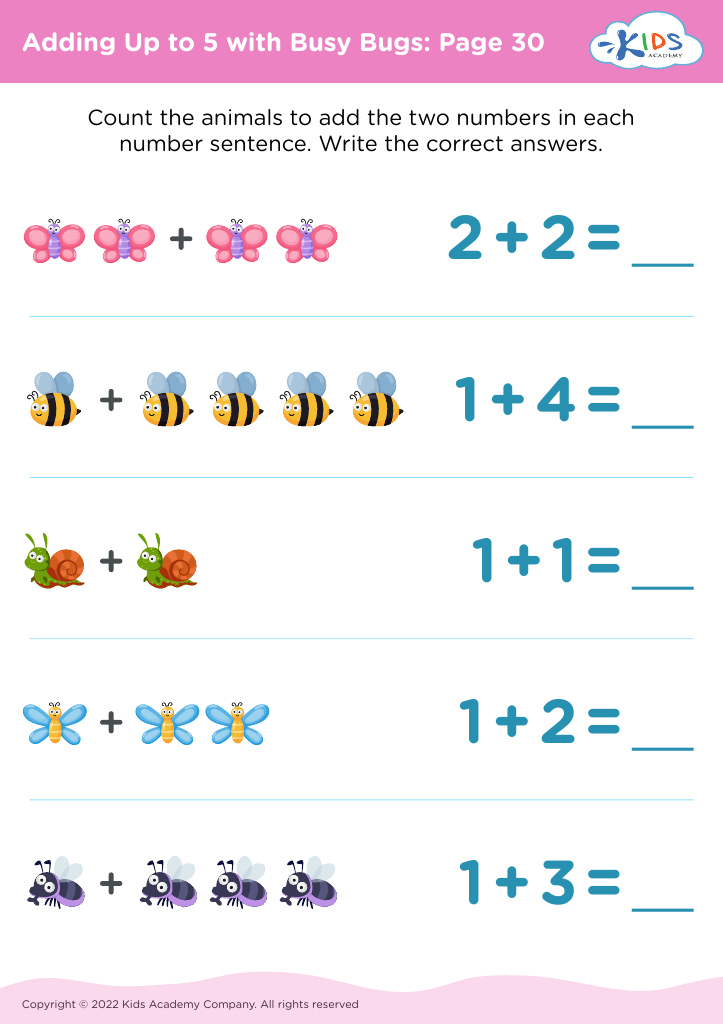
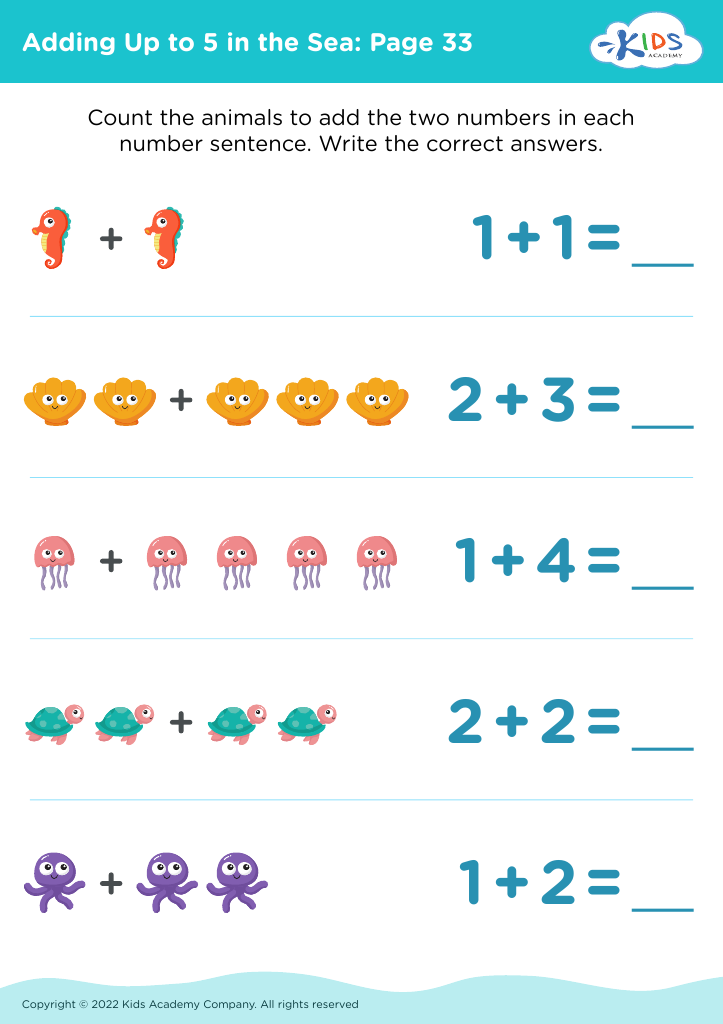
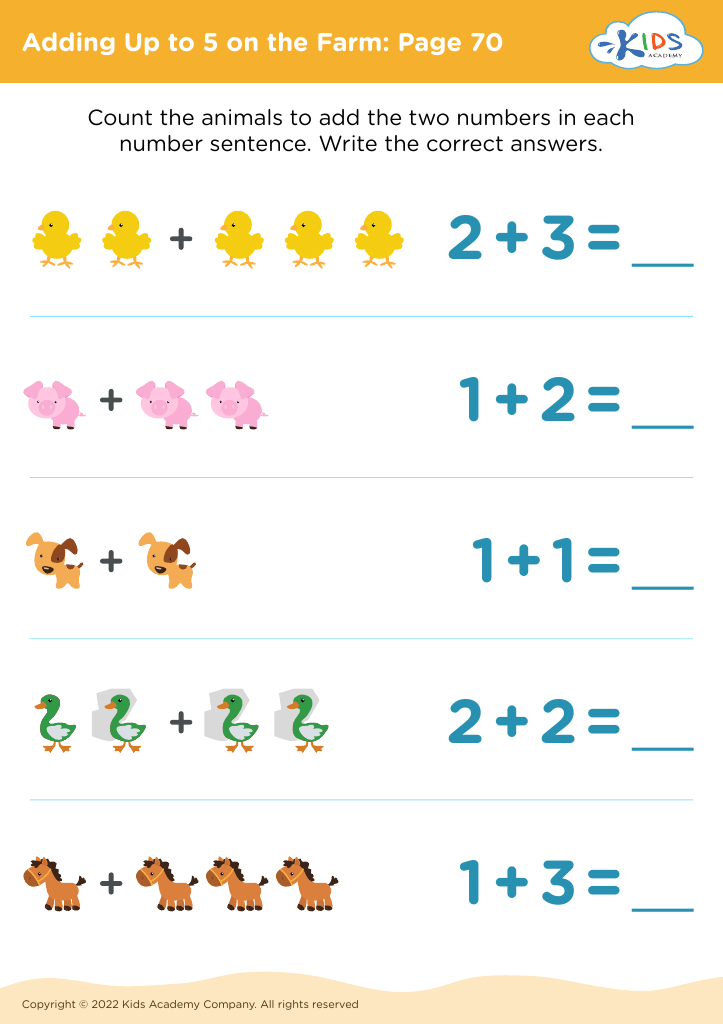
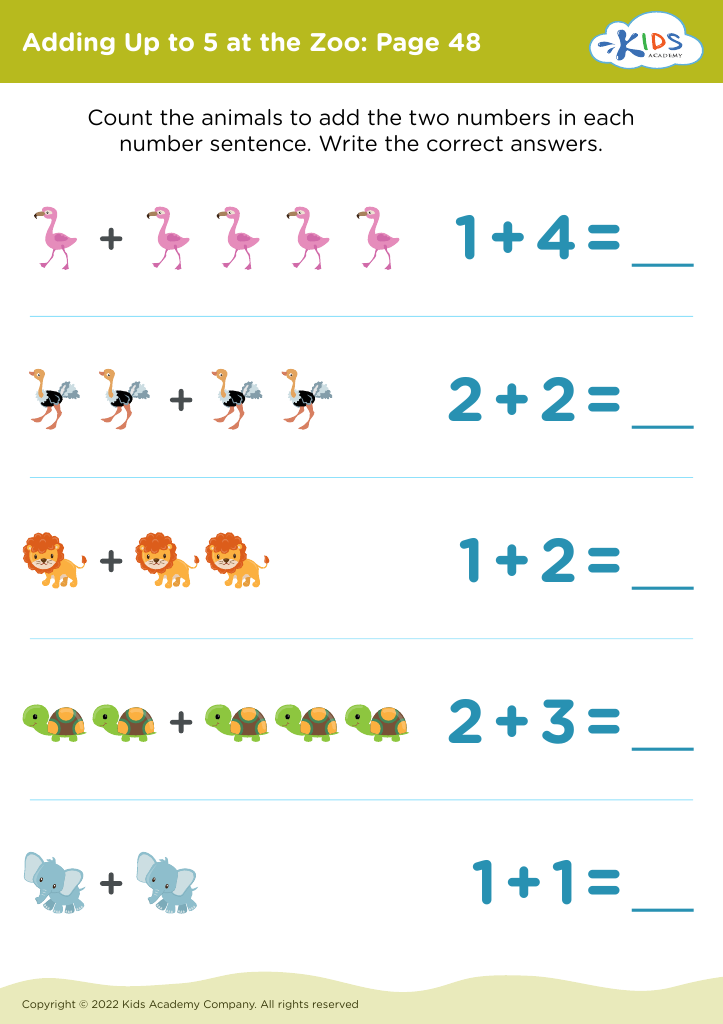
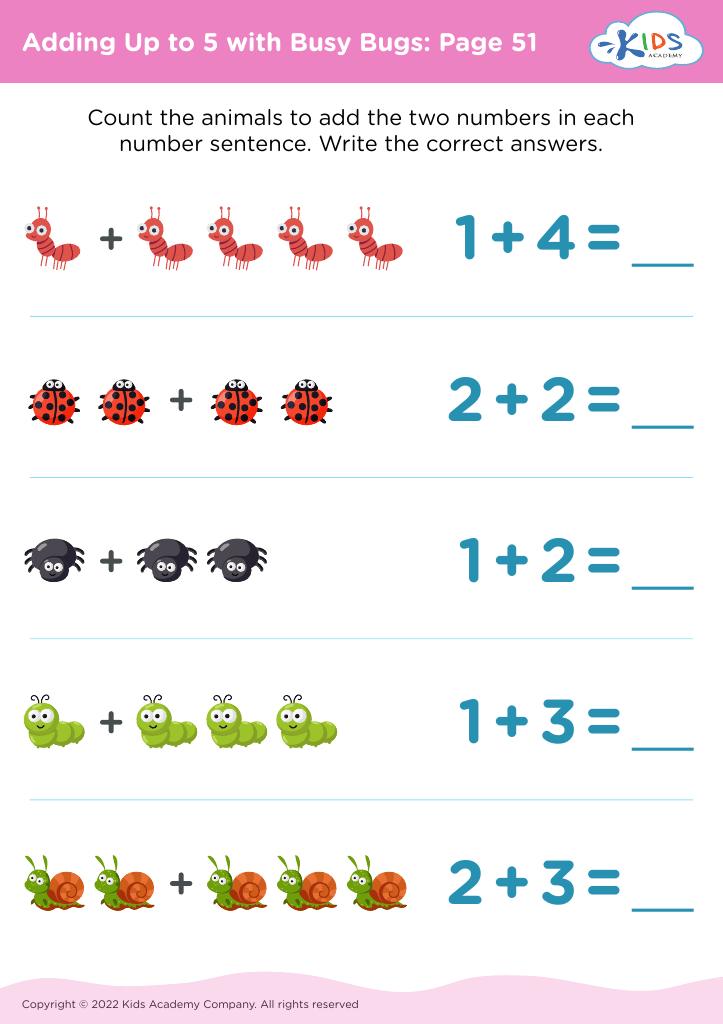
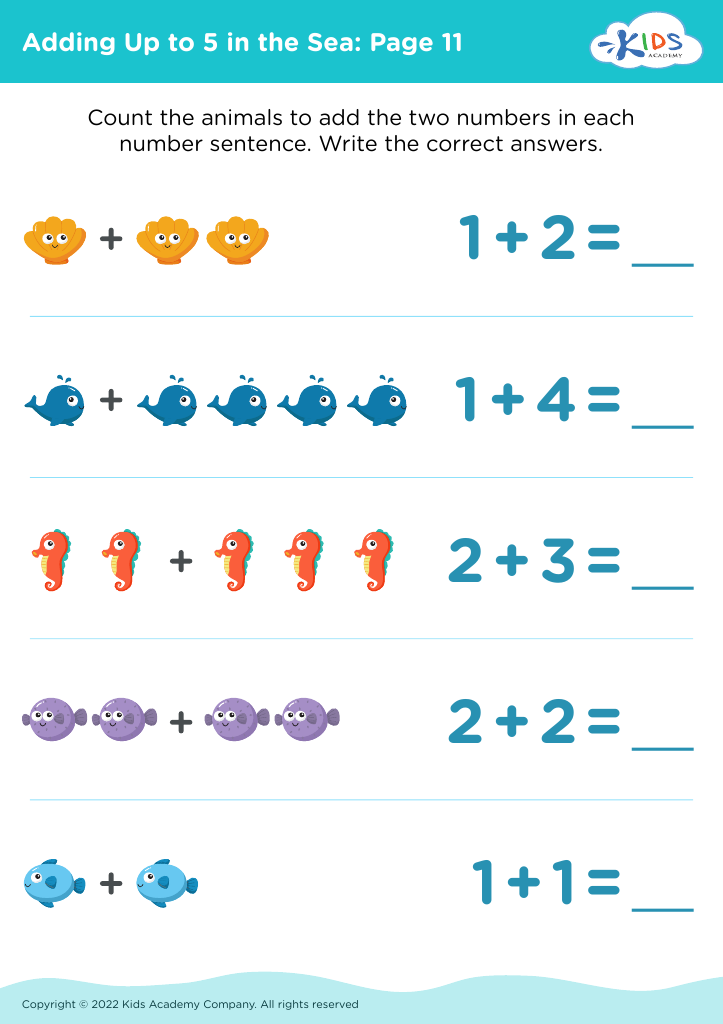
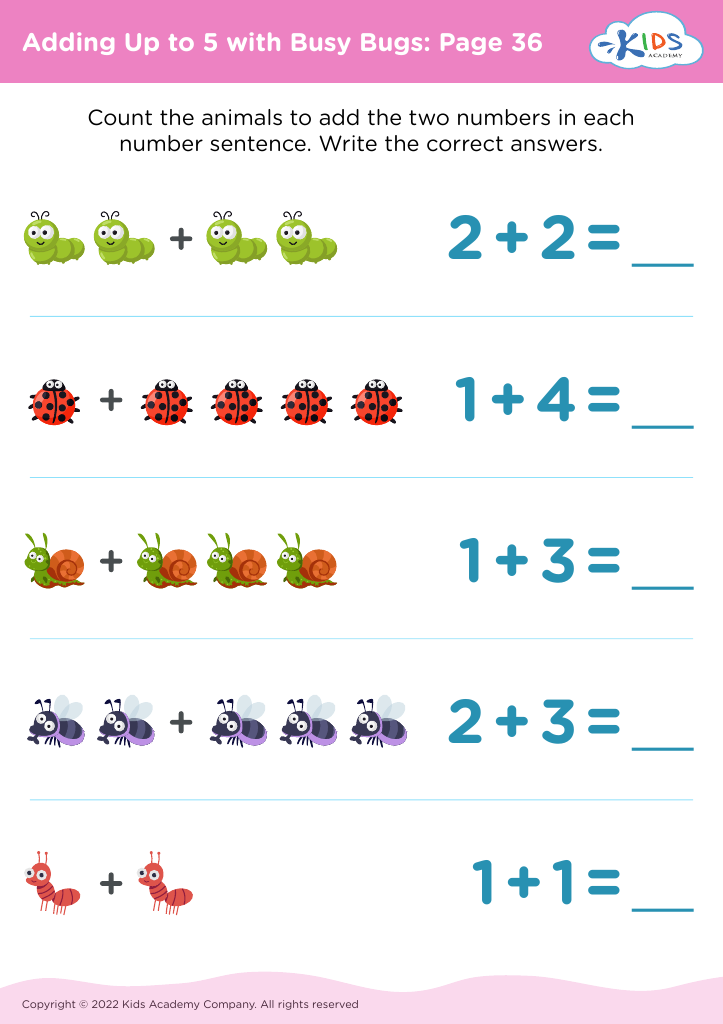
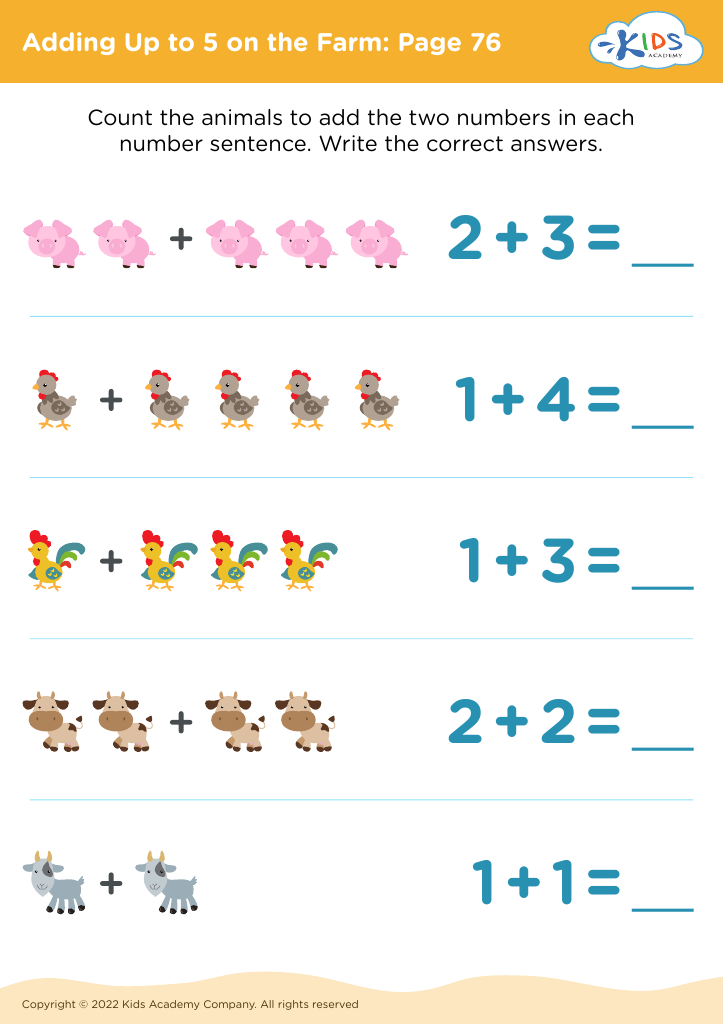
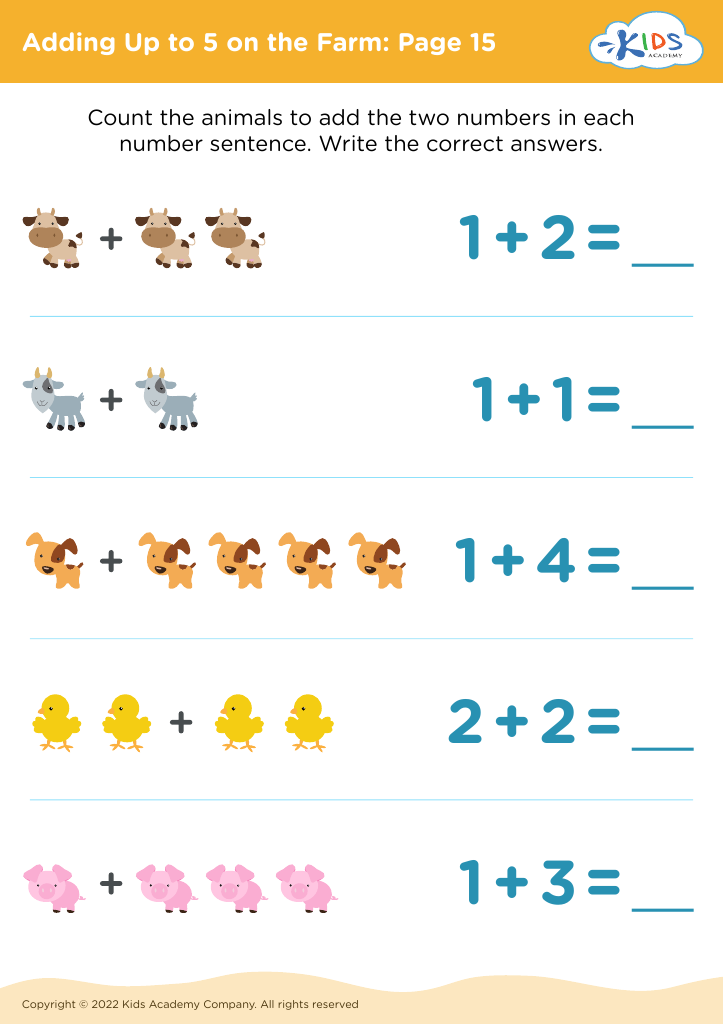
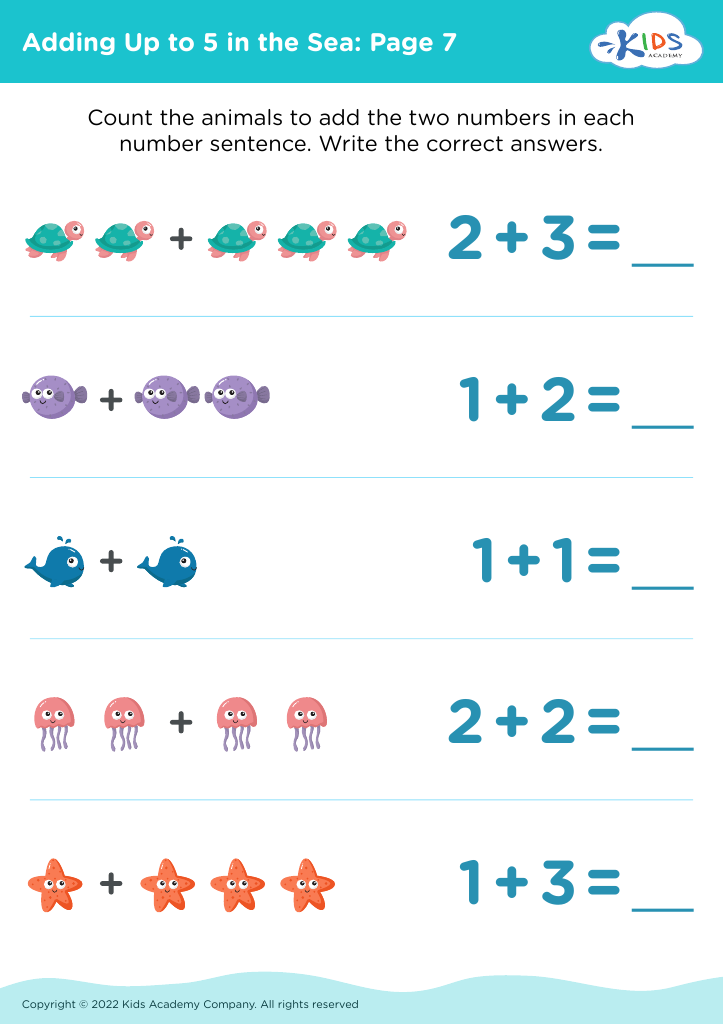
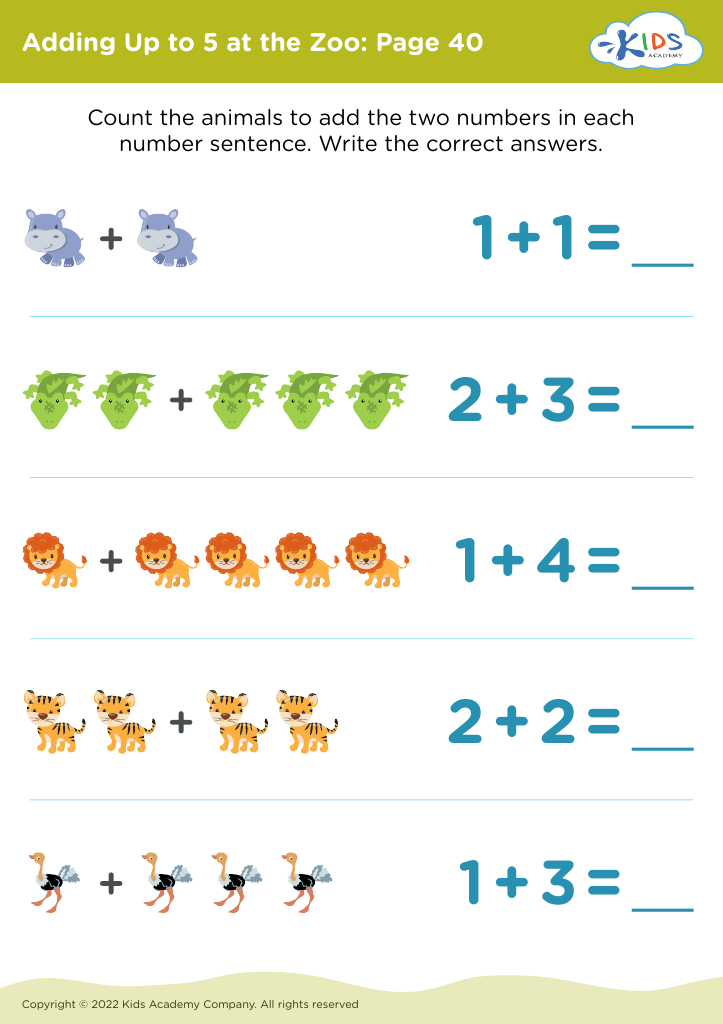
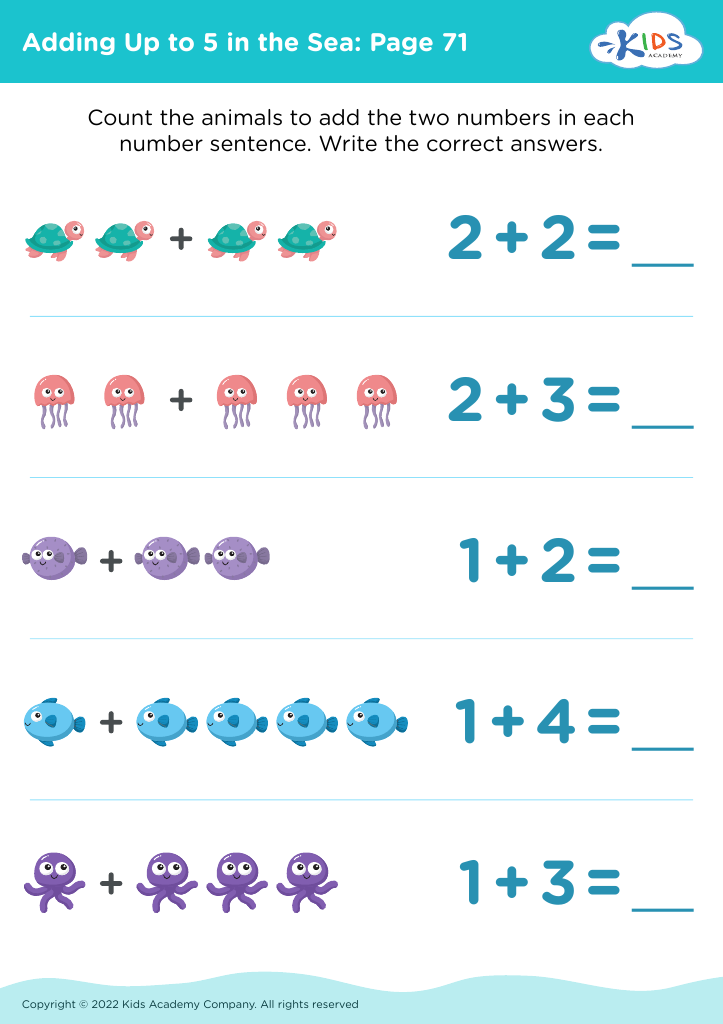
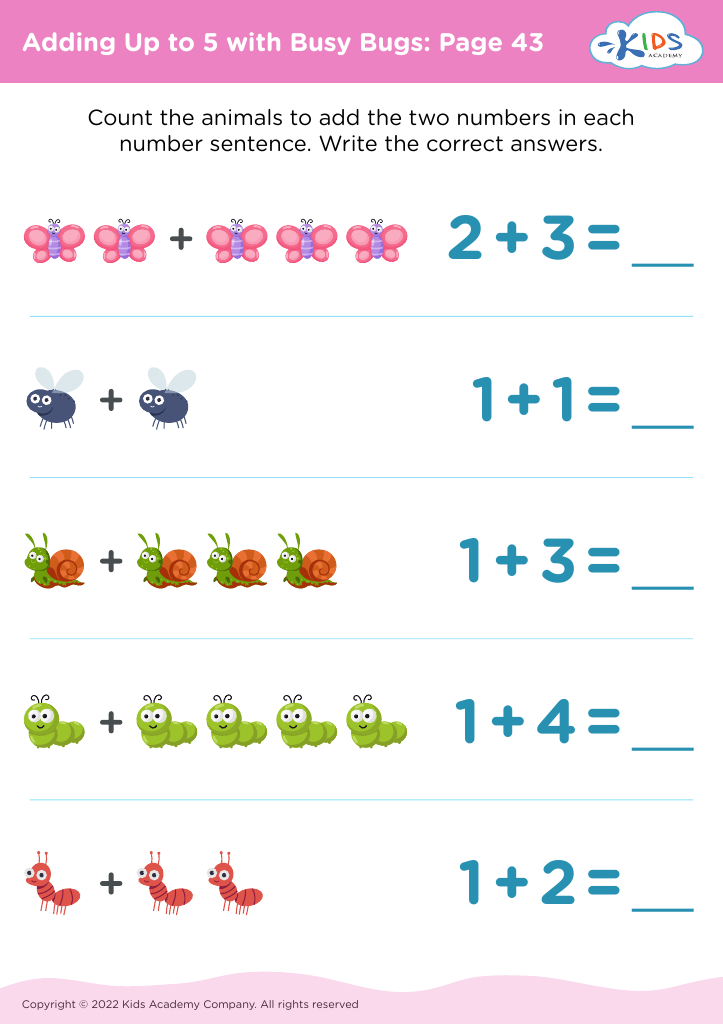
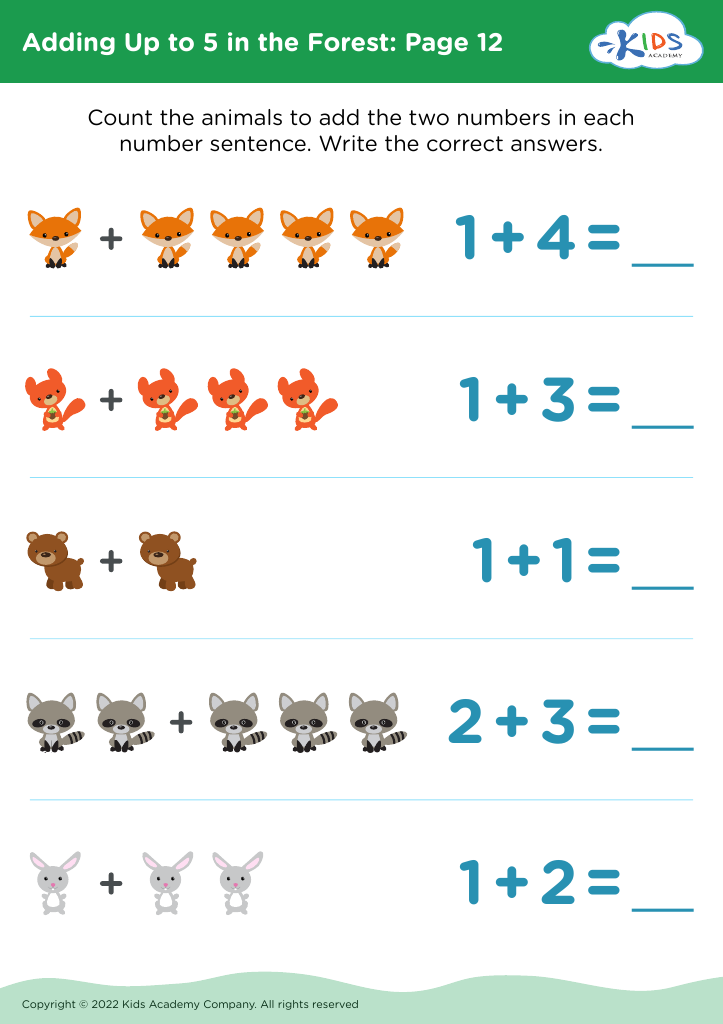
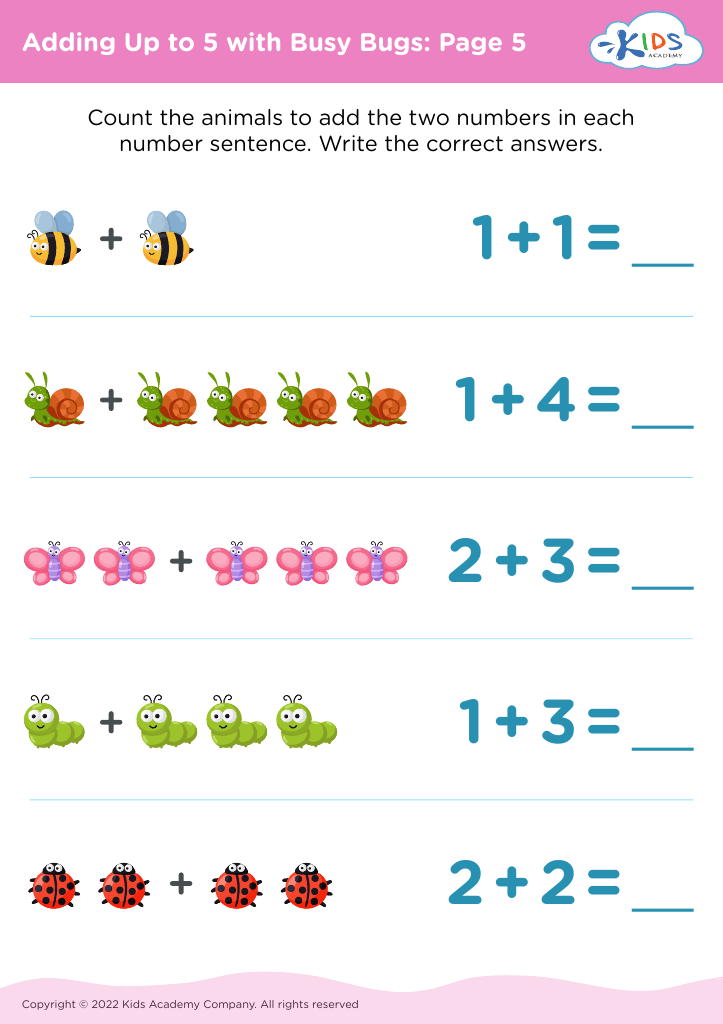
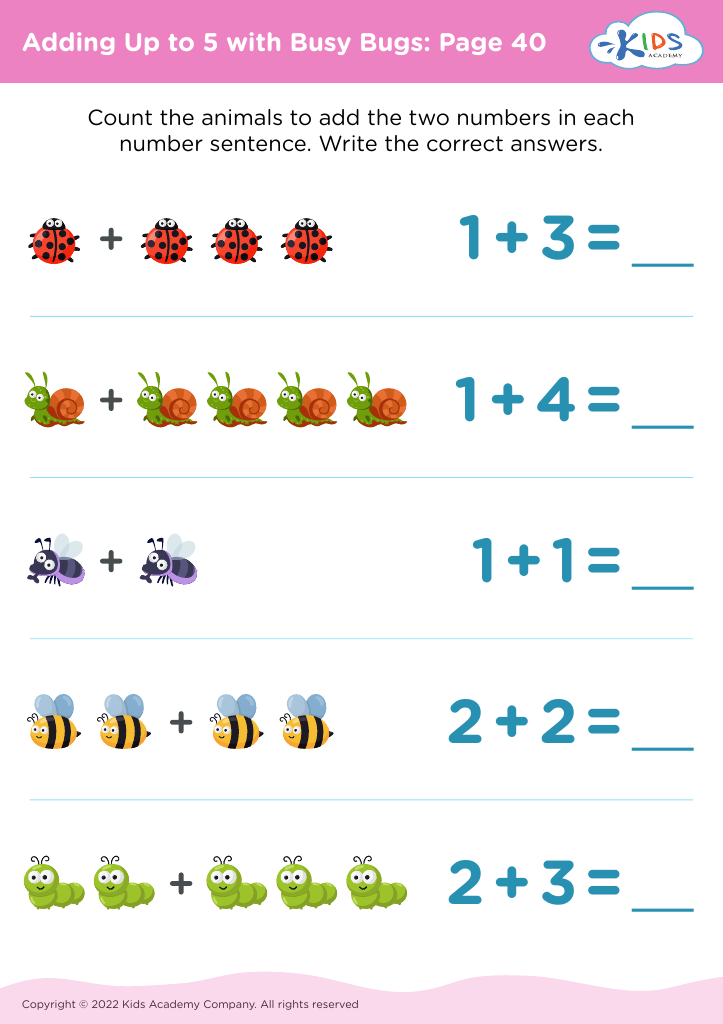
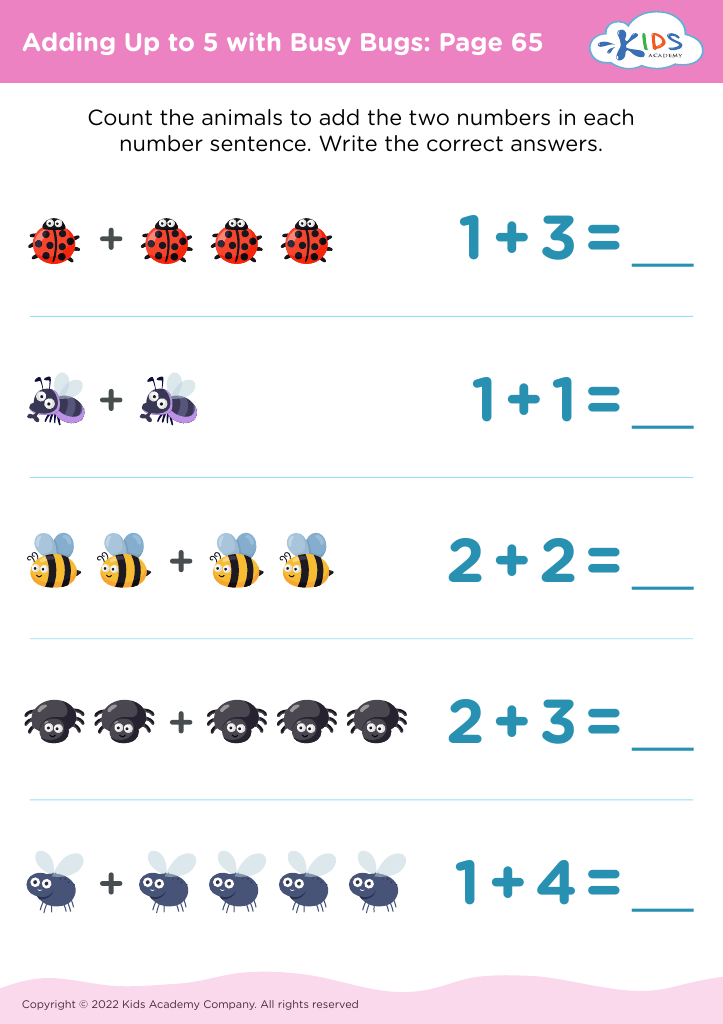
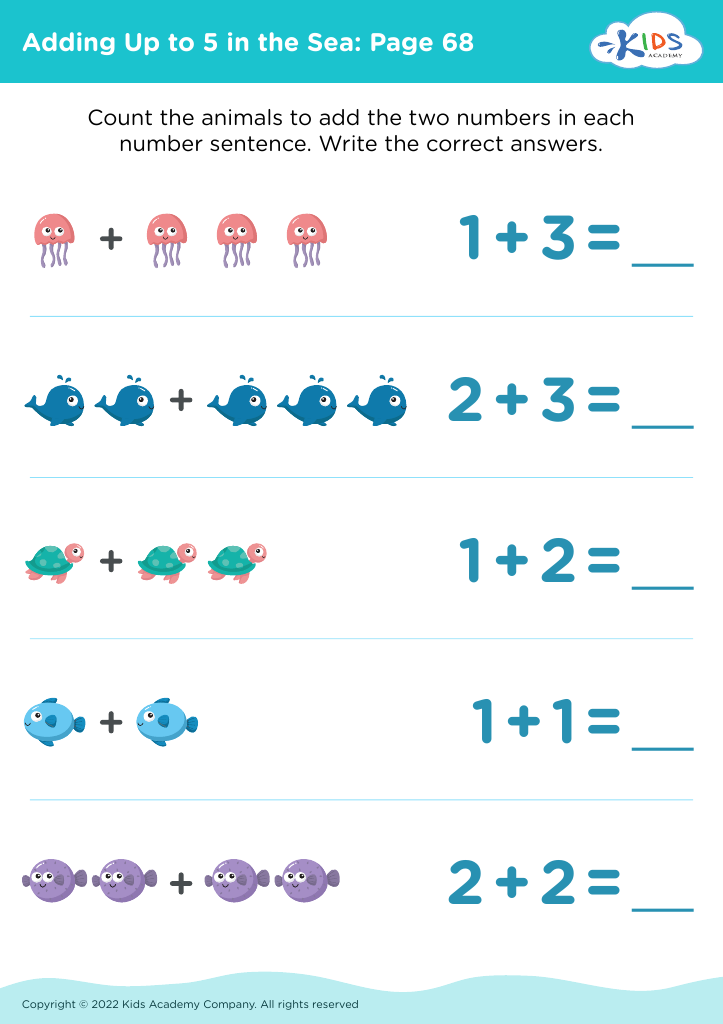





%20(1).jpg)


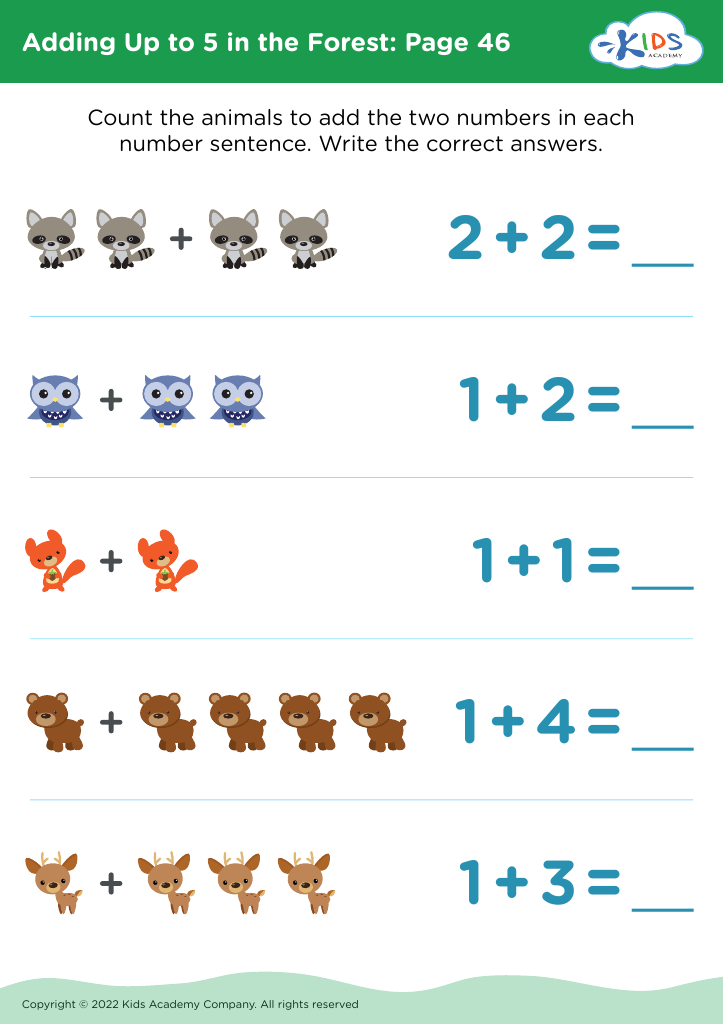
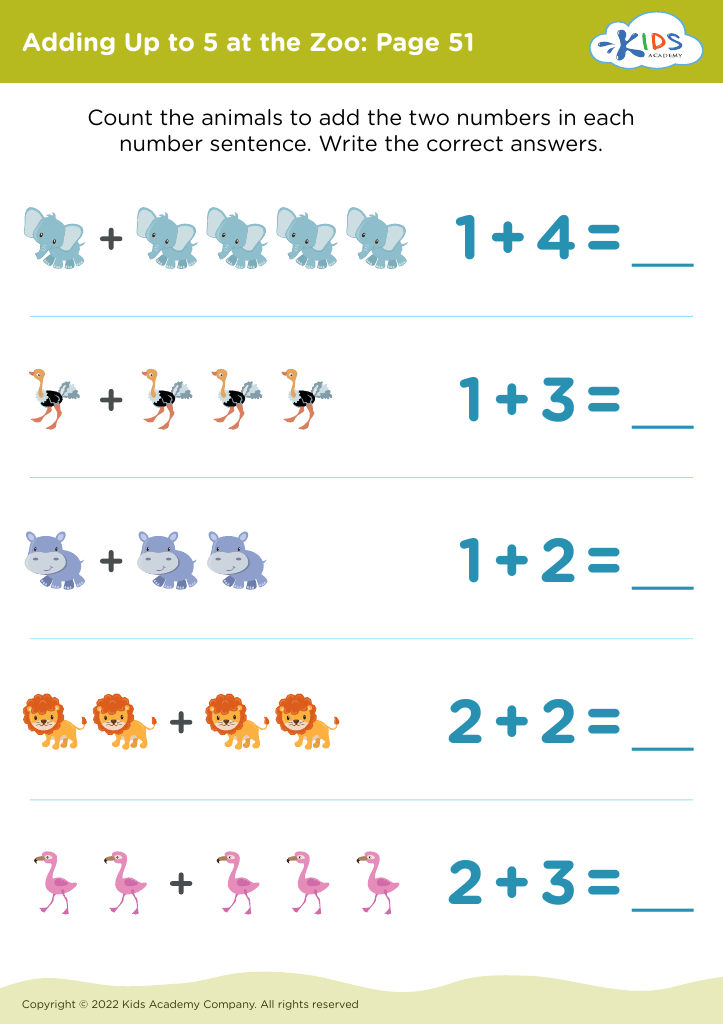
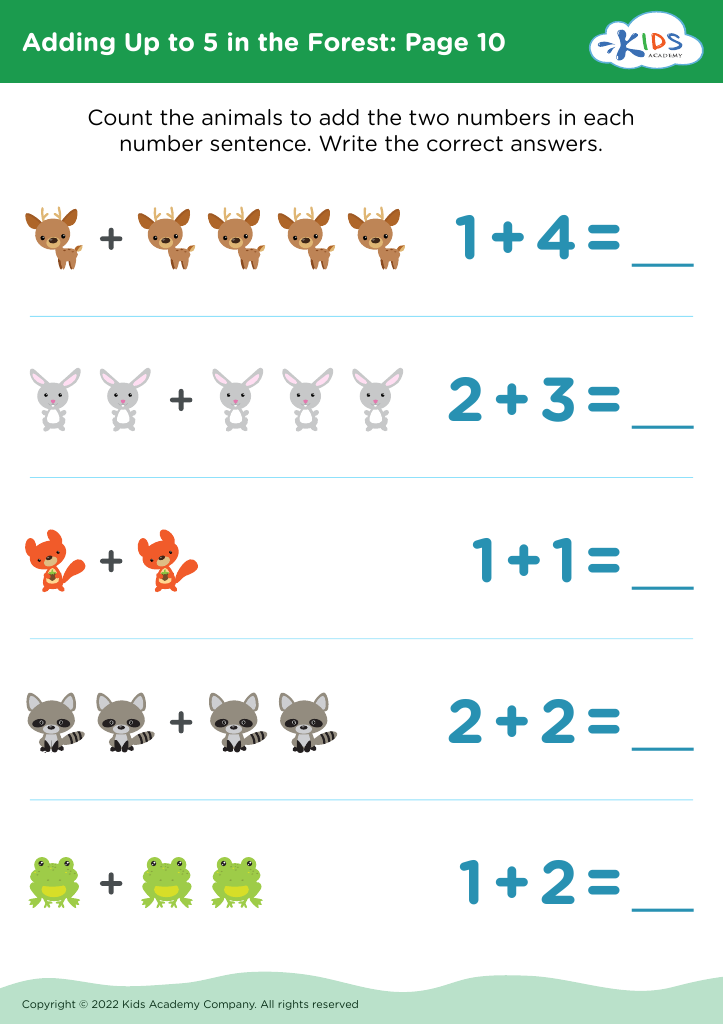
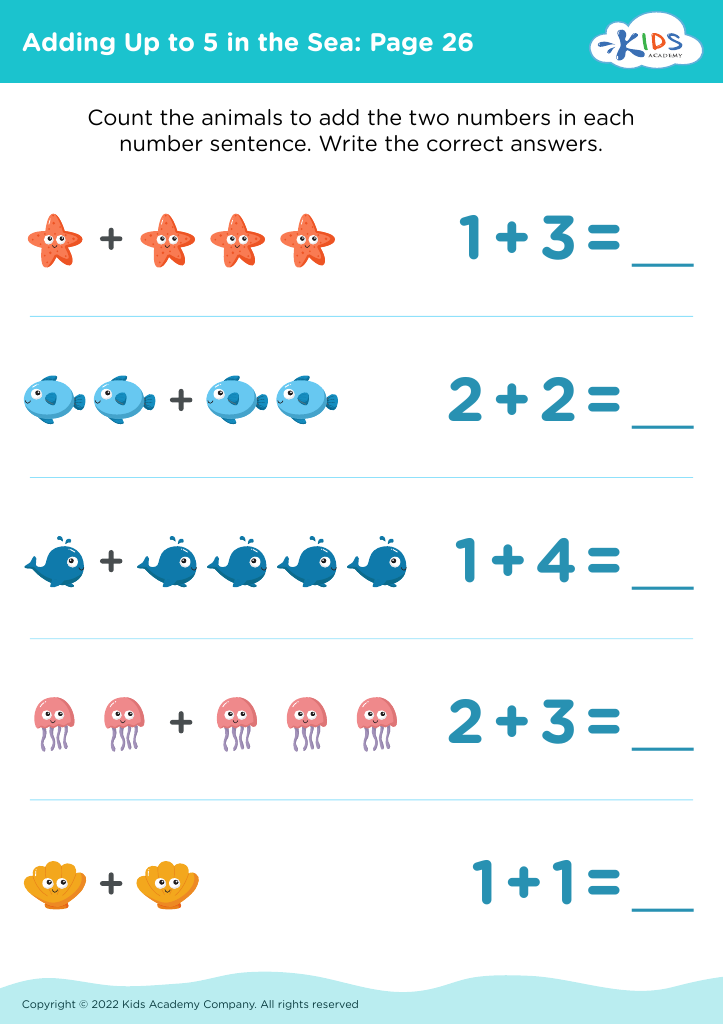
Teaching 5-year-olds to practice addition up to 5 sets a crucial foundation for their mathematical skills and overall cognitive development. At this tender age, children’s brains are highly receptive and develop rapidly. By fostering early math skills, parents and teachers promote logical thinking and problem-solving abilities that are essential for future learning.
Moreover, addition is a fundamental mathematical concept that appears in everyday life—from counting toys to sharing snacks. When children grasp these basic addition problems, they begin to understand the relevance of math in their daily activities, boosting their confidence and interest in the subject.
Practicing addition also enhances fine motor skills and improves concentration, as children often use objects like toys or fingers to count. This hands-on approach not only makes learning fun but also reinforces their ability to perform simple computations without getting overwhelmed.
Furthermore, mastering addition up to 5 sets the stage for tackling more complex arithmetic operations as they progress in school. Competency in these early skills contributes to a positive learning experience, minimizing math-related anxiety.
In summary, emphasizing addition practice for 5-year-olds is essential. It equips them with foundational skills, boosts confidence, encourages a love for maths, and paves the way for future academic success.








