Filters

90 filtered results

Clear all filters
Favorites
With answer key
Interactive

90 filtered results

Difficulty Level

Grade


Our "Animal Recognition Adding Up to 5 Worksheets" for 5-year-olds combine essential math skills with the fun of learning about animals. Designed to captivate young minds, these printable worksheets help children practice addition up to 5 while enhancing their animal recognition abilities. Through engaging visuals and simple exercises, kids will enjoy identifying various animals and solving basic math problems. Ideal for early learners, these worksheets foster a love for math and nature, boosting cognitive and observational skills. Perfect for both classroom activities and extra practice at home, encourage your child's development with our dynamic, education-focused worksheets.
Check out this FREE Trial Lesson on Adding Up to 5 for age 5!

D

Favorites
With answer key
Interactive
  • 5
  • Animal recognition
  • Adding Up to 5
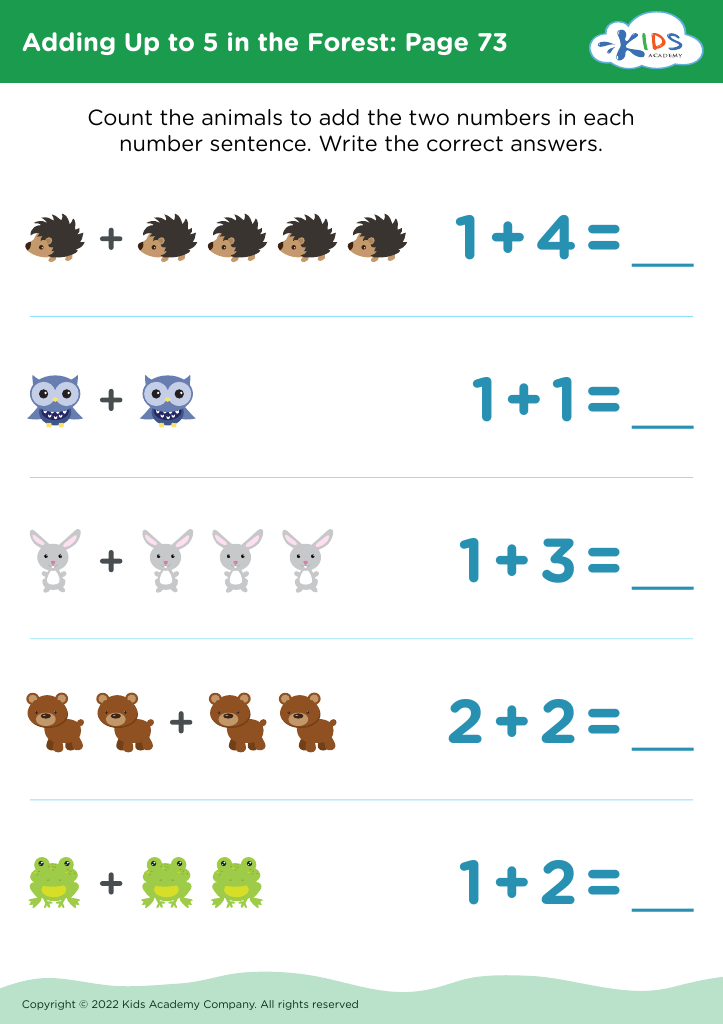
Adding Up to 5 in the Forest: Page 73
Worksheet
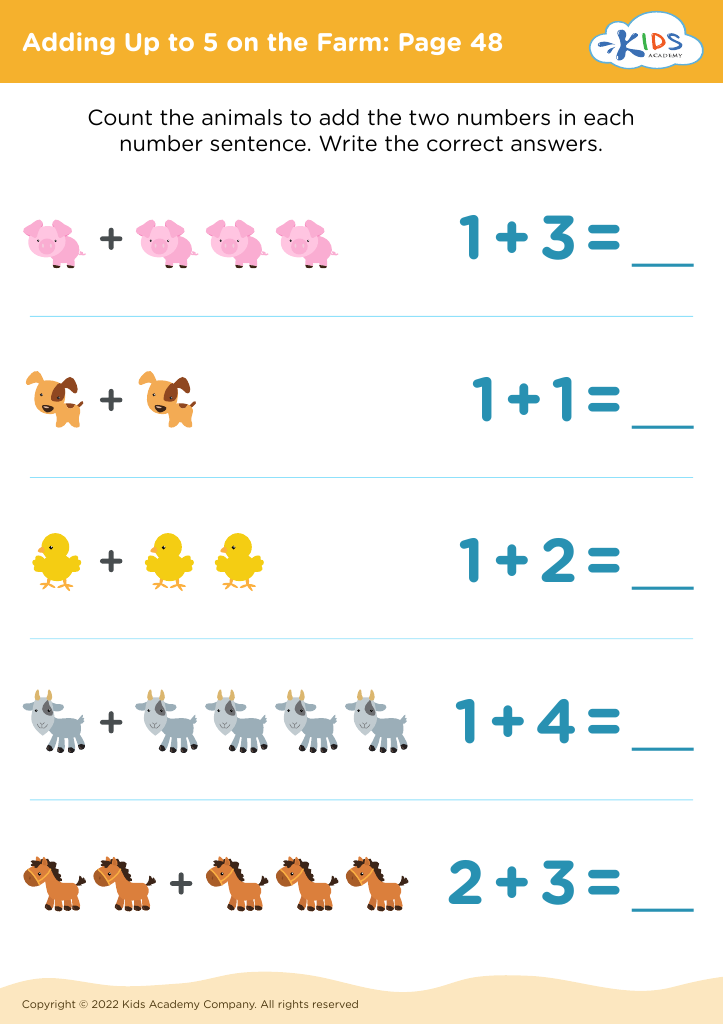
Adding Up to 5 on the Farm: Page 48
Worksheet
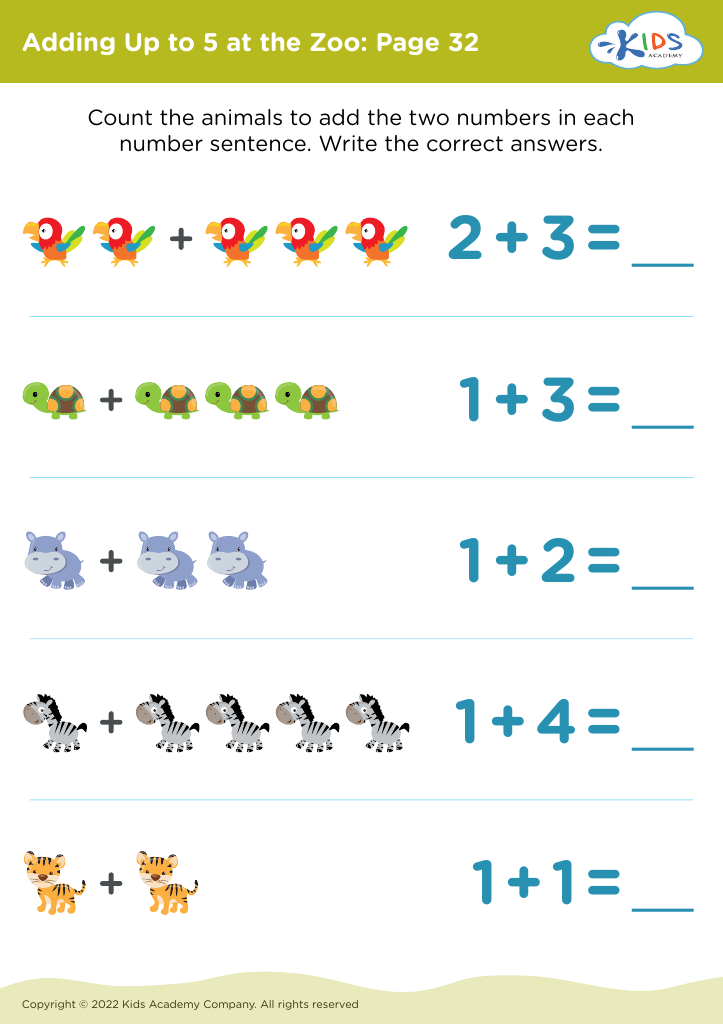
Adding Up to 5 at the Zoo: Page 32
Worksheet
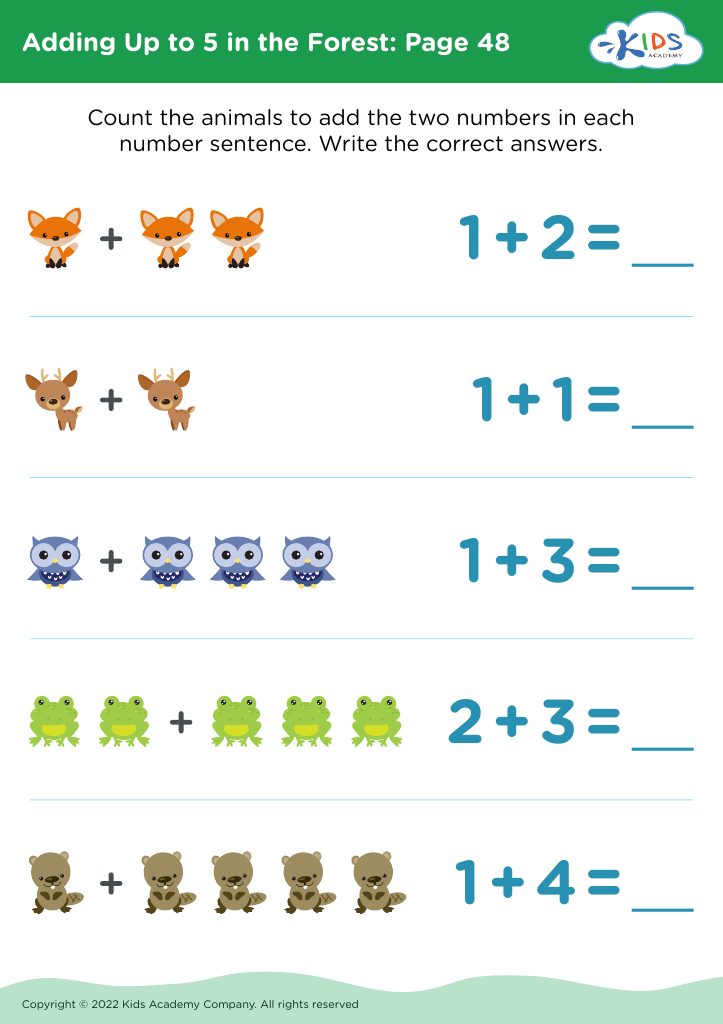
Adding Up to 5 in the Forest: Page 48
Worksheet
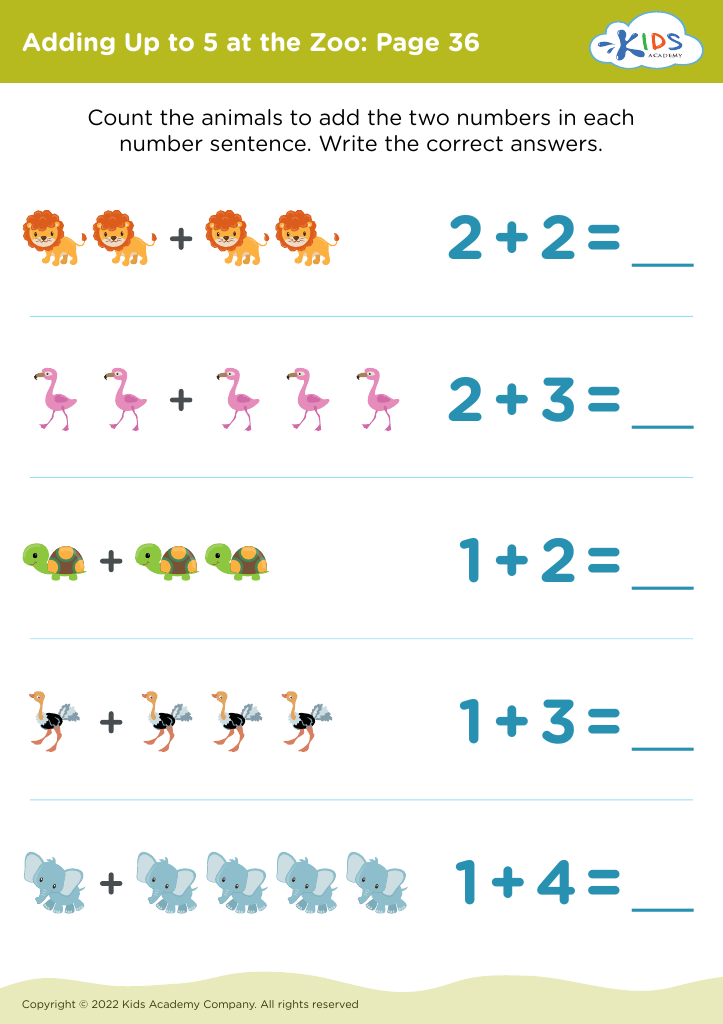
Adding Up to 5 at the Zoo: Page 36
Worksheet
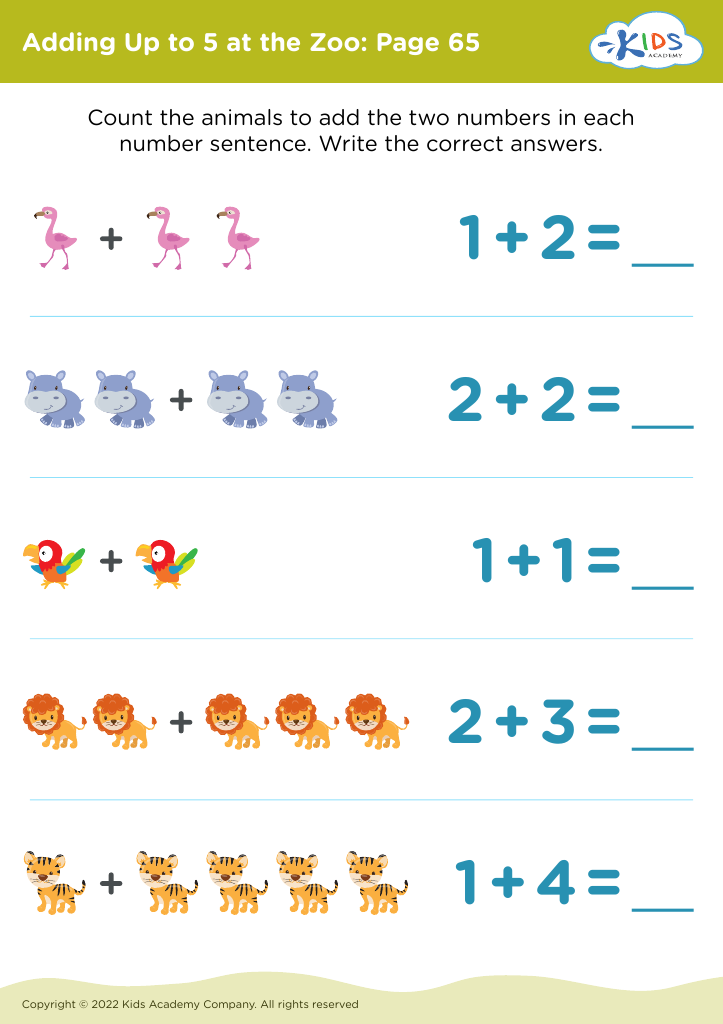
Adding Up to 5 at the Zoo: Page 65
Worksheet
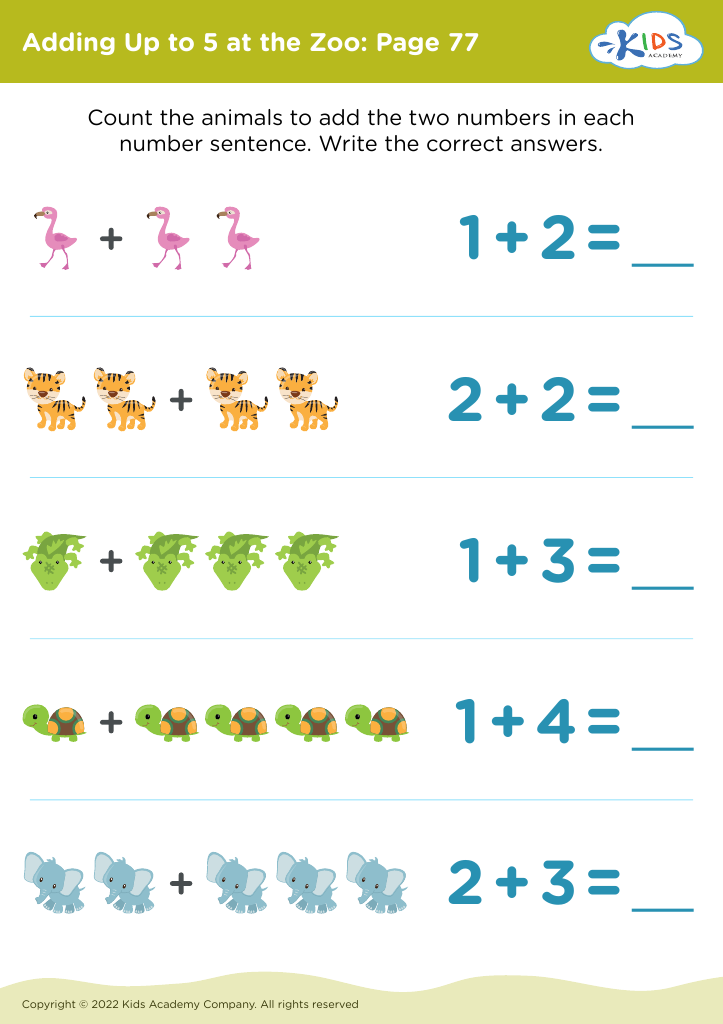
Adding Up to 5 at the Zoo: Page 77
Worksheet
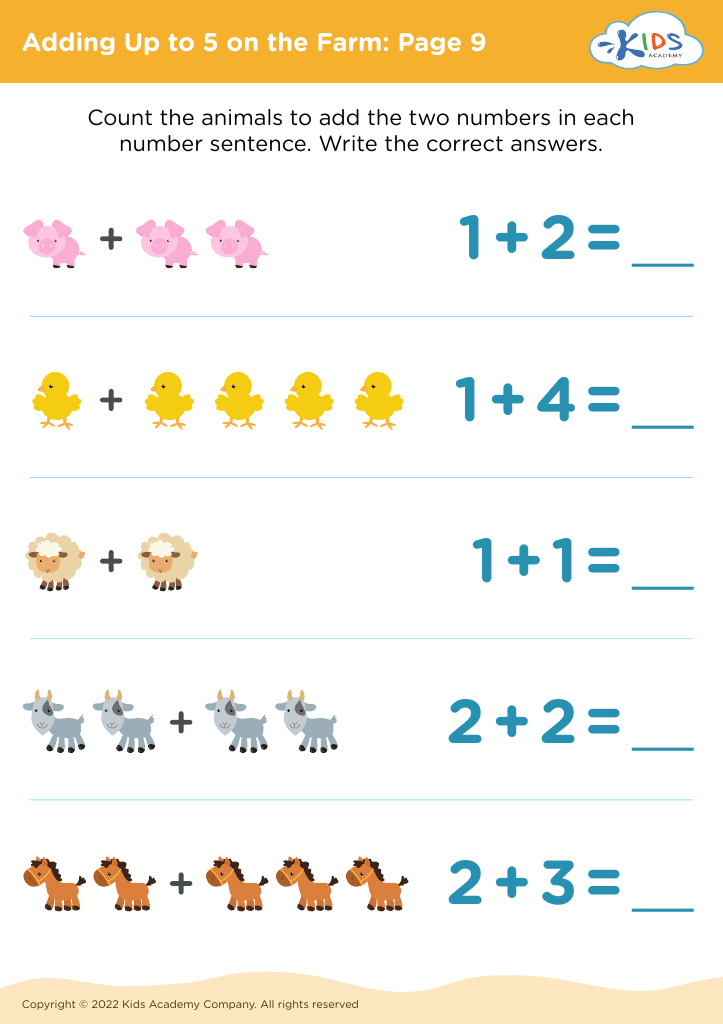
Adding Up to 5 on the Farm: Page 9
Worksheet
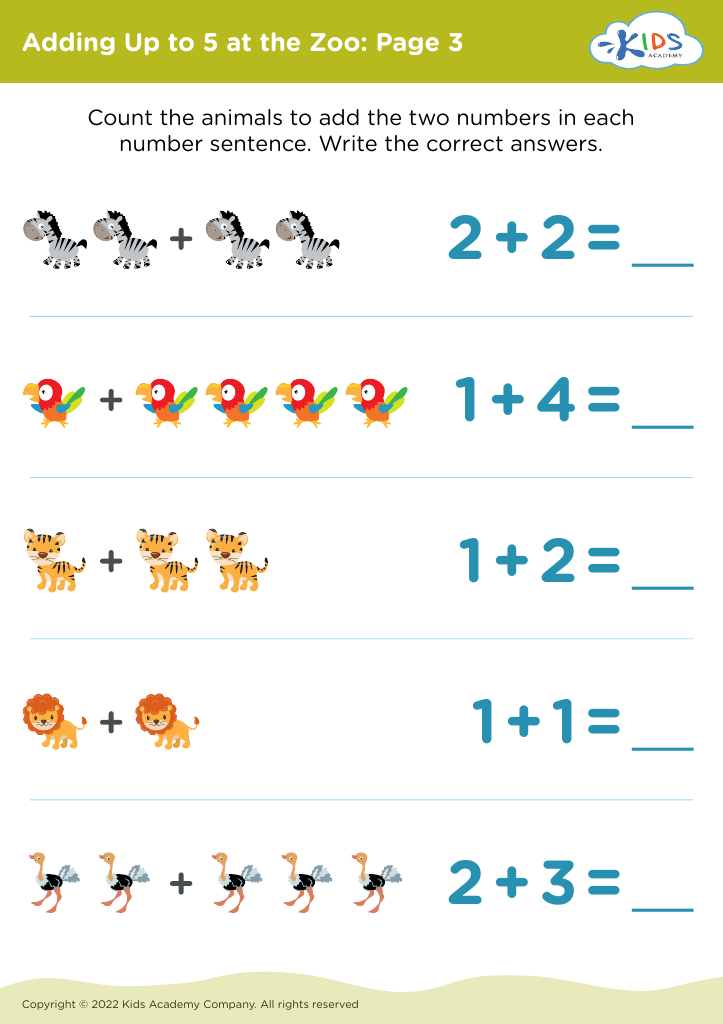
Adding Up to 5 at the Zoo: Page 3

Adding Up to 5 at the Zoo: Page 3

Adding Up to 5 at the Zoo: Page 3
Worksheet
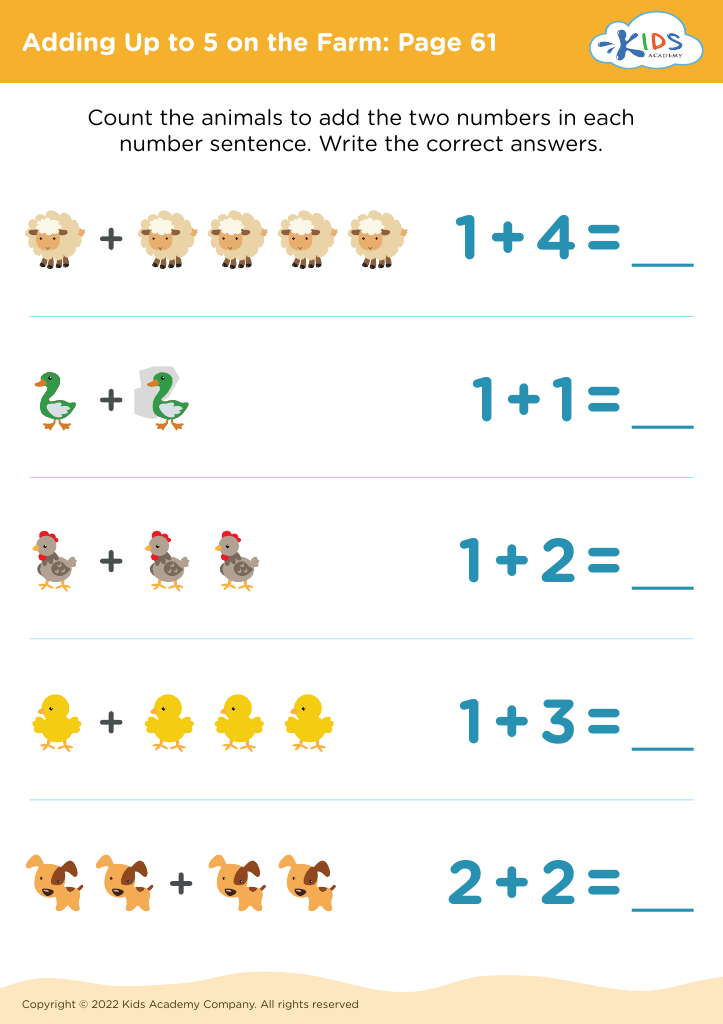
Adding Up to 5 on the Farm: Page 61
Worksheet
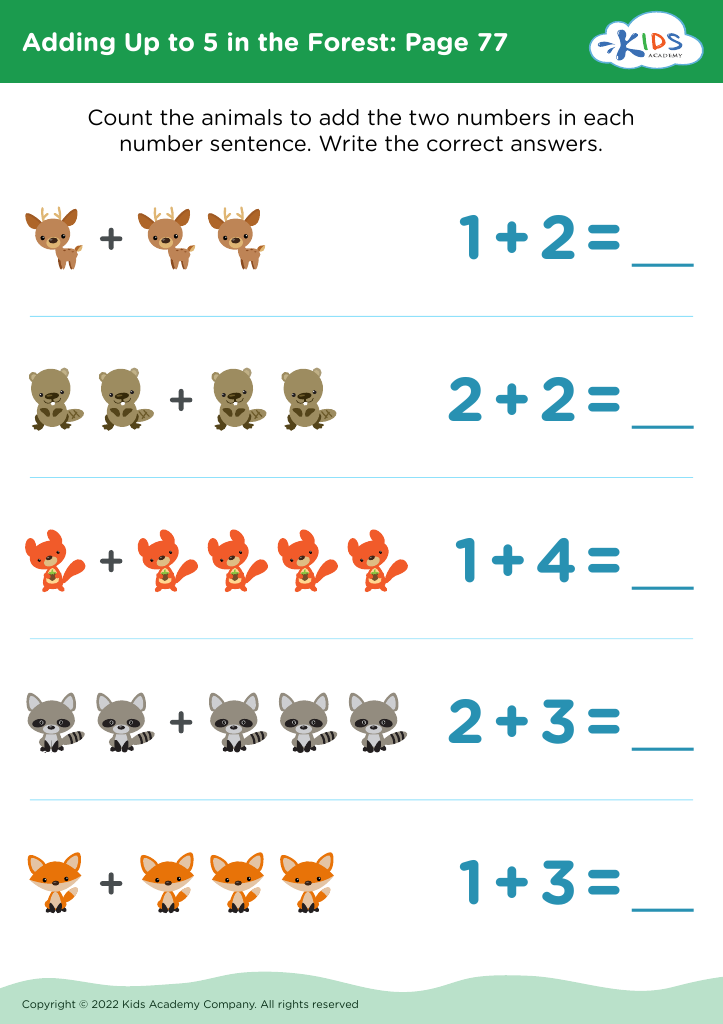
Adding Up to 5 in the Forest: Page 77
Worksheet
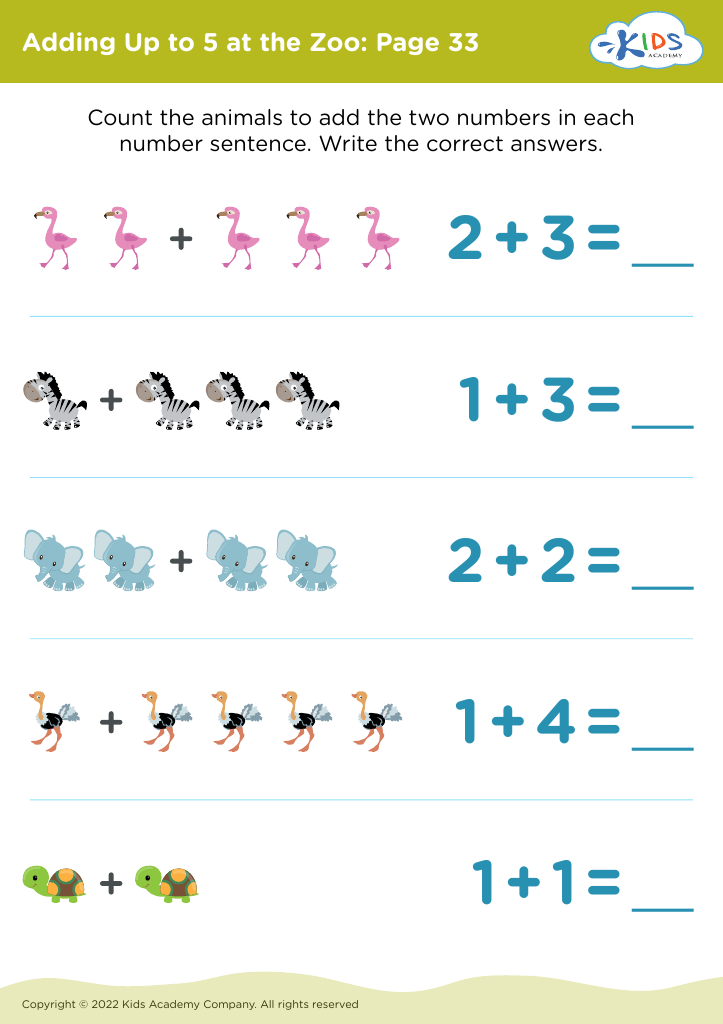
Adding Up to 5 at the Zoo: Page 33
Worksheet
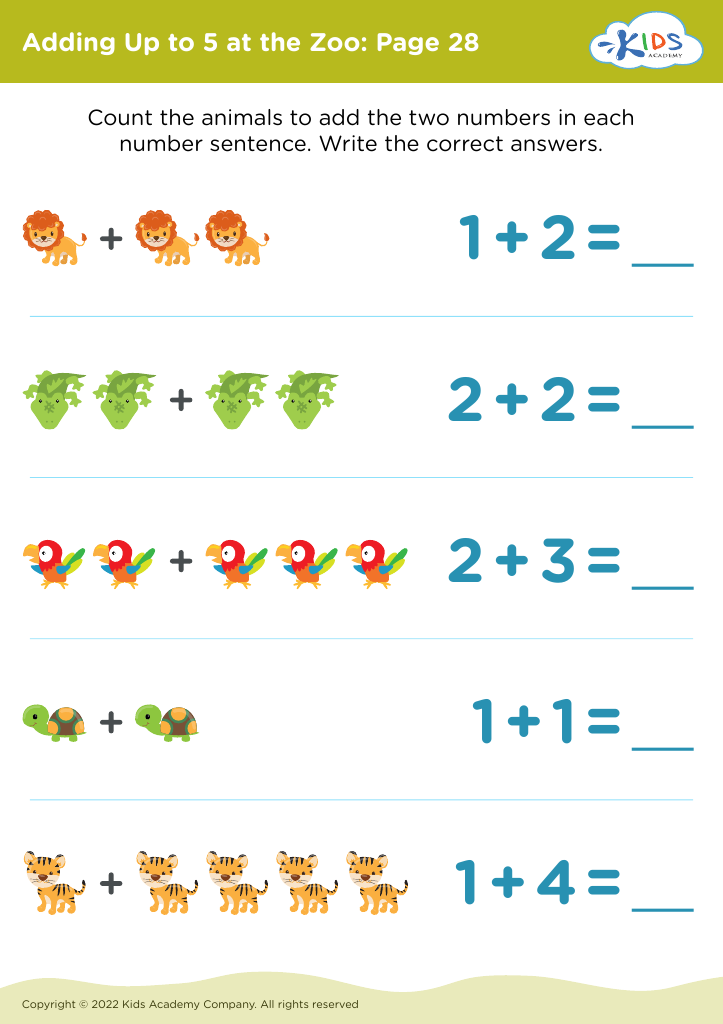
Adding Up to 5 at the Zoo: Page 28
Worksheet
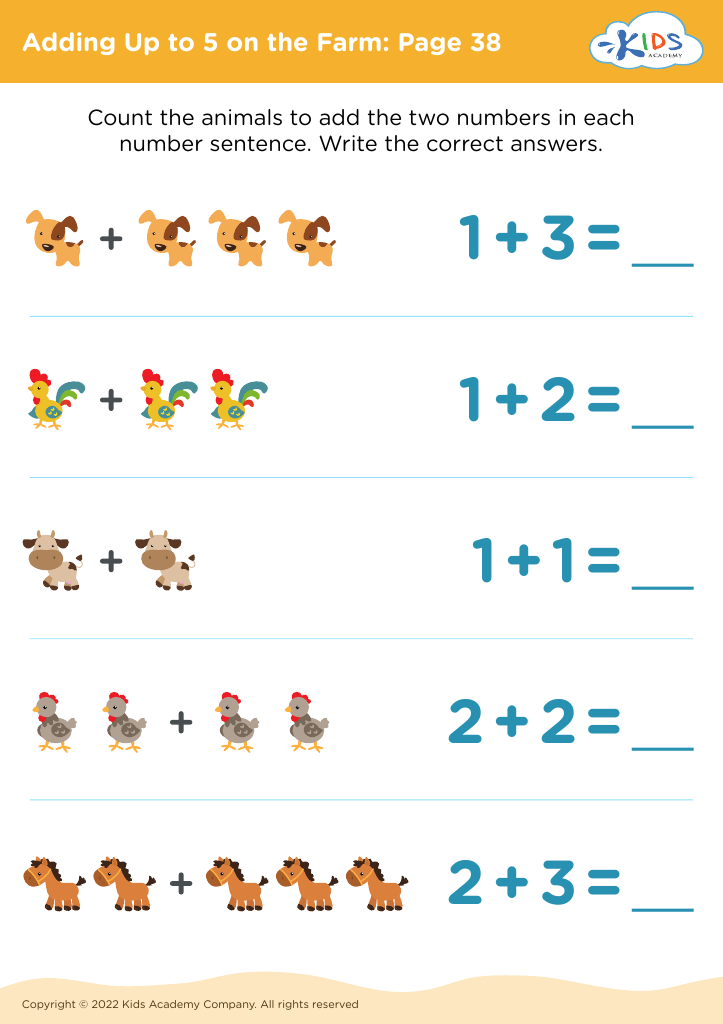
Adding Up to 5 on the Farm: Page 38
Worksheet
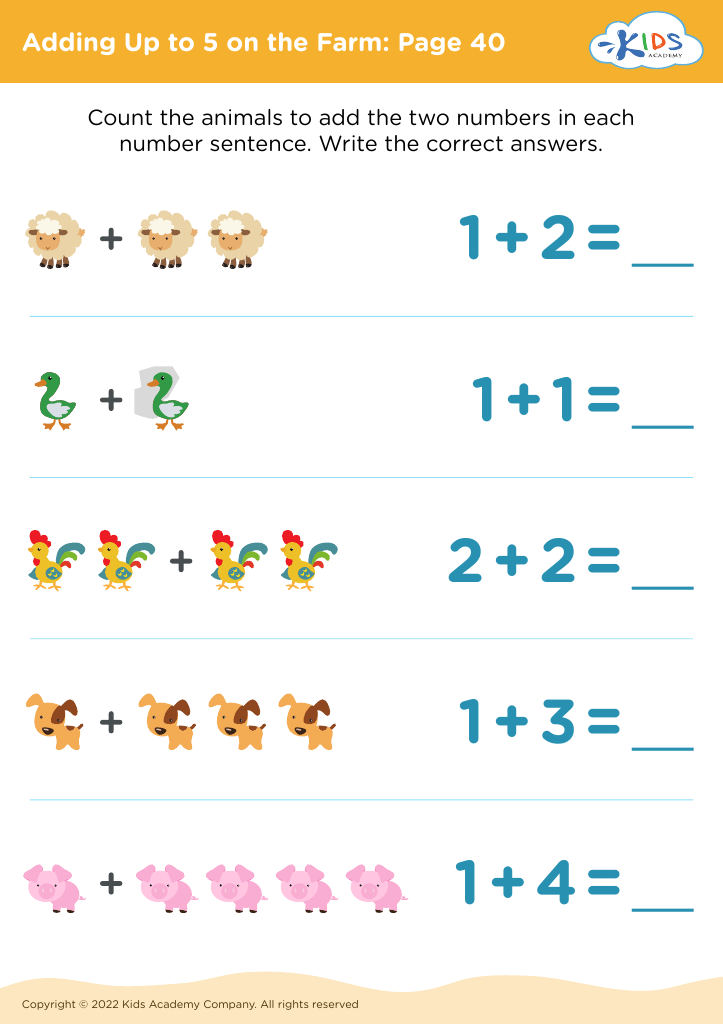
Adding Up to 5 on the Farm: Page 40
Worksheet
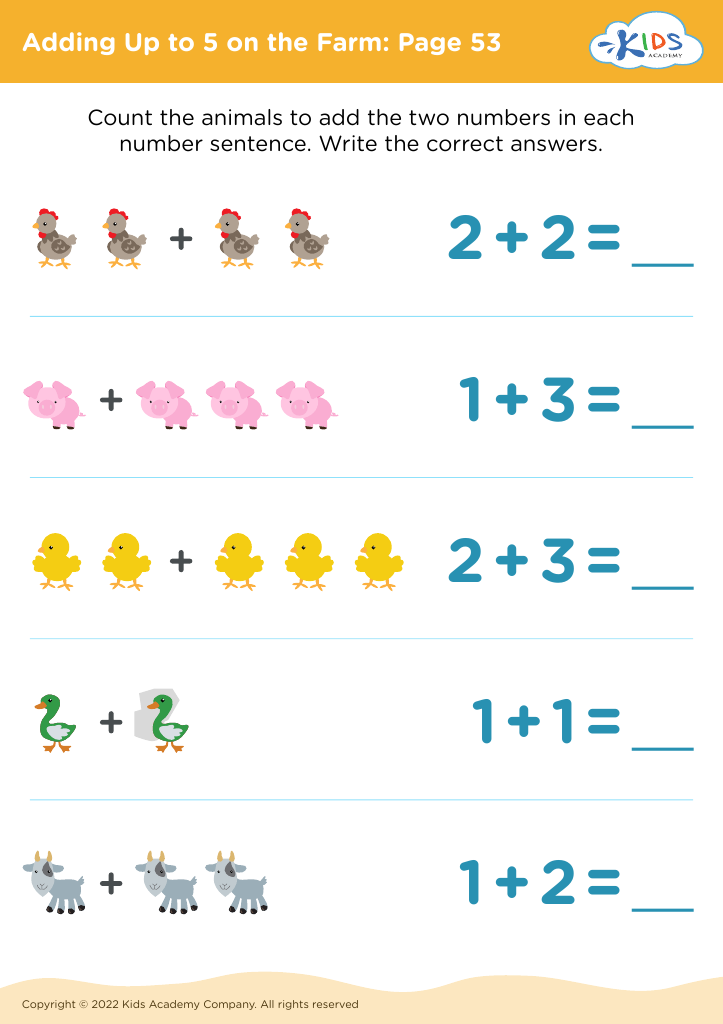
Adding Up to 5 on the Farm: Page 53
Worksheet
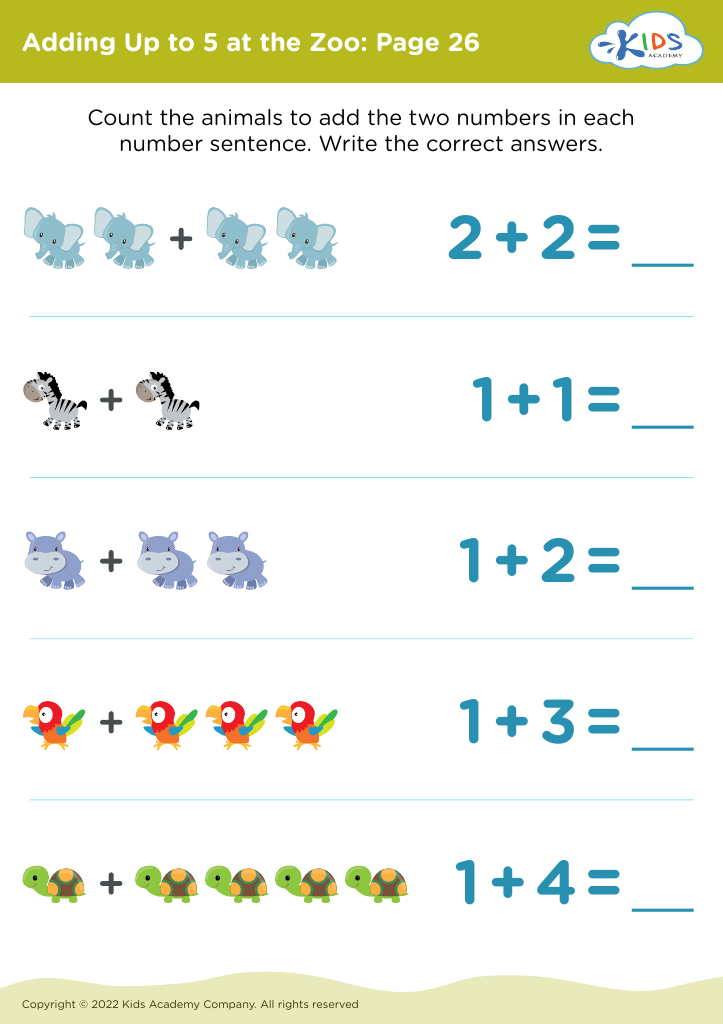
Adding Up to 5 at the Zoo: Page 26
Worksheet
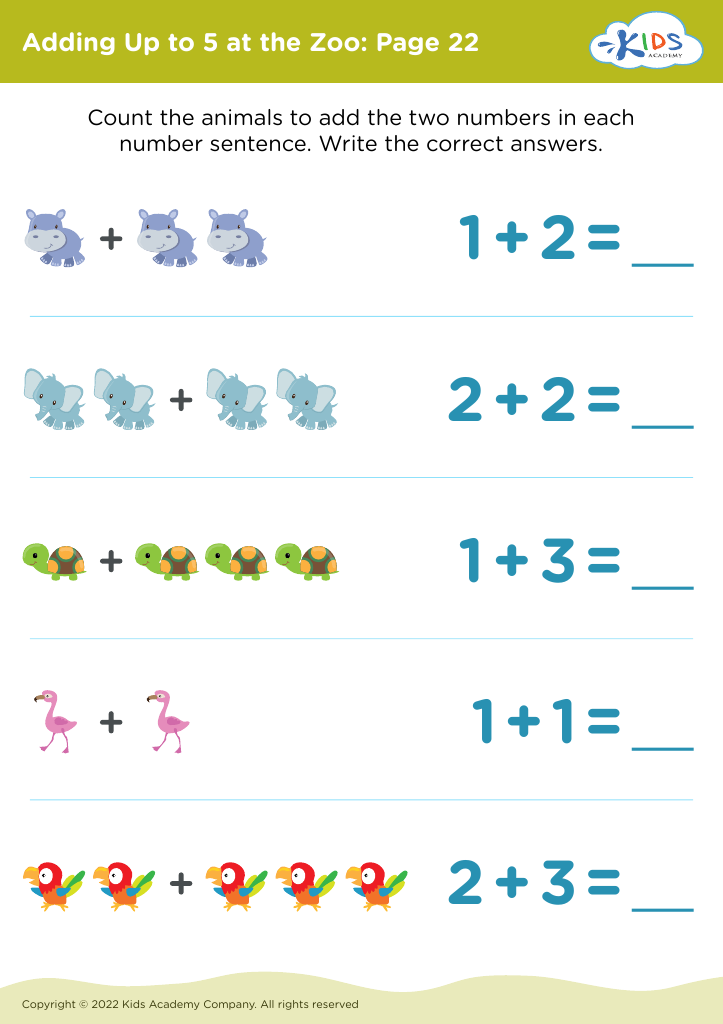
Adding Up to 5 at the Zoo: Page 22
Worksheet
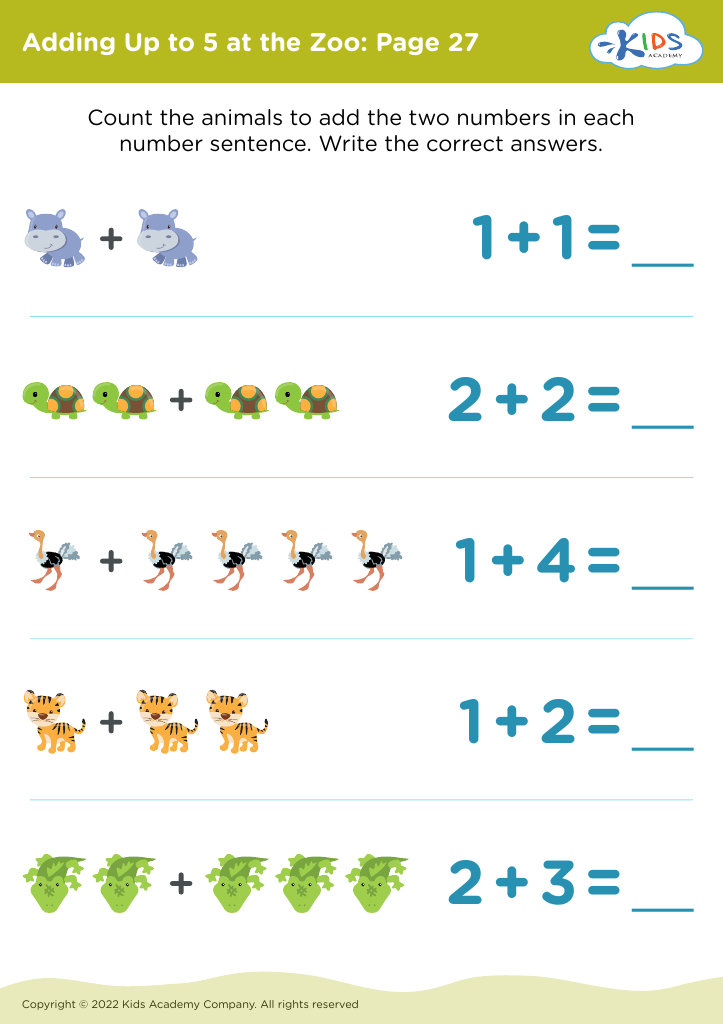
Adding Up to 5 at the Zoo: Page 27
Worksheet
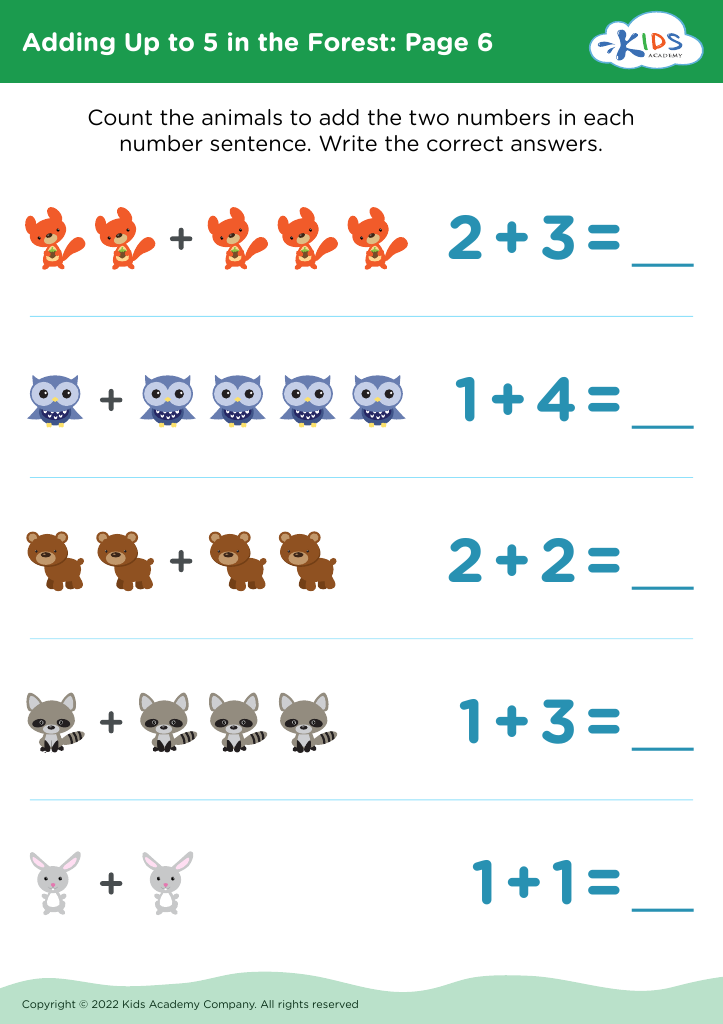
Adding Up to 5 in the Forest: Page 6
Worksheet
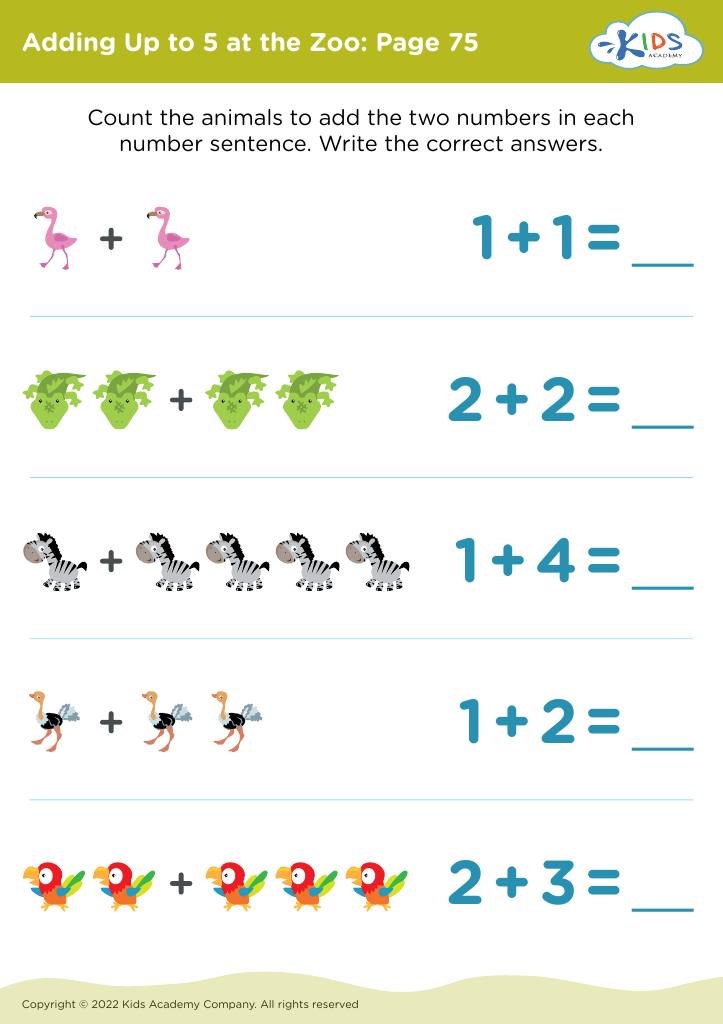
Adding Up to 5 at the Zoo: Page 75
Worksheet
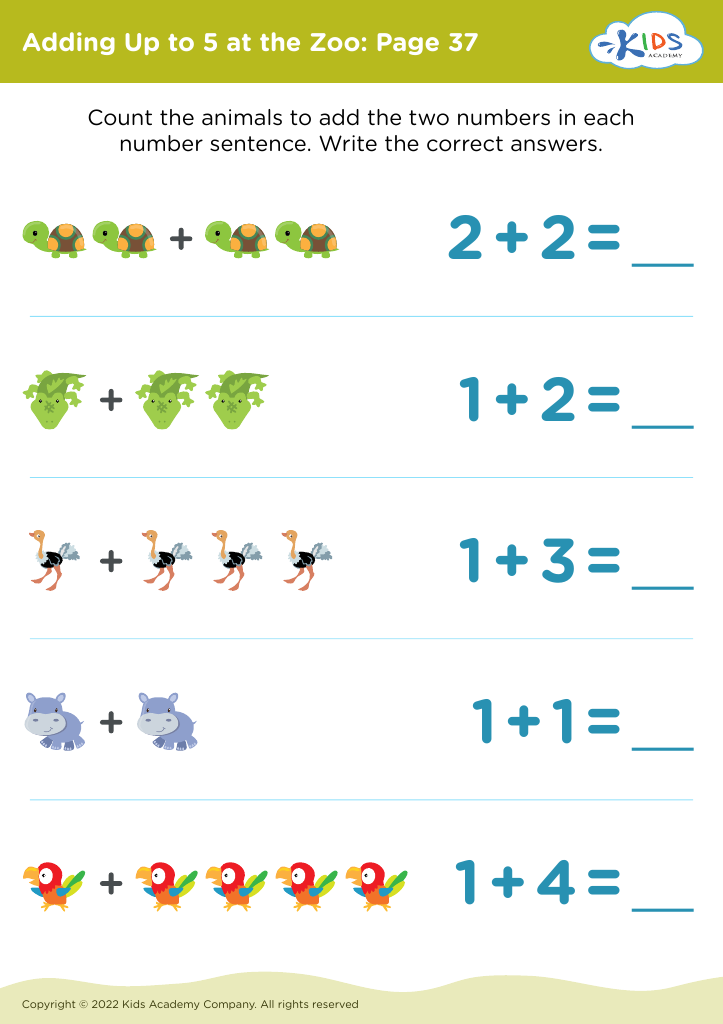
Adding Up to 5 at the Zoo: Page 37
Worksheet
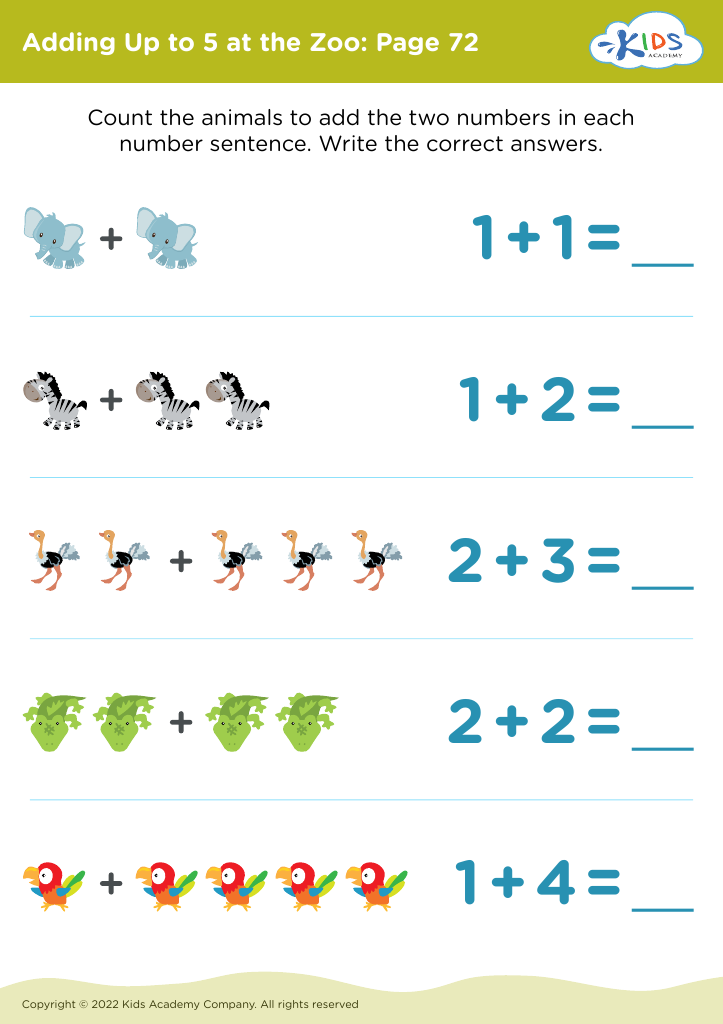
Adding Up to 5 at the Zoo: Page 72
Worksheet
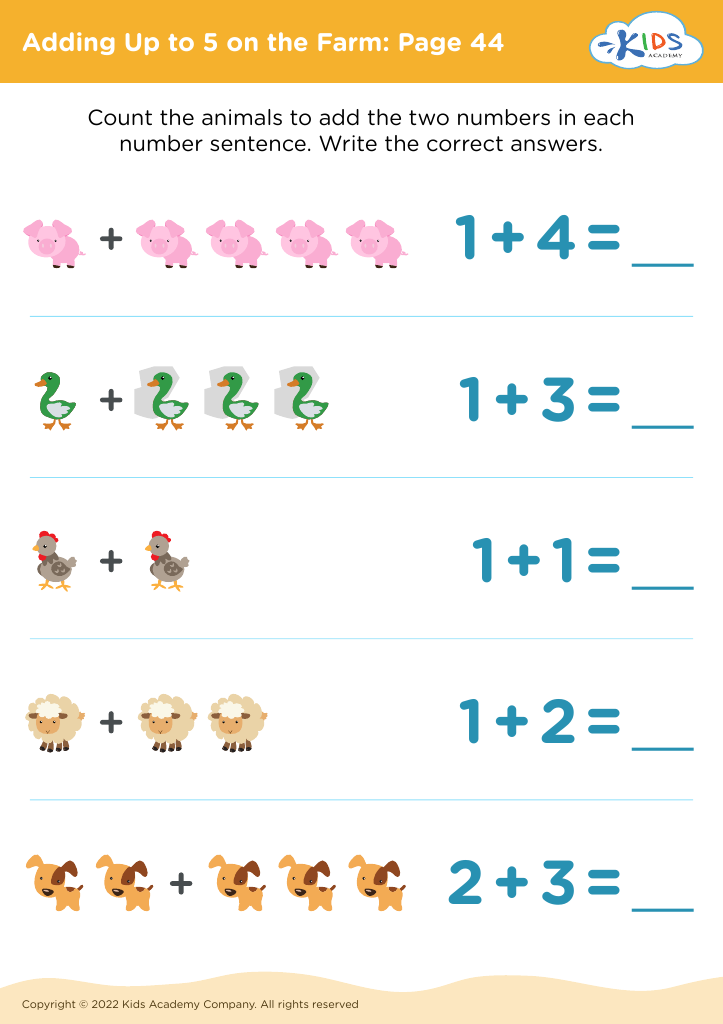
Adding Up to 5 on the Farm: Page 44
Worksheet


Animal recognition combined with basic addition aids in the holistic development of 5-year-olds, advantageous both academically and cognitively. Firstly, recognizing animals enriches a child’s world knowledge and language skills. This expands their vocabulary, supports reading development, and fosters curiosity about the natural world. Simultaneously incorporating addition up to 5 builds foundational math skills essential for later academic success.

Engaging children in activities that merge animal recognition with simple addition leverages their natural interests. Many children are innately fascinated by animals, so using this interest can make learning math more engaging and enjoyable. For example, asking questions like “If you have 2 dogs and 3 cats, how many animals do you have in total?” can seamlessly integrate numerical concepts with familiar subjects.

This interdisciplinary approach supports cognitive growth by enhancing memory, attention to detail, and problem-solving skills. When children identify and count animals, they practice visual discrimination and numerical fluency simultaneously. Moreover, it fosters empathy and encourages an appreciation for living creatures, contributing to socio-emotional development.

Ultimately, embedding animal recognition within early math education ensures a well-rounded, stimulating, and effective learning experience. By cultivating both knowledge and skills in an enjoyable context, parents and teachers help children build strong cognitive foundations essential for lifelong learning.