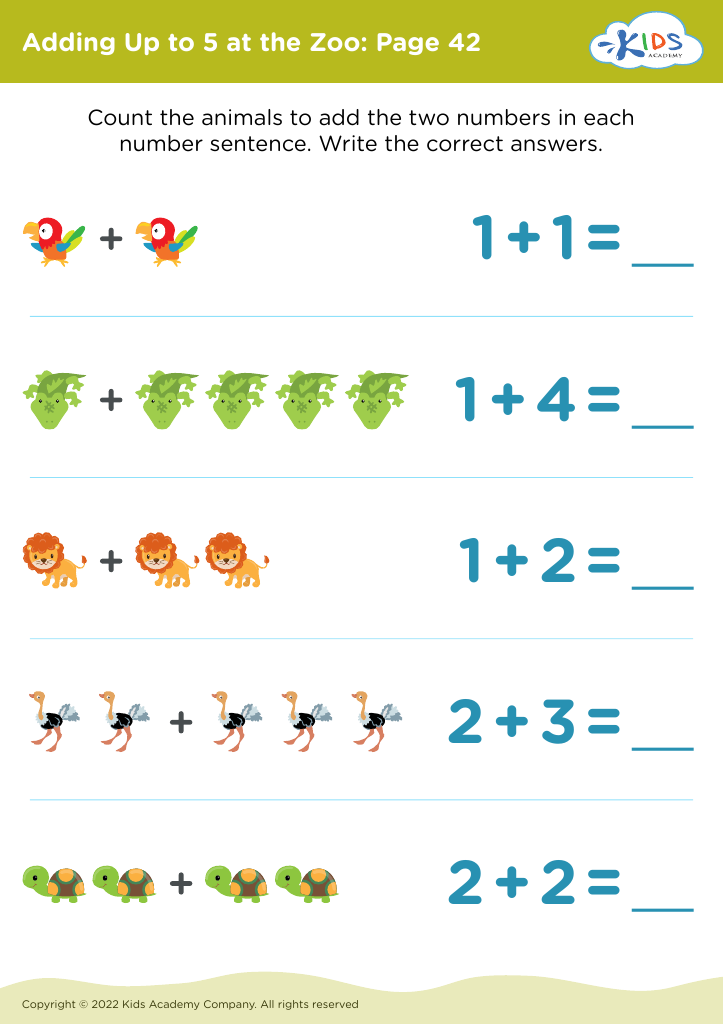
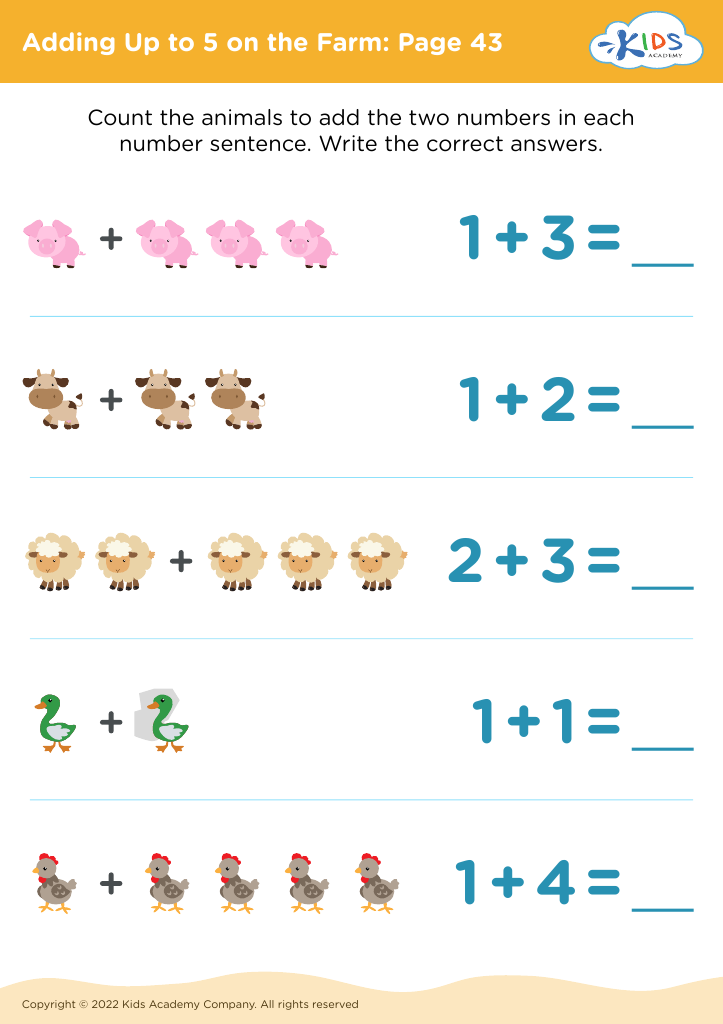
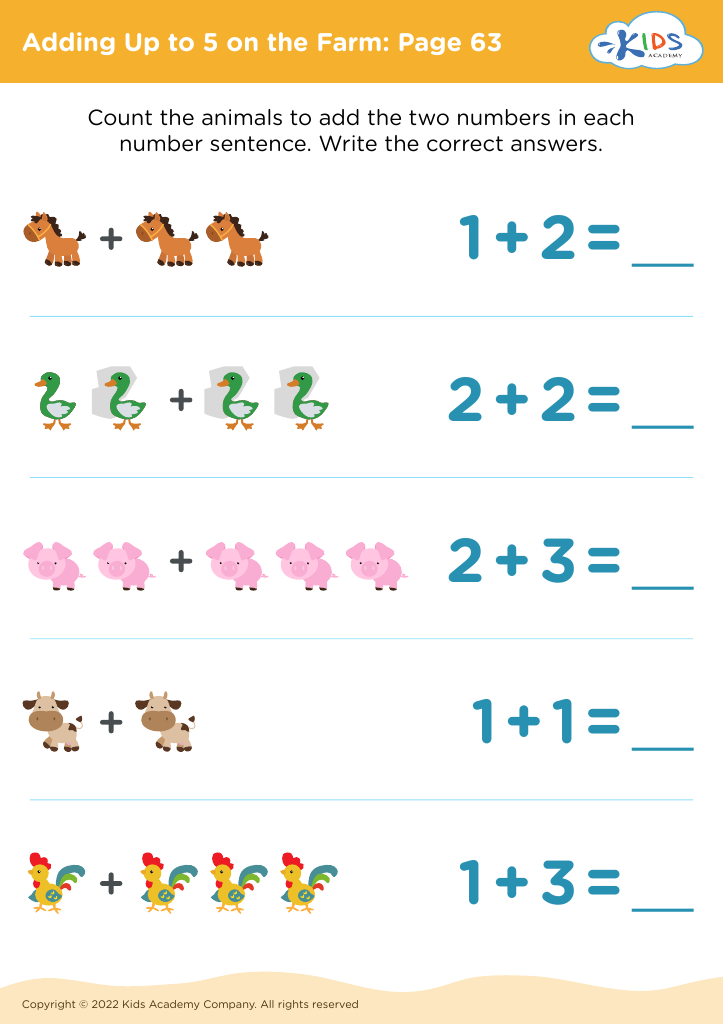
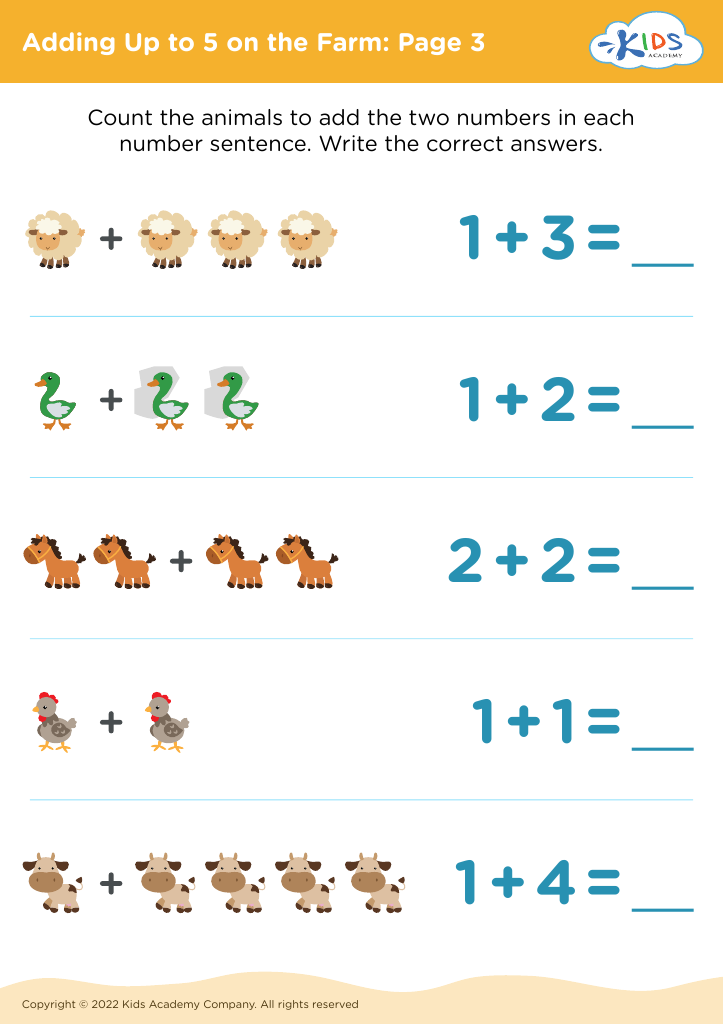
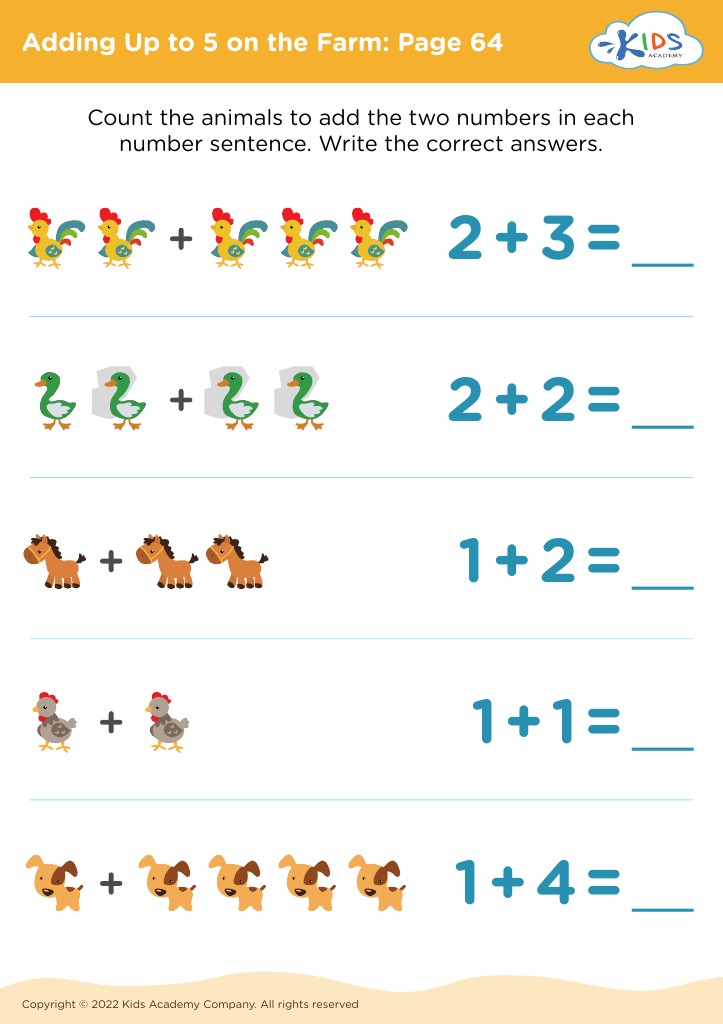
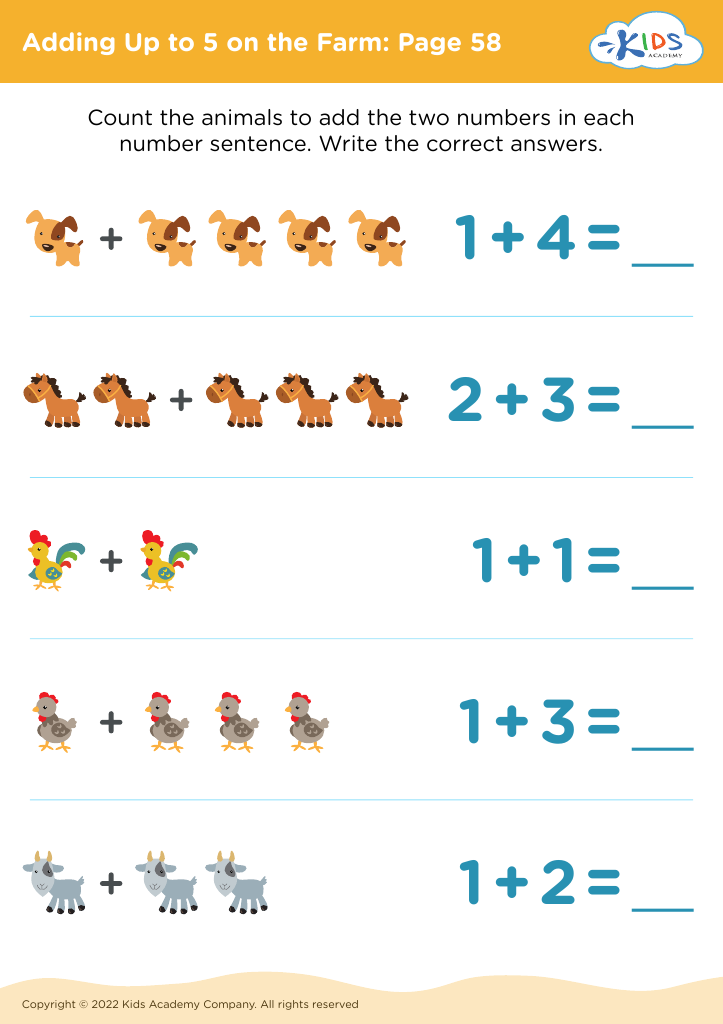
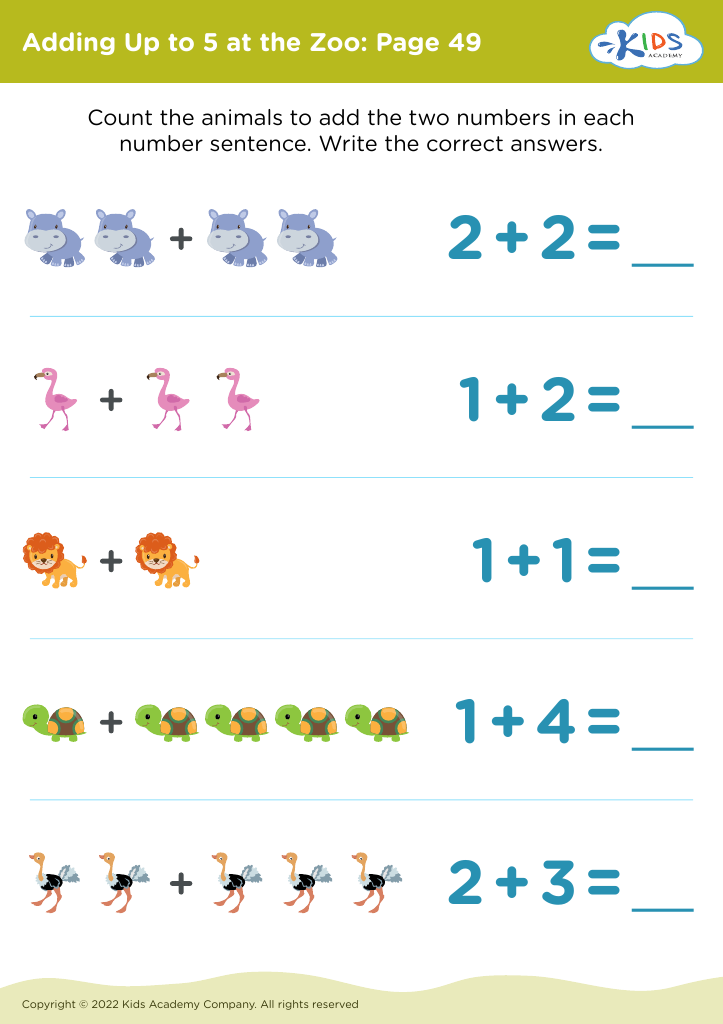
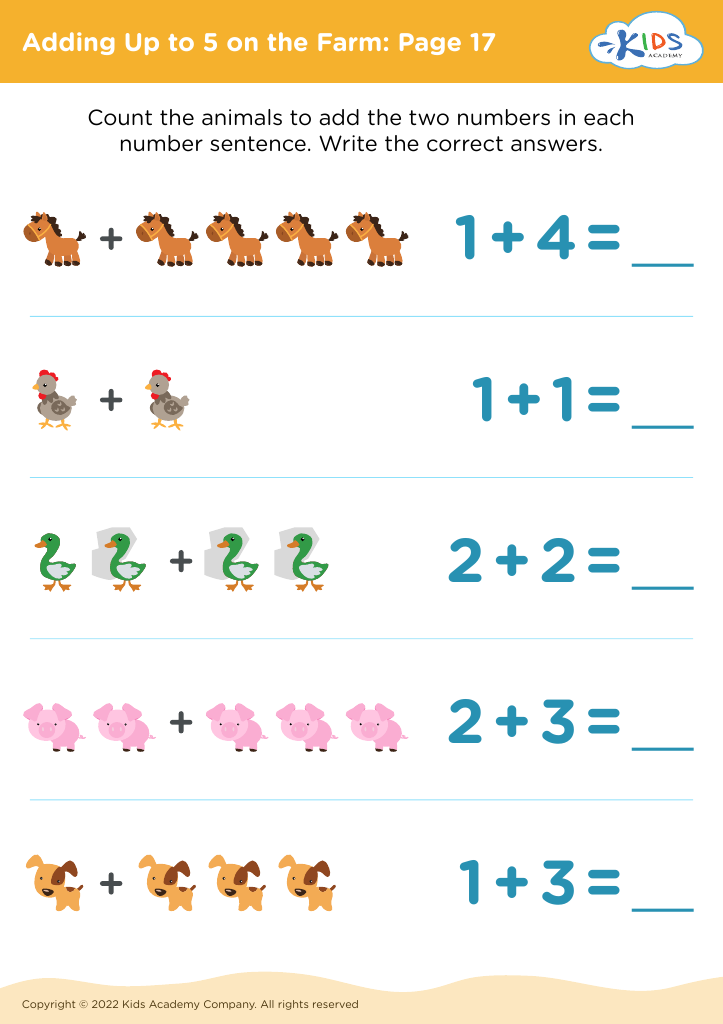
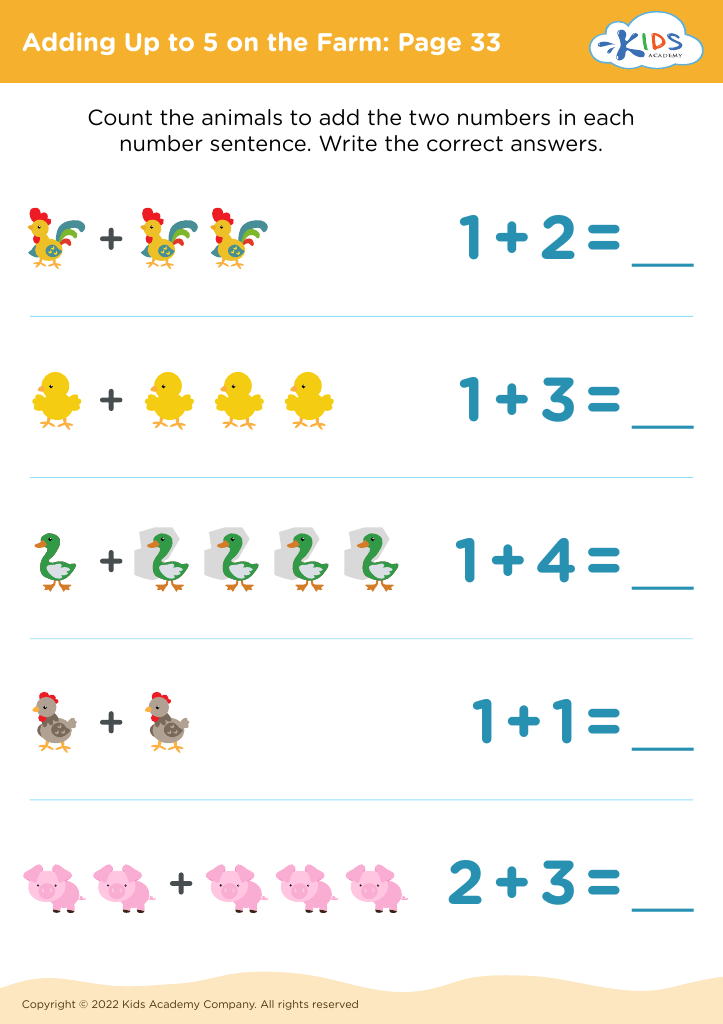
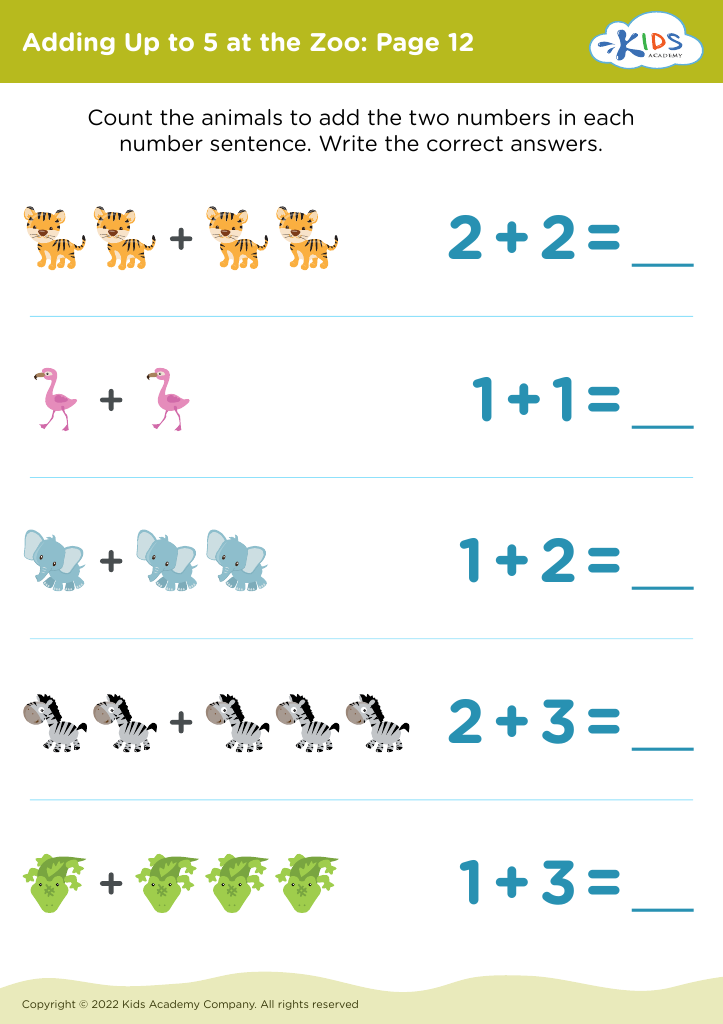
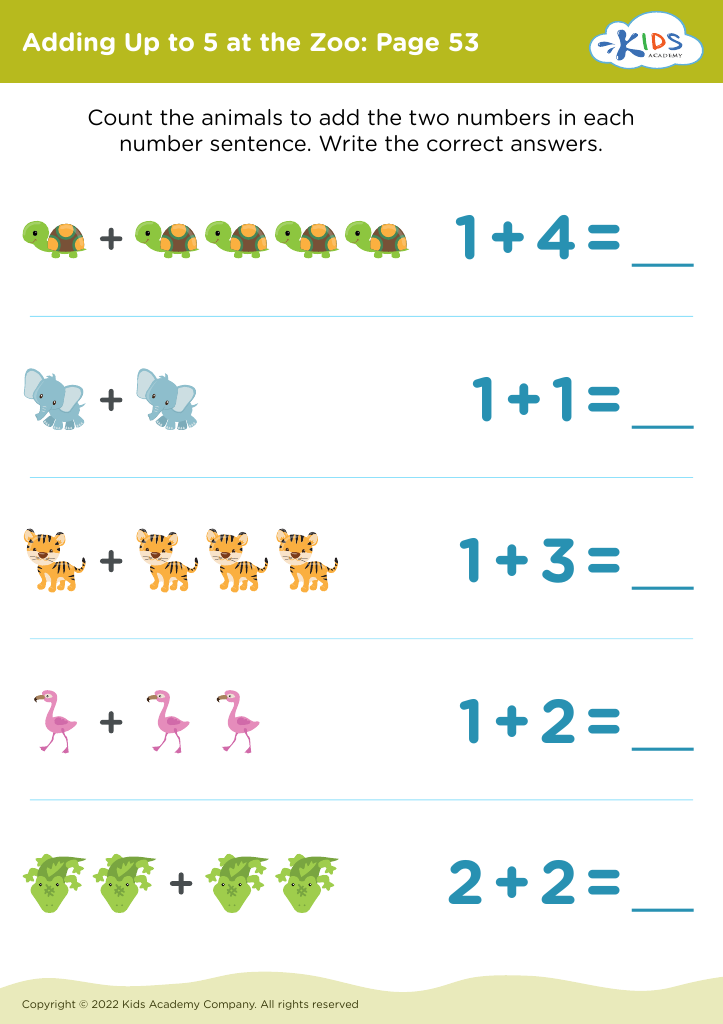
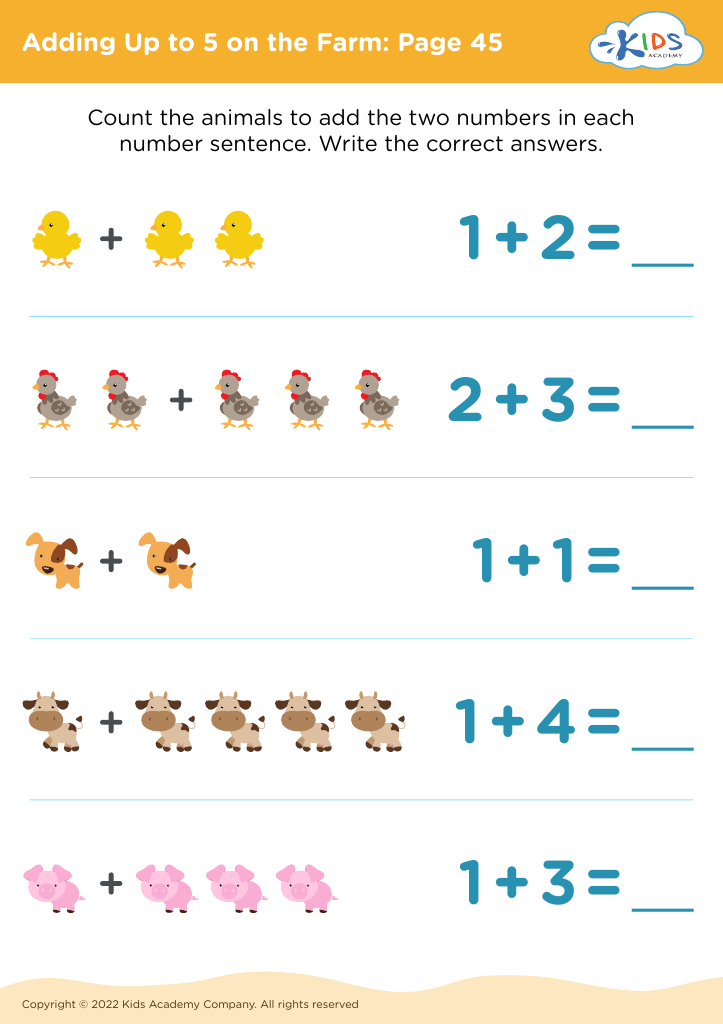
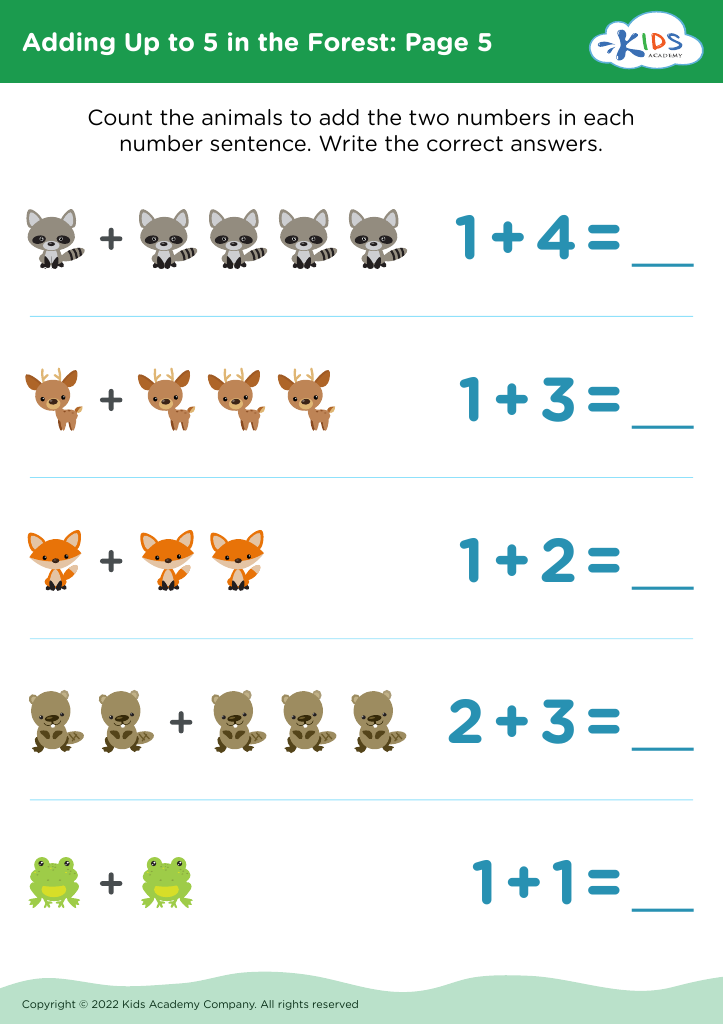
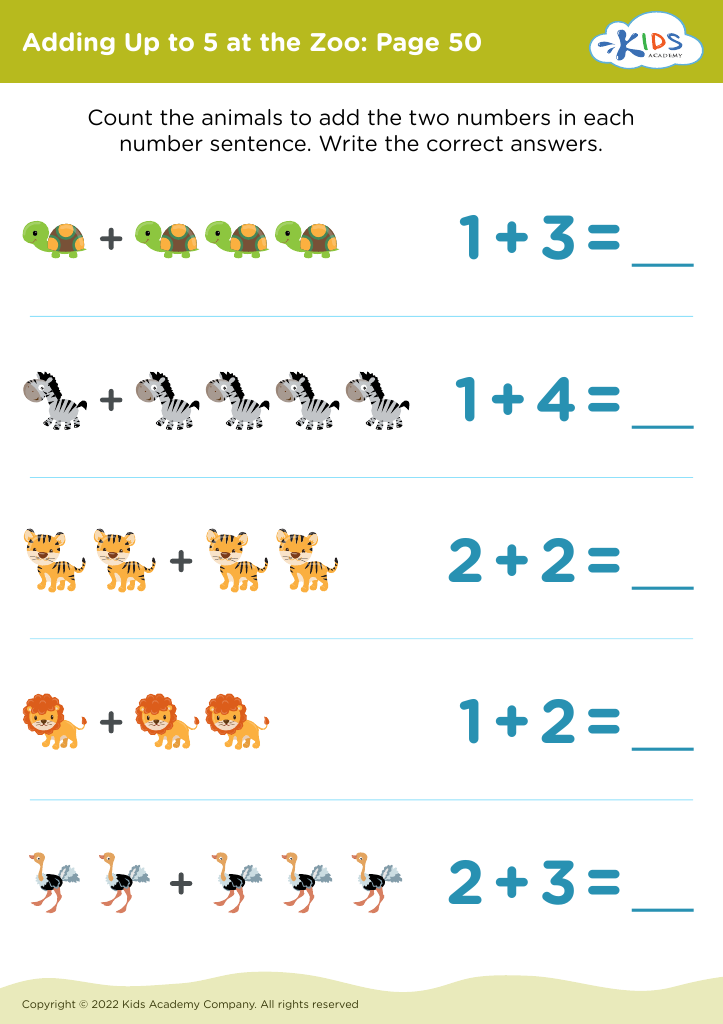
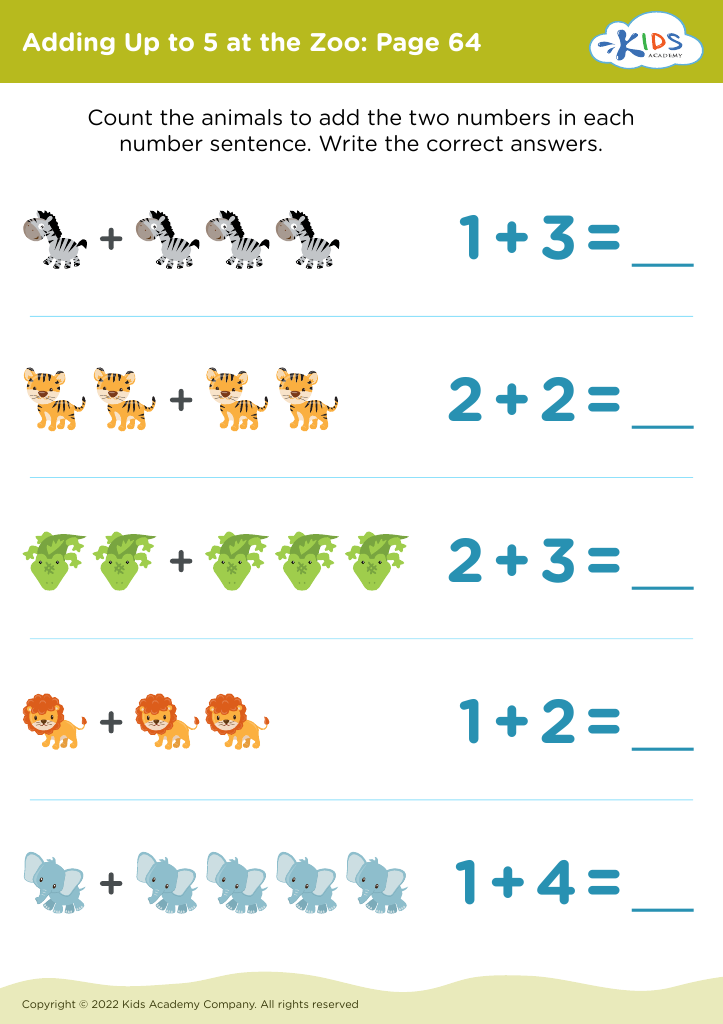
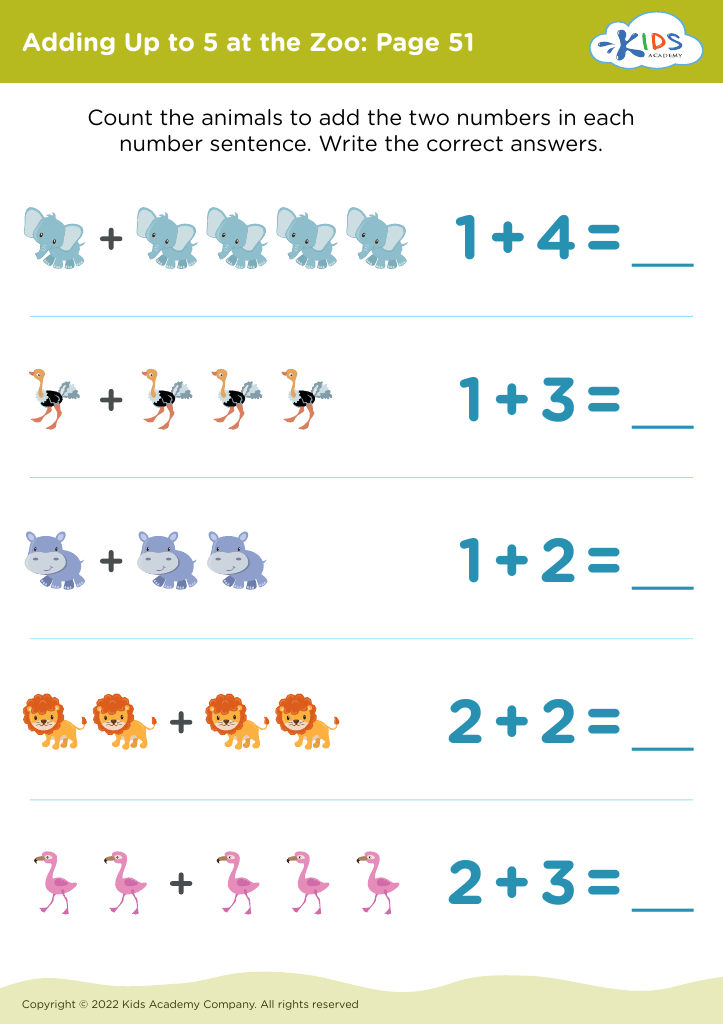
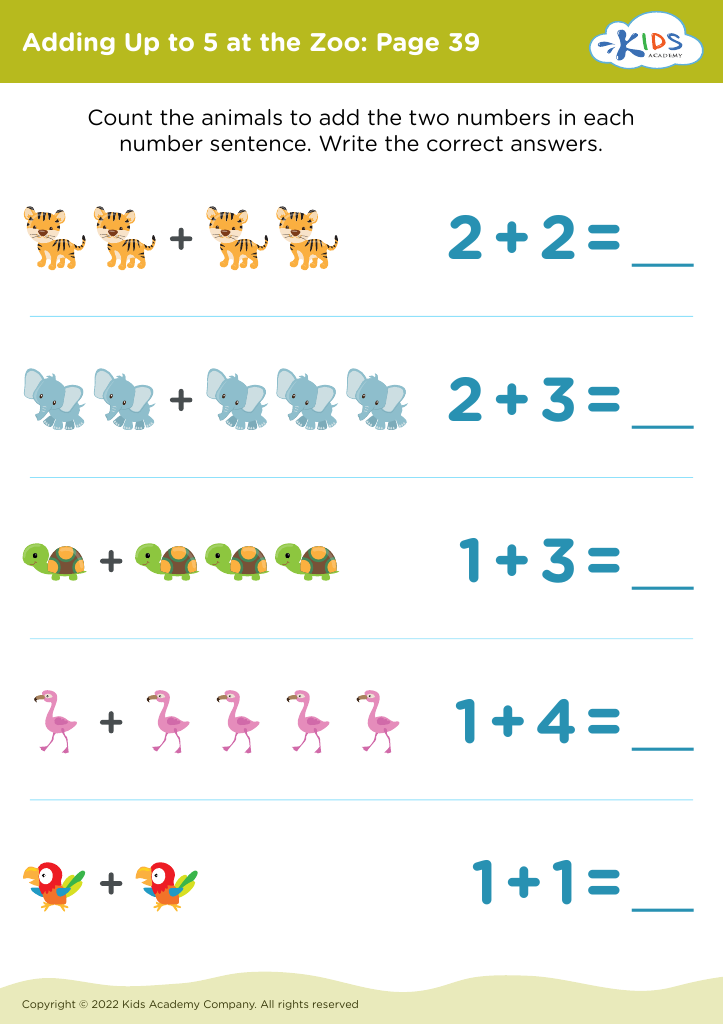
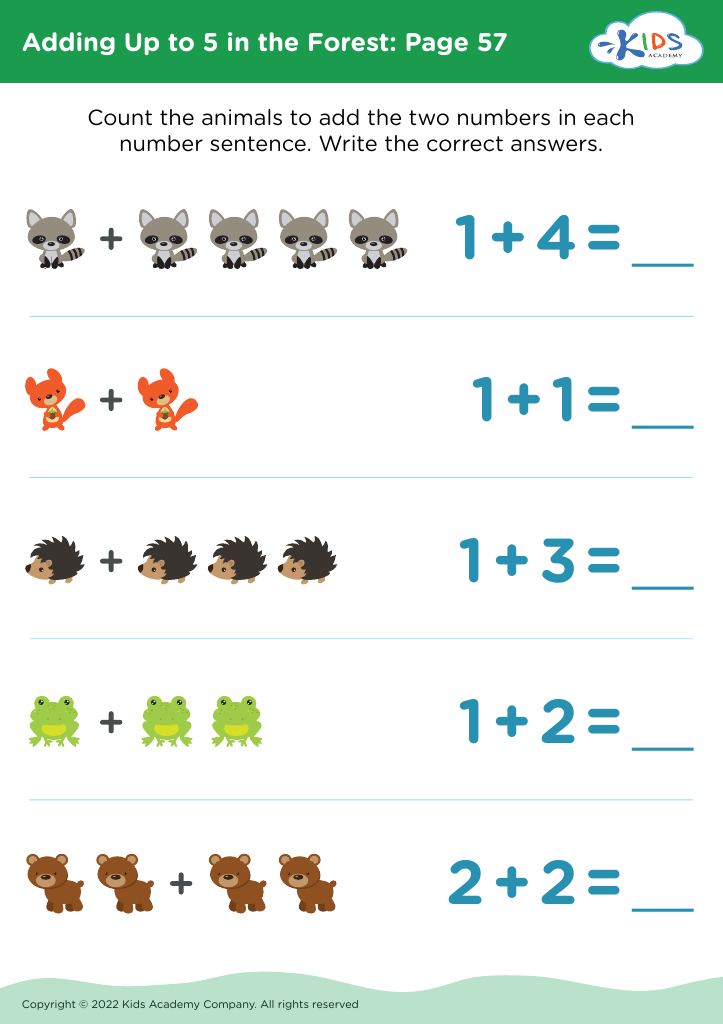








Animal recognition combined with basic addition aids in the holistic development of 5-year-olds, advantageous both academically and cognitively. Firstly, recognizing animals enriches a child’s world knowledge and language skills. This expands their vocabulary, supports reading development, and fosters curiosity about the natural world. Simultaneously incorporating addition up to 5 builds foundational math skills essential for later academic success.
Engaging children in activities that merge animal recognition with simple addition leverages their natural interests. Many children are innately fascinated by animals, so using this interest can make learning math more engaging and enjoyable. For example, asking questions like “If you have 2 dogs and 3 cats, how many animals do you have in total?” can seamlessly integrate numerical concepts with familiar subjects.
This interdisciplinary approach supports cognitive growth by enhancing memory, attention to detail, and problem-solving skills. When children identify and count animals, they practice visual discrimination and numerical fluency simultaneously. Moreover, it fosters empathy and encourages an appreciation for living creatures, contributing to socio-emotional development.
Ultimately, embedding animal recognition within early math education ensures a well-rounded, stimulating, and effective learning experience. By cultivating both knowledge and skills in an enjoyable context, parents and teachers help children build strong cognitive foundations essential for lifelong learning.








