Basic Arithmetic Adding Up to 5 Worksheets for 5-Year-Olds - Page 2
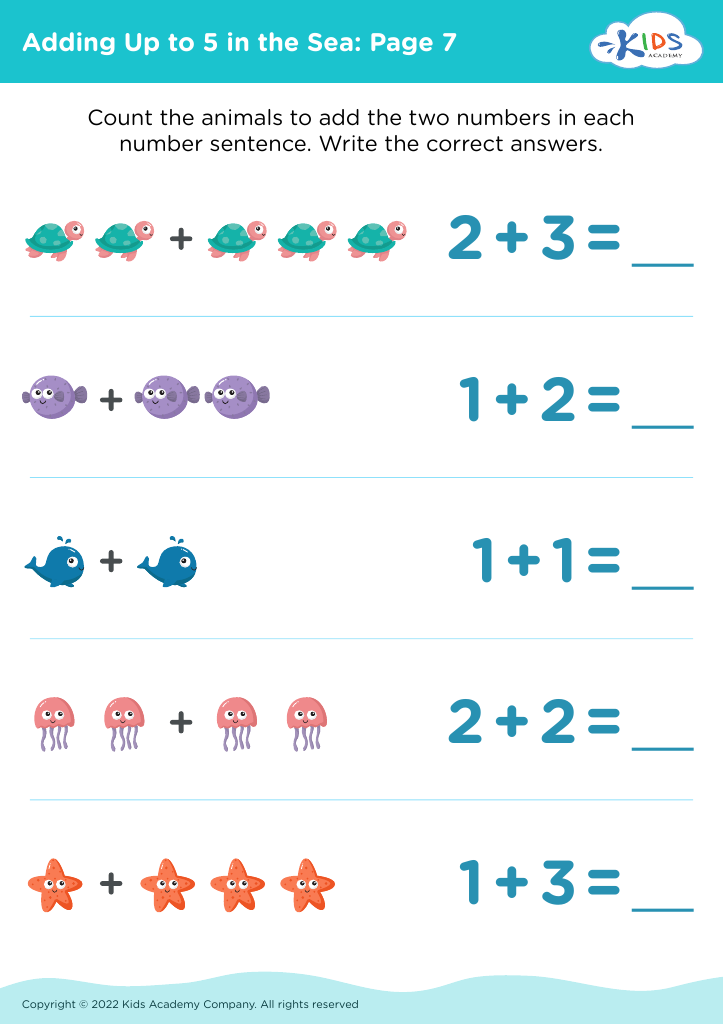
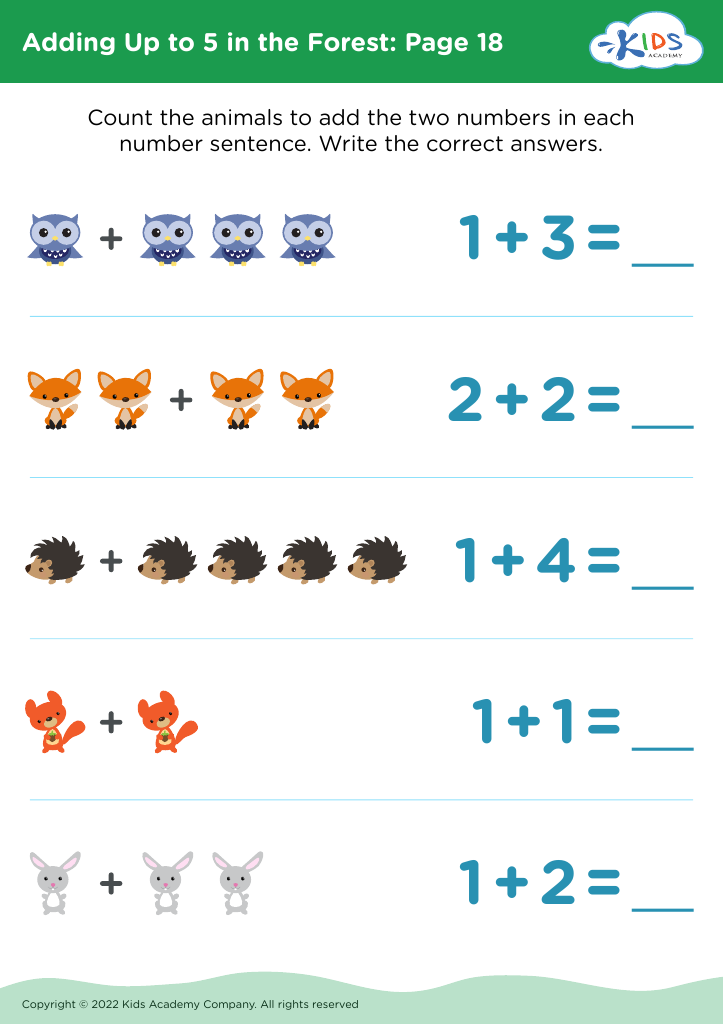
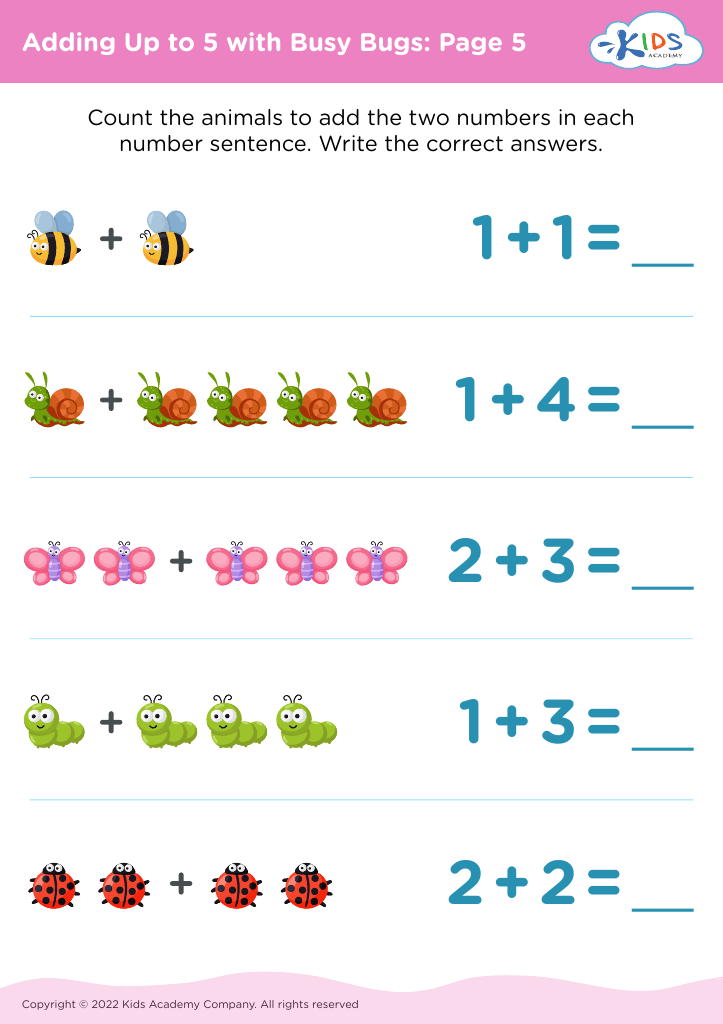
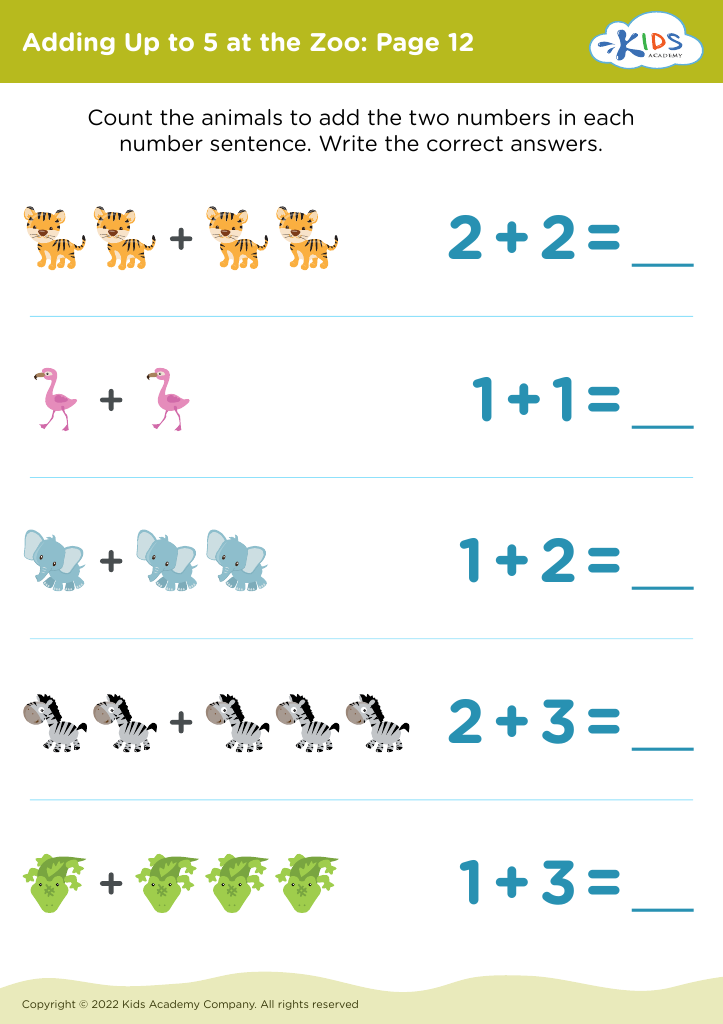
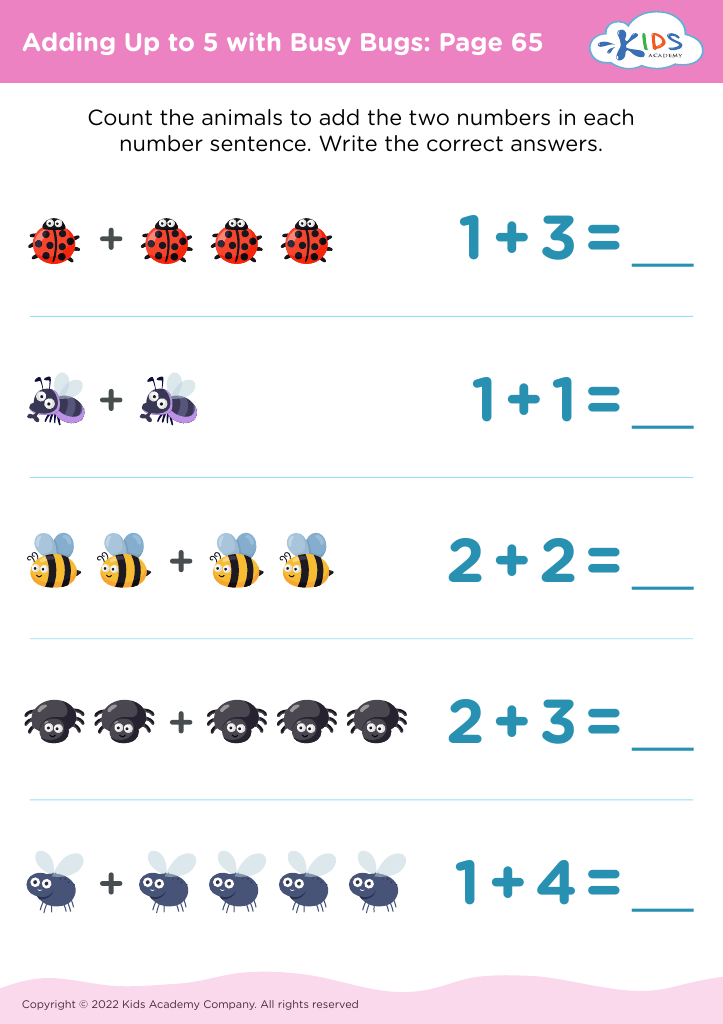
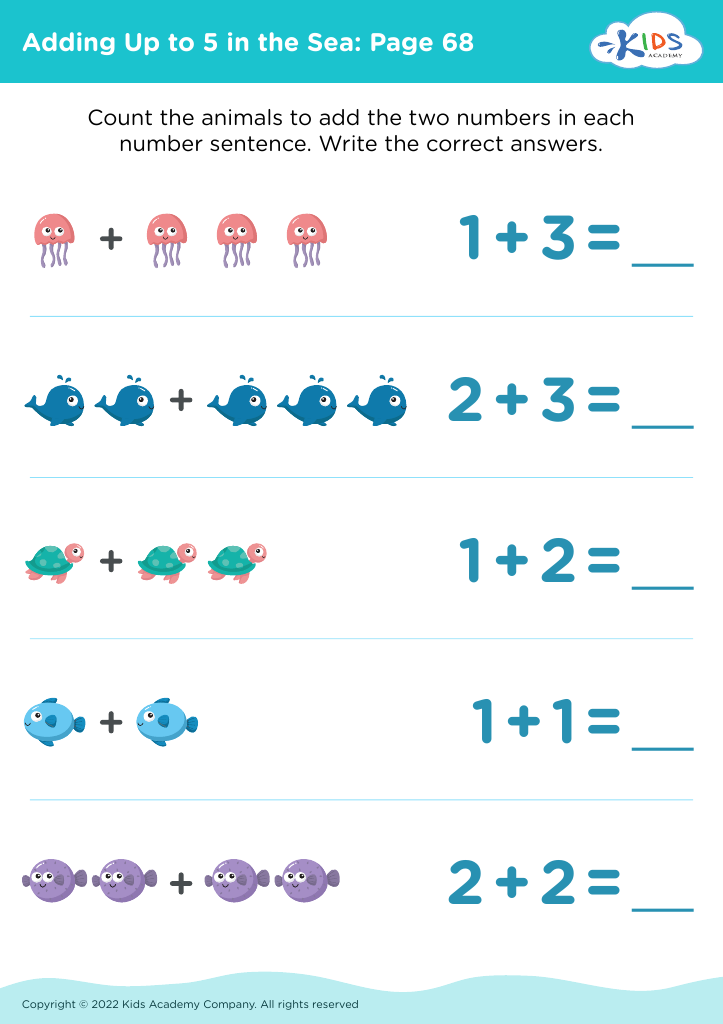
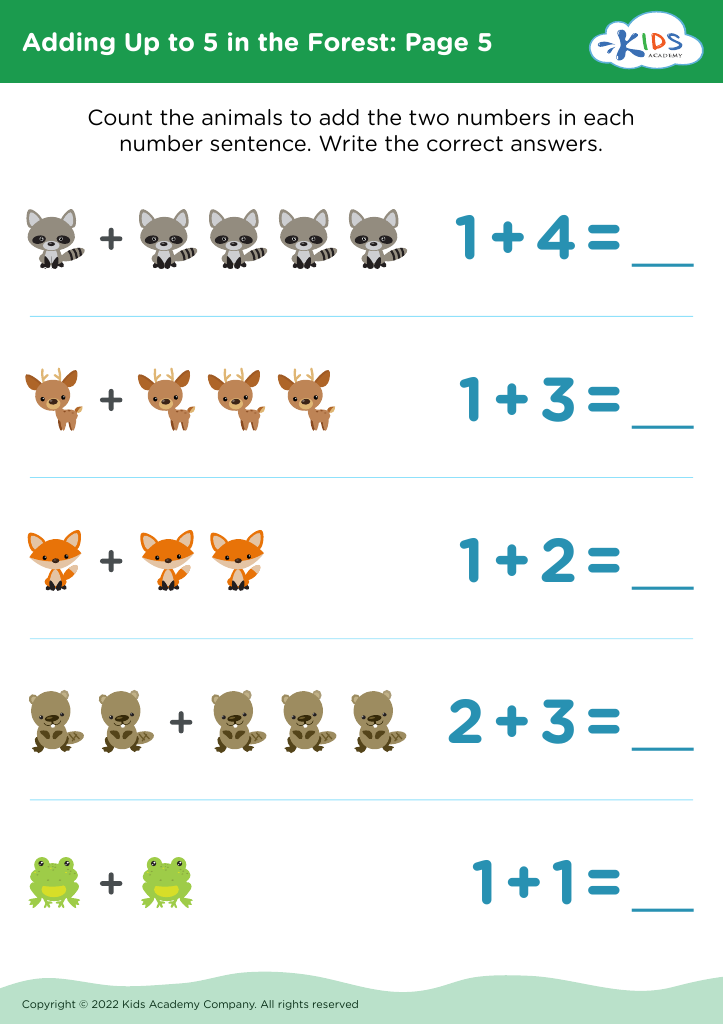
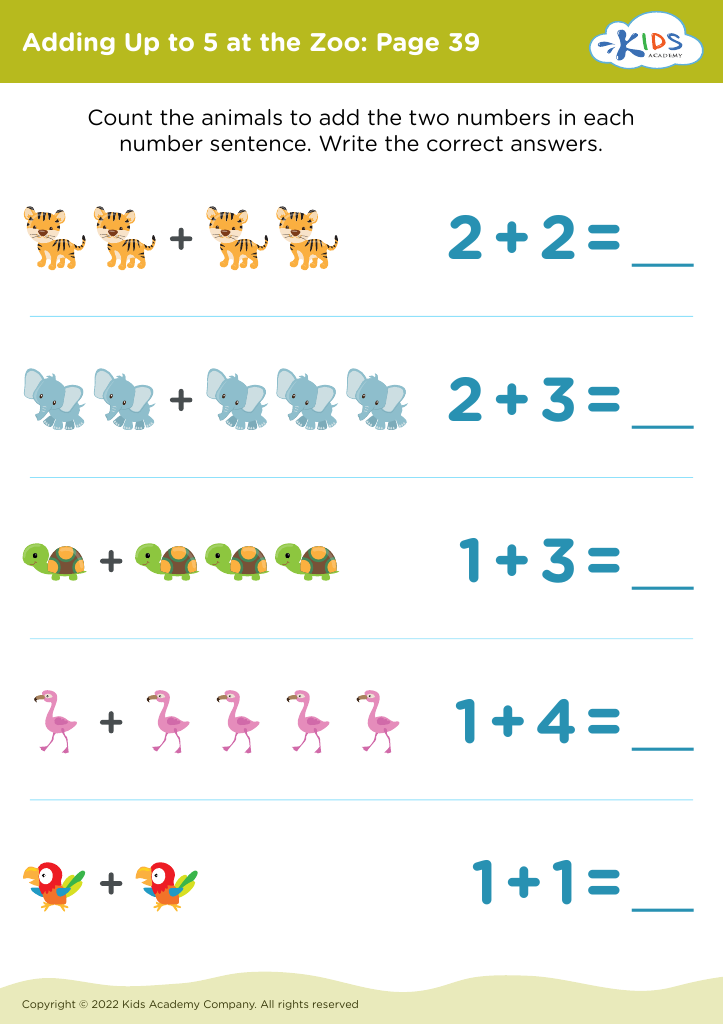
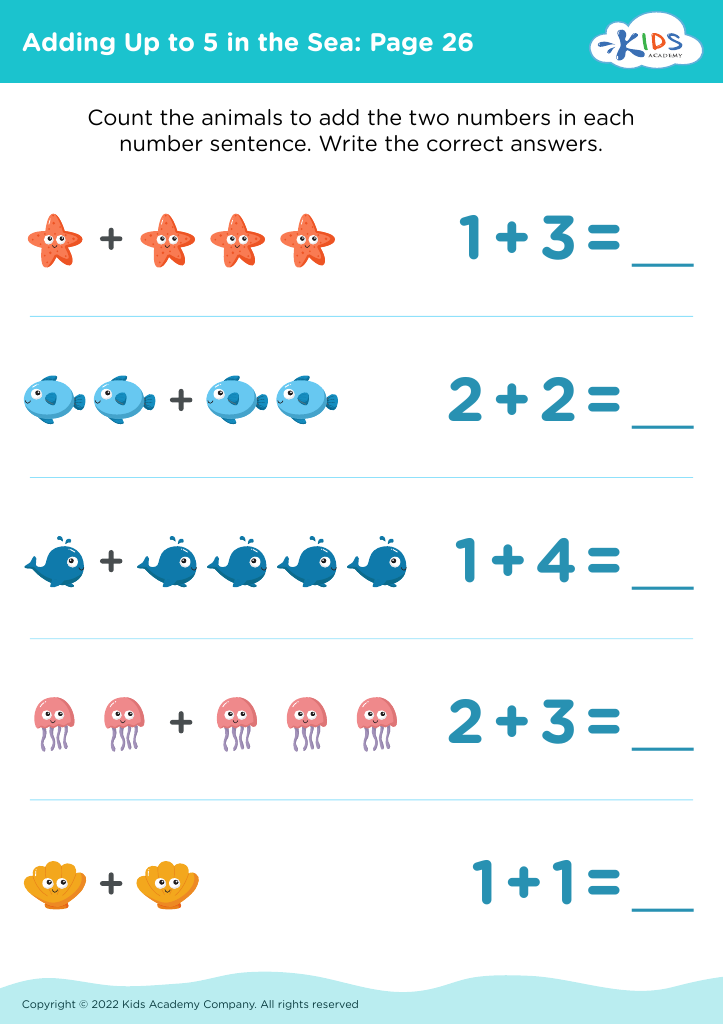
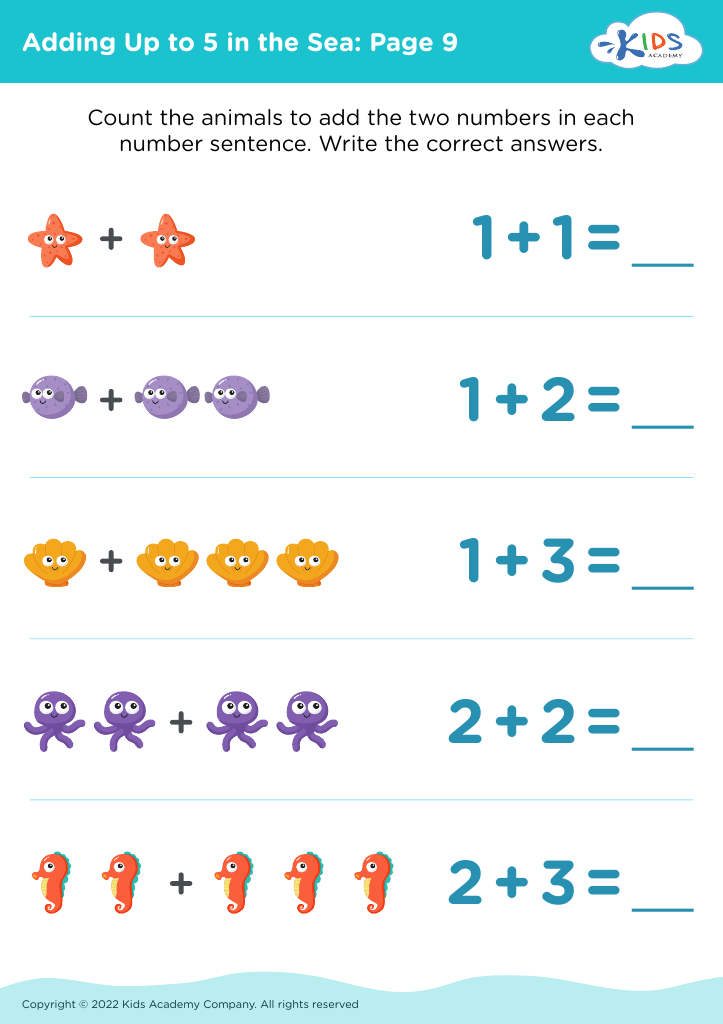








Teaching basic arithmetic, particularly adding up to 5, is crucial for 5-year-olds as it lays the foundation for their future mathematical understanding and cognitive development. At this age, children are naturally curious and eager to explore numbers, making it an ideal time to introduce fundamental concepts. Understanding how to add up to 5 helps young learners develop not just mathematical skills but also critical thinking and problem-solving abilities.
Parents and teachers should care because mastering basic addition fosters confidence in children. When children feel competent in early math, they are more likely to engage positively with more complex mathematical concepts as they progress in school. Moreover, these foundational skills can translate to daily life situations, such as sharing, grouping, or even simple shopping tasks.
Integrating fun and interactive approaches, such as using toys, games, and visual aids, makes learning enjoyable and memorable. Additionally, teaching these skills promotes patience, perseverance, and social interaction among peers during collaborative activities. By recognizing the importance of adding up to 5, parents and teachers can significantly impact a child's overall academic journey and instill a lifelong appreciation for learning.








