Hand-eye Coordination Adding Up to 5 Worksheets for 5-Year-Olds
15 filtered results
-
From - To
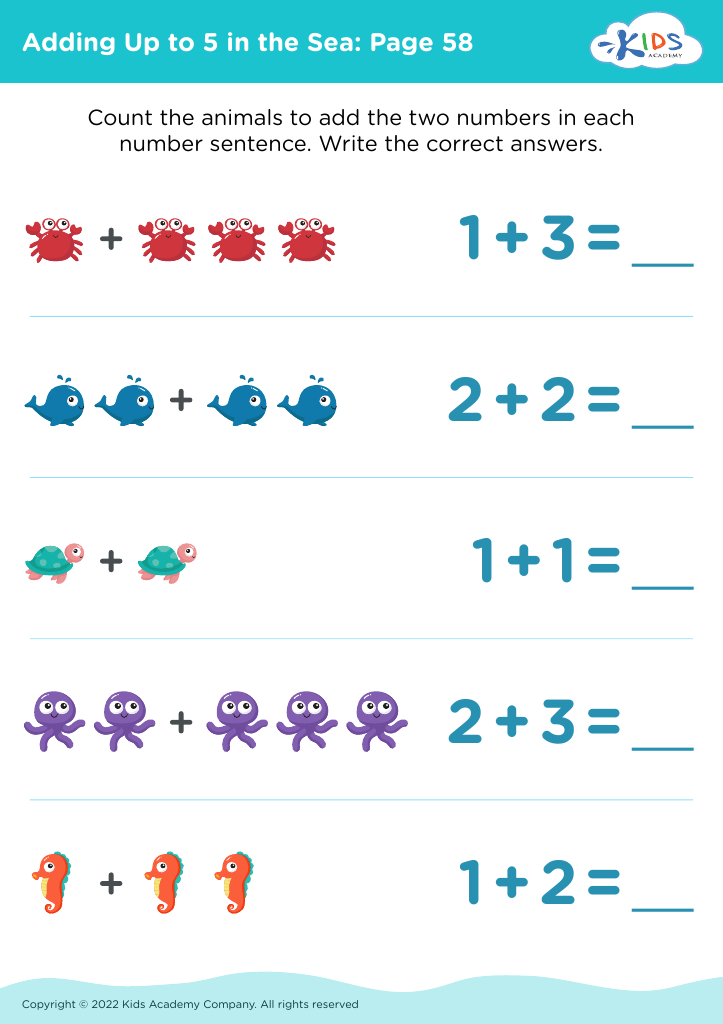
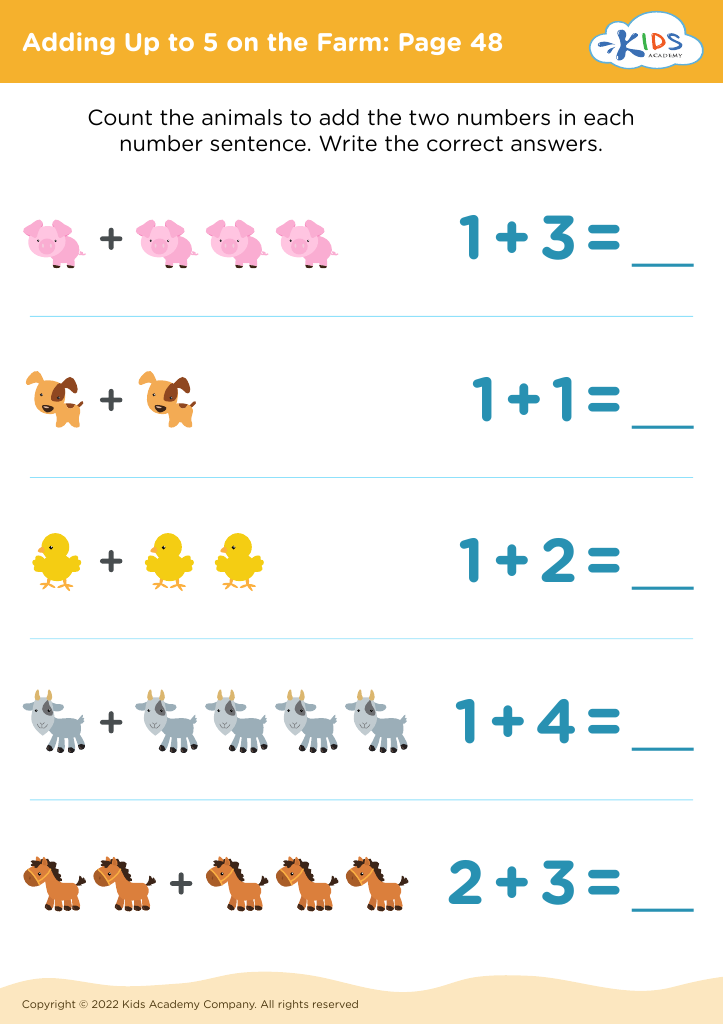
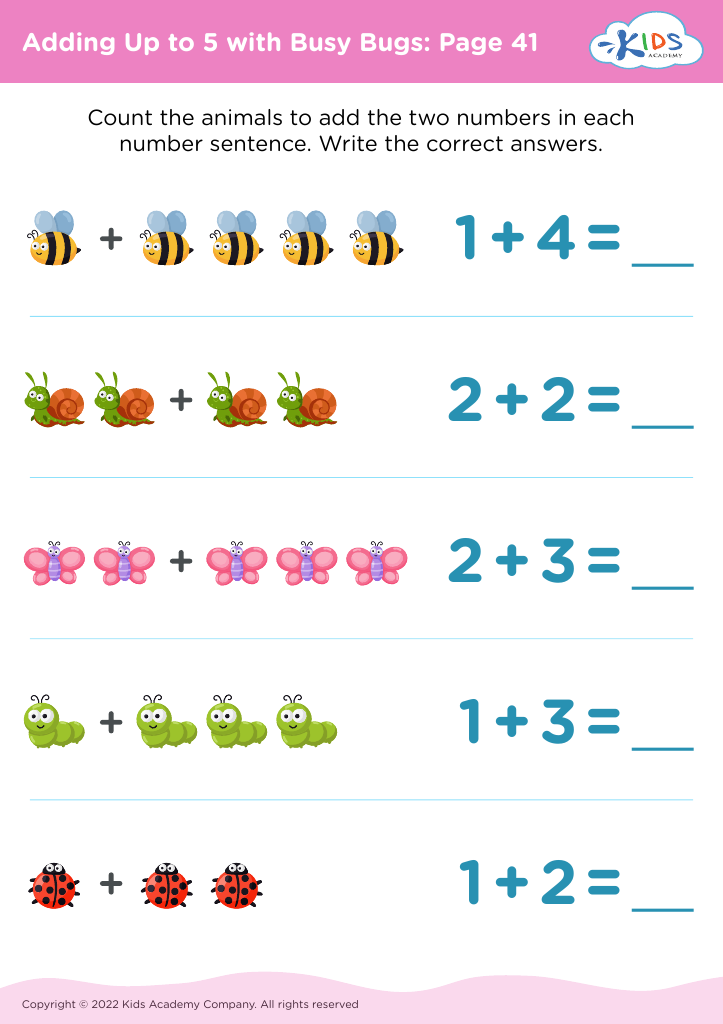
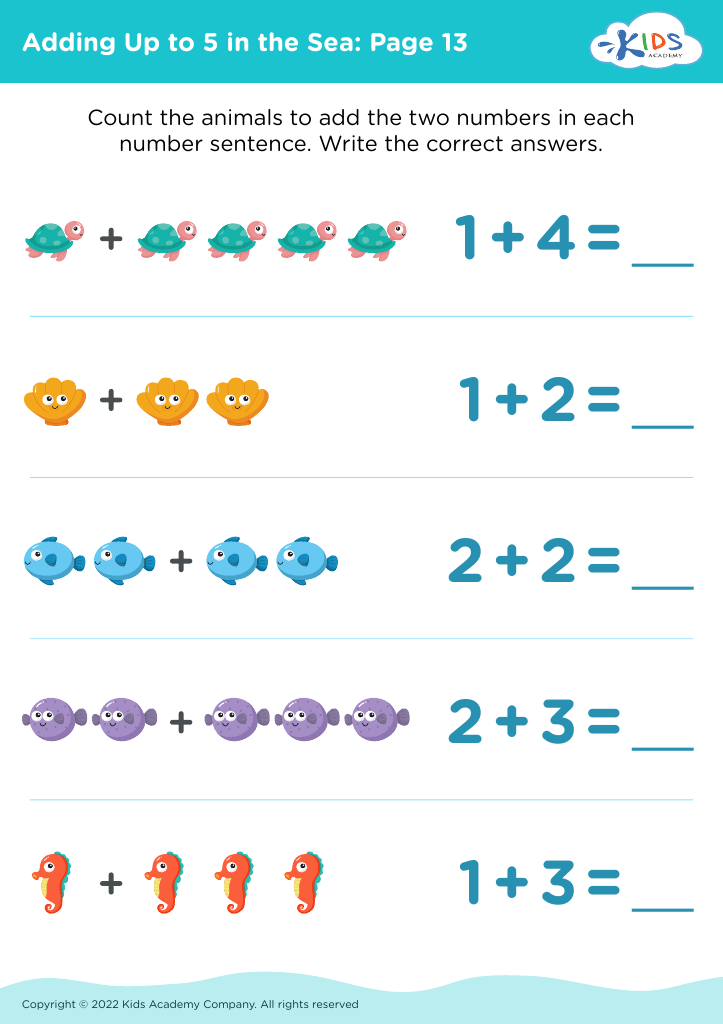
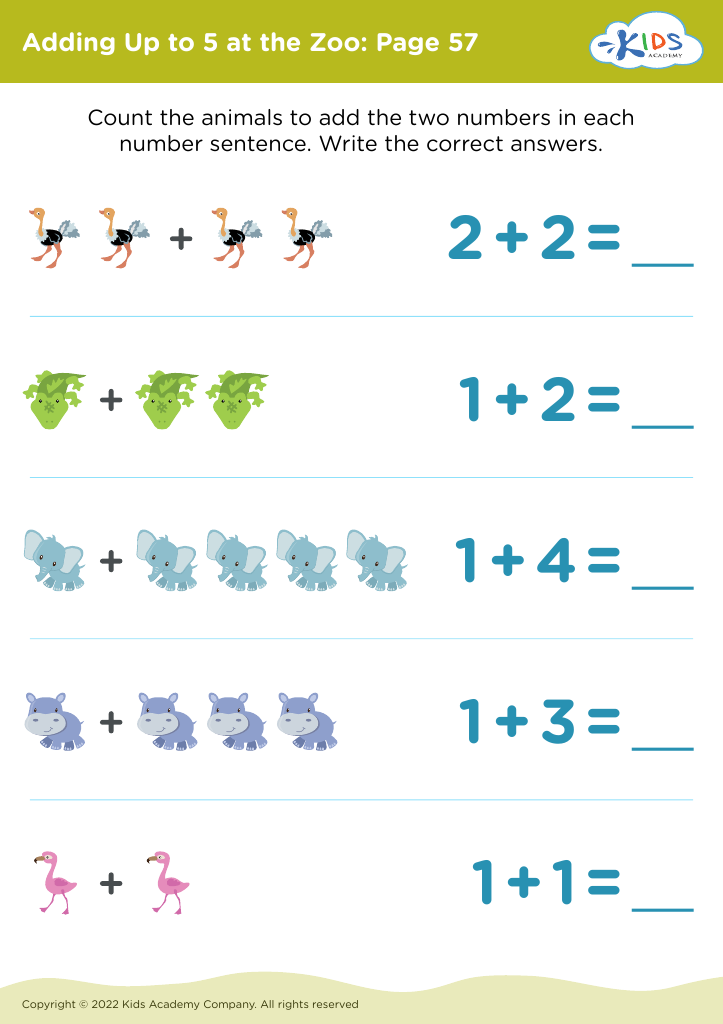
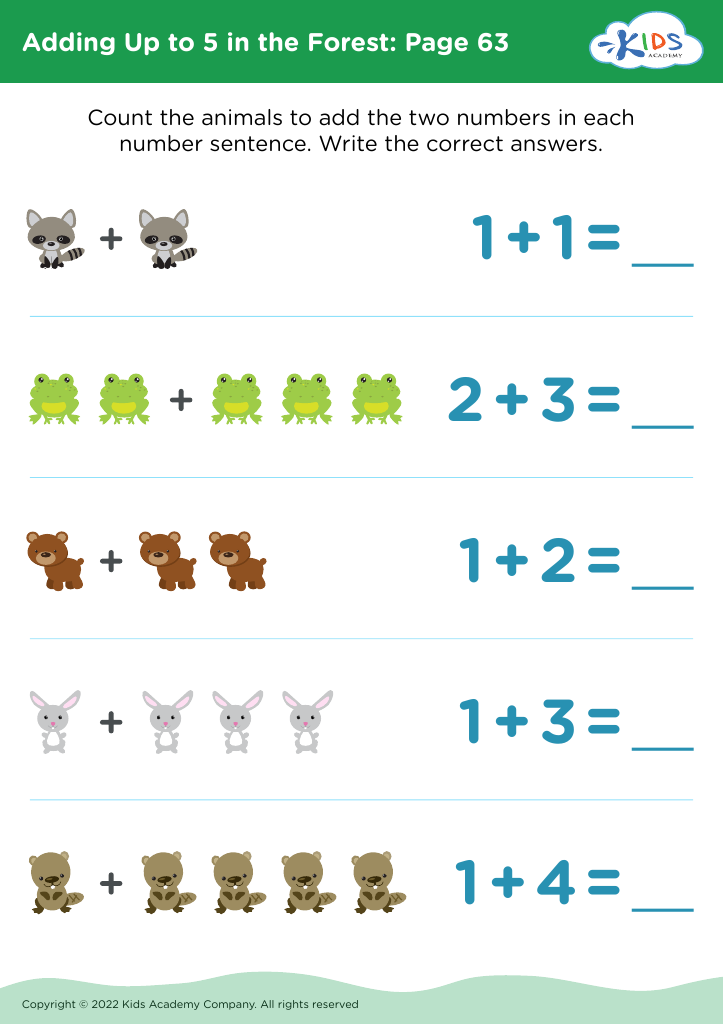
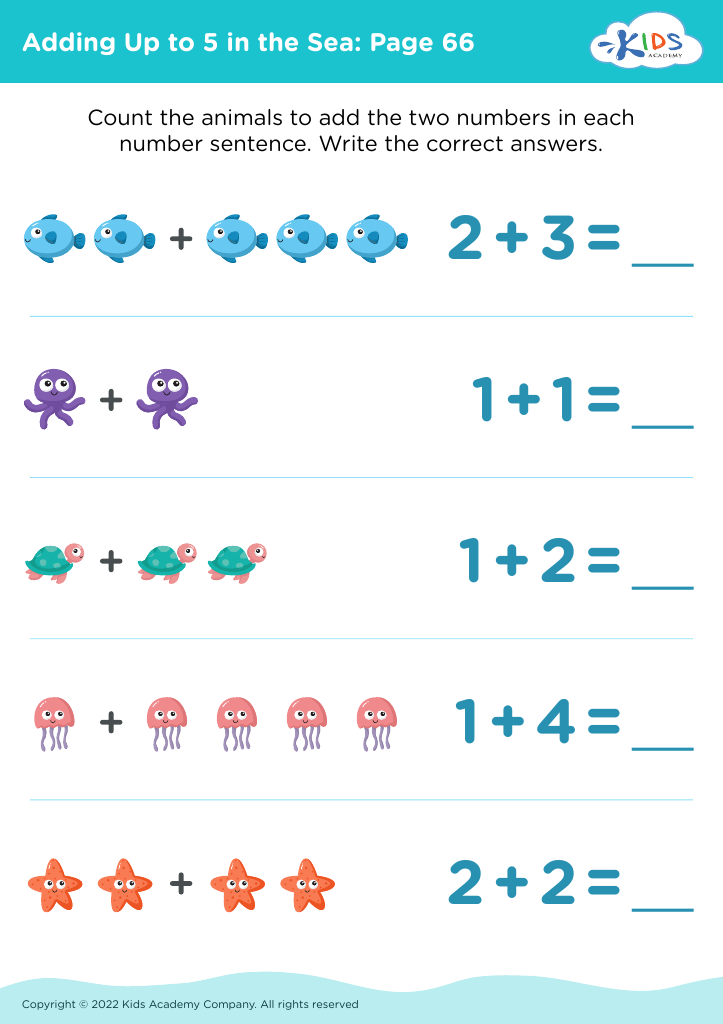
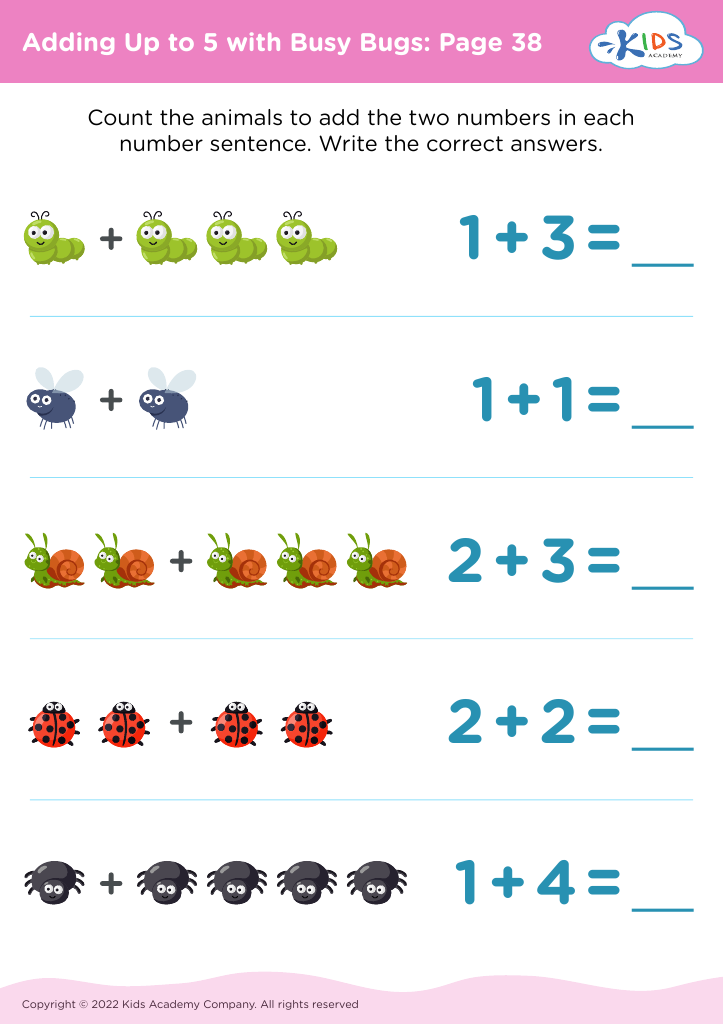
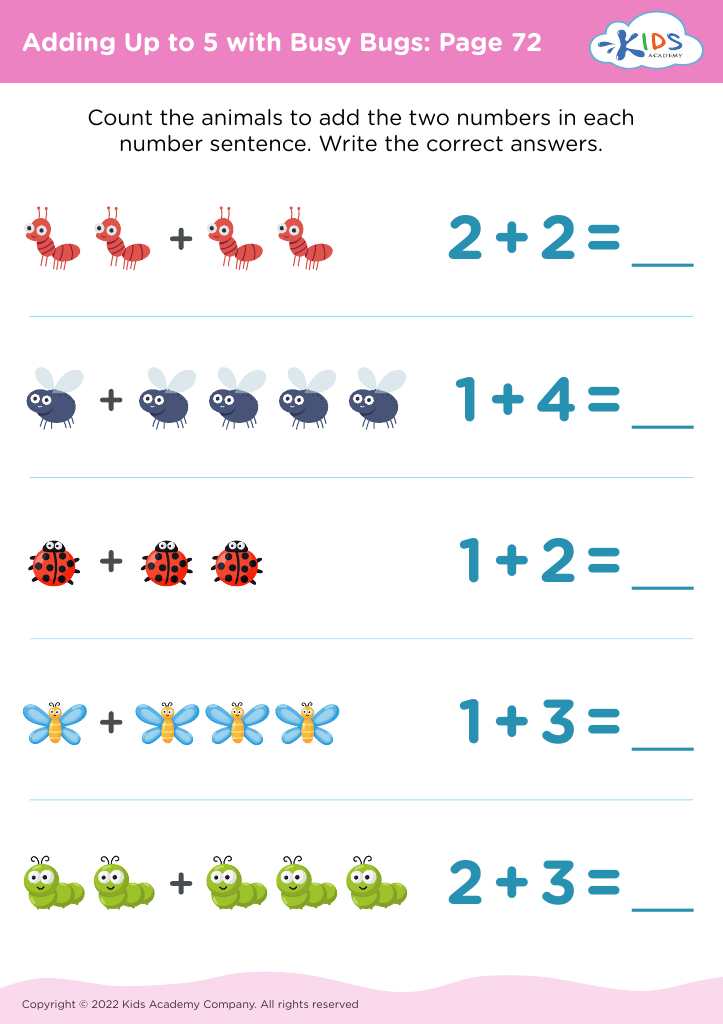
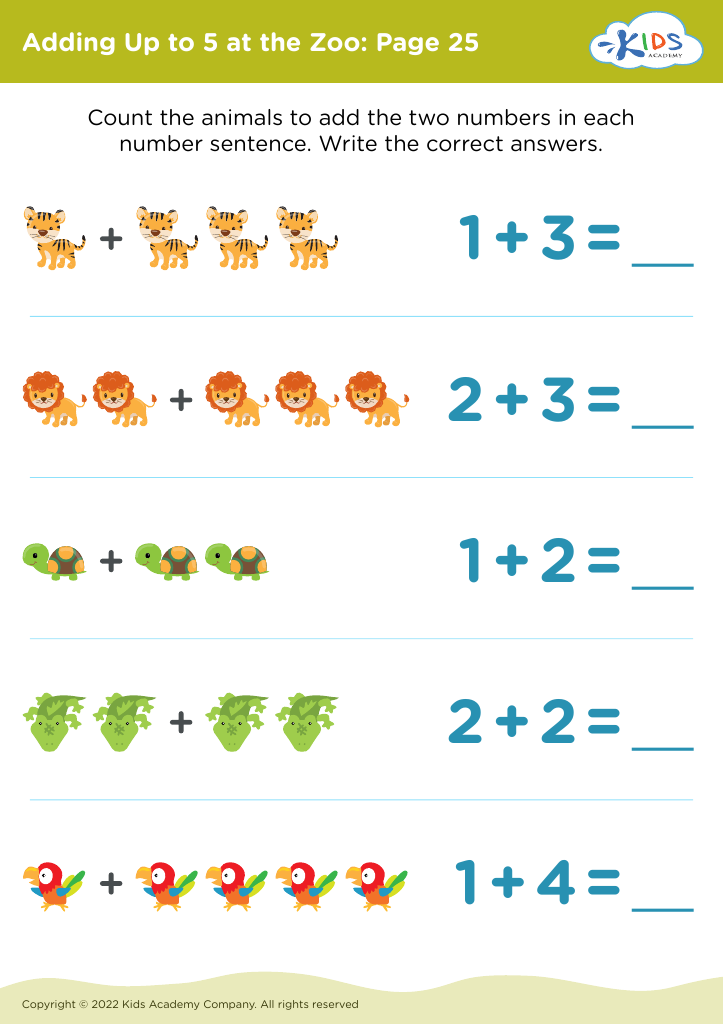
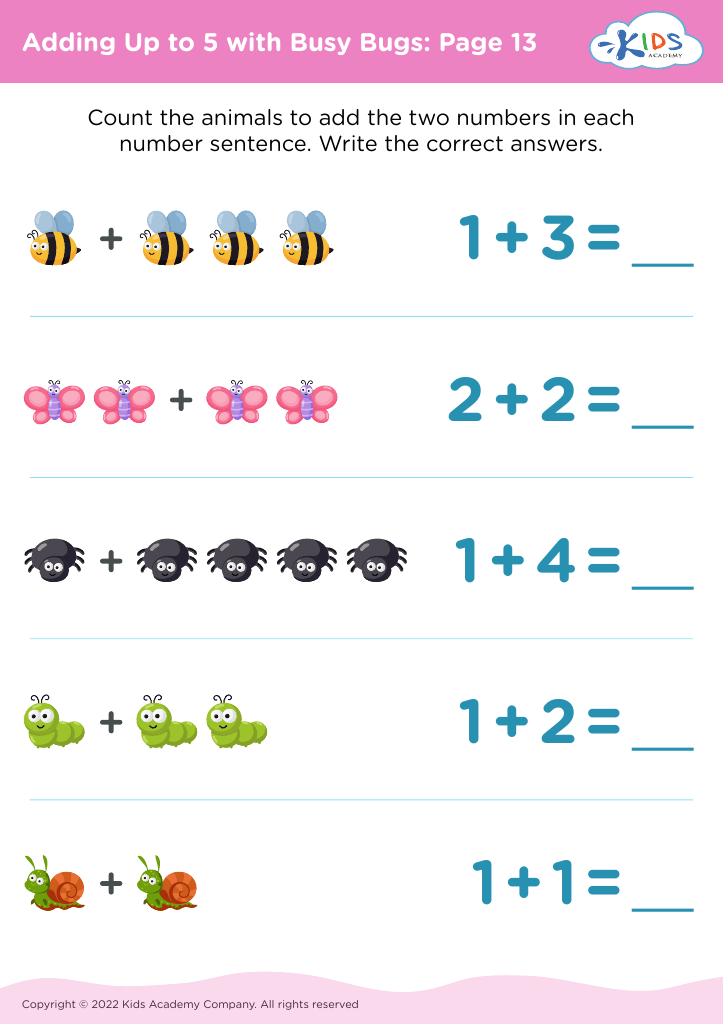
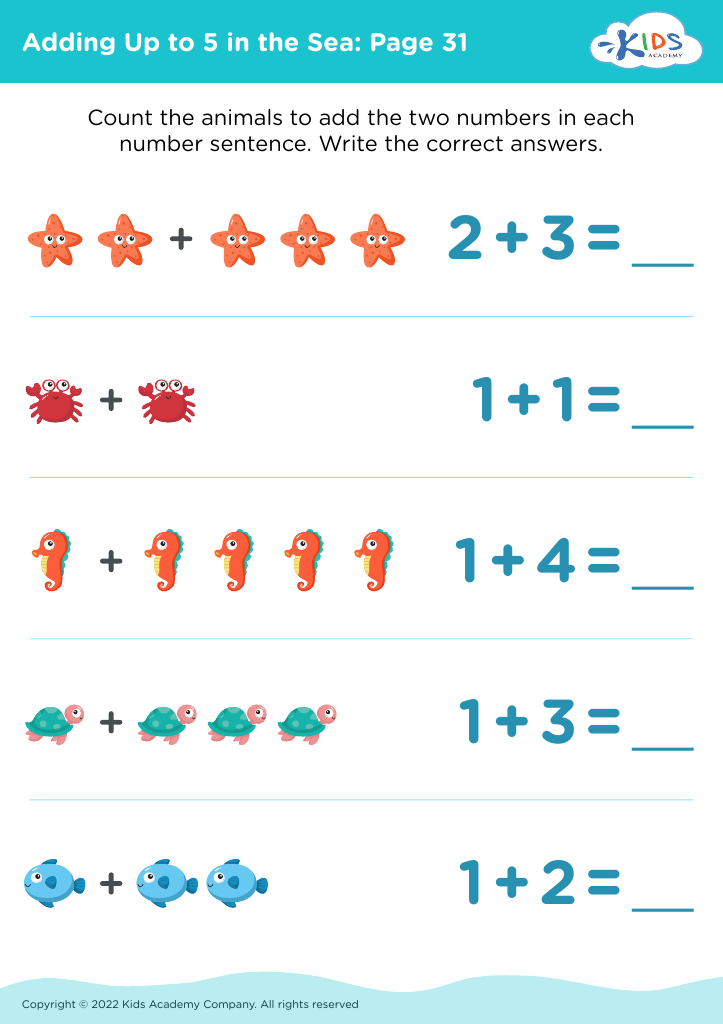
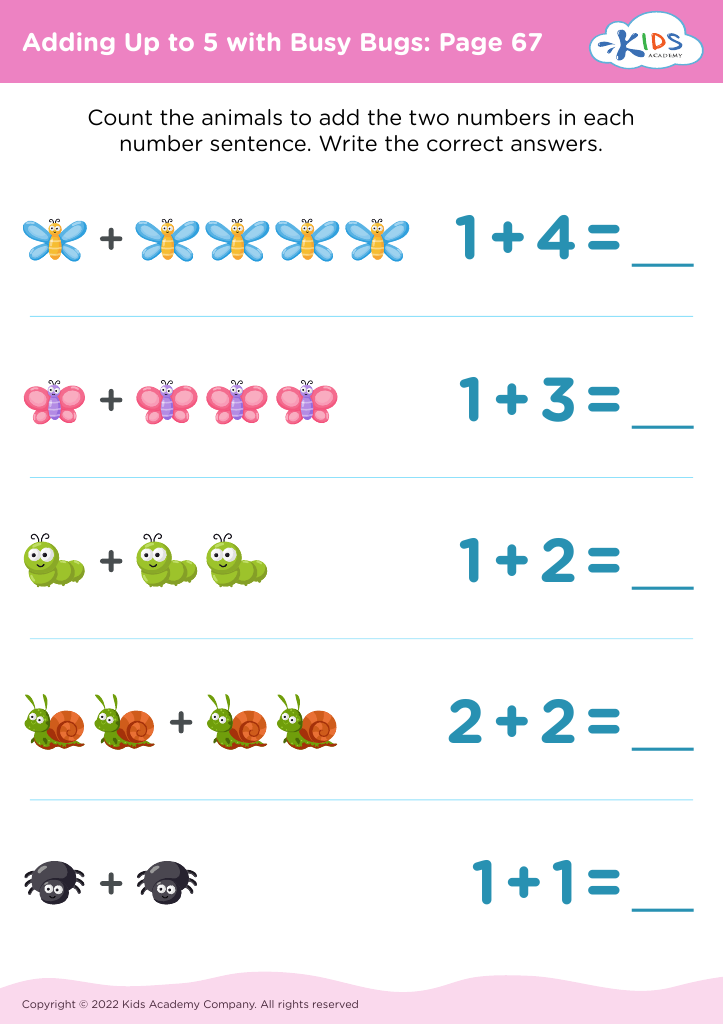
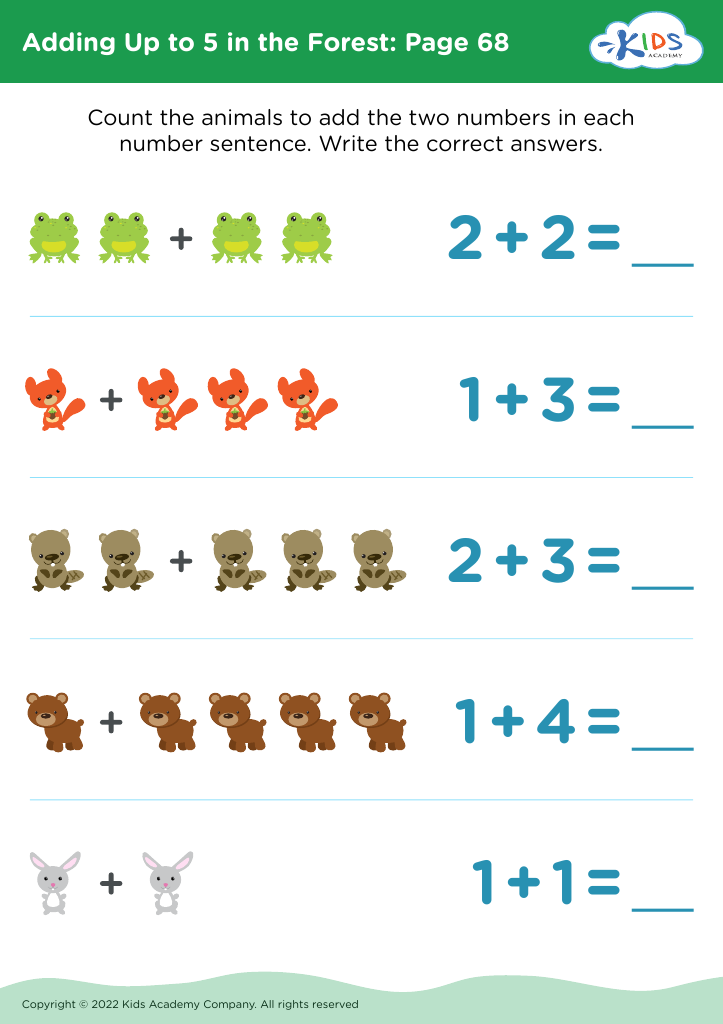
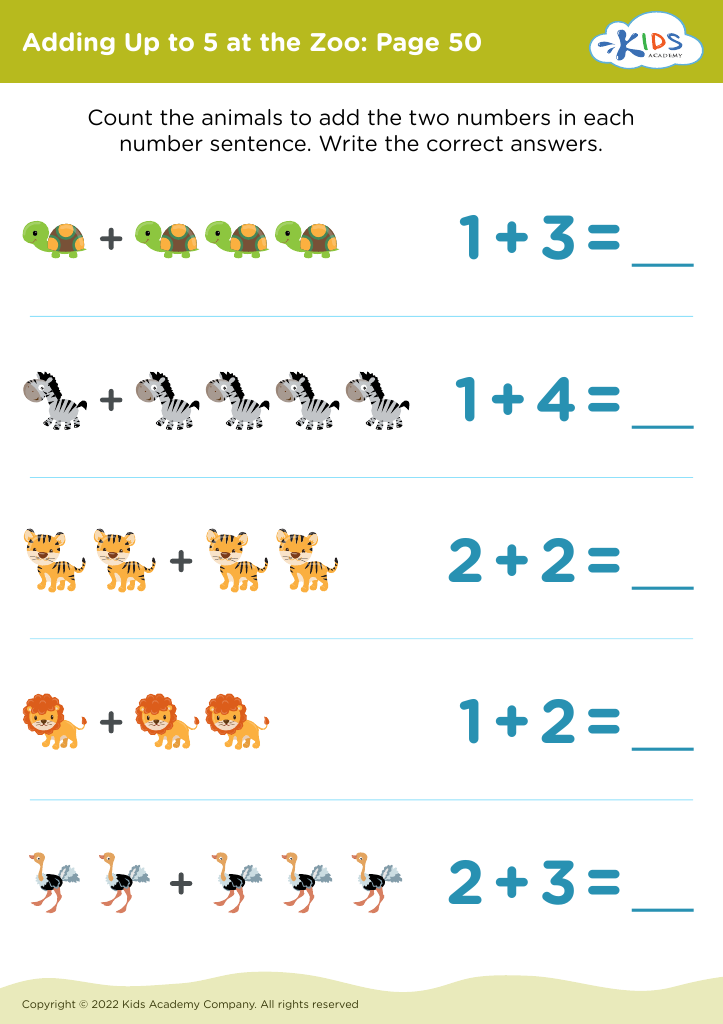
Boost your child's hand-eye coordination and math skills with our "Hand-eye Coordination Adding Up to 5 Worksheets" designed specifically for 5-year-olds! These engaging worksheets combine fun activities with early math concepts, enabling children to practice addition while enhancing their fine motor skills. Young learners will enjoy colorful illustrations and interactive exercises that encourage them to connect numbers with visual elements effectively. Perfect for home or classroom use, these worksheets create a dynamic learning experience that builds confidence in both math and coordination. Unlock your child's potential today and help them master adding up to 5 in an enjoyable and creative way!



.jpg)




Hand-eye coordination is a crucial developmental skill for 5-year-olds, impacting various aspects of learning and everyday activities. For parents and teachers, fostering this ability during early childhood is important for several reasons.
First, hand-eye coordination supports fine motor skills, which are essential for tasks like writing, drawing, and manipulating objects. These skills are foundational for a child’s academic success, as they enable children to handle tools like pencils and scissors effectively.
Secondly, hand-eye coordination plays a significant role in learning basic math concepts, such as adding up to 5. Activities that involve counting objects, matching, or sorting help children visualize numbers and understand quantity through a hands-on approach. When children participate in games or exercises that develop coordination, they become more adept at connecting physical actions with mathematical concepts.
Finally, improving hand-eye coordination can enhance a child’s confidence and foster a love for learning. Engaging in fun, interactive activities, like counting games or crafted projects, can promote a positive learning environment. Ultimately, by prioritizing hand-eye coordination, parents and teachers prepare children not only for mathematical success but also for a smoother transition into more complex skills in the future.








