Understanding quantity Adding Up to 5 Worksheets for 5-Year-Olds
17 filtered results
-
From - To
Explore our "Understanding Quantity: Adding Up to 5 Worksheets for 5-Year-Olds," designed to make math fun and engaging for young learners! Our diverse range of worksheets encourages children to recognize and manipulate numbers up to 5. By connecting visual aids with hands-on activities, kids will enhance their counting and addition skills effortlessly. Each worksheet features colorful illustrations and interactive exercises that foster a deeper understanding of quantity. Perfect for homeschooling or classroom use, these worksheets provide an excellent foundation for early math success. Help your child build confidence and a love for numbers while mastering the basics of addition with our thoughtfully crafted resources!
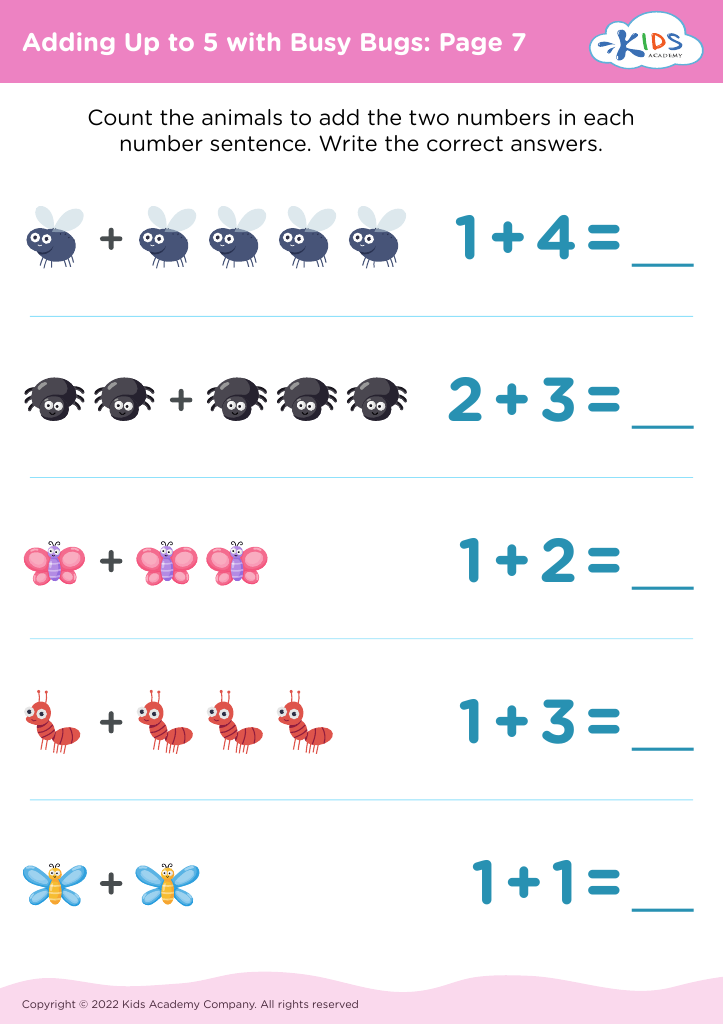
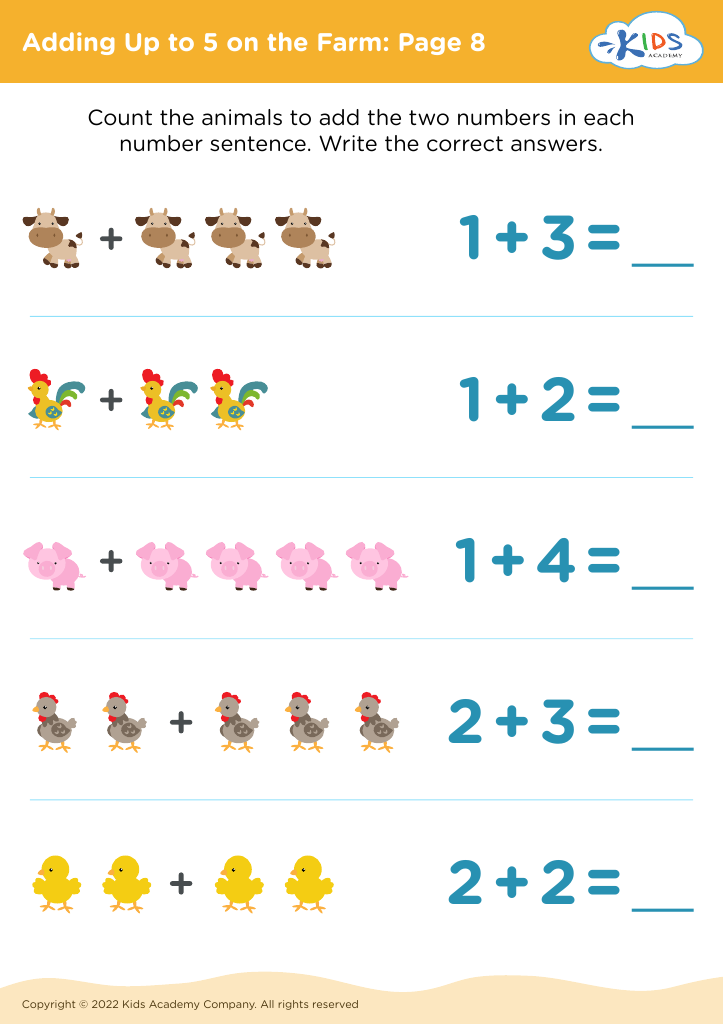
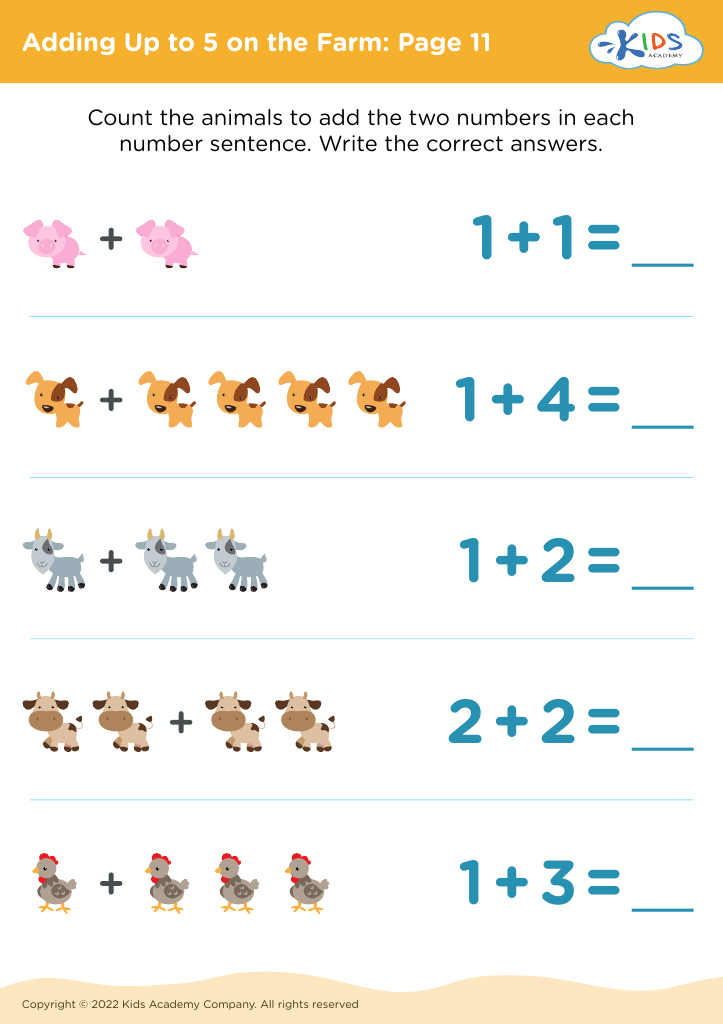
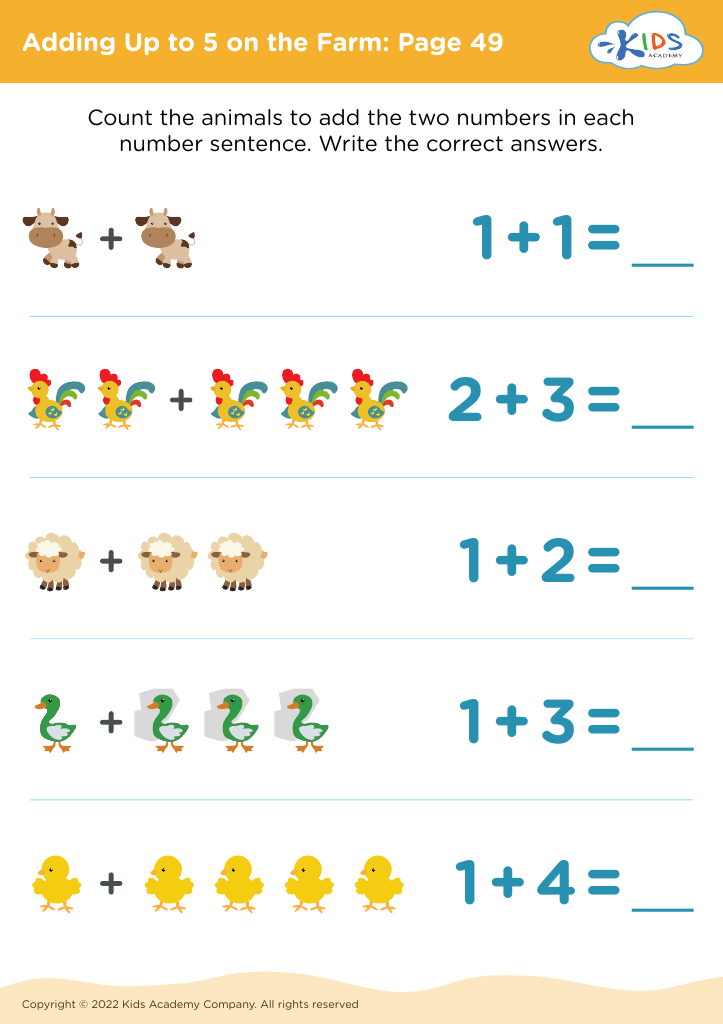
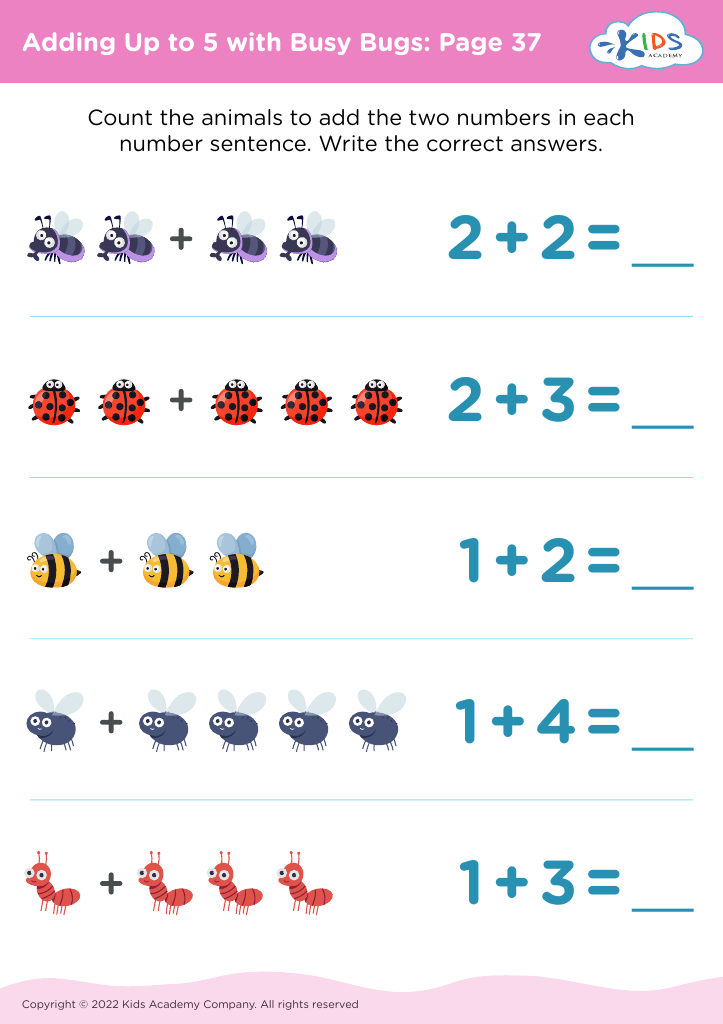
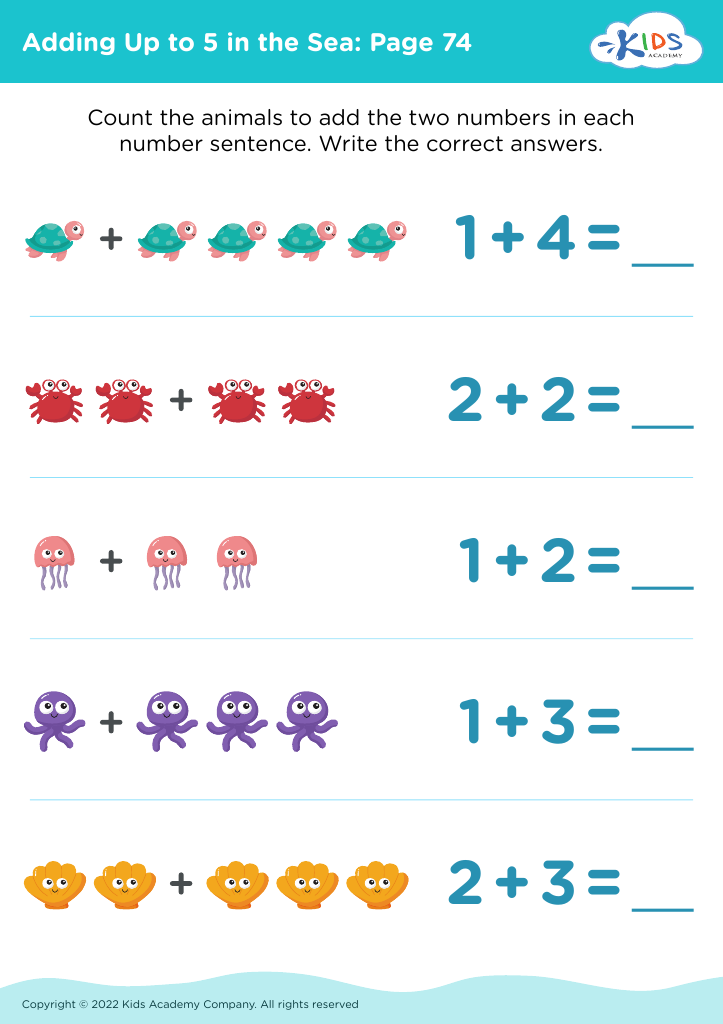
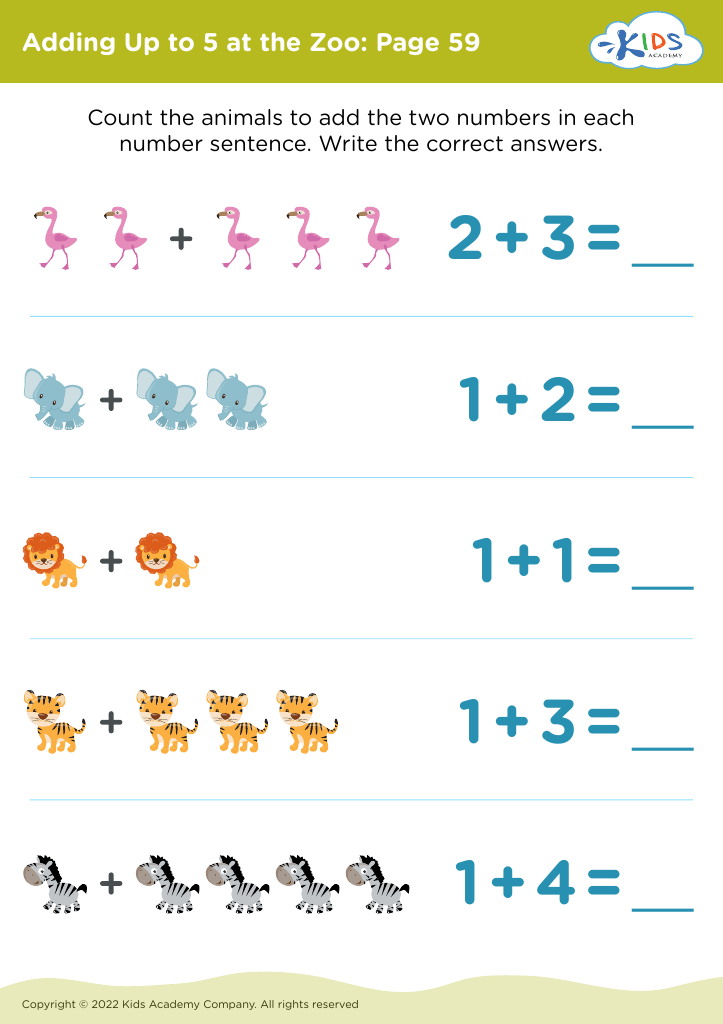
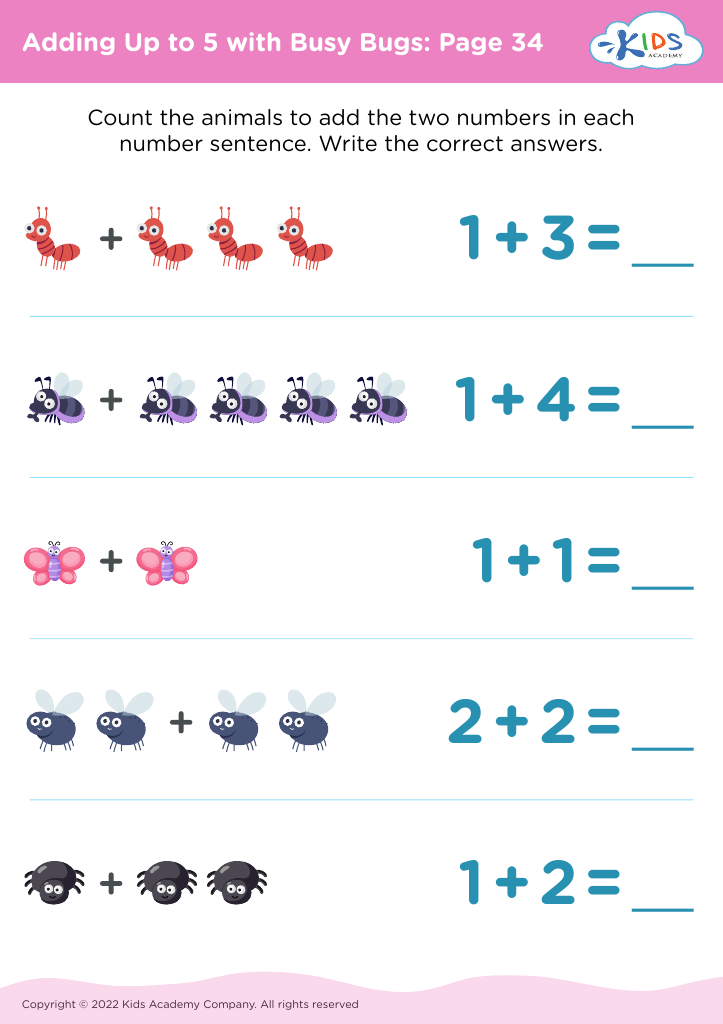
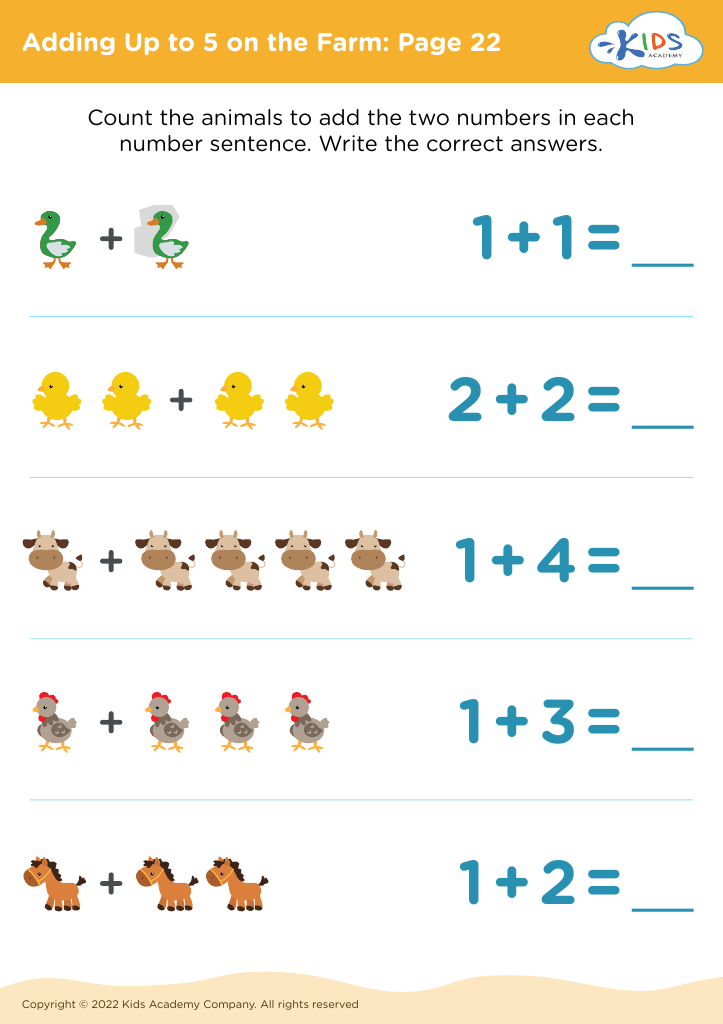
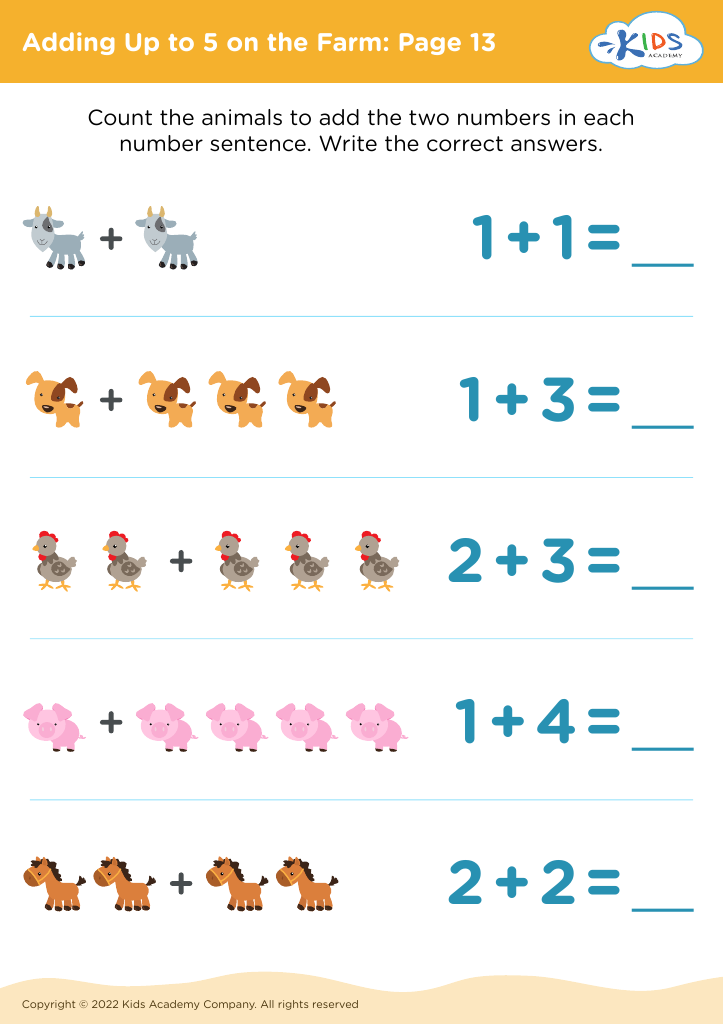
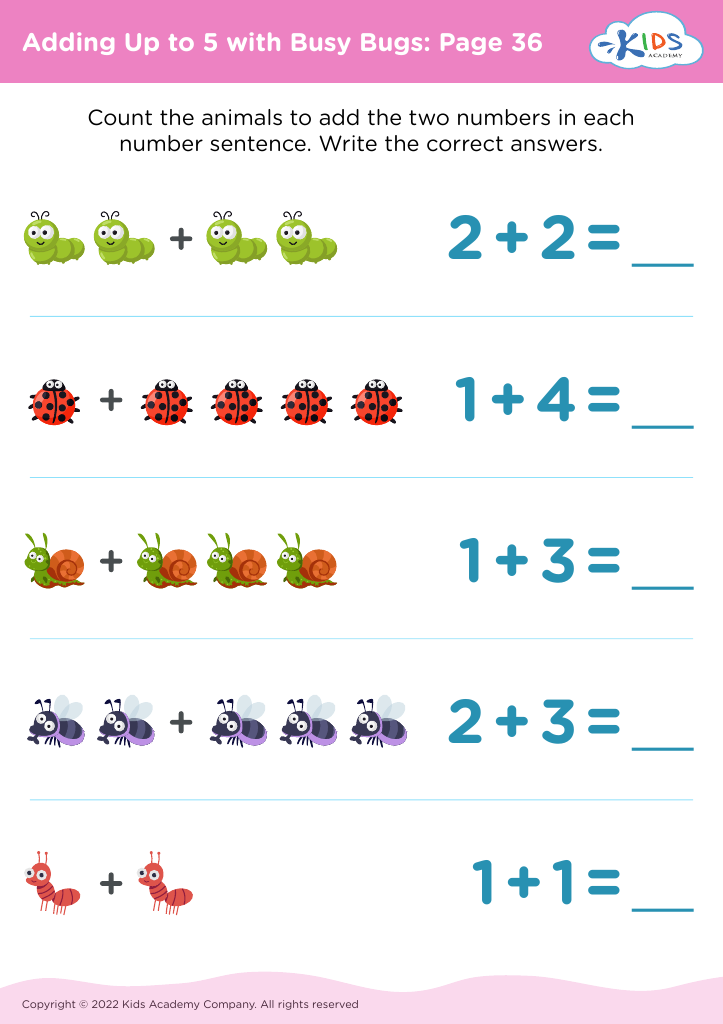
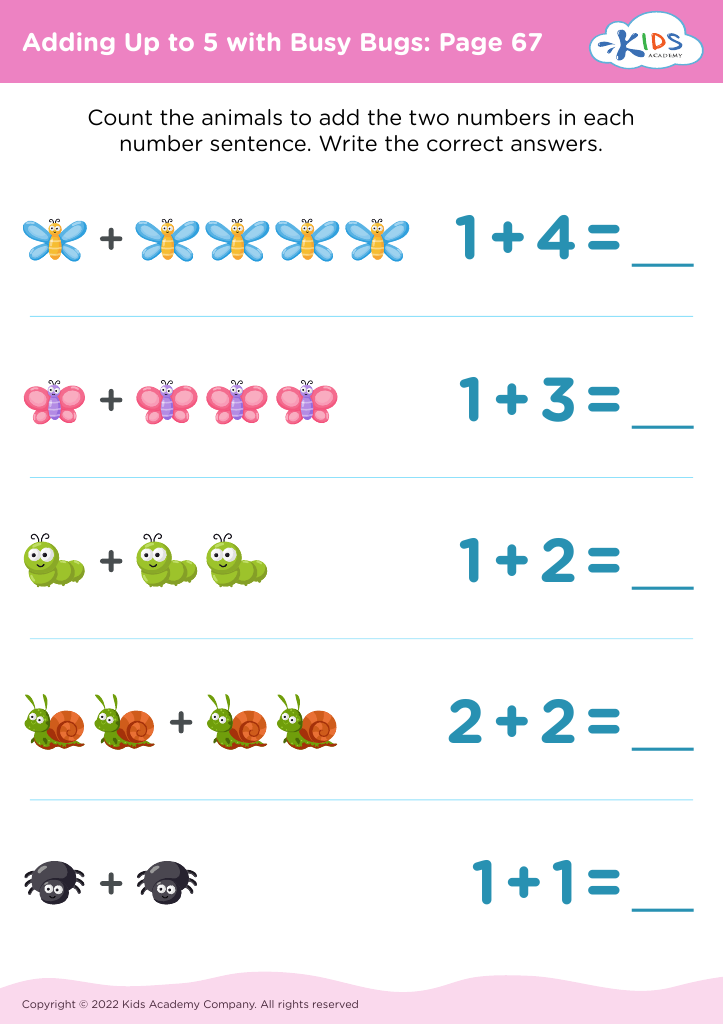
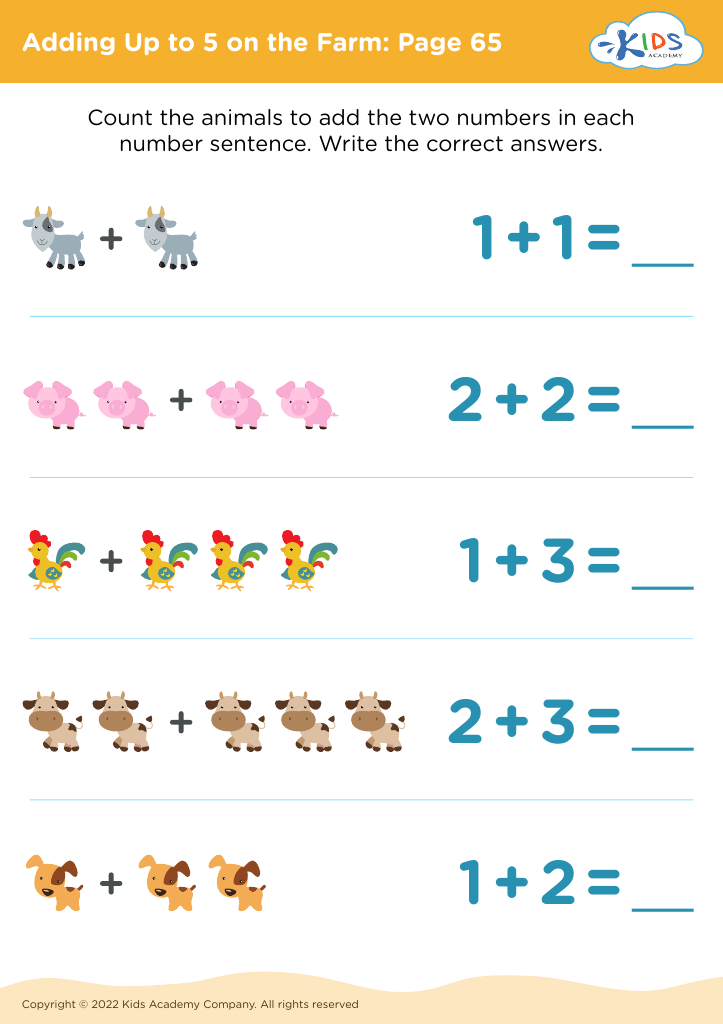
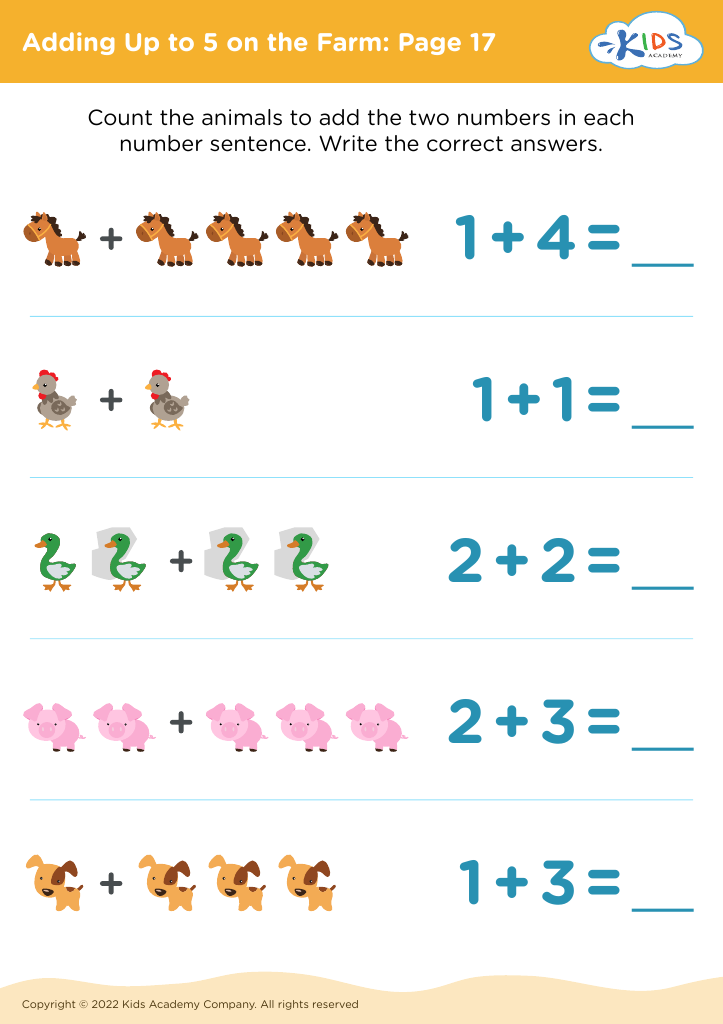
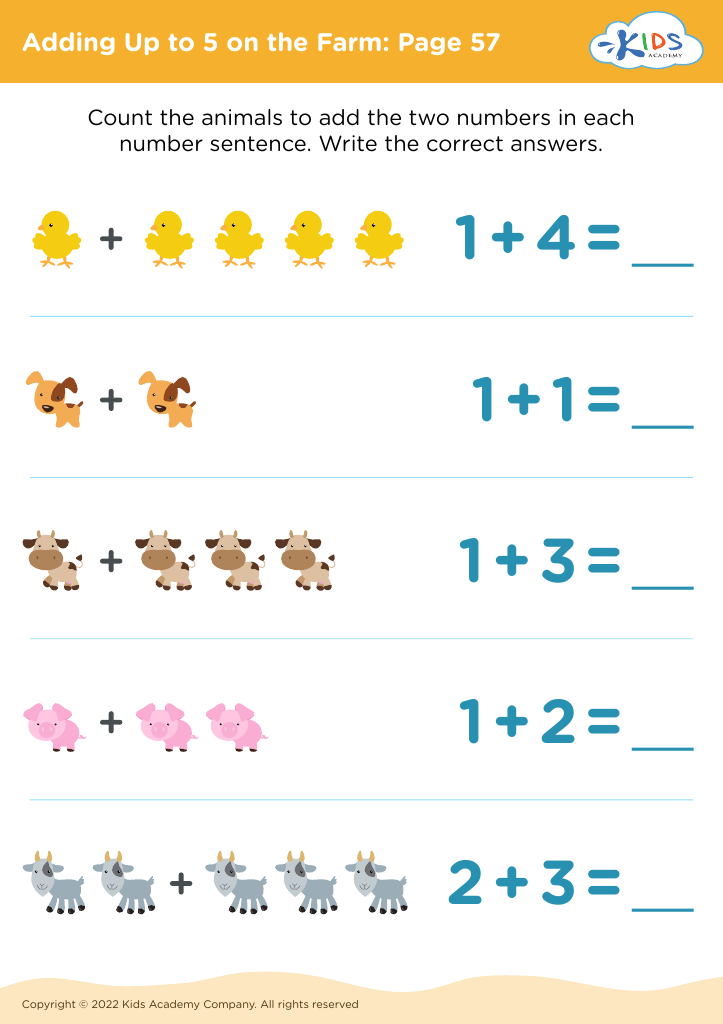
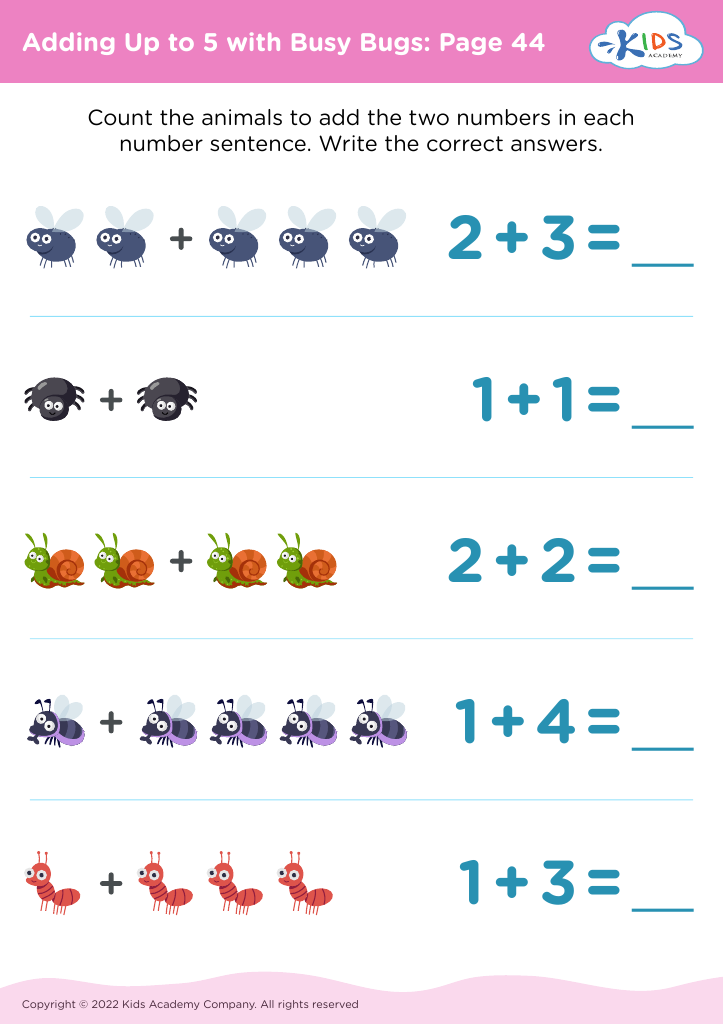
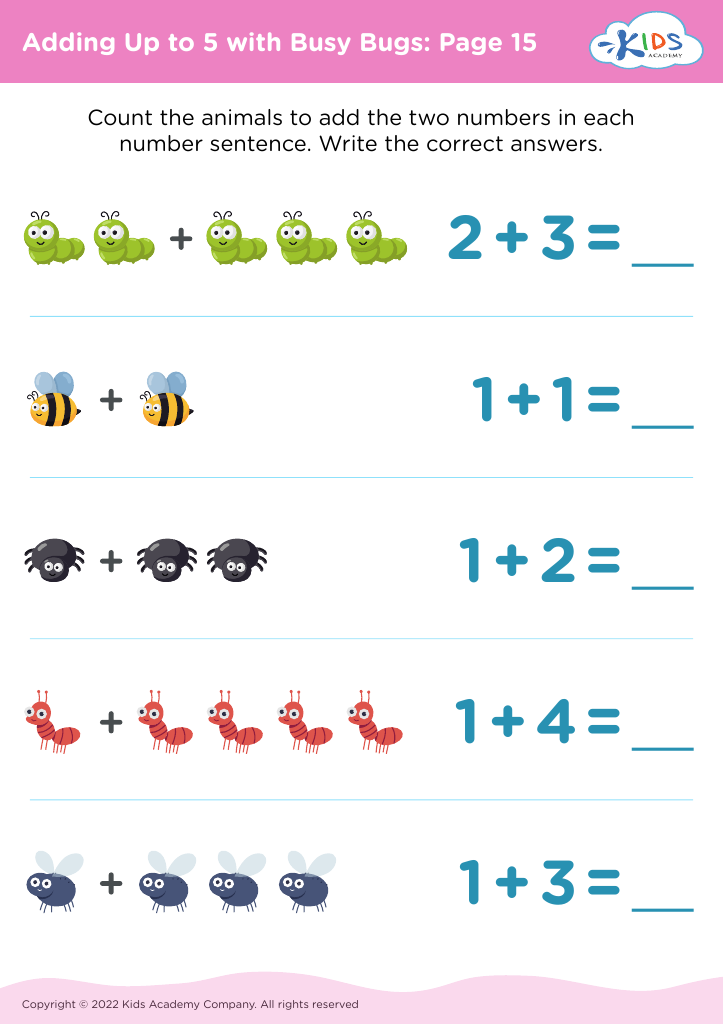








Understanding quantity and the concept of adding up to 5 is crucial for 5-year-olds as it lays the foundation for their mathematical understanding. At this early age, children are not only developing number recognition but are starting to grasp the relationships between numbers, which is essential for future learning. Mastery of small quantities helps strengthen addition skills, enhancing their confidence in tackling larger numbers as they progress in school.
Moreover, learning to add up to 5 fosters critical thinking, problem-solving abilities, and cognitive development. Children can engage in hands-on activities like counting objects, which makes the learning process enjoyable and interactive. These activities assist in creating a tangible connection between numbers and real-world scenarios, helping children see relevance in their learning.
Furthermore, understanding small quantities also supports other subjects like science and art, as children learn to categorize, compare, and combine ideas creatively. By instilling a solid numerical foundation early on, parents and teachers empower children not only to succeed in mathematics but also encourage a positive attitude towards learning. Ultimately, fostering these skills in early childhood can lead to better educational outcomes and lifelong confidence in mathematical abilities.








