Hand-eye Coordination Addition and Subtraction Word Problems Worksheets for 5-Year-Olds
3 filtered results
-
From - To
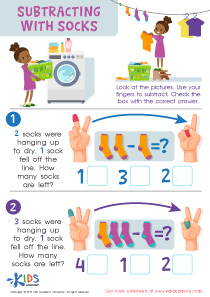
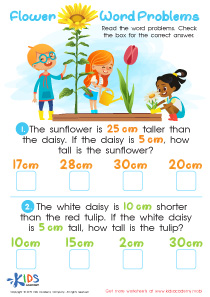
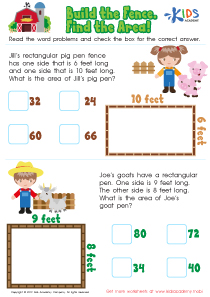
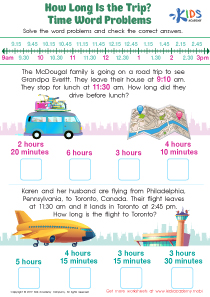
Enhance your child's learning experience with our engaging Hand-eye Coordination Addition and Subtraction Word Problems Worksheets, specially designed for 5-year-olds! These worksheets combine math skills with physical activity, helping young learners develop coordination while mastering basic addition and subtraction. Each fun and interactive word problem encourages children to visualize and manipulate objects, fostering critical thinking and problem-solving skills. Perfect for home or classroom use, these worksheets captivate young minds through colorful illustrations and relatable scenarios. Support your child's early math journey while promoting motor skills with our uniquely crafted resources today! Enjoy learning with ease and creativity!
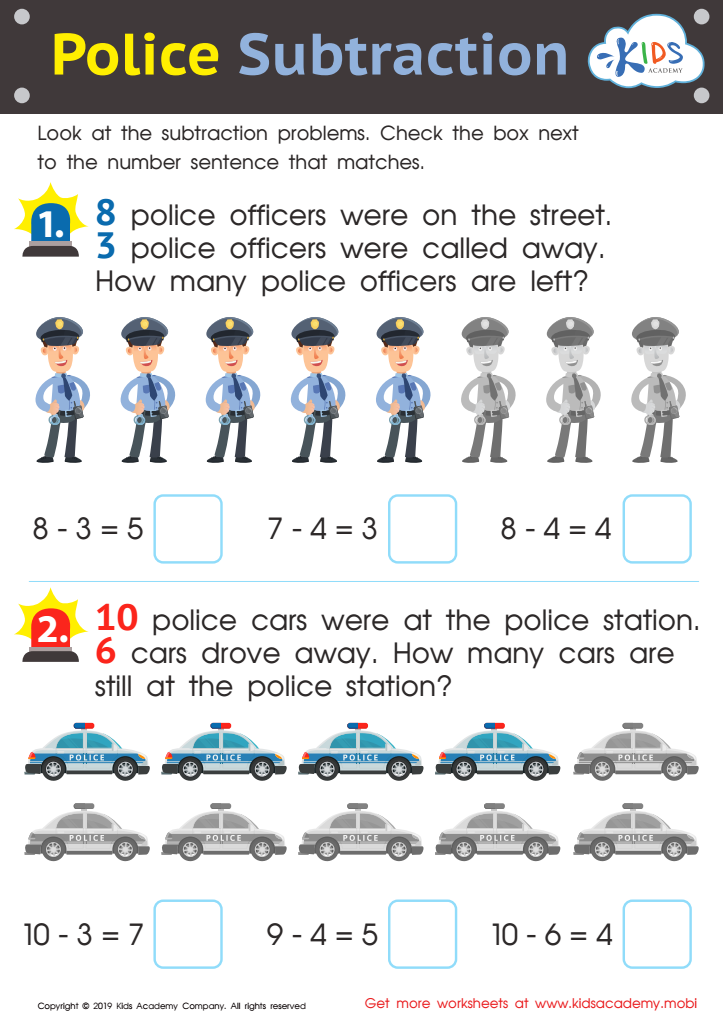
Police Subtraction Worksheet
 Assign to My Students
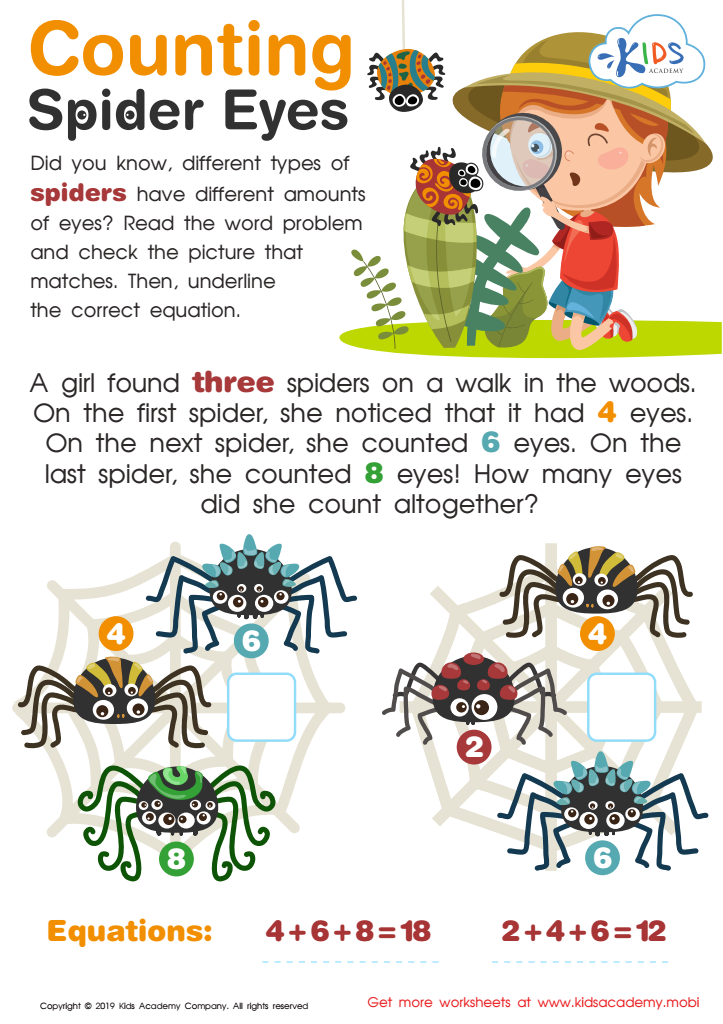
Counting Spider Eyes Worksheet
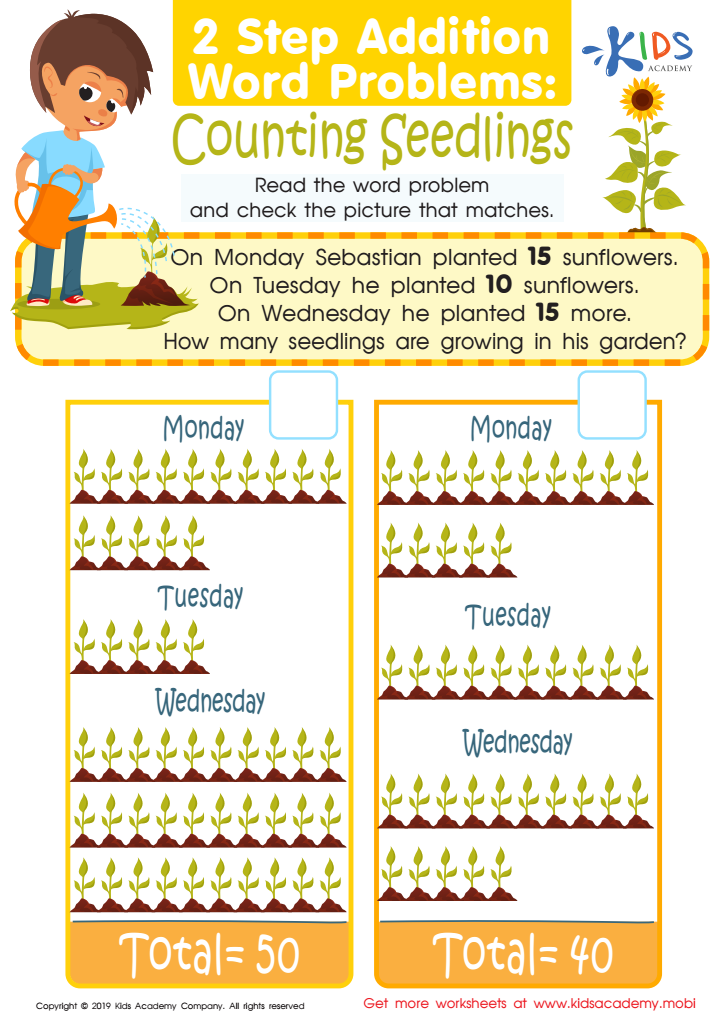
Counting Seedlings Worksheet








Hand-eye coordination is crucial for young children's overall development, impacting their cognitive and physical abilities. For 5-year-olds, engaging in activities that integrate hand-eye coordination with math, such as addition and subtraction word problems, can enhance learning. This age group is developing fine motor skills and learning to manipulate objects with precision, which is essential for writing, drawing, and later on, using tools.
By incorporating hand-eye coordination activities into math instruction, parents and teachers create a multisensory learning environment that makes abstract concepts more tangible. For instance, using physical objects, like blocks or counters, while solving word problems allows children to visualize numbers and operations, improving their problem-solving skills.
Furthermore, these activities promote focus and concentration, as they require little ones to coordinate their hand movements with what they are thinking. This process strengthens neural connections linked with both physical skills and cognitive functions such as reasoning and critical thinking.
Ultimately, fostering hand-eye coordination through math word problems not only solidifies foundational math concepts but also supports overall developmental milestones, preparing children for future academic success. By prioritizing these integrated activities, adults can help nurture well-rounded learners capable of tackling a variety of challenges.