Filters

107 filtered results

Clear all filters
Favorites
With answer key
Interactive

107 filtered results

Difficulty Level

Grade


Explore our engaging Cognitive Development Addition & Subtraction Worksheets tailored for 5-year-olds! Designed to enhance young minds, these worksheets promote essential early math skills through fun and interactive activities. Our carefully crafted exercises help children develop critical thinking, problem-solving abilities, and number recognition, making learning enjoyable. Each worksheet encourages cognitive growth while reinforcing foundational math concepts in a playful way. Perfect for classroom or homeschooling settings, these resources are a fantastic way for kids to practice addition and subtraction with confidence. Foster a love for learning and strengthen mathematical foundations with our colorful, educational worksheets today!

Check out this FREE Trial Lesson on Addition & Subtraction for age 5!

Match Exactly the Same

Favorites
With answer key
Interactive
  • 5
  • Cognitive Development
  • Addition & Subtraction
Addition worksheet for kindergarten pdf

Addition Worksheet for Kindergarten

Addition Worksheet for Kindergarten
Worksheet
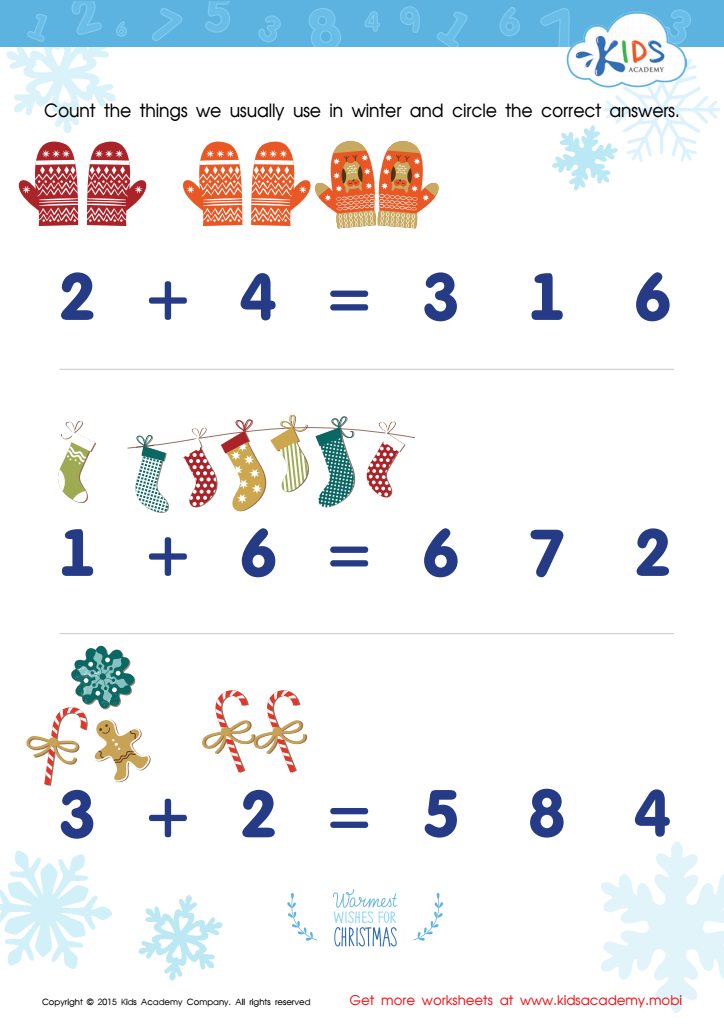
Math PDF Worksheet: Count Winter Things

Count Winter Things Worksheet

This chilly winter afternoon, help your kid warm up with Kids Academy's free math worksheet - full of bright pictures and addition practice. Let them count the things and write in the numbers for a great brain training and math head start. Get more free math worksheets here. (80 words)
Count Winter Things Worksheet
Worksheet
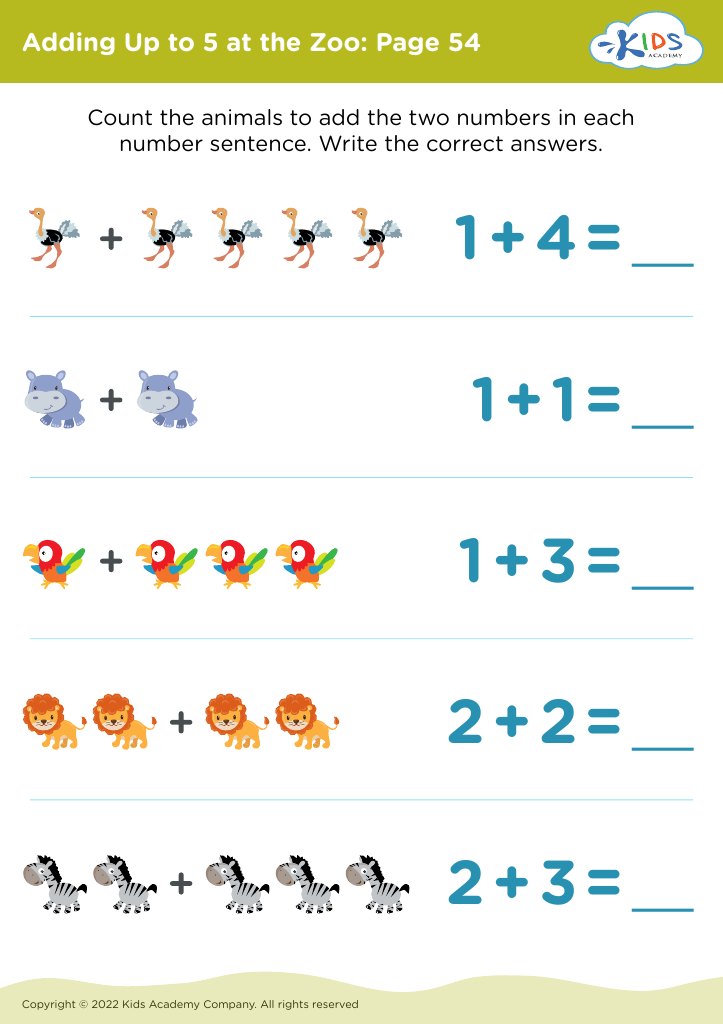
Adding Up to 5 at the Zoo: Page 54
Worksheet
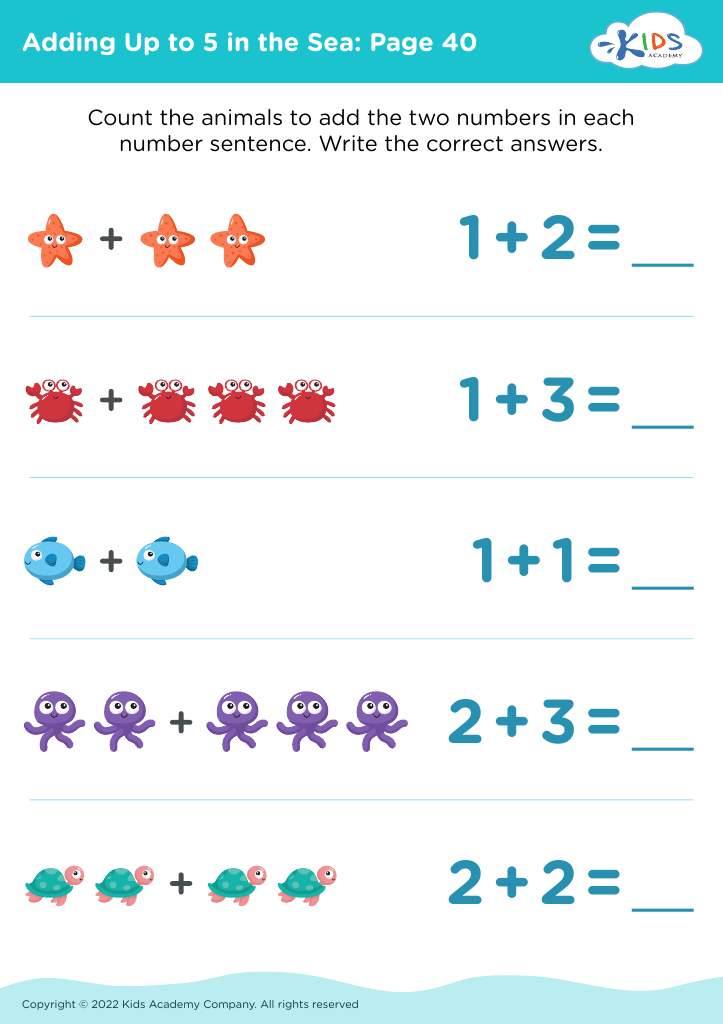
Adding Up to 5 in the Sea: Page 40
Worksheet
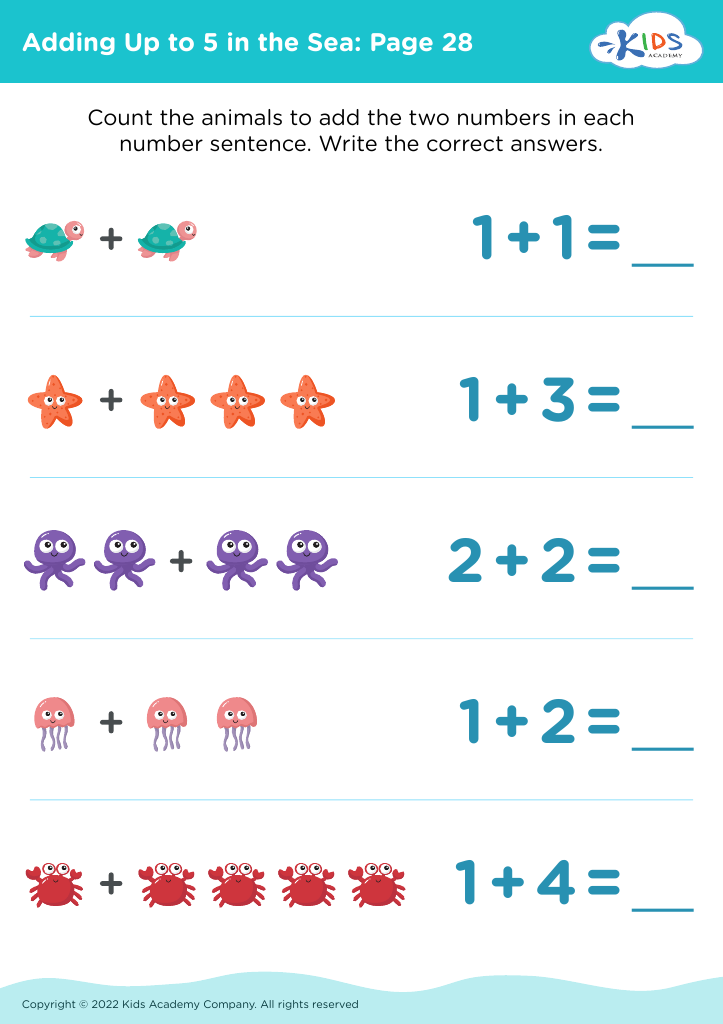
Adding Up to 5 in the Sea: Page 28
Worksheet
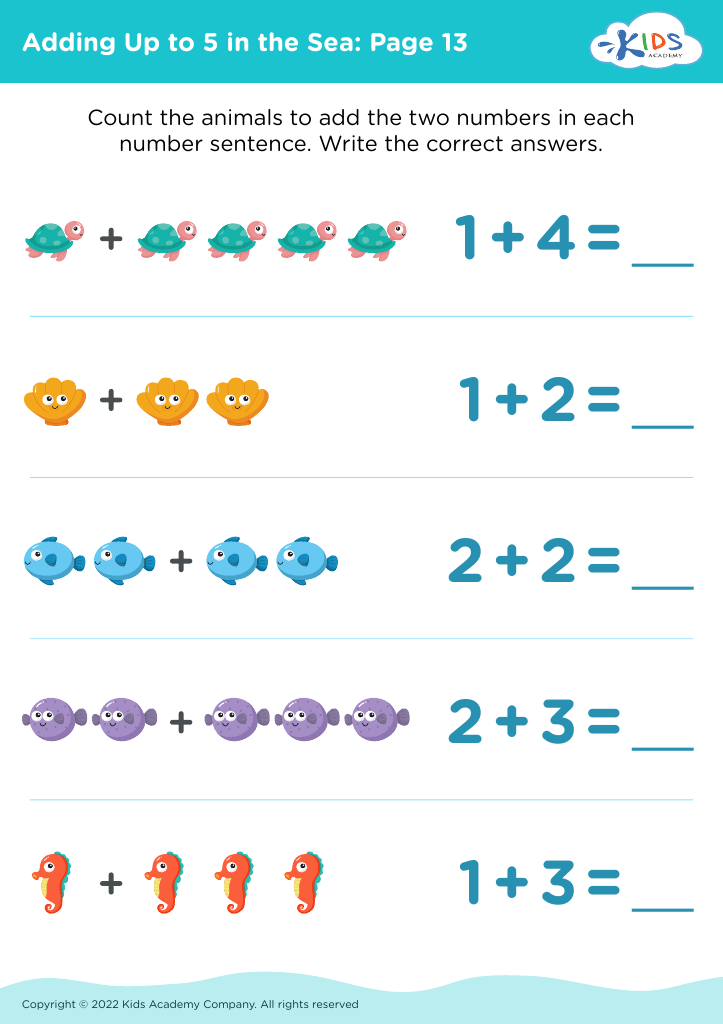
Adding Up to 5 in the Sea: Page 13
Worksheet
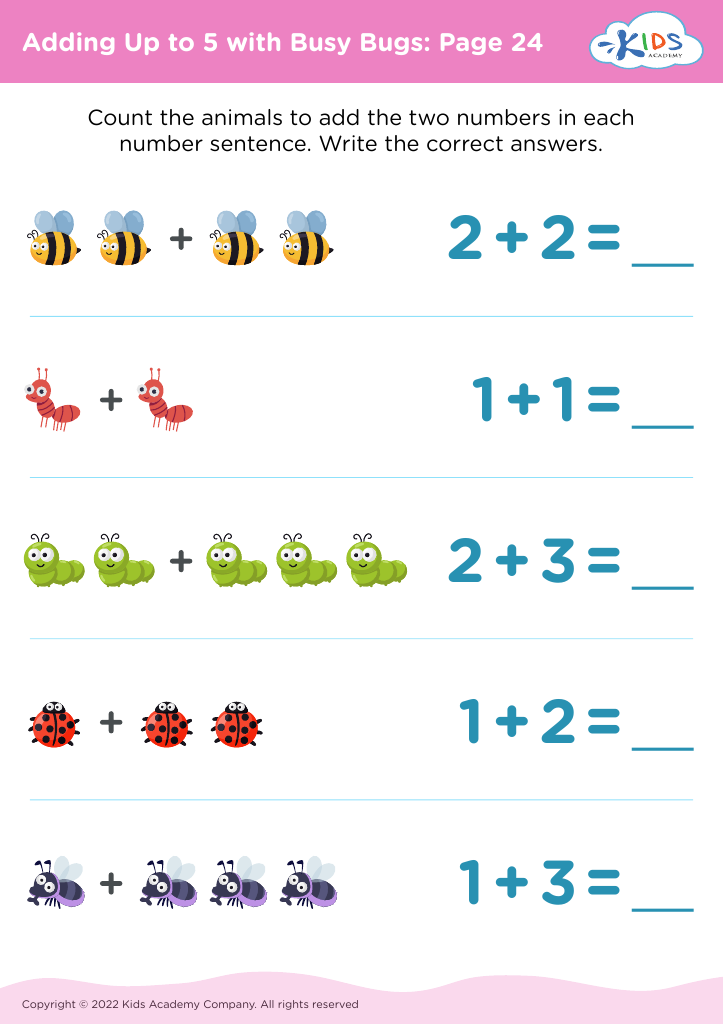
Adding Up to 5 with Busy Bugs: Page 24
Worksheet
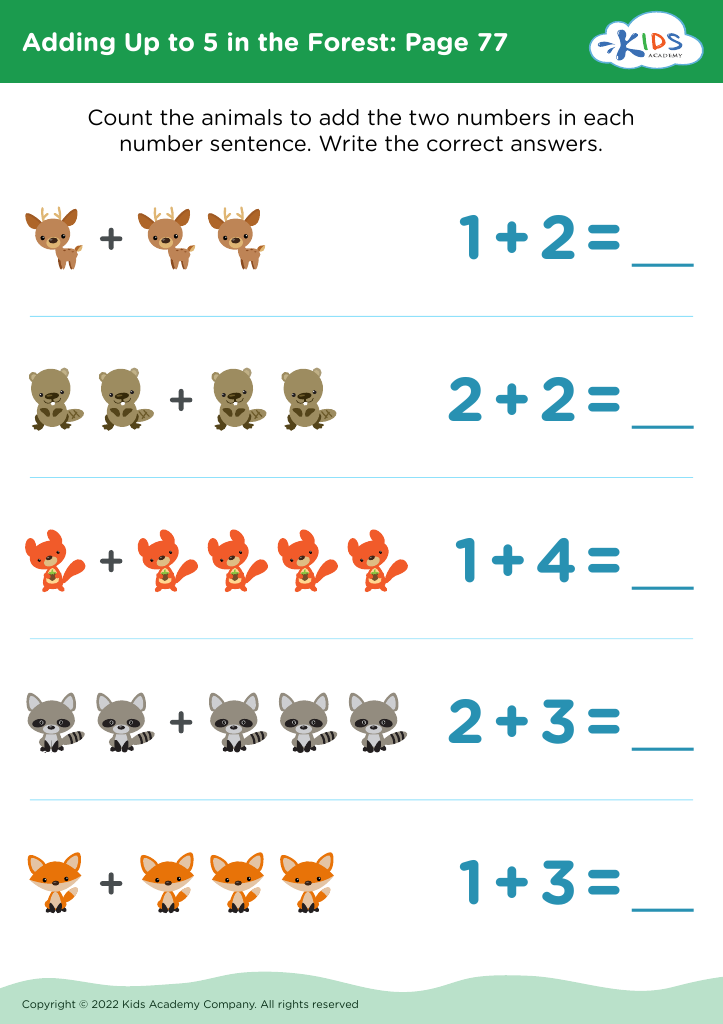
Adding Up to 5 in the Forest: Page 77
Worksheet
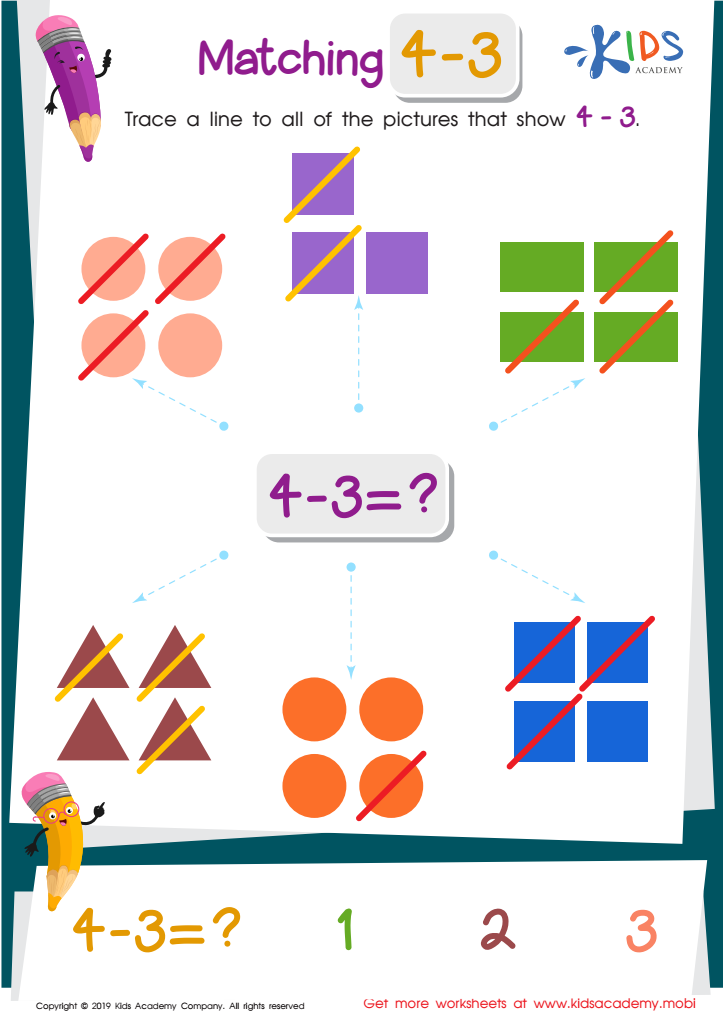
Matching 4 – 3 Worksheet
Matching 4 – 3 Worksheet
Help your kids master basic math concepts like addition and subtraction with fun exercises. Test their understanding with simple problems. For example, in this worksheet, ask them to count the objects in each picture and draw a line to the pictures that show 4 - 3 = 1. This will help them get better at solving equations.
Matching 4 – 3 Worksheet
Worksheet
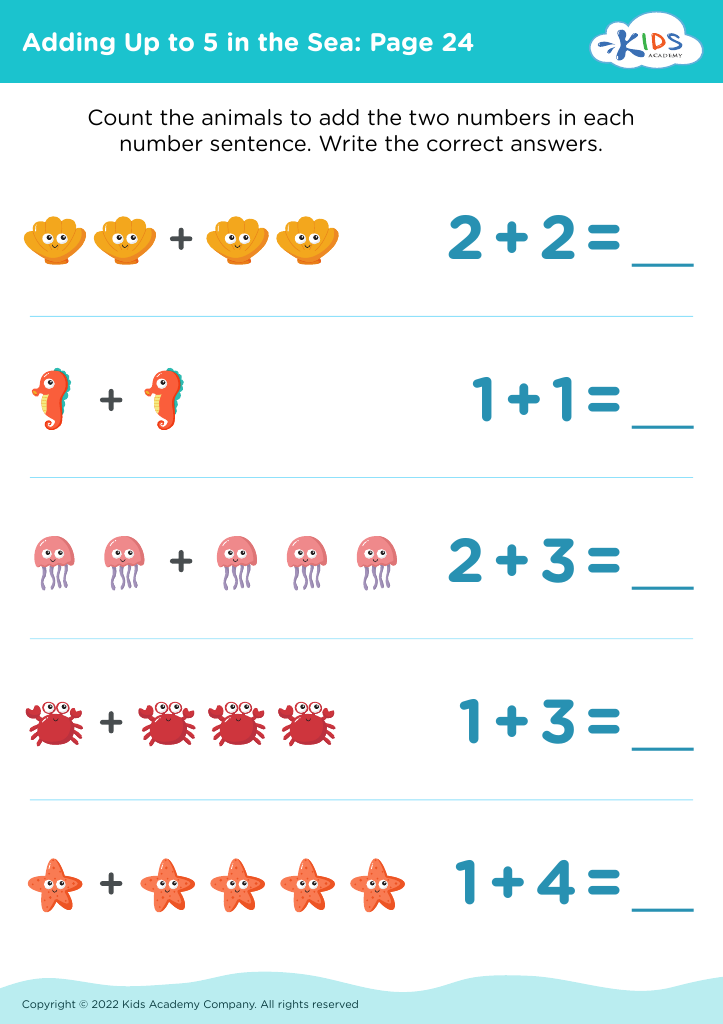
Adding Up to 5 in the Sea: Page 24
Worksheet
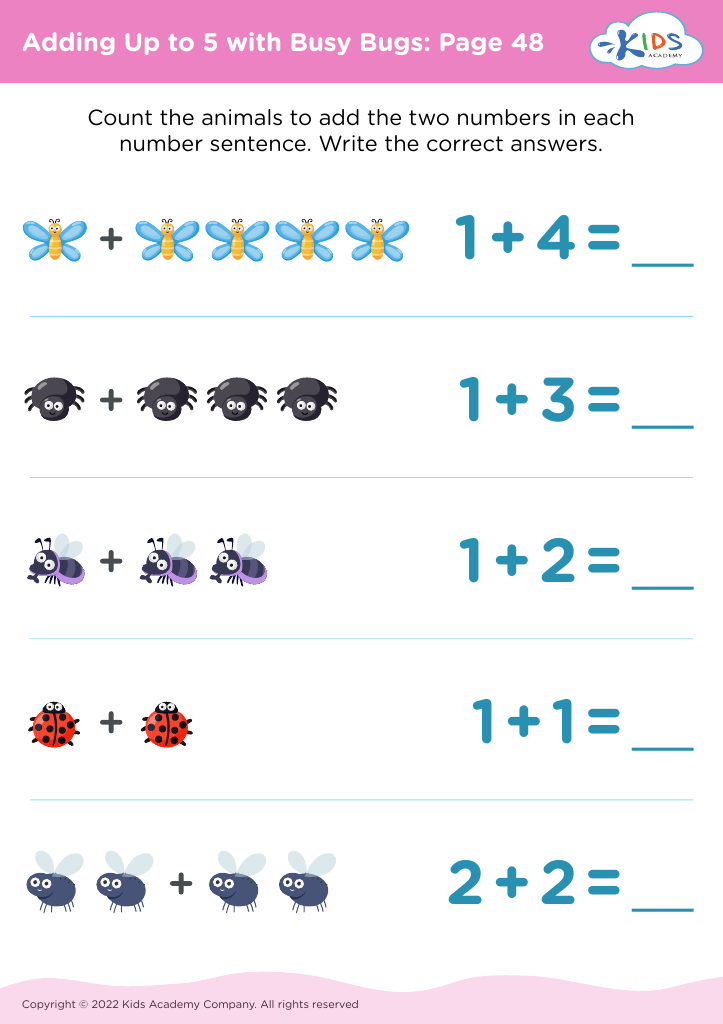
Adding Up to 5 with Busy Bugs: Page 48
Worksheet
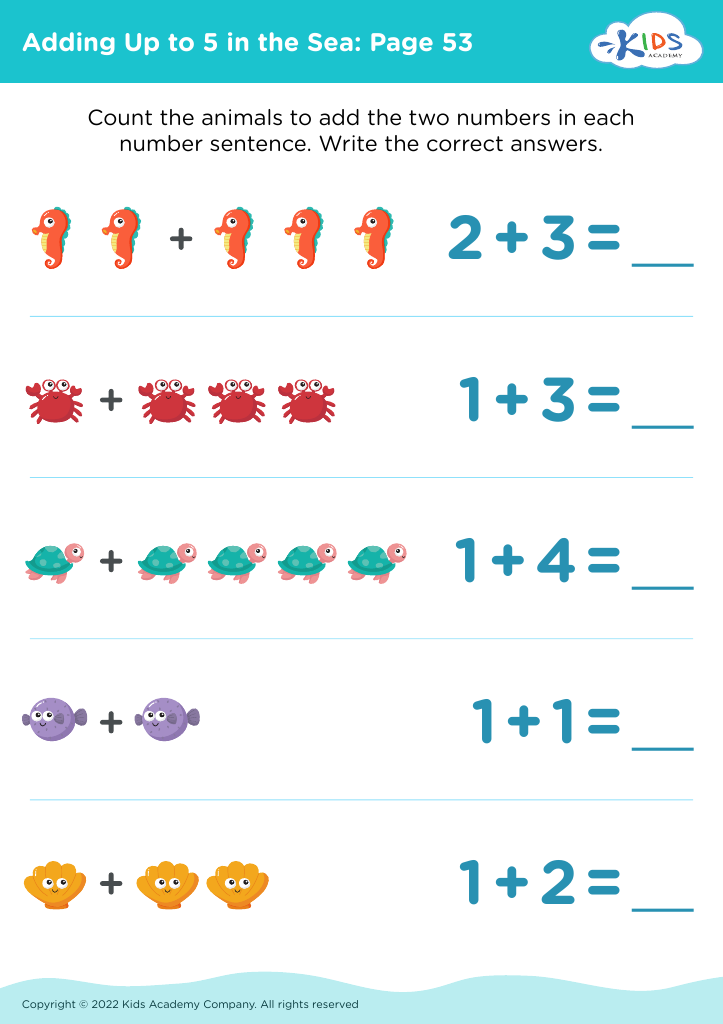
Adding Up to 5 in the Sea: Page 53
Worksheet
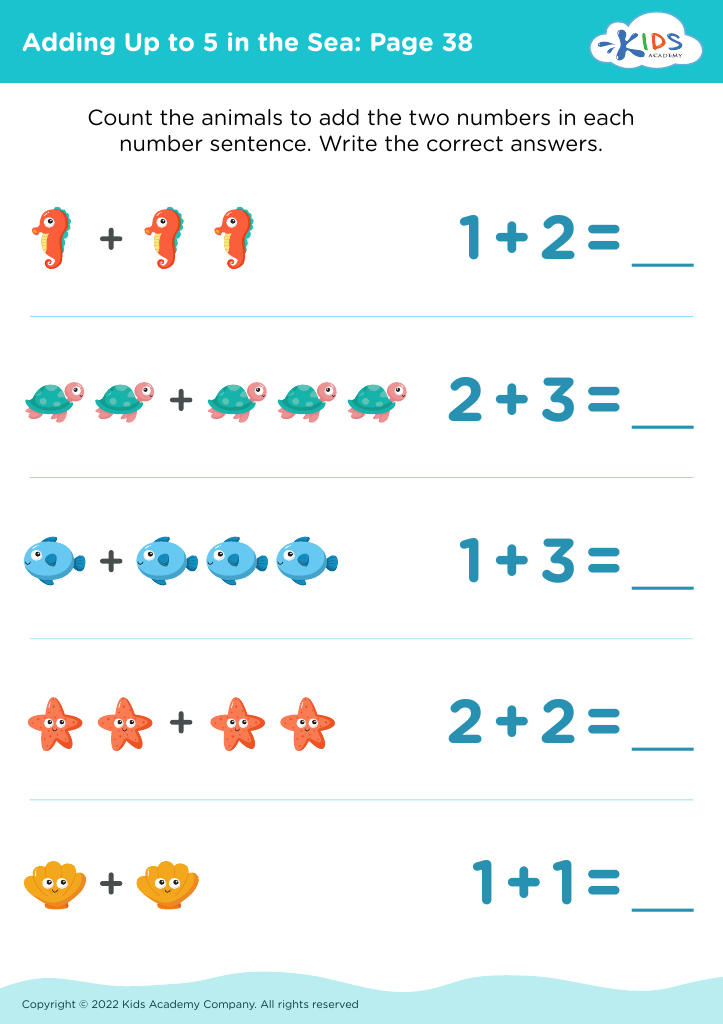
Adding Up to 5 in the Sea: Page 38
Worksheet
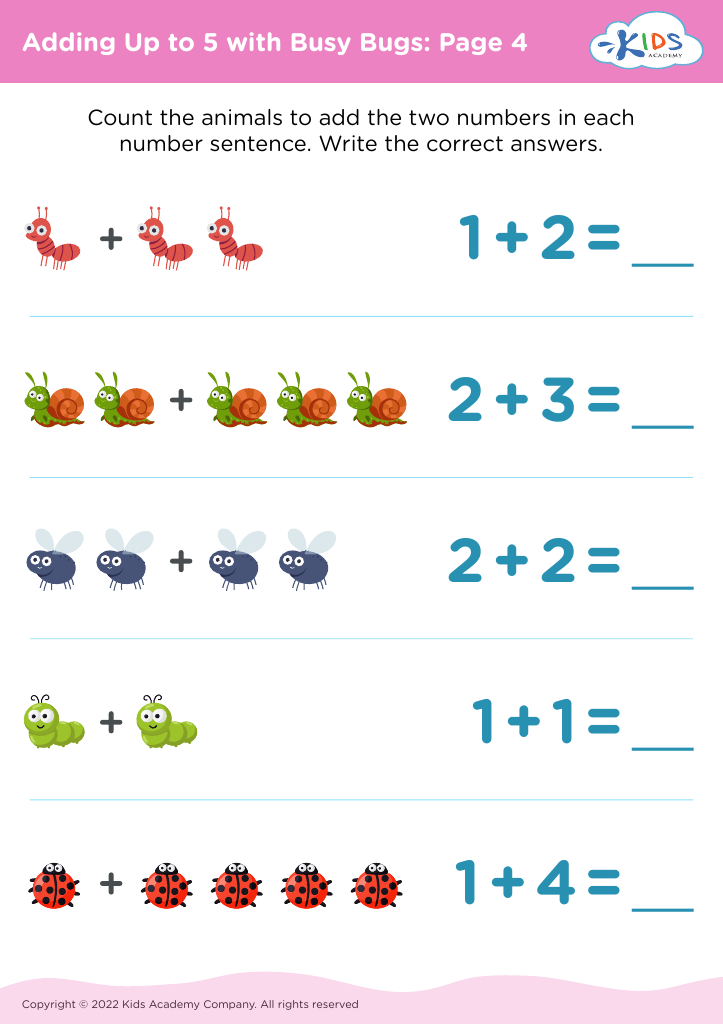
Adding Up to 5 with Busy Bugs: Page 4
Worksheet
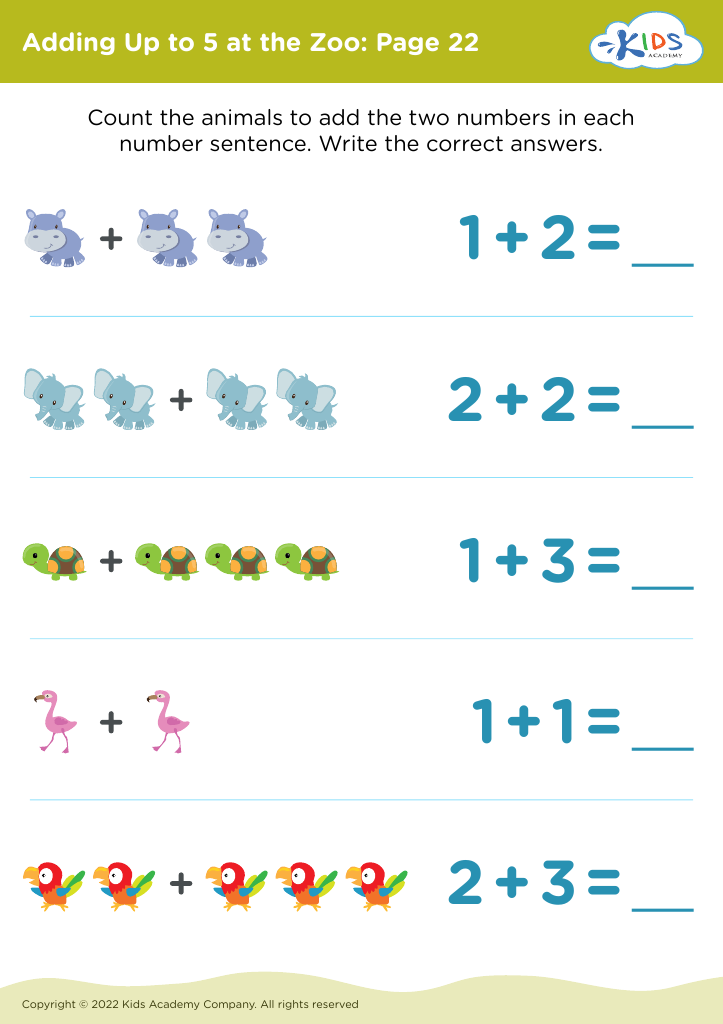
Adding Up to 5 at the Zoo: Page 22
Worksheet
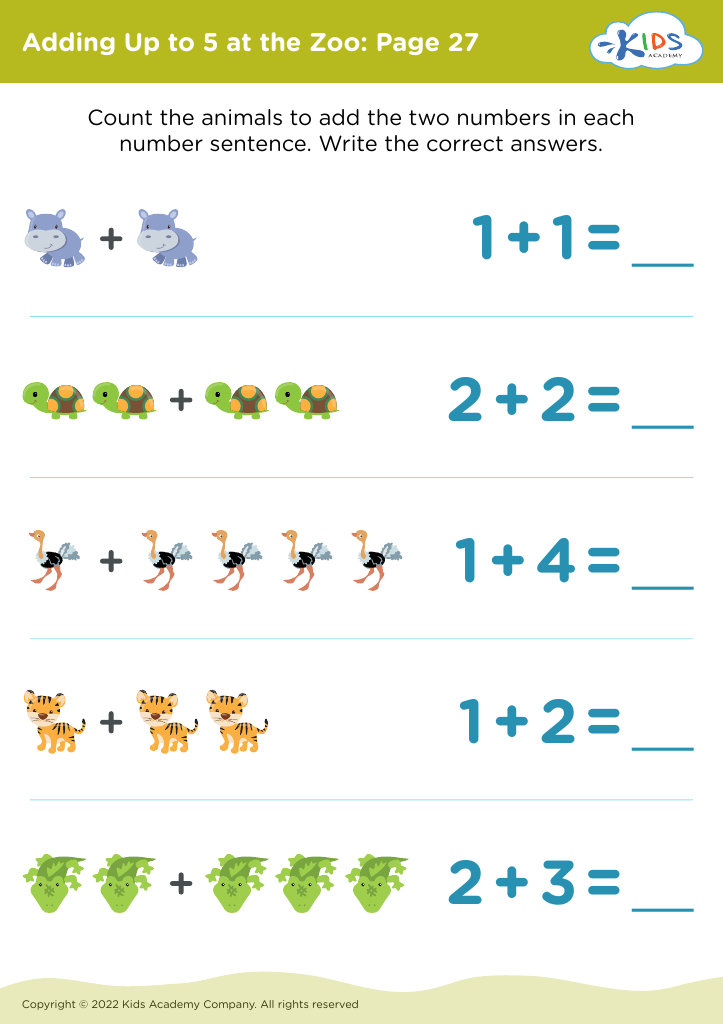
Adding Up to 5 at the Zoo: Page 27
Worksheet
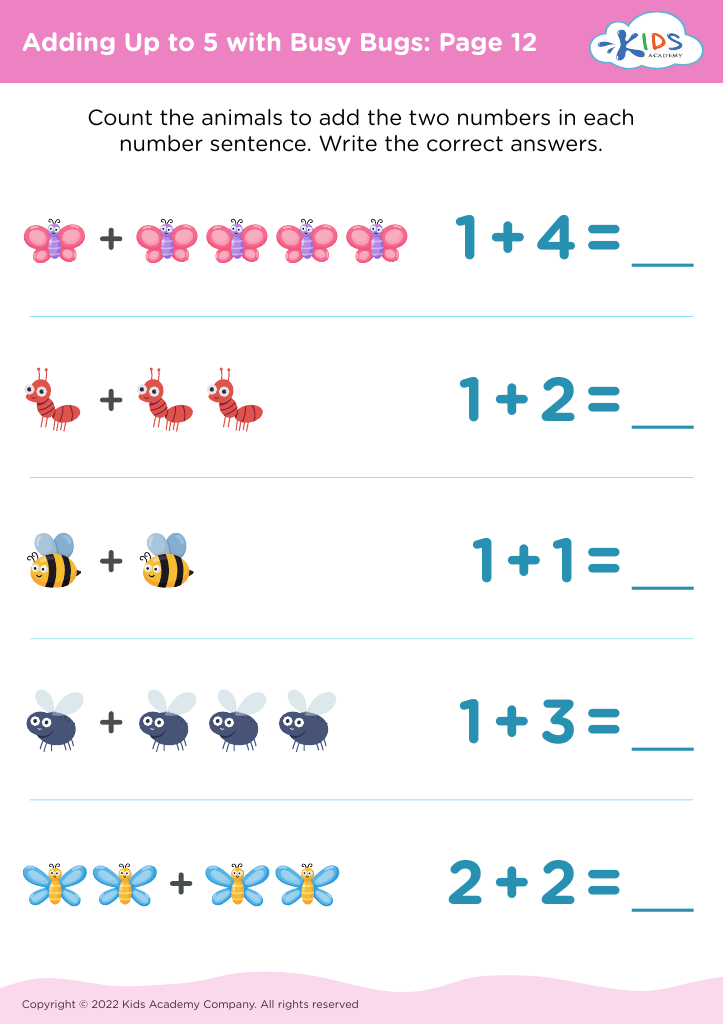
Adding Up to 5 with Busy Bugs: Page 12
Worksheet
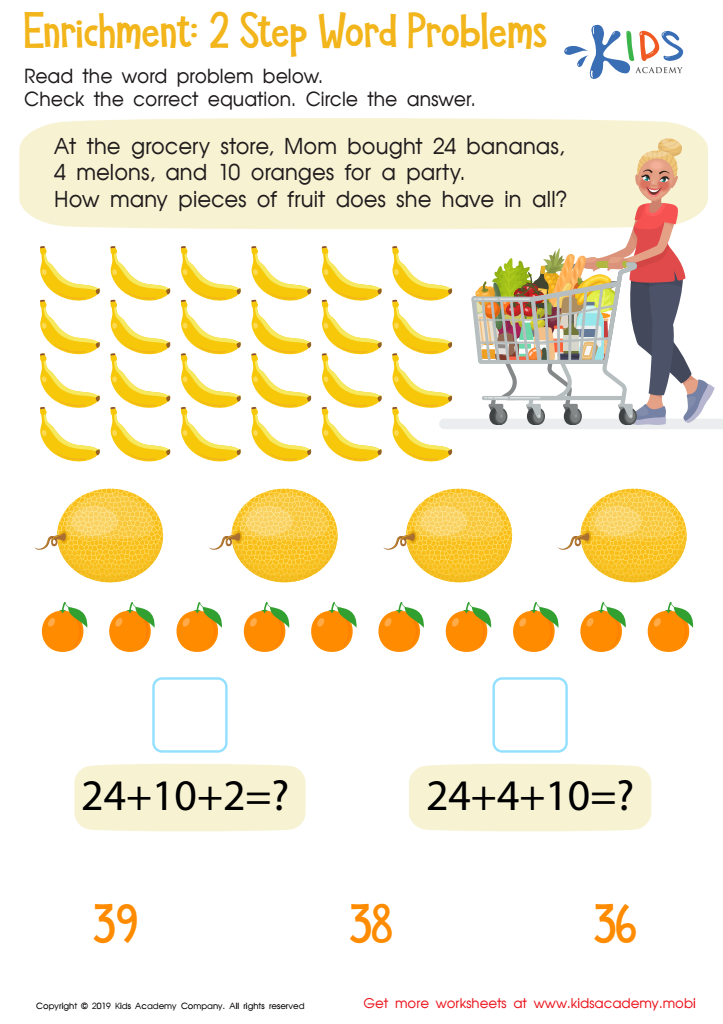
Enrichment -2 Step Word Problems Worksheet
Enrichment -2 Step Word Problems Worksheet
Help your students learn math easier and faster with this colorful worksheet. Read the word problem and then guide them in checking the correct equation and finding the answer. Your students will benefit from the extra help, as they work through new concepts each day.
Enrichment -2 Step Word Problems Worksheet
Worksheet
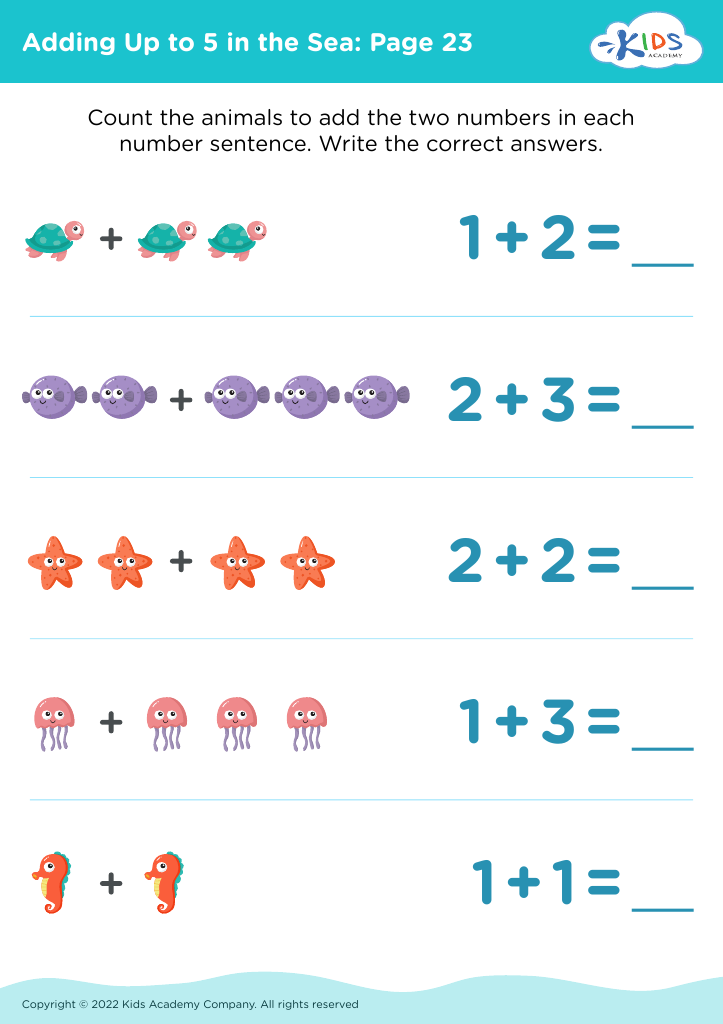
Adding Up to 5 in the Sea: Page 23
Worksheet
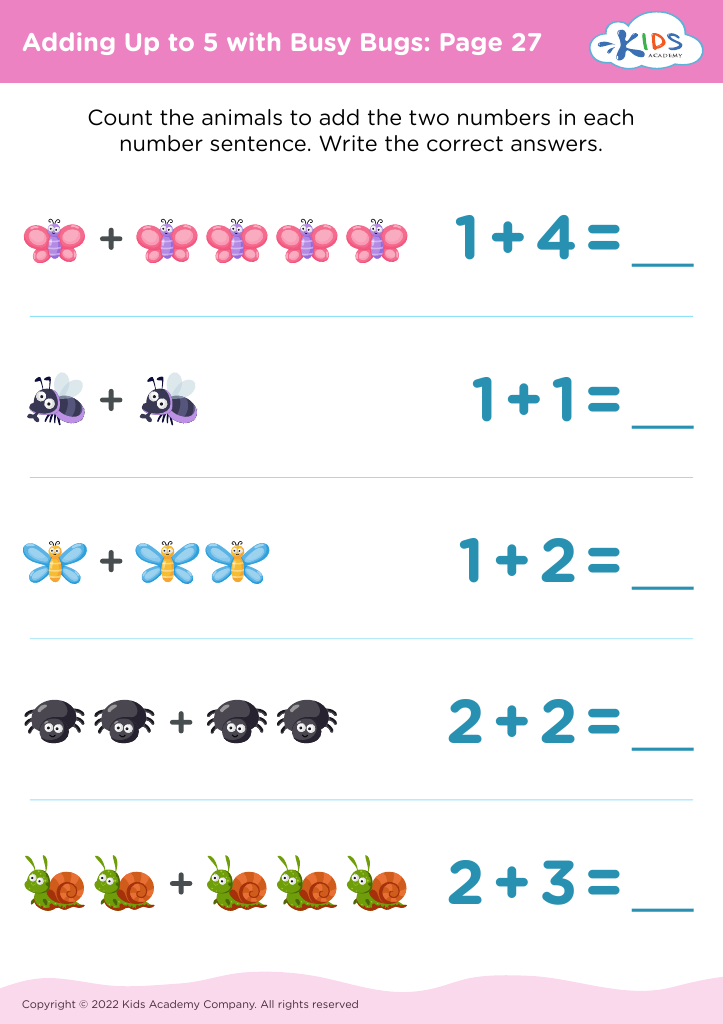
Adding Up to 5 with Busy Bugs: Page 27
Worksheet
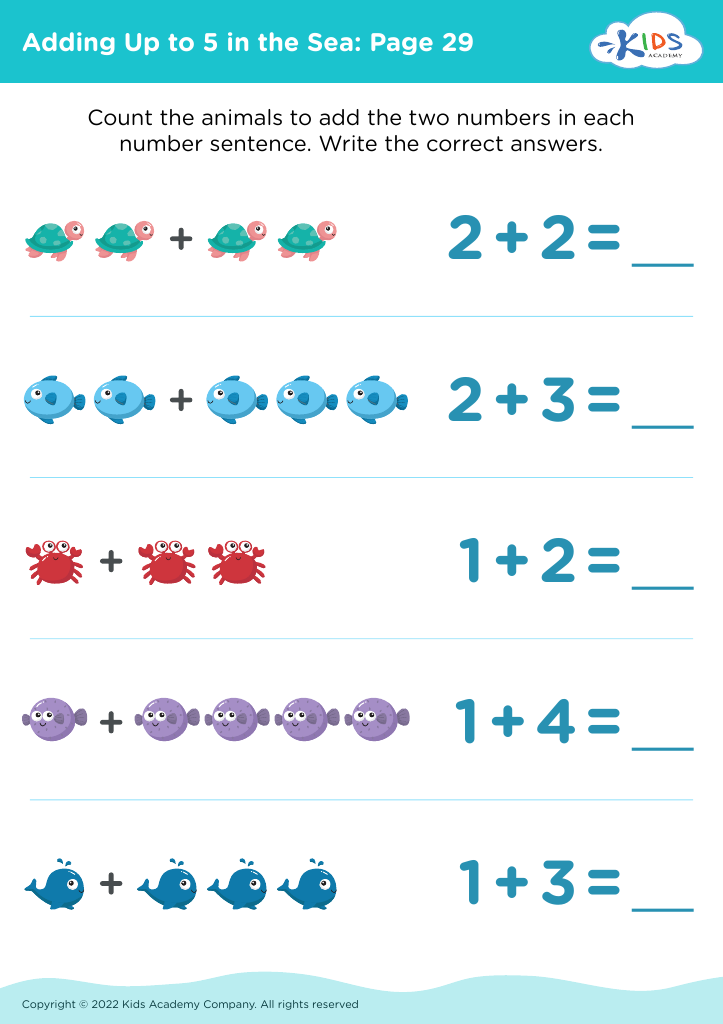
Adding Up to 5 in the Sea: Page 29
Worksheet
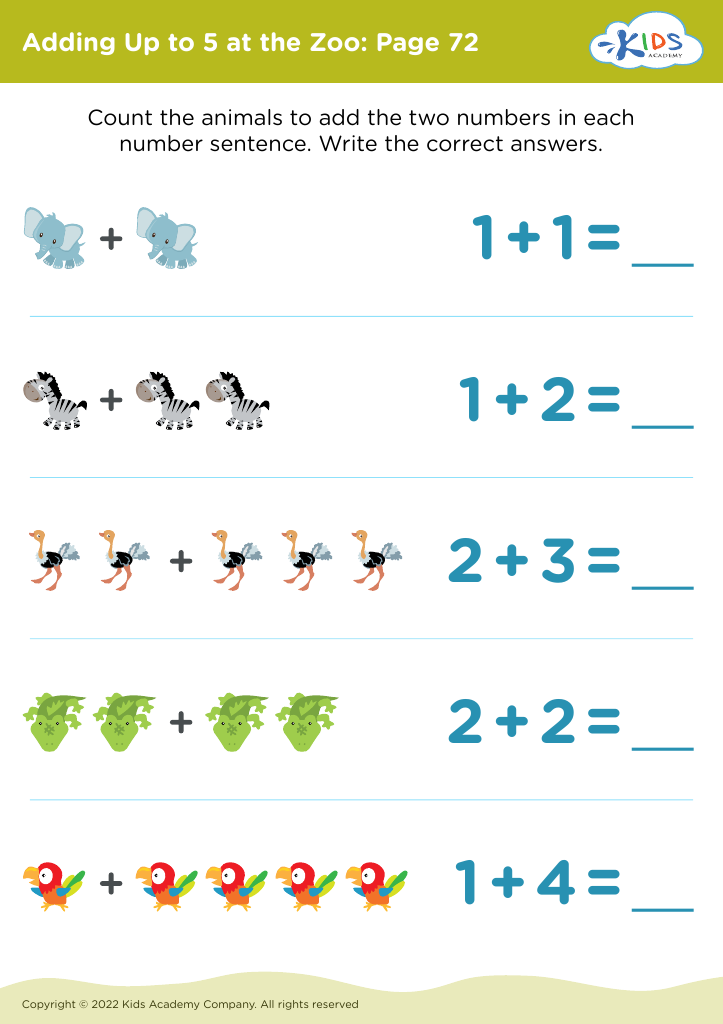
Adding Up to 5 at the Zoo: Page 72
Worksheet
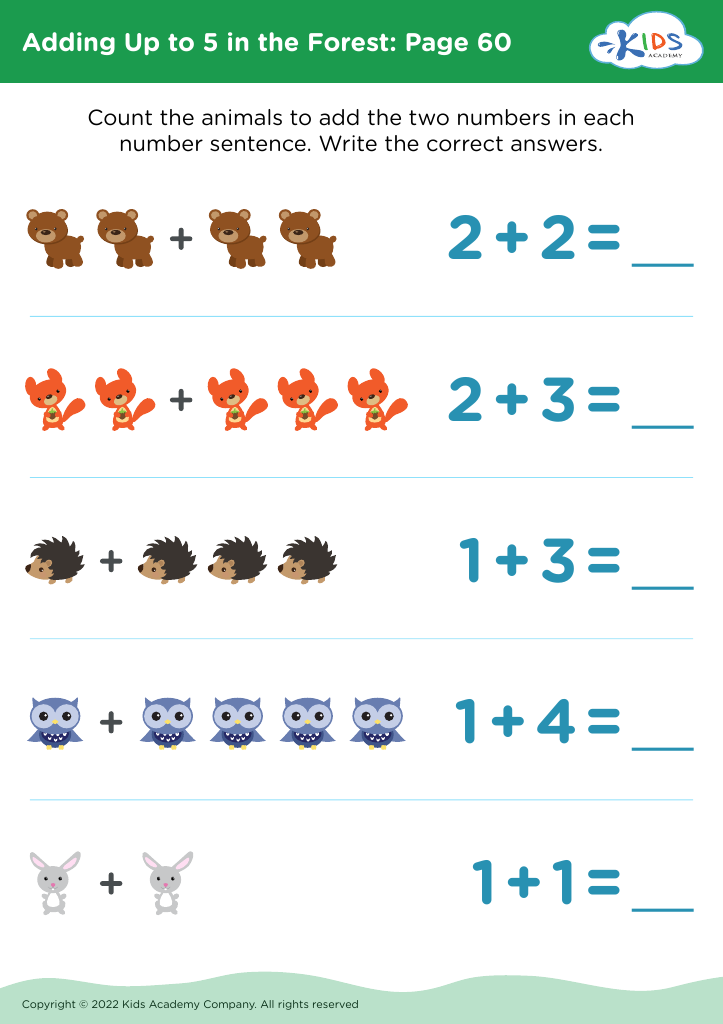
Adding Up to 5 in the Forest: Page 60
Worksheet
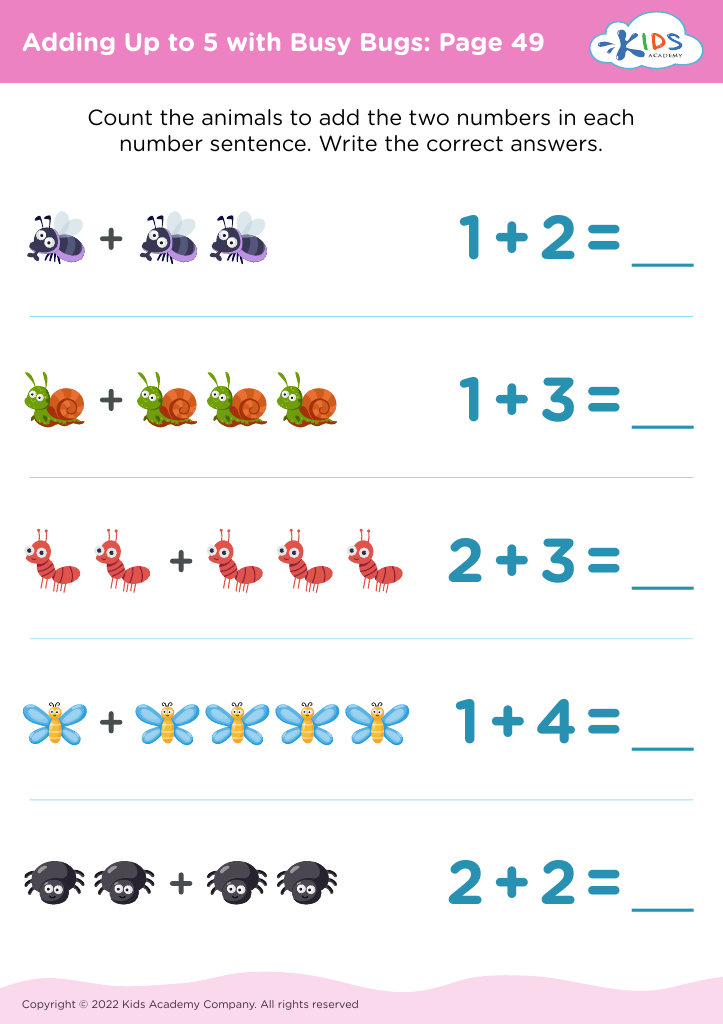
Adding Up to 5 with Busy Bugs: Page 49
Worksheet


Cognitive development in early childhood plays a crucial role in shaping a child's understanding of the world, particularly in essential skills like addition and subtraction. For 5-year-olds, grasping these basic concepts lays a vital foundation for future mathematical learning and problem-solving abilities. When parents and teachers actively engage in their child's cognitive development in this area, they foster critical thinking, logical reasoning, and analytical skills, which are crucial for all subject areas.

Additionally, arithmetic skills are not just about numbers; they enhance a child's ability to make connections between various concepts. For example, learning how to add and subtract builds their capacity to understand patterns and relationships. Engaging in playful activities that involve counting, measuring, and simple math games can turn learning into an enjoyable experience, increasing motivation and confidence.

Furthermore, strong early math skills are linked to academic success later on. Research indicates that children who grasp these concepts early are better equipped to tackle more complex mathematical operations in subsequent years. Ultimately, by prioritizing cognitive development in addition and subtraction, parents and teachers equip children not just for academic mastery, but also for lifelong learning and effective problem-solving in everyday life.