
Fine motor development Addition & Subtraction Worksheets for 5-Year-Olds
3 filtered results
Difficulty Level
Grade
Age
-
From - To
Subject
Activity
Standards
Explore our engaging Fine Motor Development Addition and Subtraction Worksheets designed specifically for 5-year-olds! These fun, interactive worksheets help young learners enhance their fine motor skills while mastering basic math concepts. Each activity combines tracing, coloring, and counting to support both dexterity and numerical understanding. Perfect for at-home practice or classroom use, our worksheets encourage kids to use their hands as they engage minds, making learning enjoyable and effective. Foster a strong foundation in arithmetic while promoting essential motor skills. Visit our site to access a variety of worksheets that make math and fine motor development exciting for your little ones!
Favorites
With answer key
Interactive
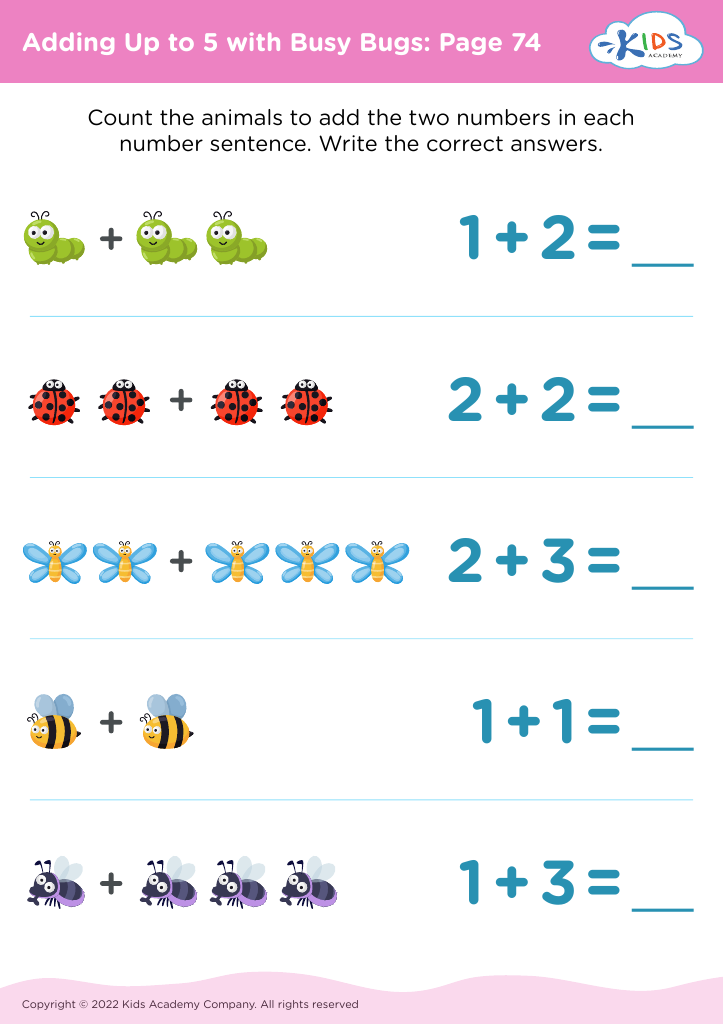
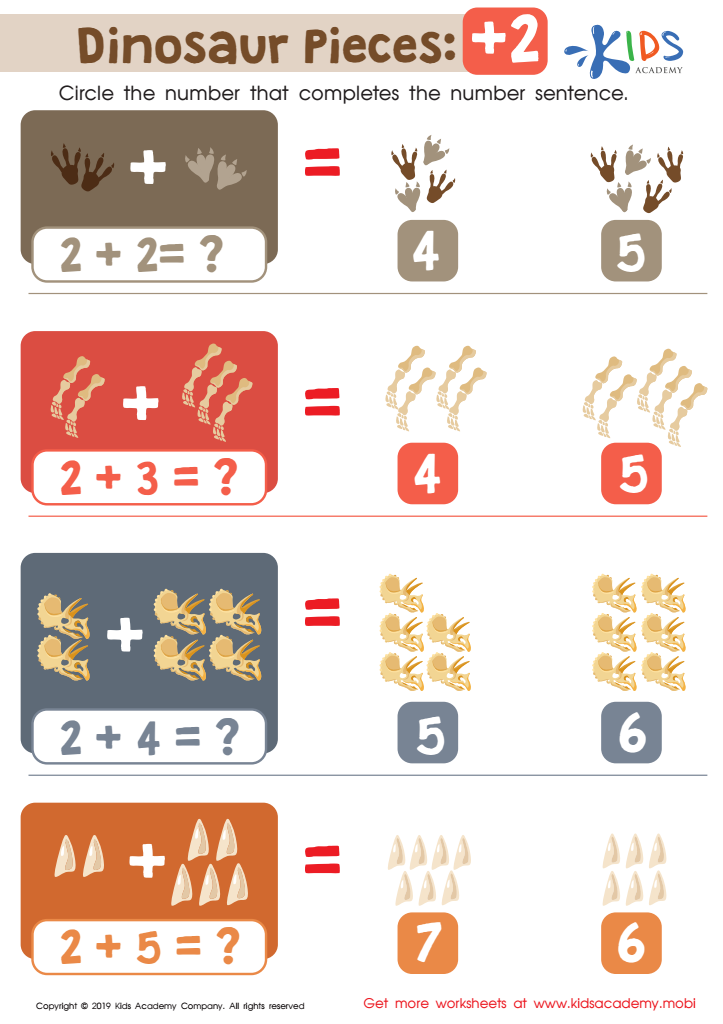
Dinosaur Pieces: +2 Worksheet
Kids love dinosaurs! See if your kids can solve these three equations featuring the mysterious creatures. Download the PDF and have them circle the number that completes each equation. Dinosaurs are extinct, not seen for thousands of years, but they can still help kids work on their math skills!
 Assign to My Students
Dinosaur Pieces: +2 Worksheet
Worksheet
Join Kids Academy for Free
Who is primarily going to use this learning content?








Fine motor development is crucial for young children, particularly as they begin learning addition and subtraction around the age of five. This stage marks an important intersection of physical coordination and cognitive skills essential for academic success. Developing fine motor skills enables children to perform tasks such as holding a pencil, cutting with scissors, and manipulating small objects, all of which are foundational not just for math but for overall learning.
When children engage in activities that promote fine motor skills, such as using manipulatives to solve addition and subtraction problems, they gain hands-on experience that reinforces their understanding of numbers and quantities. These activities help bridge the gap between concrete and abstract thinking, making mathematical concepts more accessible.
Additionally, strong fine motor skills foster confidence and independence. As children become more adept at handling tools and materials, they gain the assurance needed to tackle more complex tasks in math and beyond. For parents and teachers, nurturing fine motor development through intentional play and structured activities can lead to a more enriching educational experience, ultimately setting the stage for lifelong learning and success in mathematics and other subjects. Prioritizing this development ensures that five-year-olds are equipped not just academically, but also physically and emotionally, for future challenges.








