
Observational skills Addition & Subtraction Worksheets for 5-Year-Olds
3 filtered results
Difficulty Level
Grade
Age
-
From - To
Subject
Activity
Standards
Help your 5-year-olds build crucial observational skills with our engaging Addition and Subtraction Worksheets! These worksheets are designed to enhance young learners' ability to notice details while practicing basic math operations. Kids will enjoy identifying patterns, comparing numbers, and solving fun puzzles that reinforce their understanding of addition and subtraction. Our carefully crafted activities promote cognitive development and encourage children to develop critical thinking skills in an enjoyable way. Perfect for both classroom and at-home learning, these worksheets provide a solid foundation for future math success. Download now and watch as your child’s mathematical confidence soars!
Favorites
With answer key
Interactive
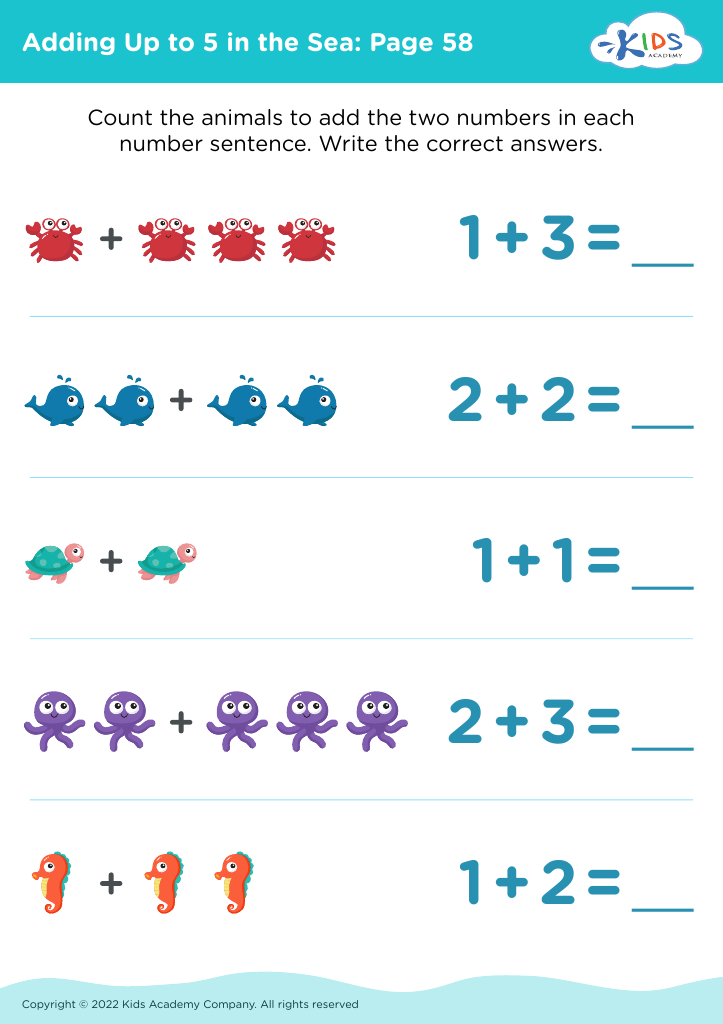
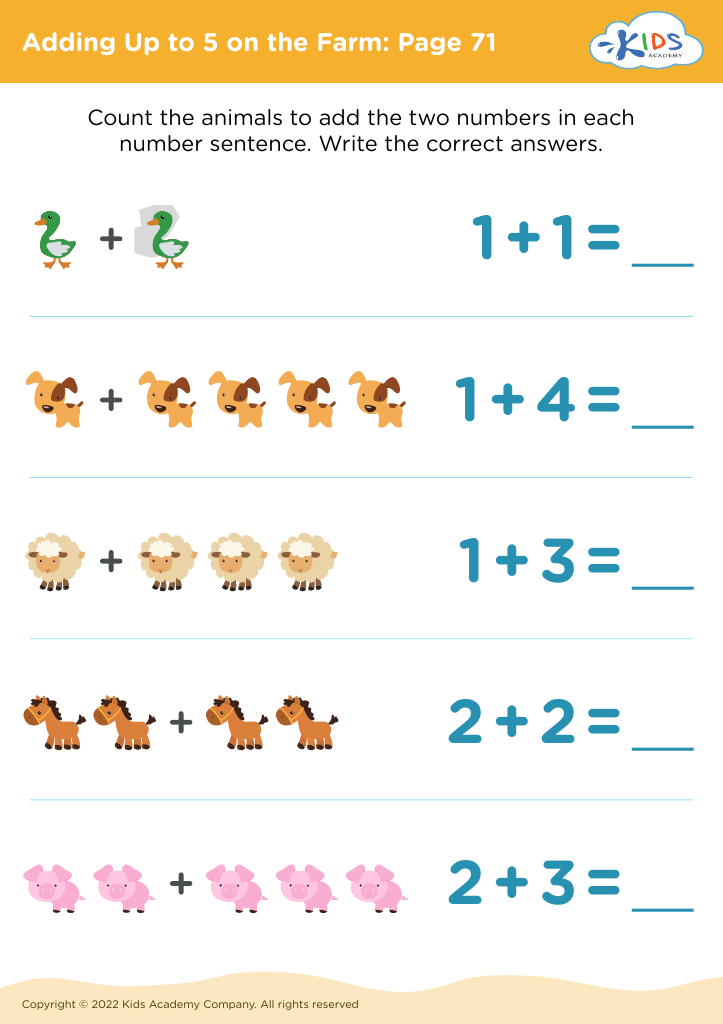
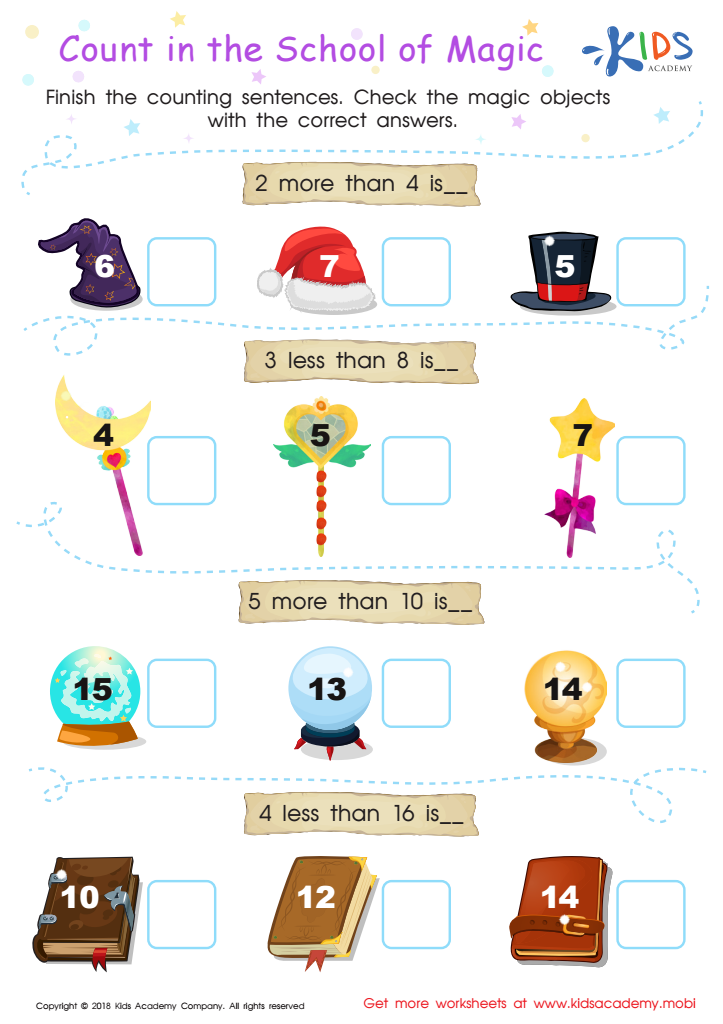
Count in the School of Magic Worksheet
Your math learners can explore the School of Magic with this worksheet. They'll read equations with addition and subtraction numbers under 20, count back and forth to find the answer, then complete the counting sentences. Fun pictures and easy accuracy make it an enjoyable and successful learning experience.
 Assign to My Students
Count in the School of Magic Worksheet
Worksheet
Join Kids Academy for Free
Who is primarily going to use this learning content?








Observational skills are crucial for 5-year-olds, particularly in the areas of addition and subtraction. At this age, children are developing foundational math concepts that will support their future learning. By enhancing their observational abilities, parents and teachers can help these young learners notice patterns, relationships, and quantities in a more meaningful way.
For instance, when children observe and compare different sets of objects, they begin to understand the basic principles of adding and subtracting. This hands-on engagement transforms abstract math concepts into concrete experiences. It also encourages critical thinking, as children learn to make predictions and verify their ideas through observation.
Moreover, fostering observational skills promotes language development as children articulate what they see, think, and understand. Parents and teachers who prioritize these skills create a conducive environment for informal learning, all while making math enjoyable. Incorporating games and everyday scenarios helps children relate math to the real world, forging a deeper connection to what they learn.
Ultimately, strong observational skills equip 5-year-olds with the tools they need not only for math but for problem-solving and analytical thinking throughout their educational journey, laying the groundwork for academic success and confidence in their abilities.








