Understanding number values Addition & Subtraction Worksheets for 5-Year-Olds
3 filtered results
-
From - To
Introducing our "Understanding Number Values: Addition & Subtraction Worksheets for 5-Year-Olds" at Kids Academy! Specially designed for early learners, these engaging worksheets help children grasp the basic concepts of addition and subtraction through fun, interactive activities. Each worksheet is crafted to develop your child's understanding of number values, enabling them to solve simple math problems with ease. Featuring vibrant illustrations and easy-to-follow instructions, these resources make learning math an enjoyable adventure. Nurture your child's budding mathematical skills and build a strong foundation for future learning. Download now and watch them thrive!
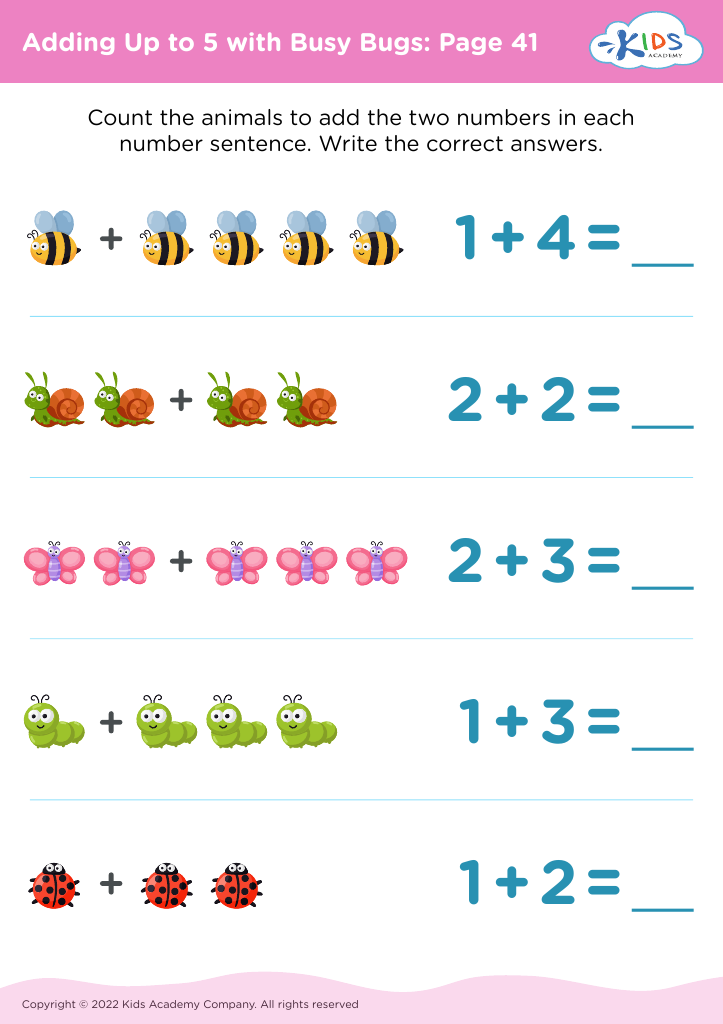
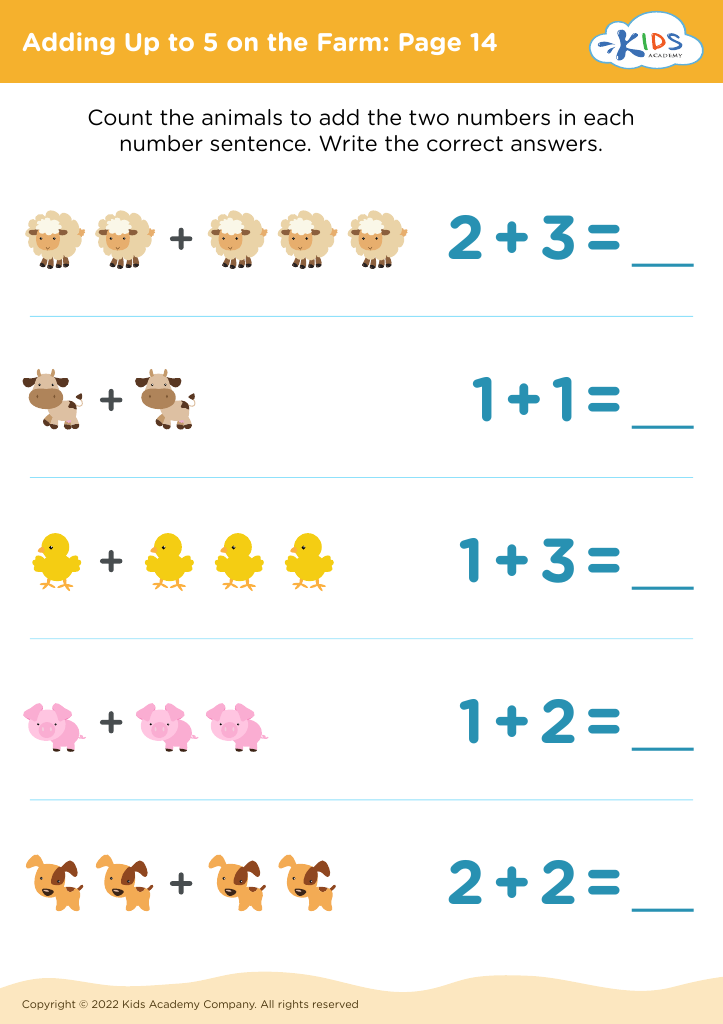
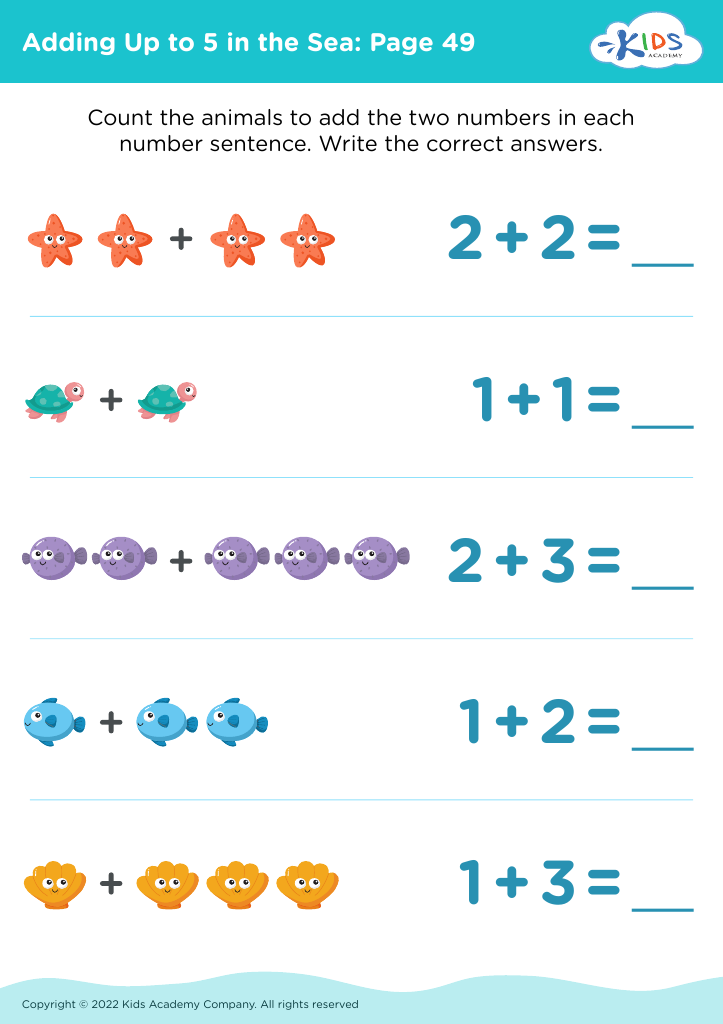








Understanding number values, addition, and subtraction is critical for 5-year-olds as these early math skills lay the foundation for more complex mathematical reasoning and problem-solving abilities in later years. For parents and teachers, nurturing these skills has significant short-term and long-term benefits.
At this age, children are naturally curious and can absorb new concepts efficiently. Grasping number values helps them comprehend basic relationships between numbers, such as which numbers are bigger, smaller, or equal. This fundamental knowledge is essential not only for math but also for everyday activities, like understanding age, time, and even sharing.
Addition and subtraction introduce children to the concept of change - adding increases quantity, and subtracting decreases it. These operations involve critical thinking and problem-solving which encourage cognitive development. Simple math also enhances their ability to follow sequences and understand patterns, thereby boosting logical reasoning.
Moreover, early mastery of these concepts fosters confidence. When children feel competent in math, their attitude towards the subject tends to be positive, reducing anxiety and promoting a growth mindset. As they grow, this solid mathematical foundation makes it easier to learn more advanced topics, setting them up for academic success. Therefore, parents and teachers should prioritize these early math skills to support overall educational and personal growth.








