Filters

89 filtered results

Clear all filters
Favorites
With answer key
Interactive

89 filtered results

Difficulty Level

Grade


Check out this FREE Trial Lesson on Addition for age 5!

Short and Long Vowel Sort

Favorites
With answer key
Interactive
  • 5
  • Addition skills
  • Addition
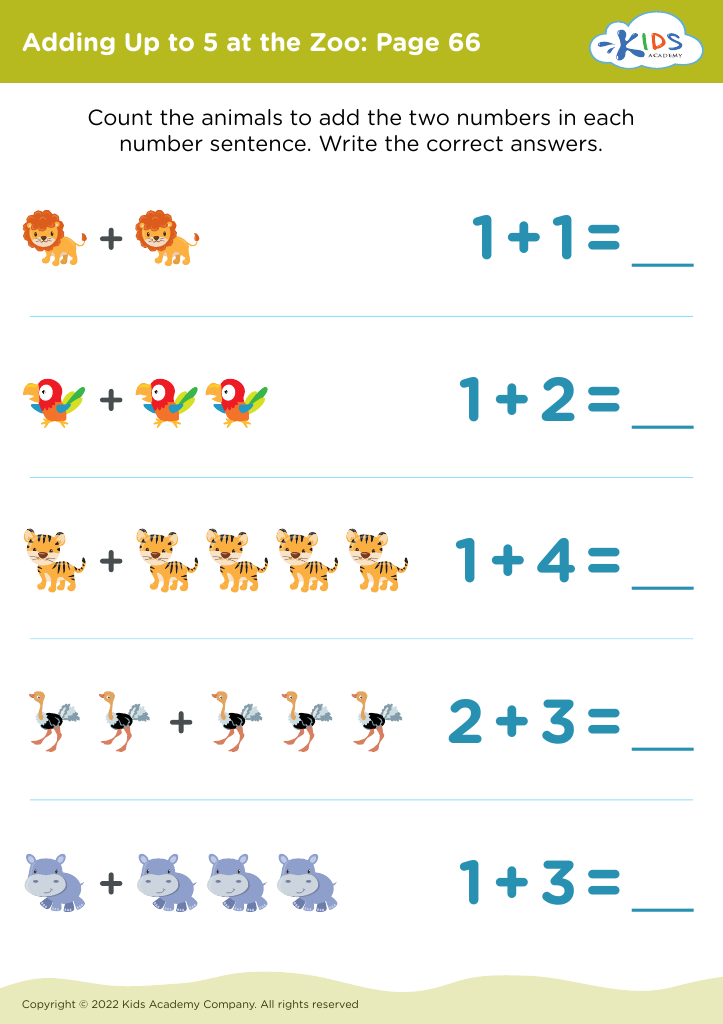
Adding Up to 5 at the Zoo: Page 66
Worksheet
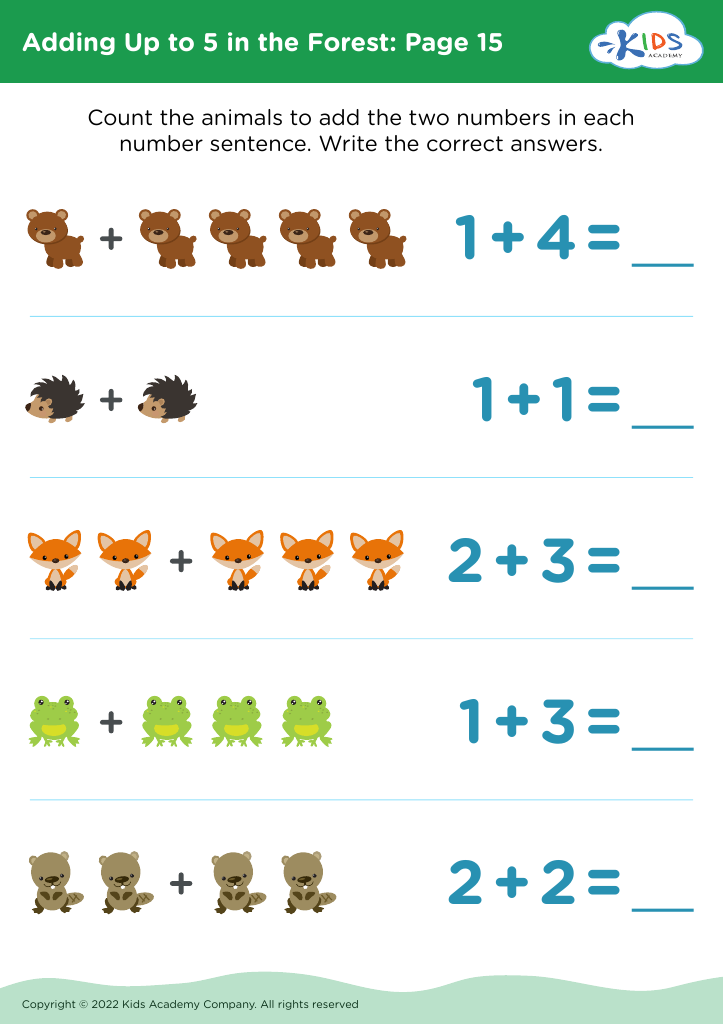
Adding Up to 5 in the Forest: Page 15
Worksheet
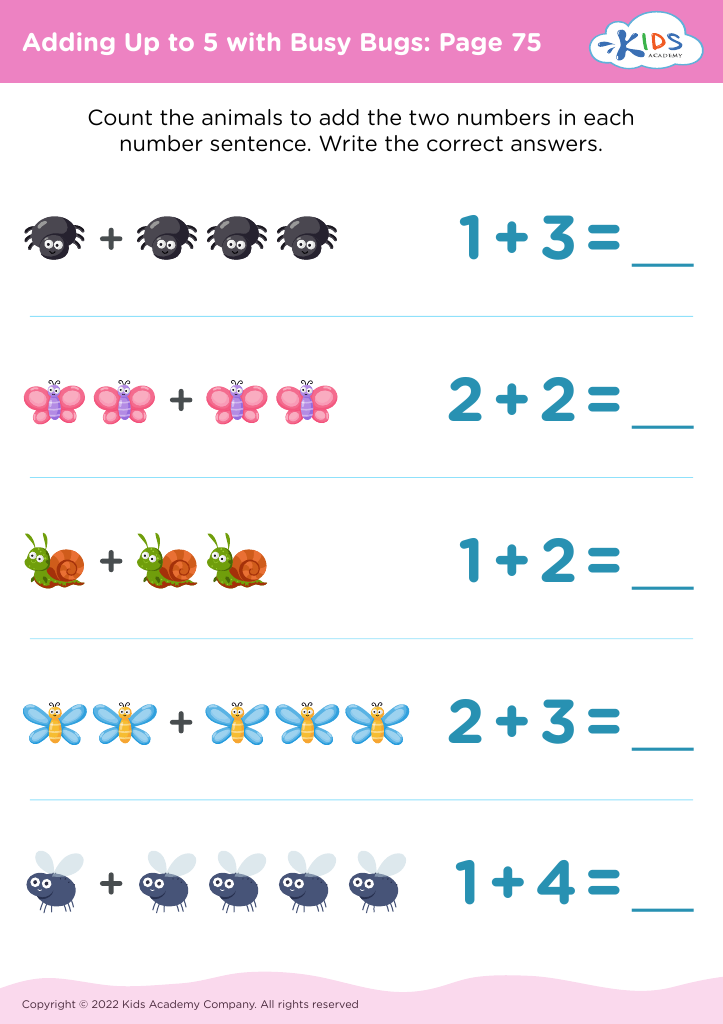
Adding Up to 5 with Busy Bugs: Page 75
Worksheet
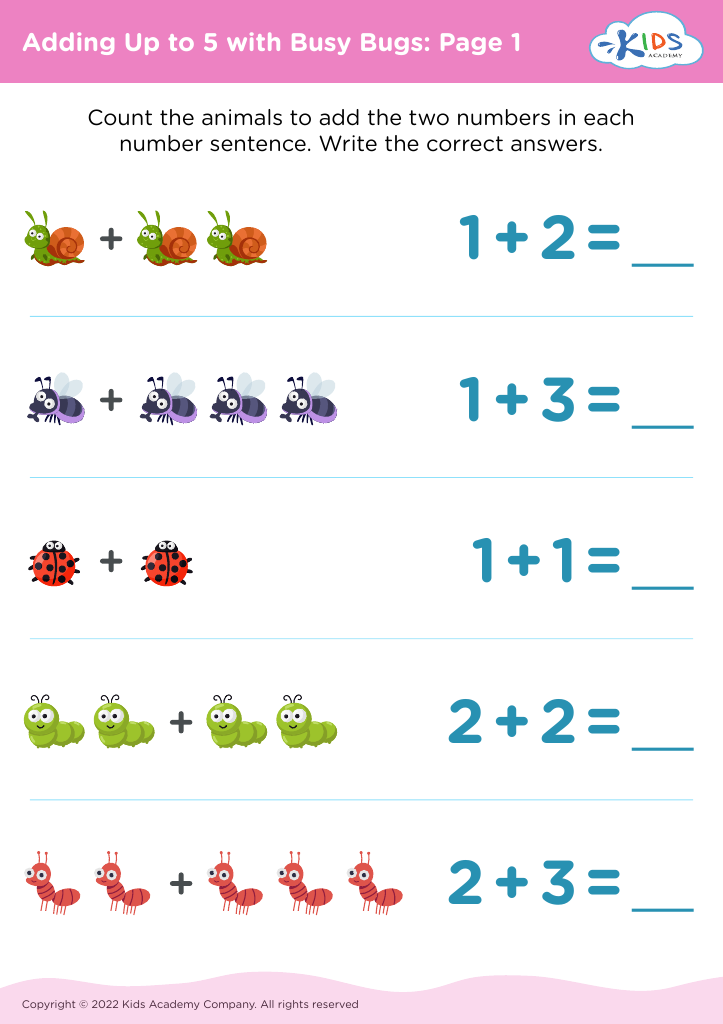
Adding Up to 5 with Busy Bugs: Page 1
Worksheet
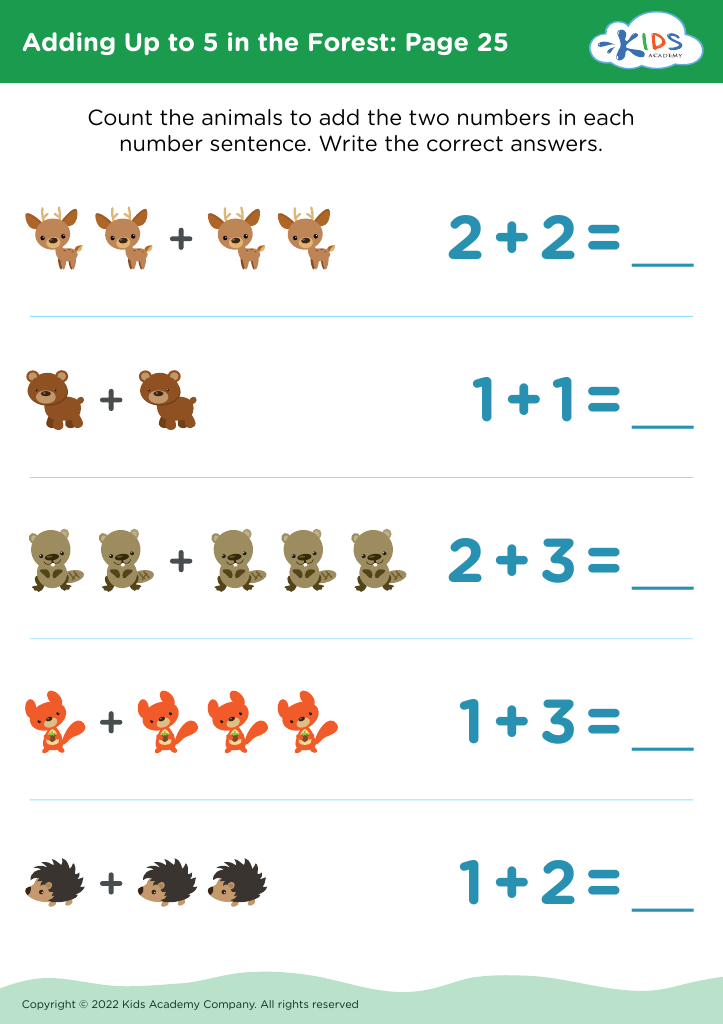
Adding Up to 5 in the Forest: Page 25
Worksheet
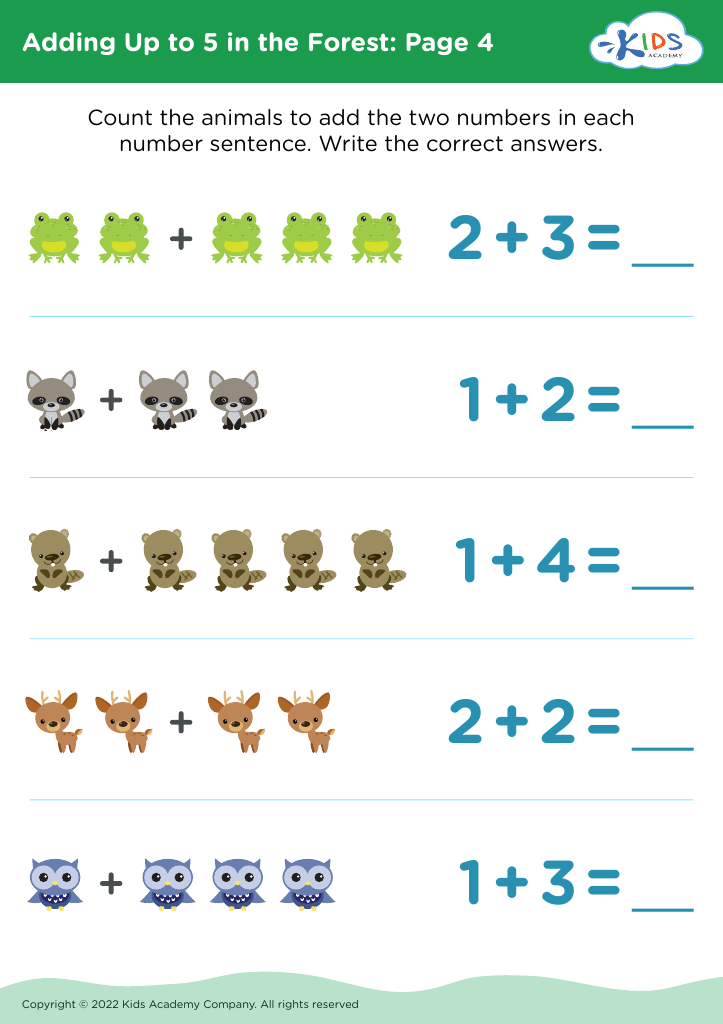
Adding Up to 5 in the Forest: Page 4
Worksheet
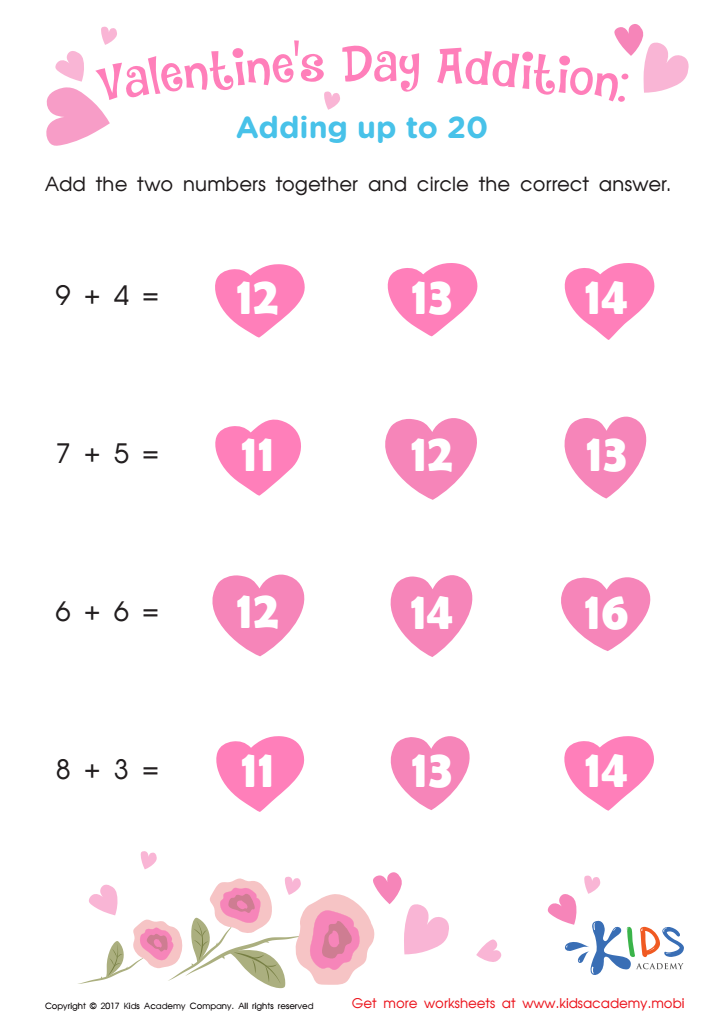
Addition up to 20 worksheet

Valentine's Day Addition Worksheet

This Valentine's Day themed worksheet is a fun way for your child to practice adding single digits up to 20! Hearts feature to help your child increase their math skills and have fun at the same time.
Valentine's Day Addition Worksheet
Worksheet
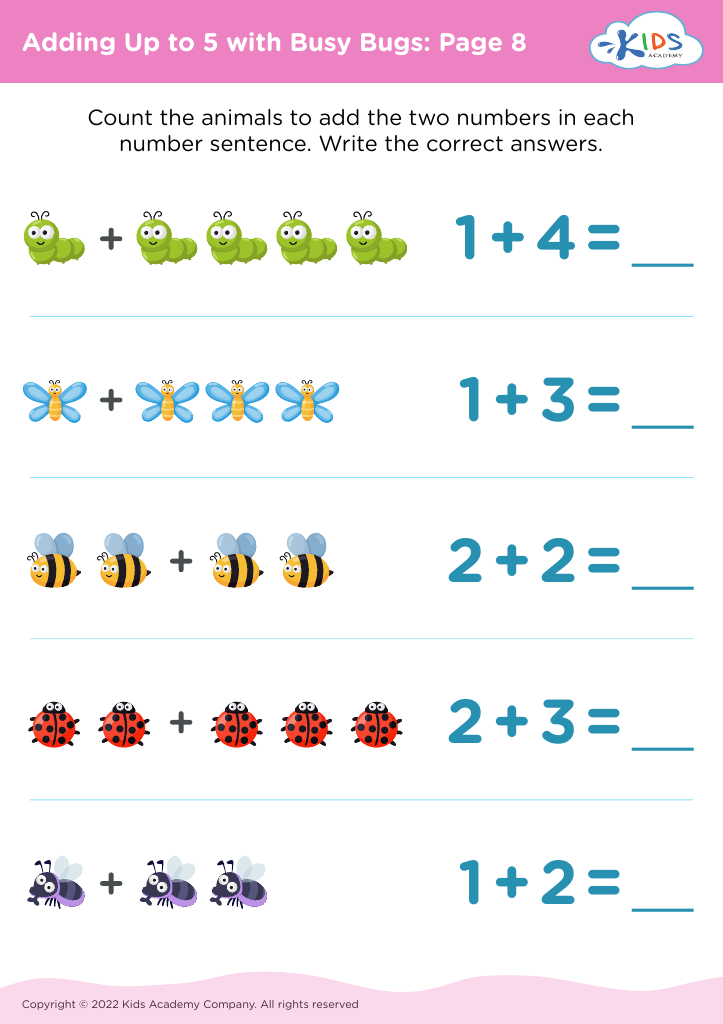
Adding Up to 5 with Busy Bugs: Page 8
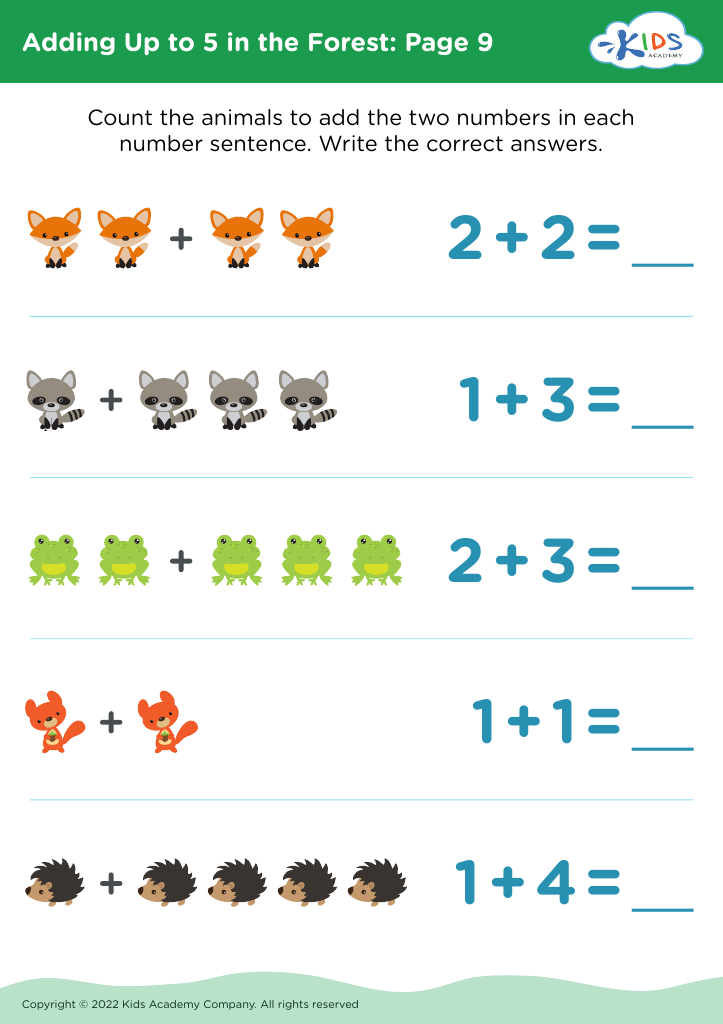
Worksheet
Adding Up to 5 in the Forest: Page 9
Worksheet
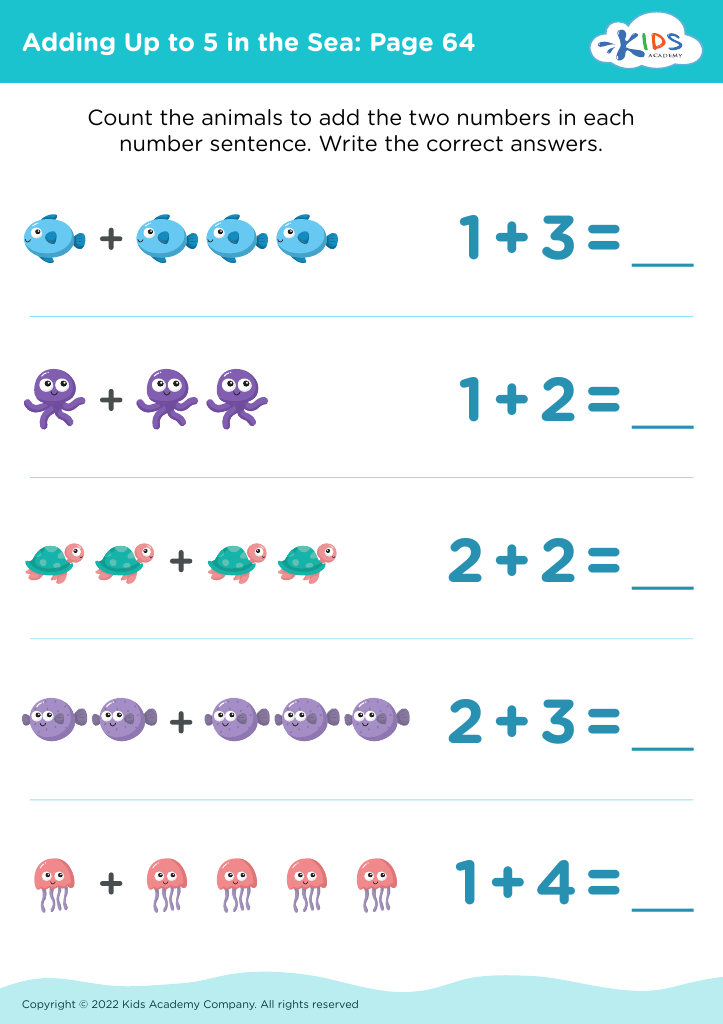
Adding Up to 5 in the Sea: Page 64
Worksheet
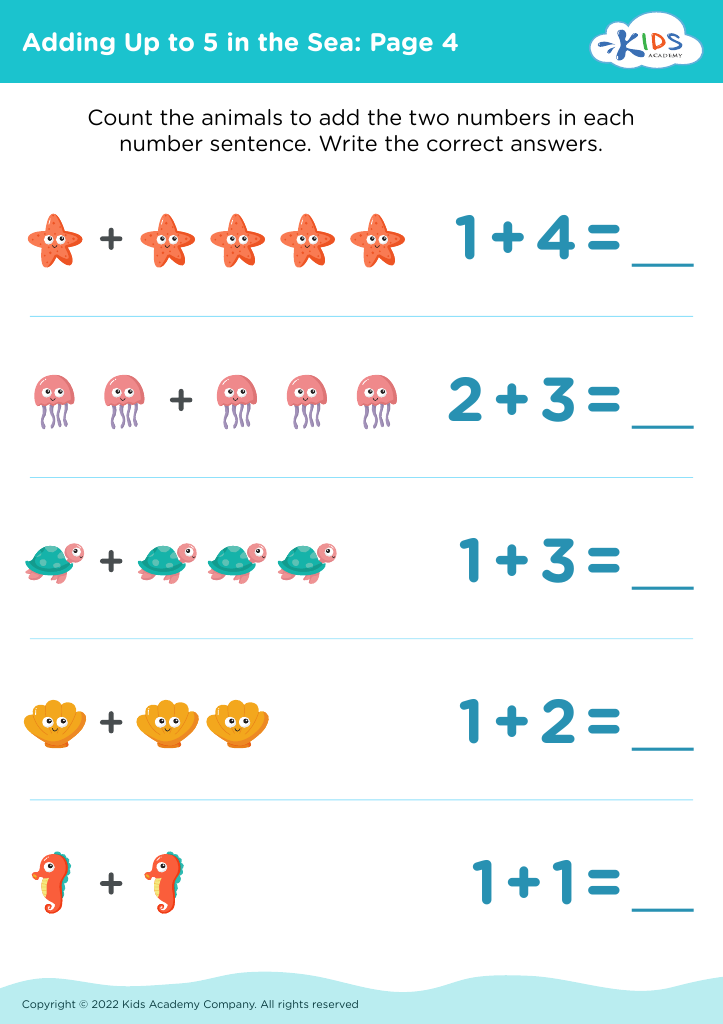
Adding Up to 5 in the Sea: Page 4

Adding Up to 5 in the Sea: Page 4

Adding Up to 5 in the Sea: Page 4
Worksheet
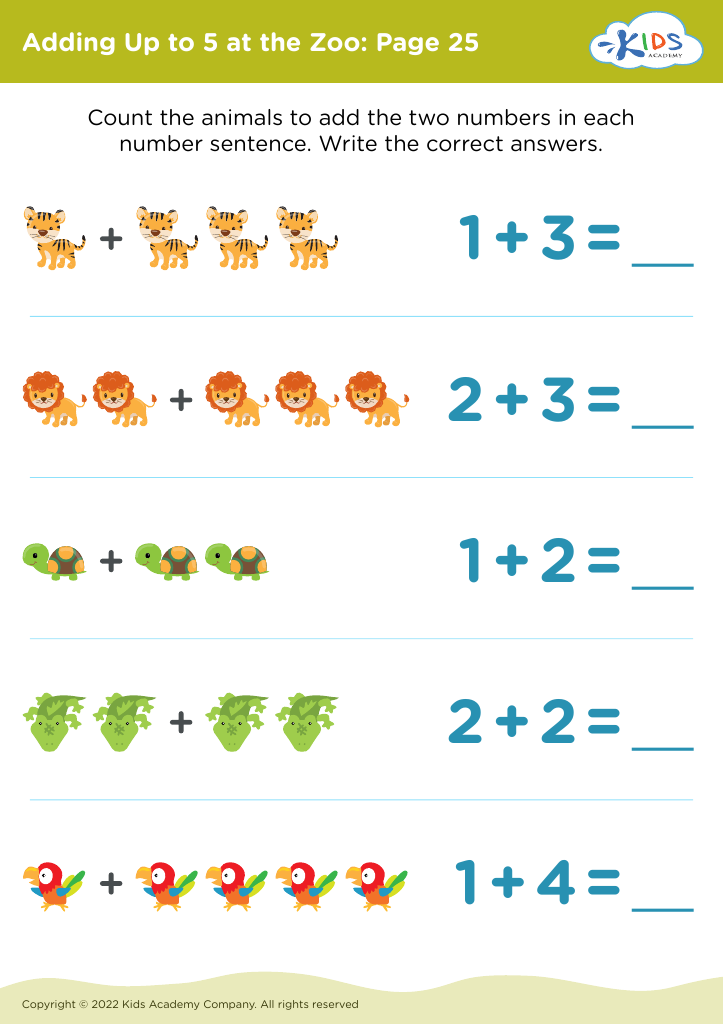
Adding Up to 5 at the Zoo: Page 25
Worksheet
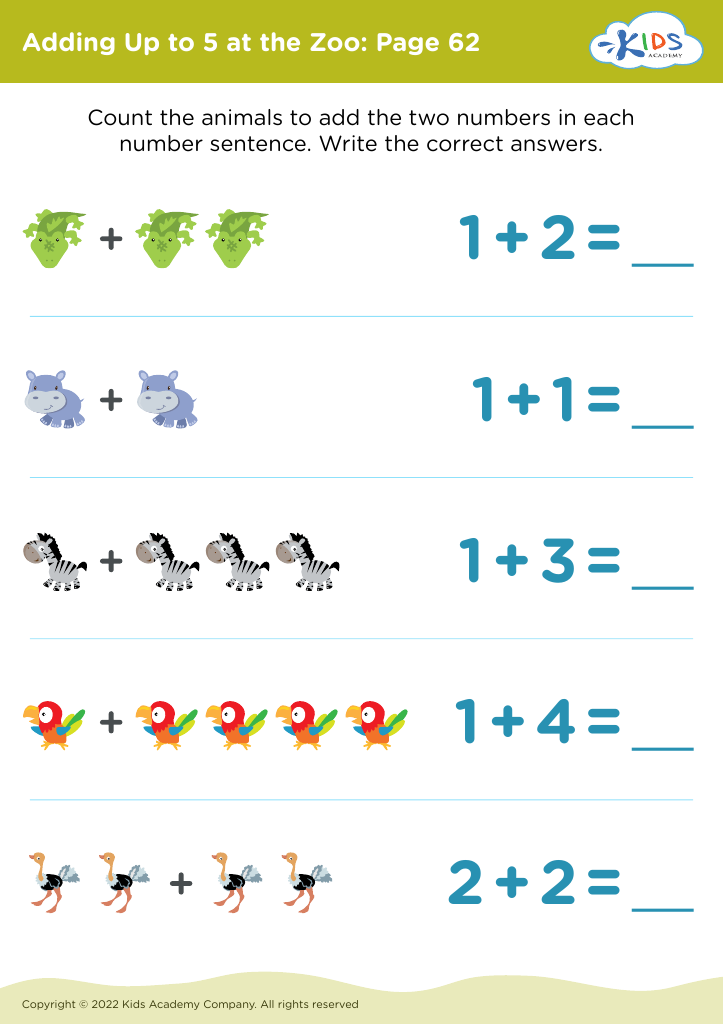
Adding Up to 5 at the Zoo: Page 62
Worksheet
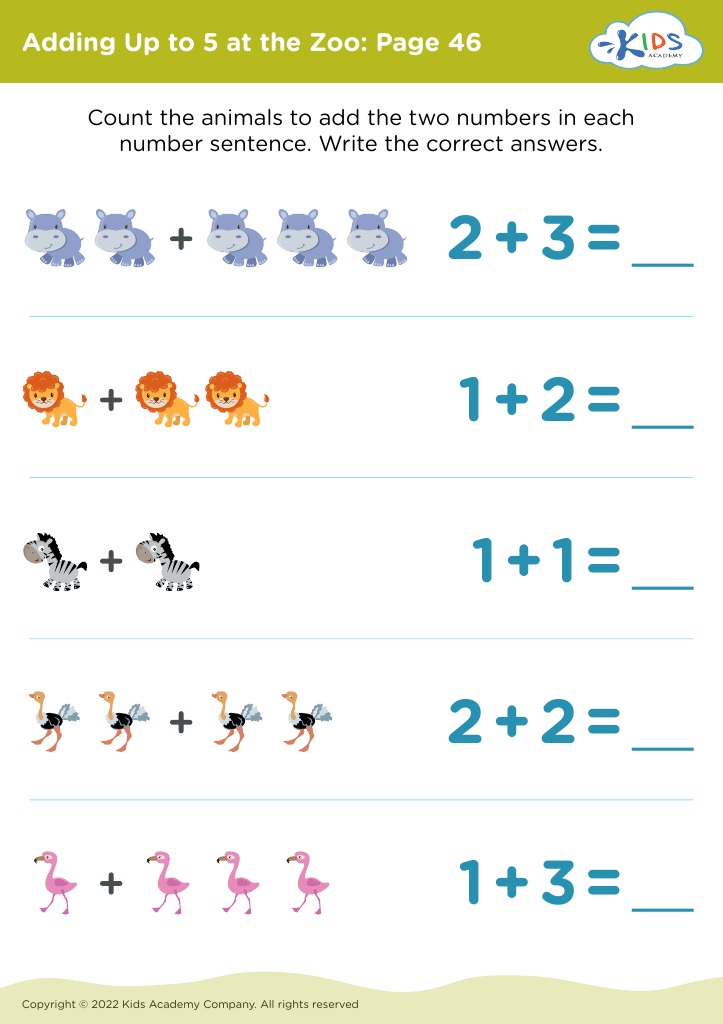
Adding Up to 5 at the Zoo: Page 46
Worksheet
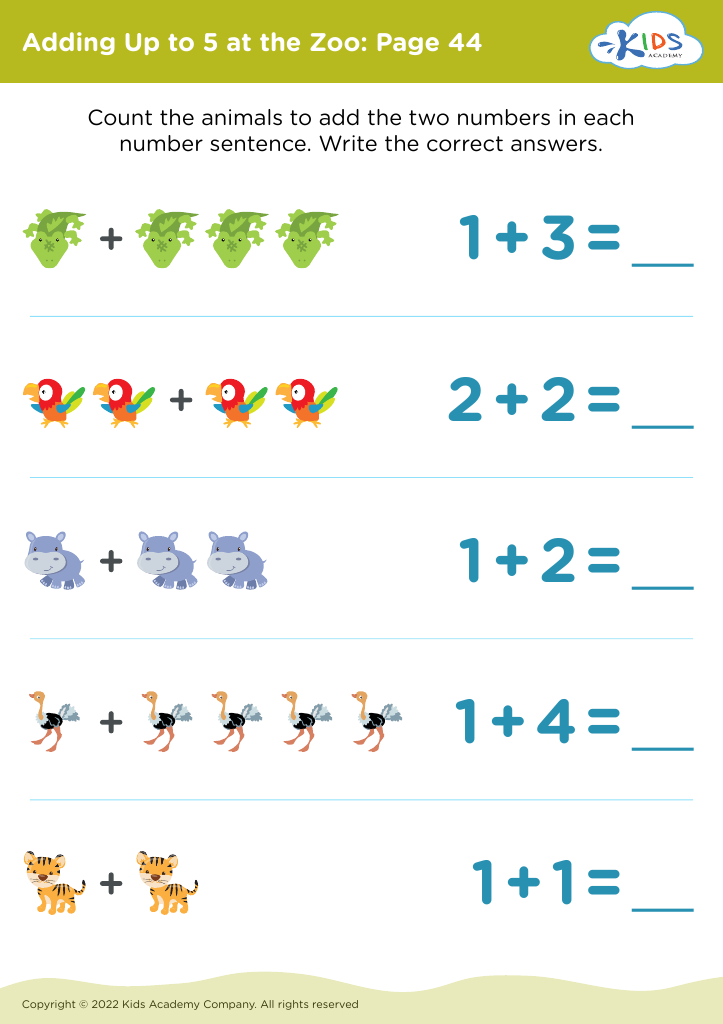
Adding Up to 5 at the Zoo: Page 44
Worksheet
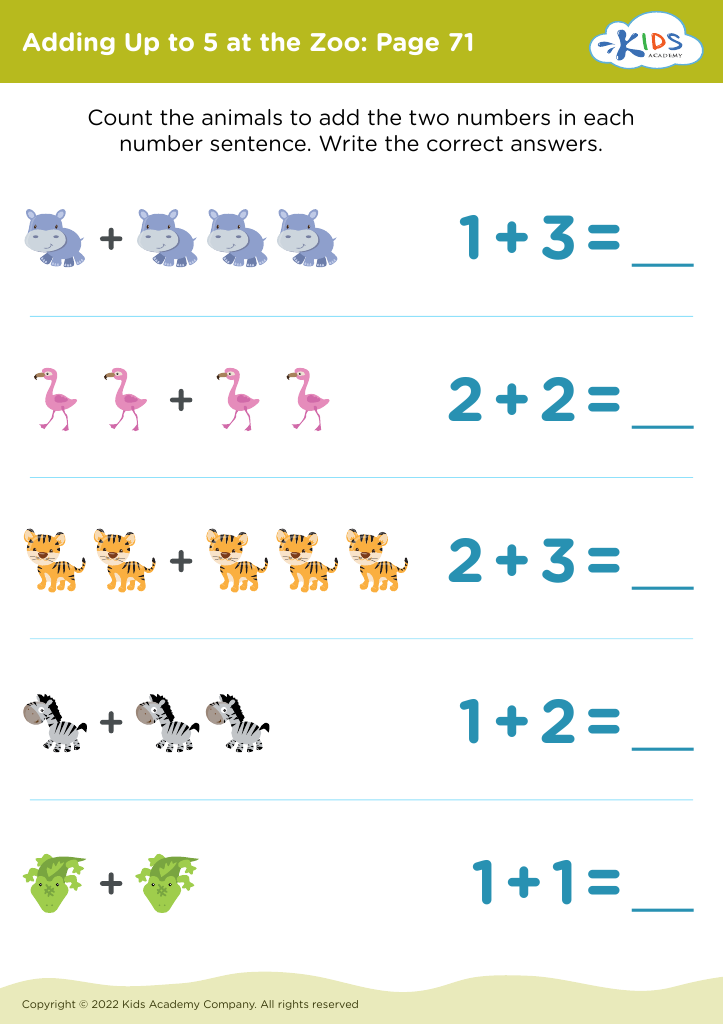
Adding Up to 5 at the Zoo: Page 71
Worksheet
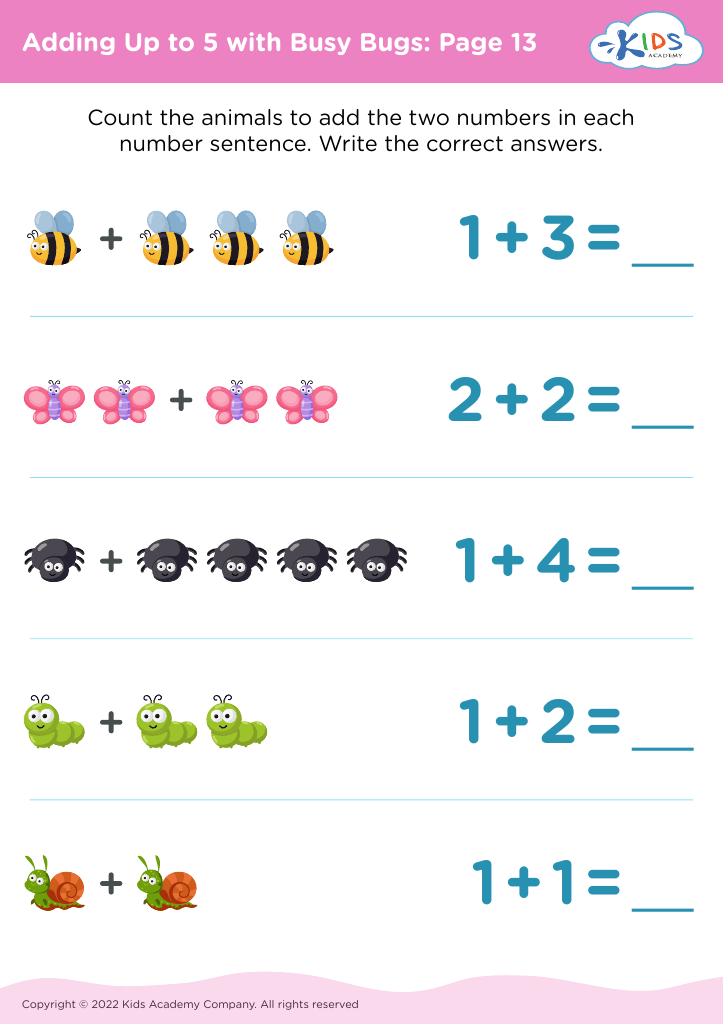
Adding Up to 5 with Busy Bugs: Page 13
Worksheet
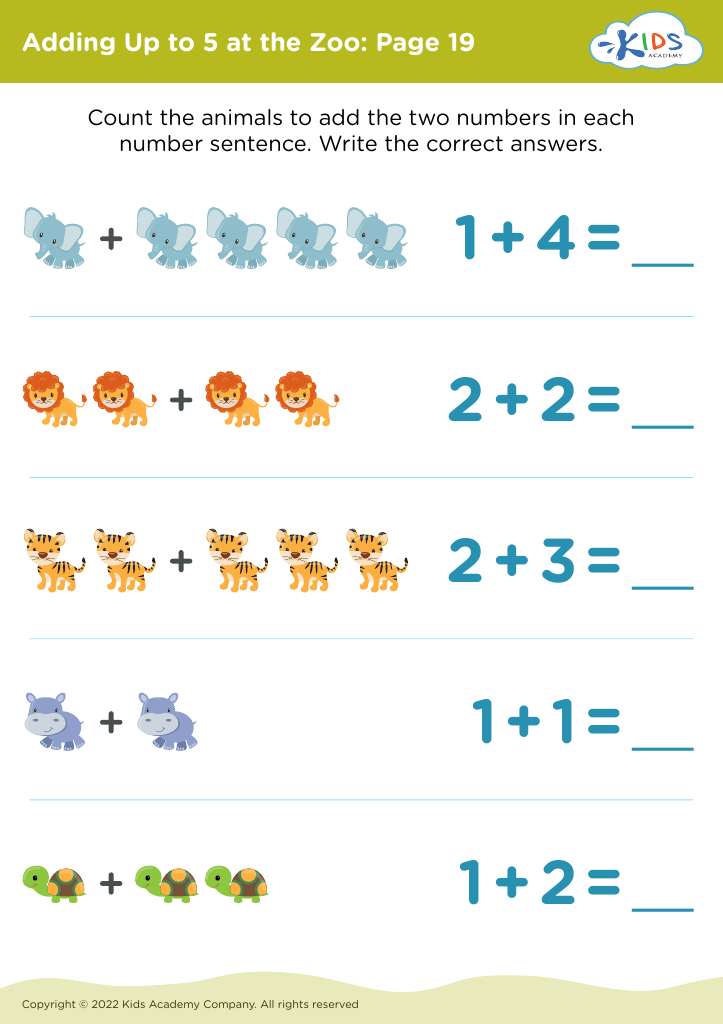
Adding Up to 5 at the Zoo: Page 19
Worksheet
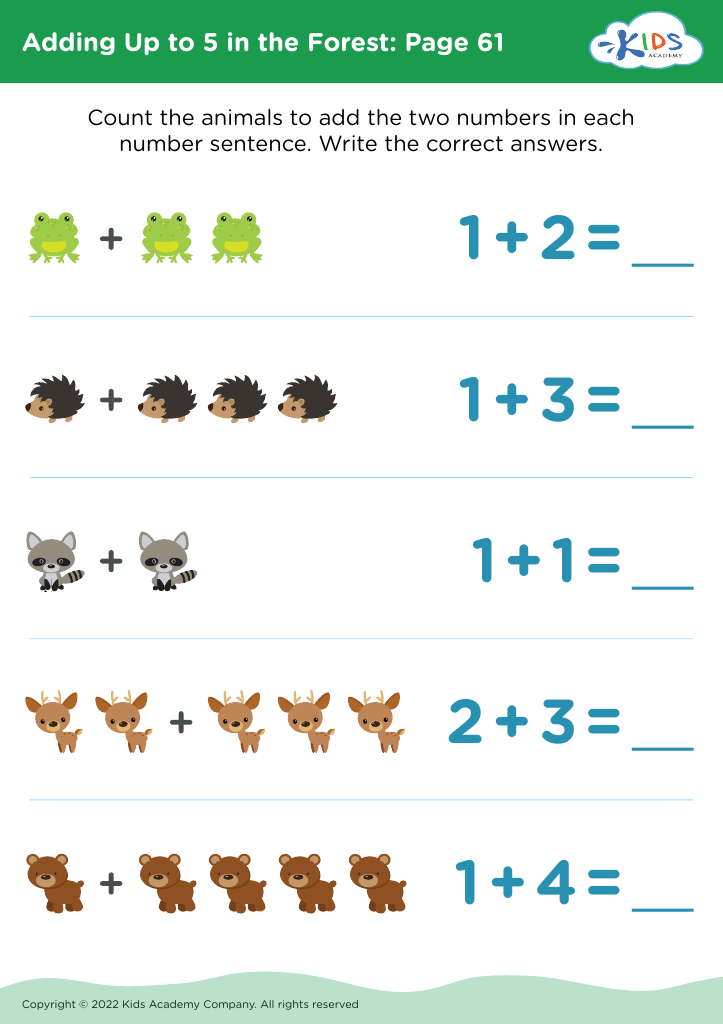
Adding Up to 5 in the Forest: Page 61
Worksheet
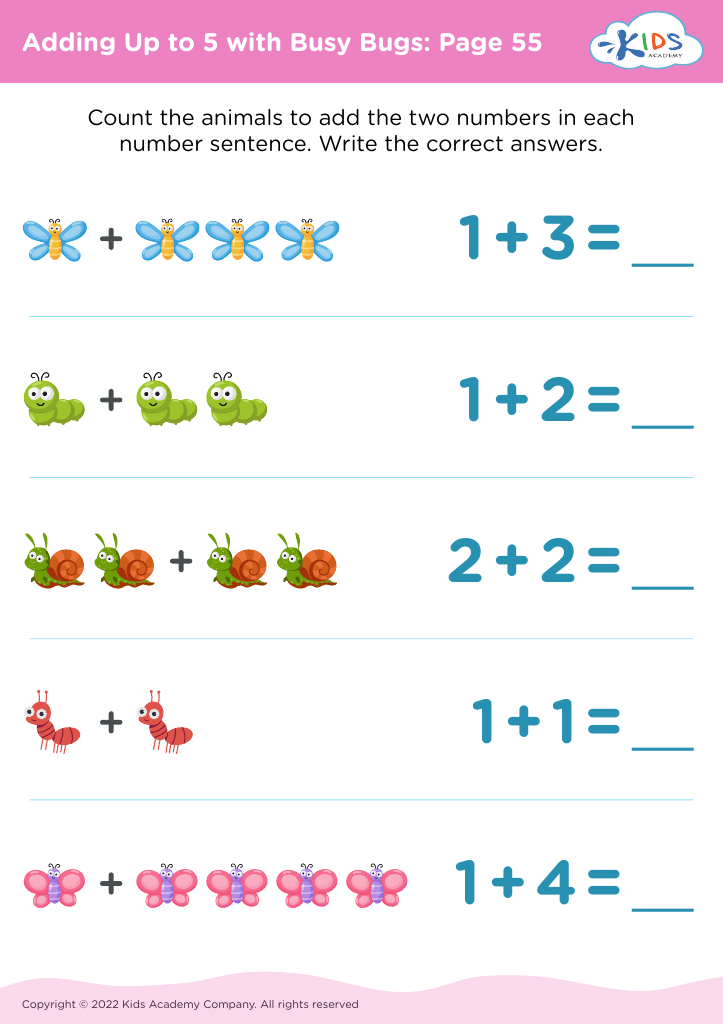
Adding Up to 5 with Busy Bugs: Page 55
Worksheet
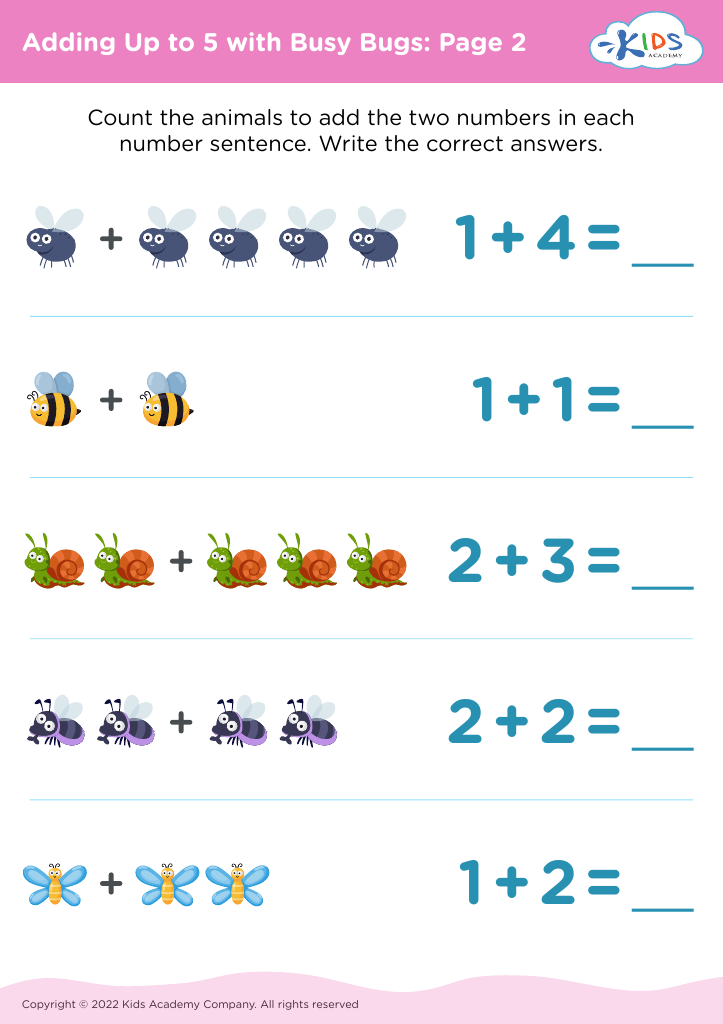
Adding Up to 5 with Busy Bugs: Page 2
Worksheet
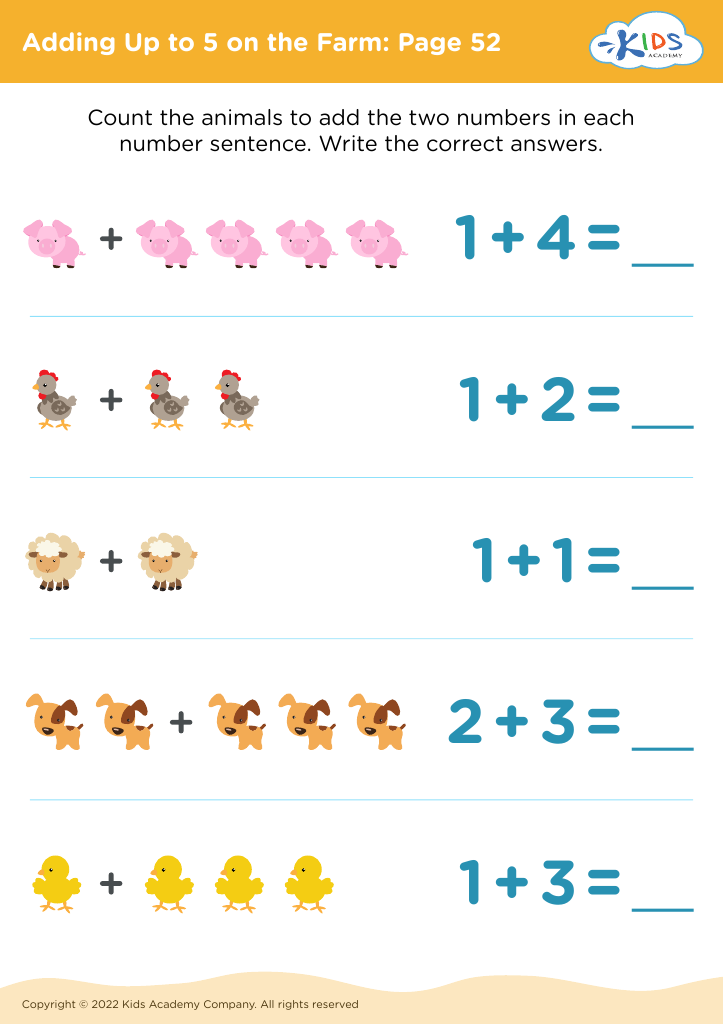
Adding Up to 5 on the Farm: Page 52
Worksheet
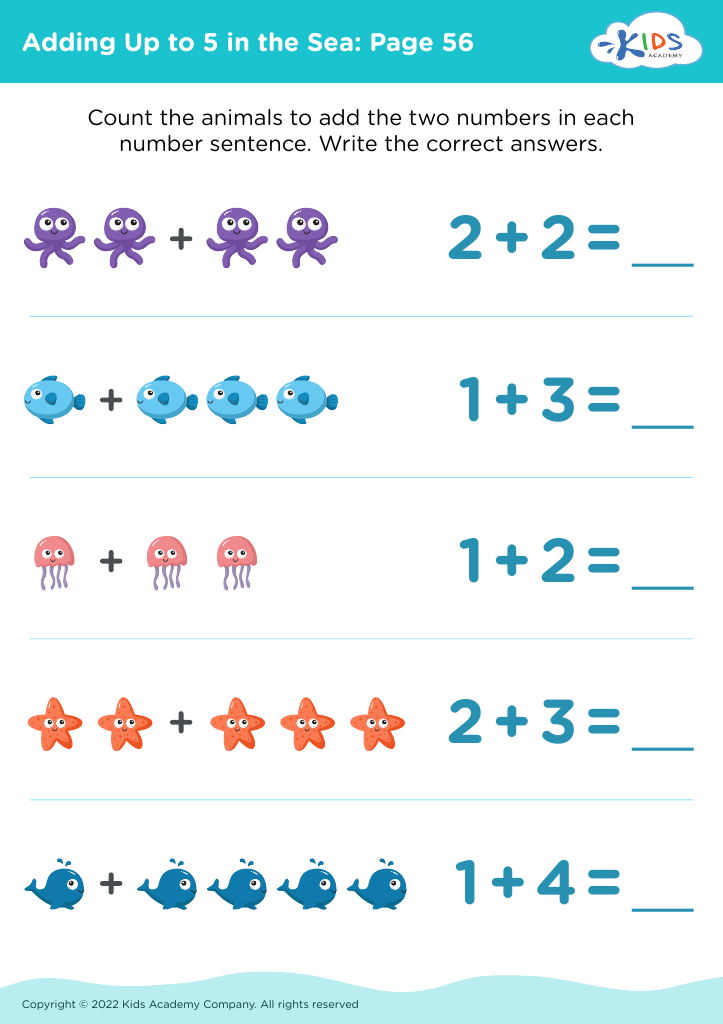
Adding Up to 5 in the Sea: Page 56
Worksheet
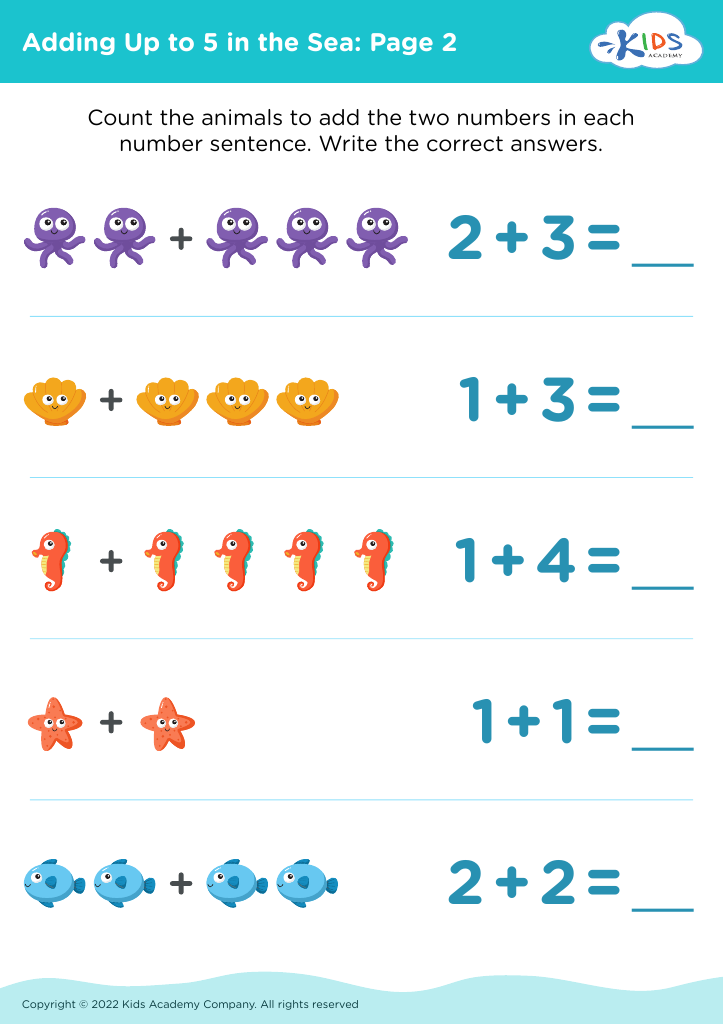
Adding Up to 5 in the Sea: Page 2

Adding Up to 5 in the Sea: Page 2

Adding Up to 5 in the Sea: Page 2
Worksheet


Addition skills are fundamental for the development of early numeracy, which is crucial for a child’s overall academic success. For 5-year-olds, mastering basic addition lays the groundwork for future math concepts. Early proficiency in addition helps children develop mathematical reasoning and problem-solving skills that will serve them throughout their education.

Encouraging addition skills in young learners boosts their confidence, fostering a positive attitude towards math. When children grasp these concepts early, they are more likely to engage with math-related subjects positively as they progress in school. This foundational competence enhances critical thinking abilities and supports cognitive development.

In addition, learning basic addition helps children recognize numerical relationships and patterns, skills that are applicable in everyday life situations. For parents and teachers, it’s important to understand that these skills are not just about numbers; they promote fine motor skills through hands-on activities like counting objects or using fingers.

Moreover, effective teaching of addition provides opportunities for social interaction, as children learn to work together to solve problems. This teamwork enhances communication skills and builds peer relationships. Ultimately, nurturing addition skills in 5-year-olds equips them with essential tools for lifelong learning and personal growth.