
Basic Math Skills Addition Worksheets for 5-Year-Olds
27 filtered results
Difficulty Level
Grade
Age
-
From - To
Subject
Activity
Standards
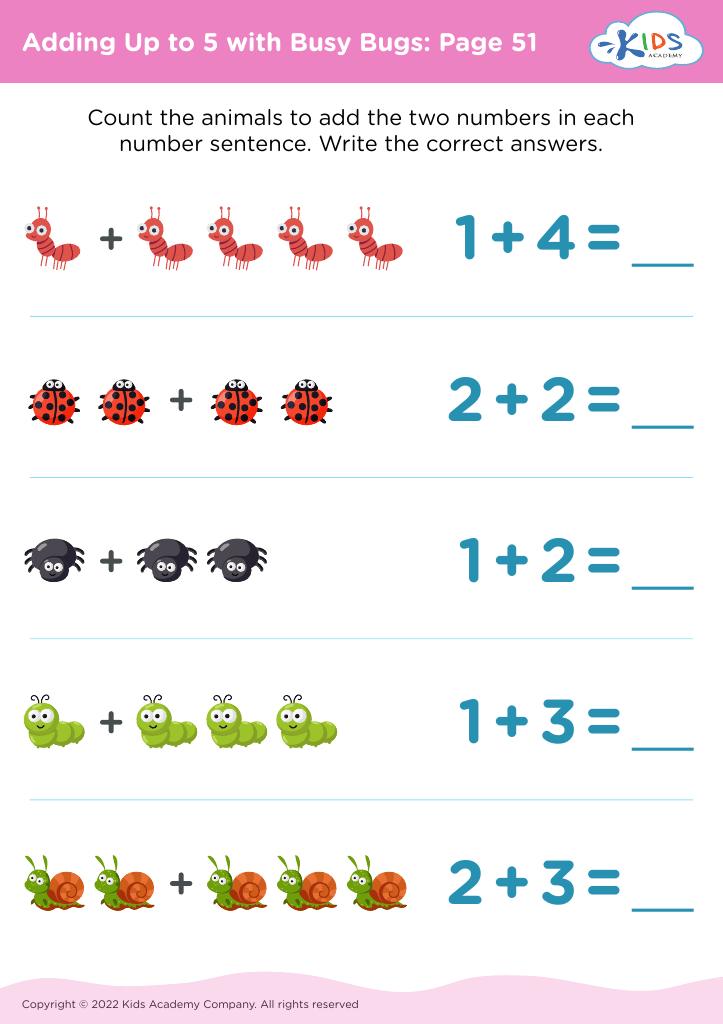
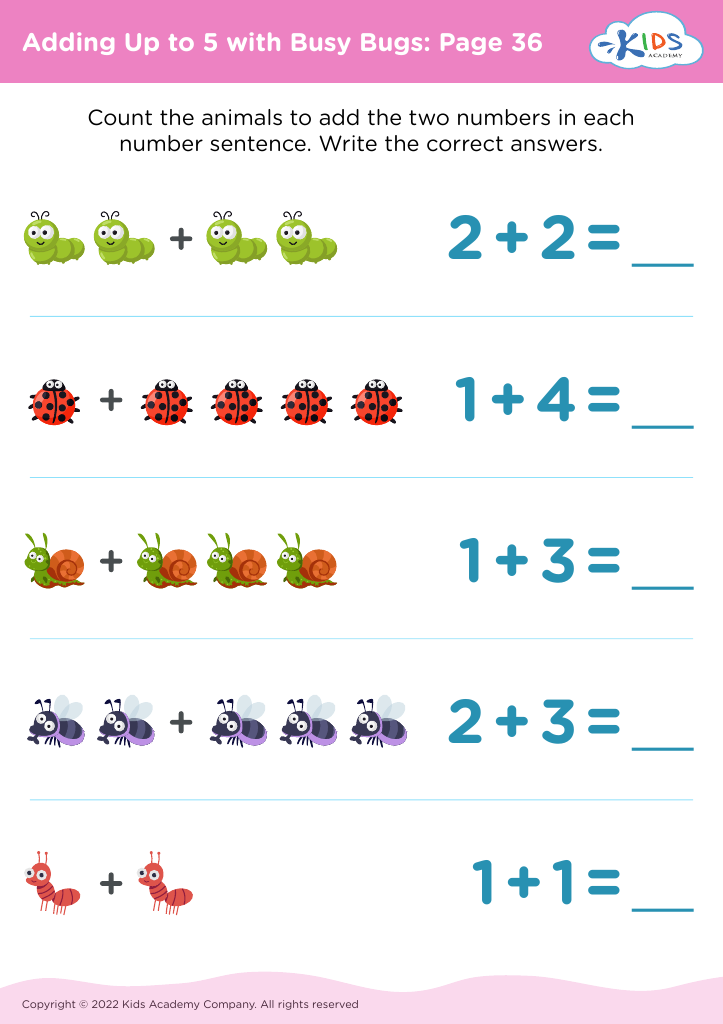
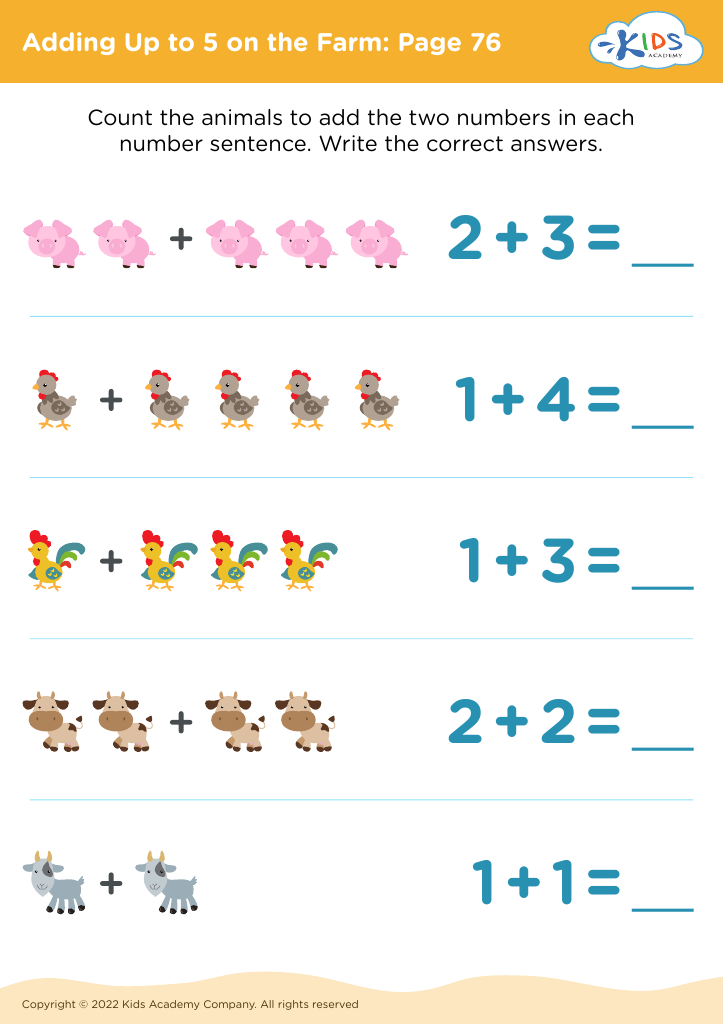
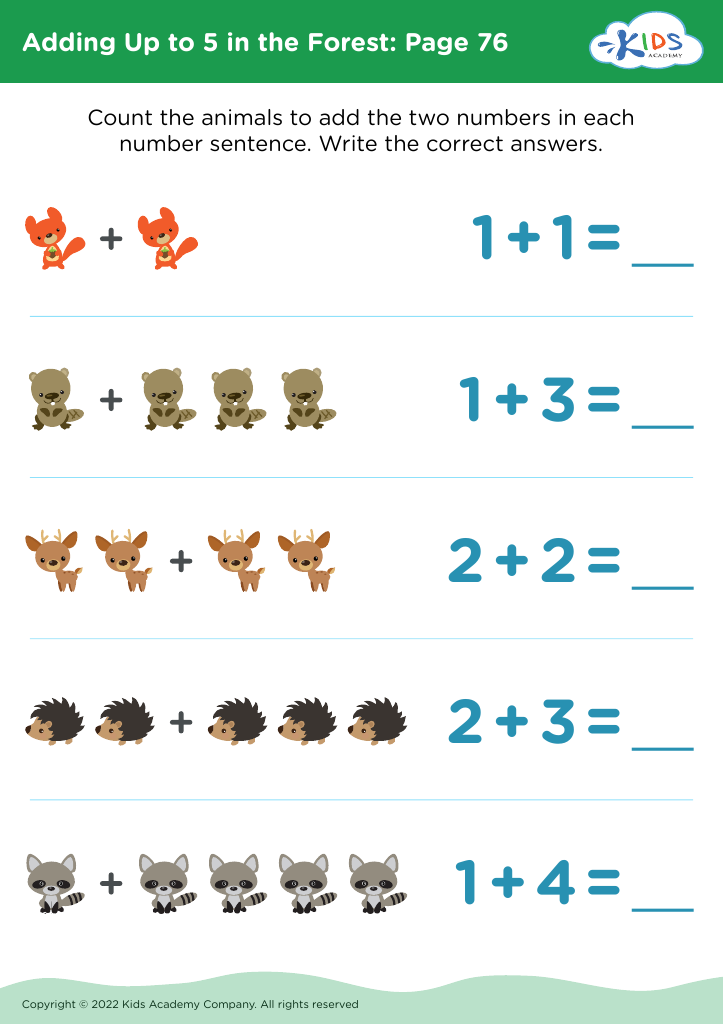
Welcome to our Basic Math Skills Addition Worksheets for 5-Year-Olds! Designed to engage young learners, these worksheets provide an enjoyable introduction to addition concepts. Each worksheet features colorful illustrations and age-appropriate exercises to help children practice fundamental math skills while having fun. Our carefully crafted activities will promote number recognition, counting, and problem-solving abilities, setting a solid foundation for future math learning. Parents and teachers can effortlessly incorporate these worksheets into daily lessons, fostering a love for math in their little ones. Start your child's math journey today with our interactive and educational resources!
Favorites
With answer key
Interactive
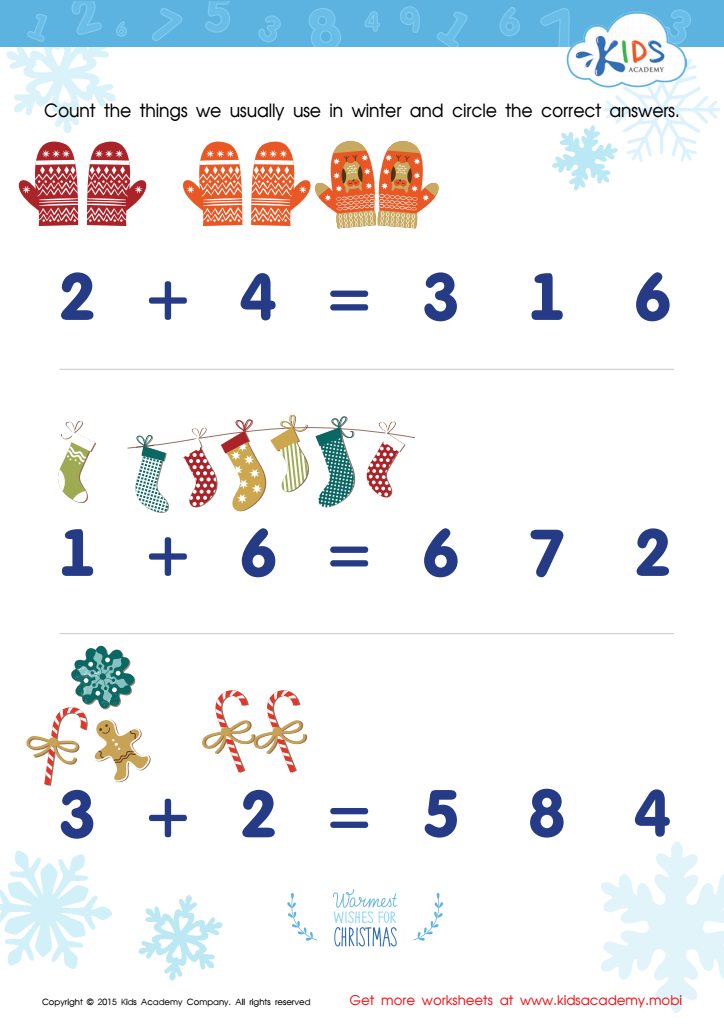
Count Winter Things Worksheet
This chilly winter afternoon, help your kid warm up with Kids Academy's free math worksheet - full of bright pictures and addition practice. Let them count the things and write in the numbers for a great brain training and math head start. Get more free math worksheets here. (80 words)
 Assign to My Students
Count Winter Things Worksheet
Worksheet
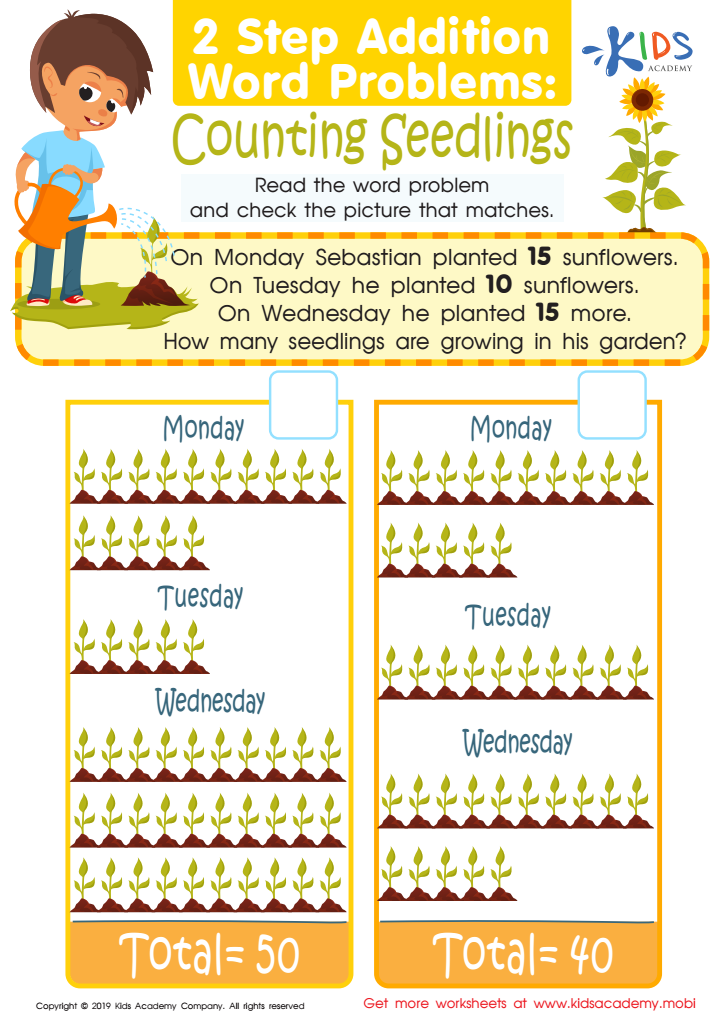
Counting Seedlings Worksheet
Understanding math word problems is key. Multiple steps can prove challenging - this free worksheet provides one-to-one picture representation to help kids solve multi-step addition word problems. Strengthen addition skills by choosing the matching picture to the answer.
Counting Seedlings Worksheet
Worksheet
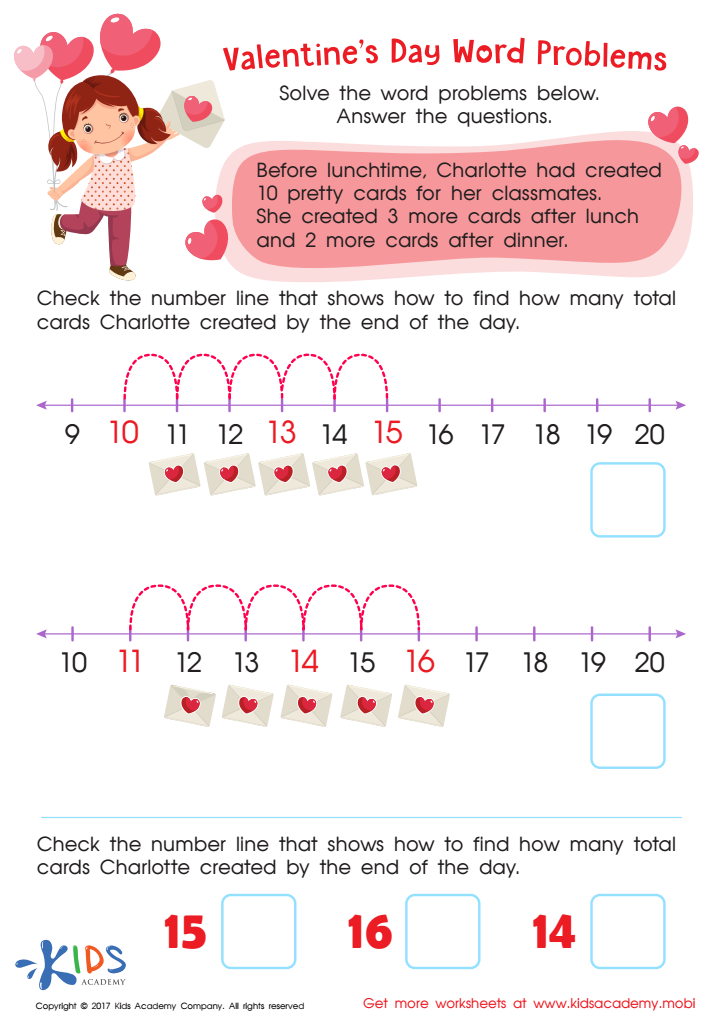
Valentines Day Word Problem Worksheet
This Valentine's Day worksheet will help your child practice using a number line to solve an addition problem. It's a great way to boost confidence and make solving word problems a breeze.
Valentines Day Word Problem Worksheet
Worksheet
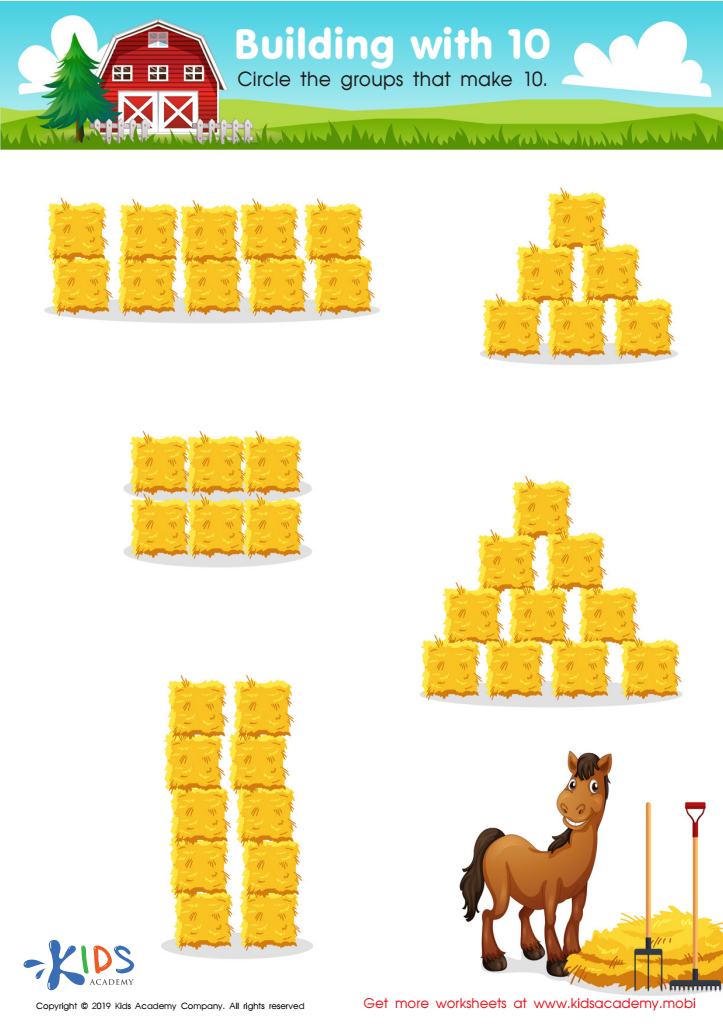
Building with 10 Worksheet
Counting numbers can be simple with this worksheet: Ask your kids to count the stacks of objects, ensure accuracy with your help, then circle the ones of ten. With practice and guidance, your children will soon become counting pros!
Building with 10 Worksheet
Worksheet
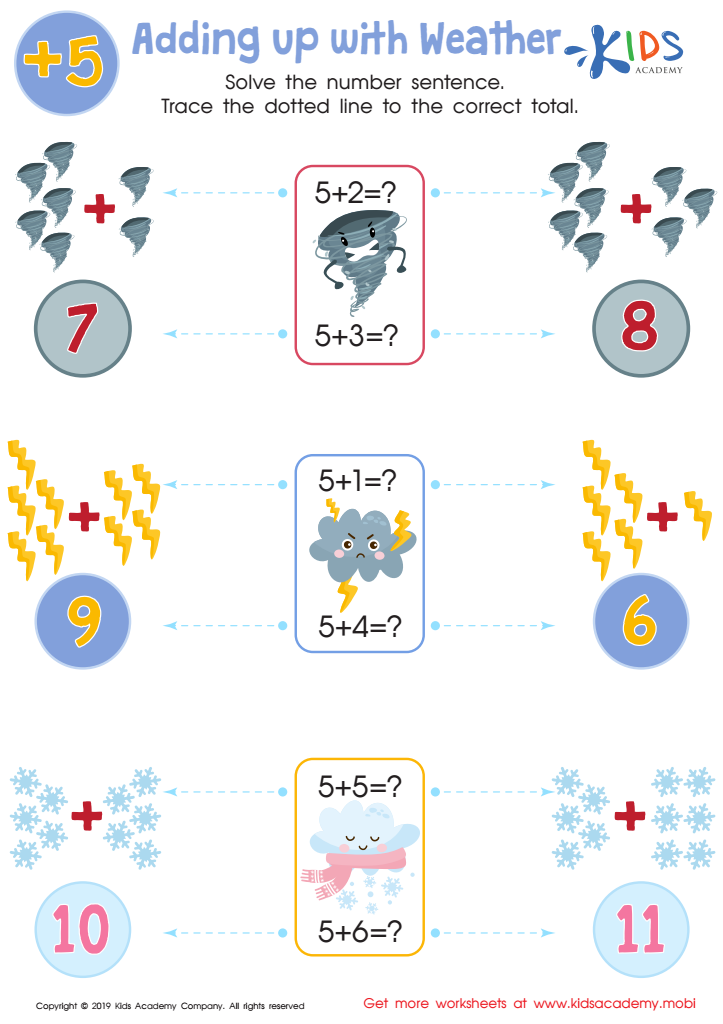
Adding up With Water Worksheet
Ask your kids to name different kinds of weather and what it's like outside now. Then, help them solve the number sentences on the worksheet by tracing the dotted line to the correct total.
Adding up With Water Worksheet
Worksheet
Join Kids Academy for Free
Who is primarily going to use this learning content?








Basic math skills, particularly addition, are crucial for 5-year-olds as they lay the foundation for future learning. At this age, children are naturally curious and absorb information rapidly. By introducing basic addition concepts, such as counting and combining small groups of items, we help develop their critical thinking and problem-solving abilities.
Parents and teachers should care about these skills for several reasons. First, strong basic math skills build confidence and a positive attitude towards learning. Children who grasp the fundamentals are more likely to pursue advanced math topics in later years. Additionally, math is not just about numbers; it enhances cognitive abilities like logical reasoning, which are applicable in various aspects of life.
Secondly, early exposure to math aids in social and emotional development. Cooperative games involving addition encourage teamwork and communication skills among peers. Moreover, integrating math into everyday activities (like grocery shopping or cooking) makes learning relevant and enjoyable.
Finally, ensuring that children grasp basic math skills fosters readiness for the increasingly demanding academic environment they will face in school. By prioritizing addition and foundational math skills, parents and teachers alike contribute to a well-rounded, successful educational experience for young learners.








