
Understanding prepositions Geometry Worksheets for 5-Year-Olds
4 filtered results
Difficulty Level
Grade
Age
-
From - To
Subject
Activity
Standards
Discover the joy of learning prepositions with our engaging Geometry Worksheets for 5-Year-Olds! Tailored specifically for young learners, these worksheets introduce foundational geometry concepts through fun and interactive activities. Children will explore spatial relationships using terms like "above," "below," "beside," and "in front of" while identifying shapes and their positions. Carefully designed to make learning effortless and enjoyable, each worksheet promotes critical thinking and enhances vocabulary. Perfect for at-home learning or classroom settings, our preposition worksheets support essential skills development, preparing kids for future math success. Encourage your child's curiosity and understanding of the world around them with these delightful resources!
Favorites
With answer key
Interactive
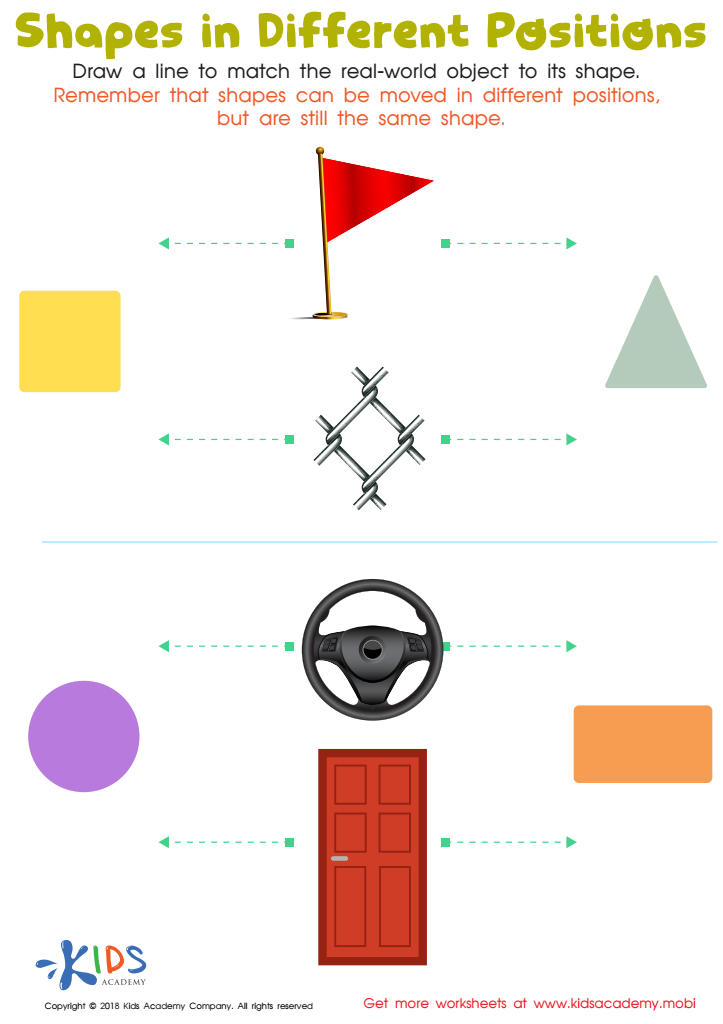
Shapes in Different Positions Worksheet
Children can practice and strengthen their visual-discernment, hand-eye coordination and neural connections by manipulating shapes in their minds and matching them with the right answer. This PDF with bright colors gives your kids the opportunity to do so.
 Assign to My Students
Shapes in Different Positions Worksheet
Worksheet











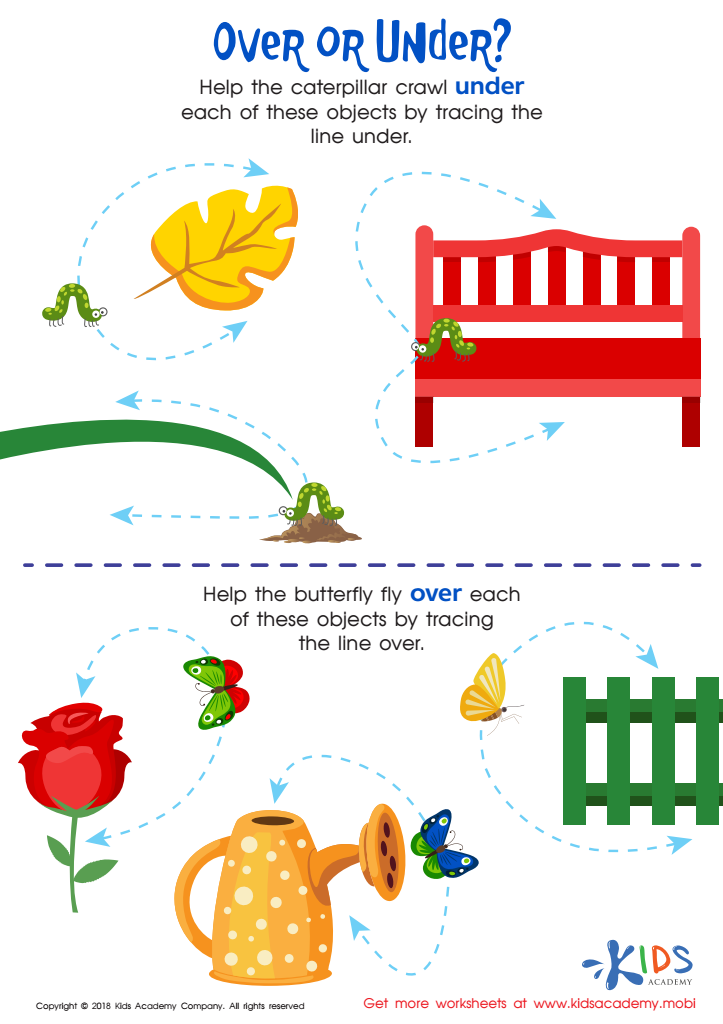
Over or Under? Worksheet
Math for young kids isn't just about numbers and counting, but also spatial concepts like geometry. This worksheet helps students learn "over" and "under" by tracing the movement of caterpillars and butterflies. Downloadable for free, it's an effective teaching tool for early learners.
Over or Under? Worksheet
Worksheet
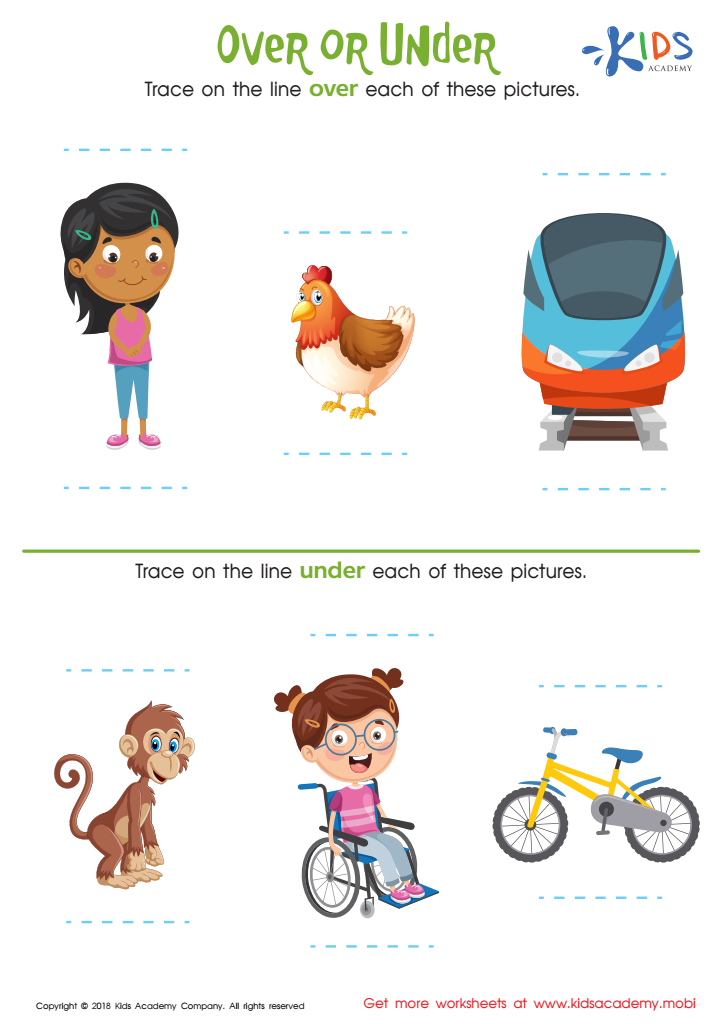
Over or Under Worksheet
Help your toddler grasp prepositions like "over" and "under" with this fun worksheet. Have them trace lines over the pictures on one half and under the pictures on the other, thus practicing basic communication and math concepts. Strengthen your child's understanding and communication skills with this activity.
Over or Under Worksheet
Worksheet
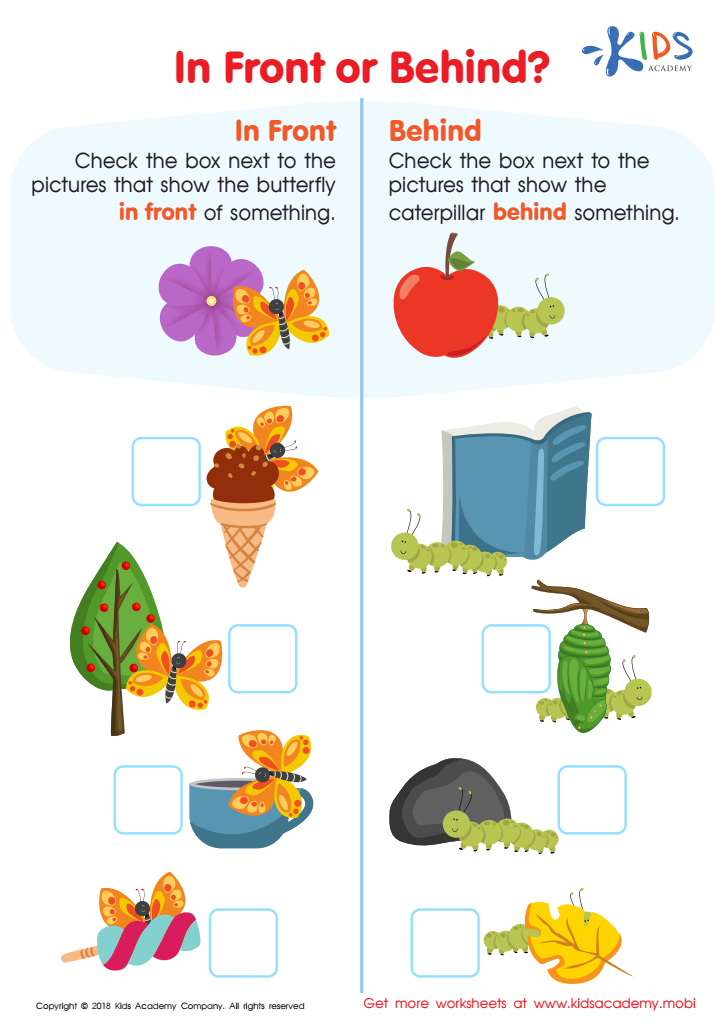
In Front or Behind Worksheet
Hone your child's spatial skills with 'in front' and 'behind'! This knowledge is essential for communication and study. Get them started with this free PDF worksheet - check off the pictures that show the butterfly in front and caterpillar behind!
In Front or Behind Worksheet
Worksheet
Join Kids Academy for Free
Who is primarily going to use this learning content?








Understanding prepositions and basic geometry concepts is essential for 5-year-olds as it lays the foundation for effective communication and critical thinking. Prepositions, such as "above," "below," "next to," and "inside," help children describe the world around them, developing both their language skills and spatial awareness. These concepts are particularly relevant as young children often explore their environment, playing with blocks or engaging in physical activities that involve movement and positioning.
Incorporating geometry into early learning enhances children's cognitive skills by allowing them to recognize shapes and spatial relationships. Recognizing and describing shapes fosters creativity, improves problem-solving skills, and supports logical thinking. For instance, identifying a circle or square in the real world helps children connect abstract ideas to tangible experiences.
Moreover, proficiency in understanding prepositions and simple geometry boosts academic success later in life. Teachers and parents who emphasize these concepts support holistic development, encouraging children to articulate their thoughts and engage with math more confidently. Ultimately, exciting early experiences with language and geometry set the stage for lifelong learning, making it vital for caregivers and educators to prioritize these essential skills.








