Animal recognition Numbers Worksheets for 5-Year-Olds
8 filtered results
-
From - To
Boost your child's early math skills with our engaging Animal Recognition Numbers Worksheets tailored for 5-year-olds. These fun, educational sheets combine the excitement of learning numbers with adorable animal illustrations to keep young minds captivated. Ideal for preschool and kindergarten students, our worksheets help kids recognize and write numbers while also identifying different animals. Each activity sharpens their counting, observation, and motor skills through vibrant, hand-drawn images and interactive exercises. Perfect for playful learning at home or in the classroom, these worksheets lay the foundation for a lifelong love of math and nature. Download now and start the adventure!
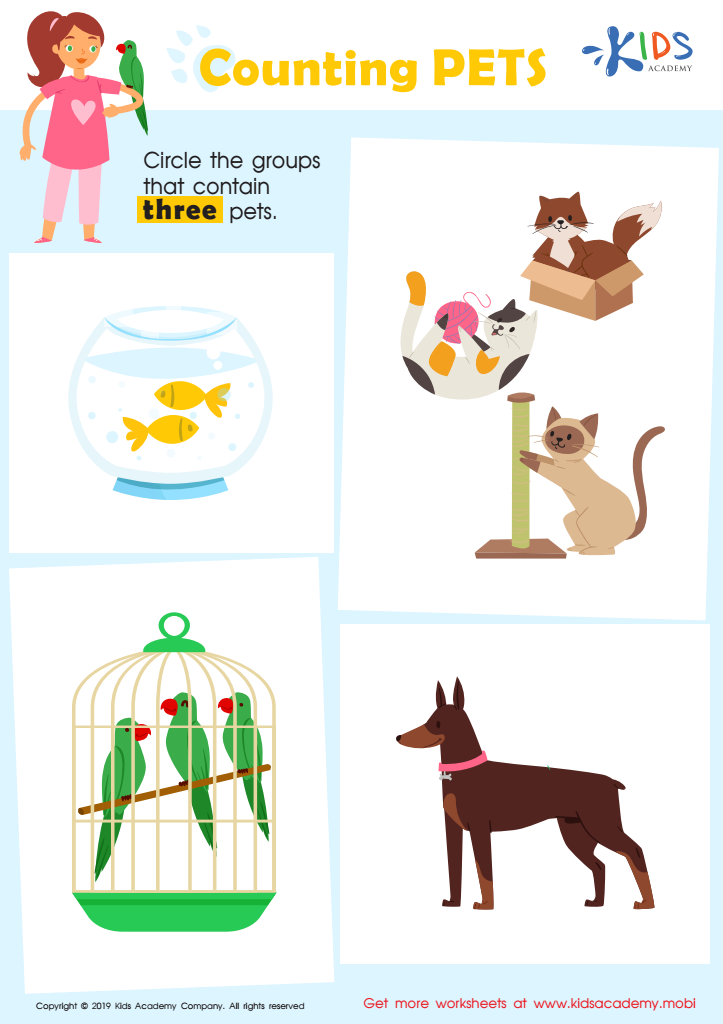
Counting Pets Worksheet
 Assign to My Students
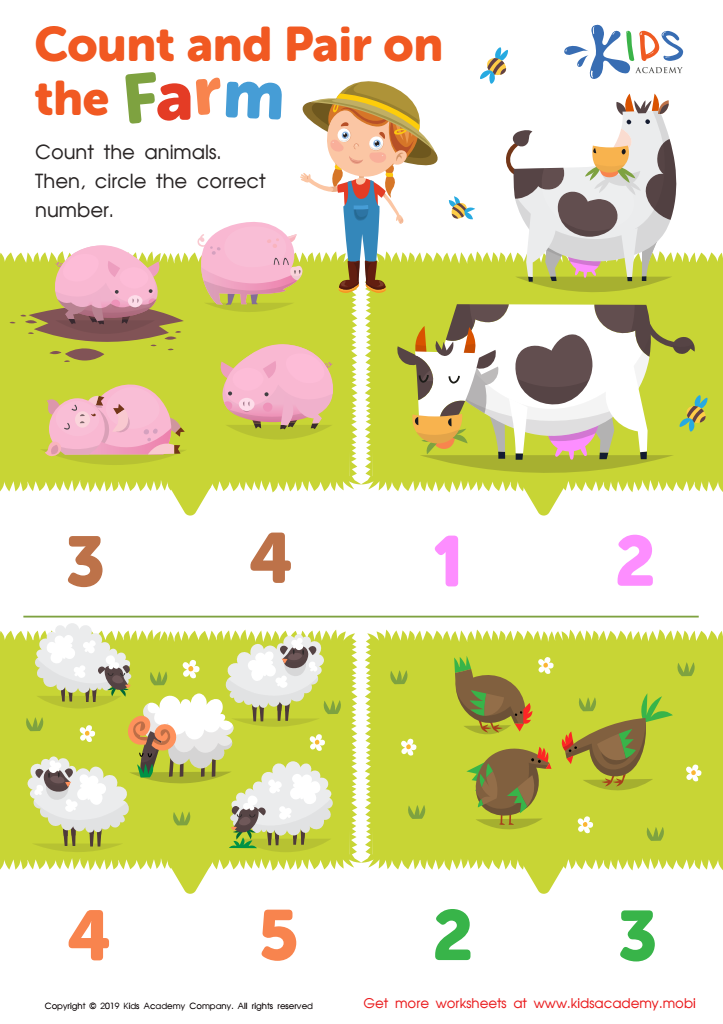
Count and Pair on the Farm Worksheet
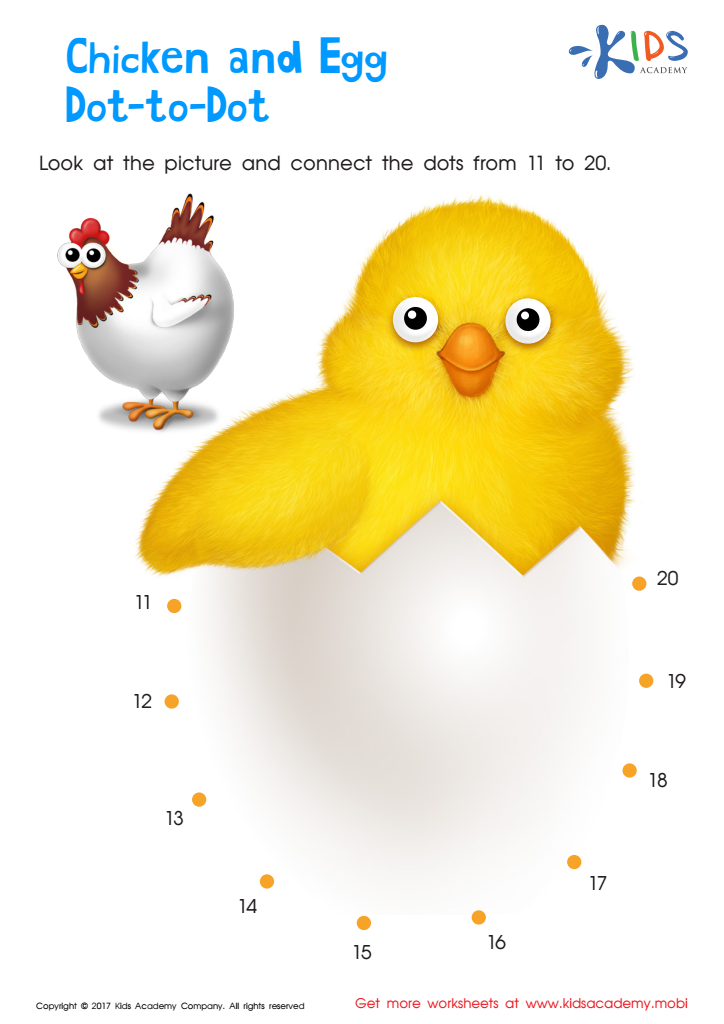
Ordering 11–20: Chicken & Egg Dot–to–dot Worksheet
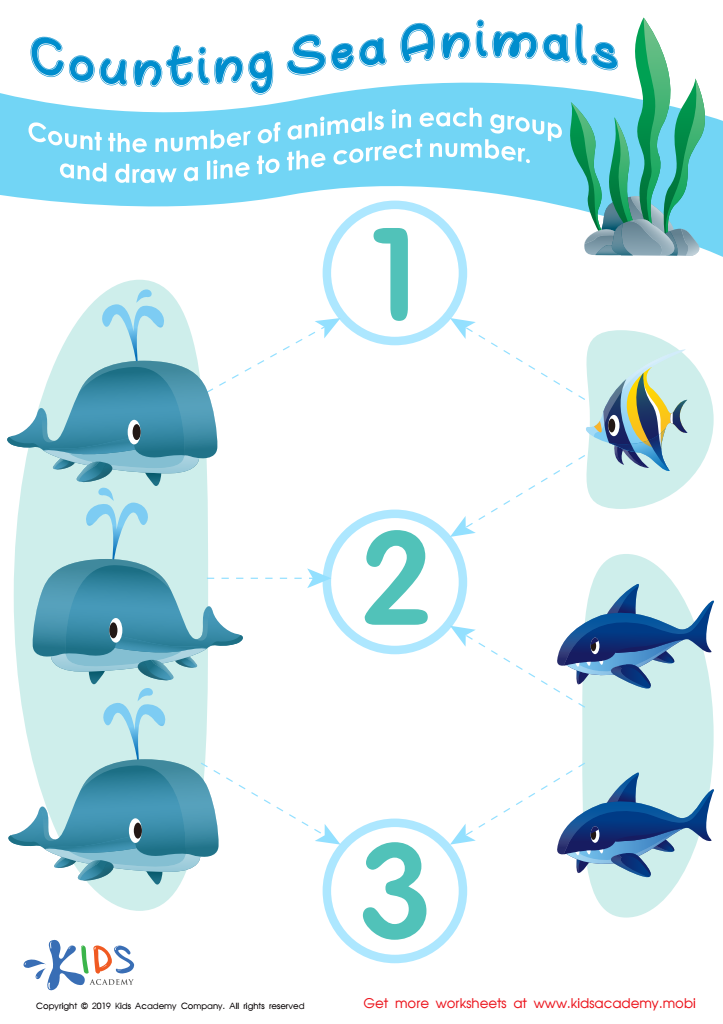
Counting Sea Animals Worksheet
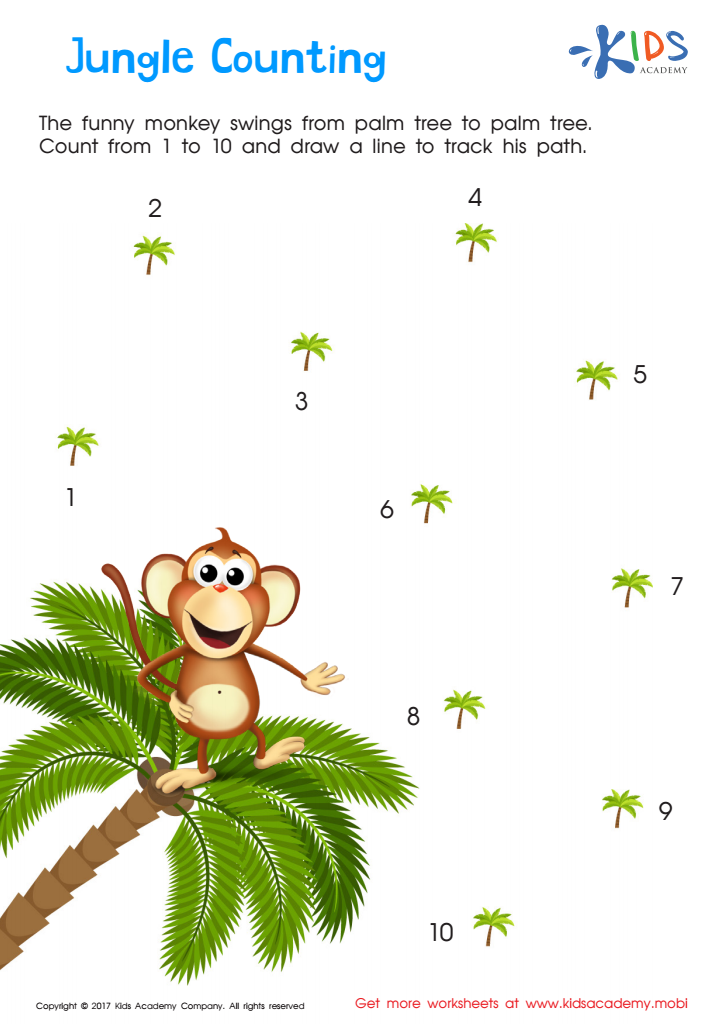
Jungle Counting Connect Dots Worksheet
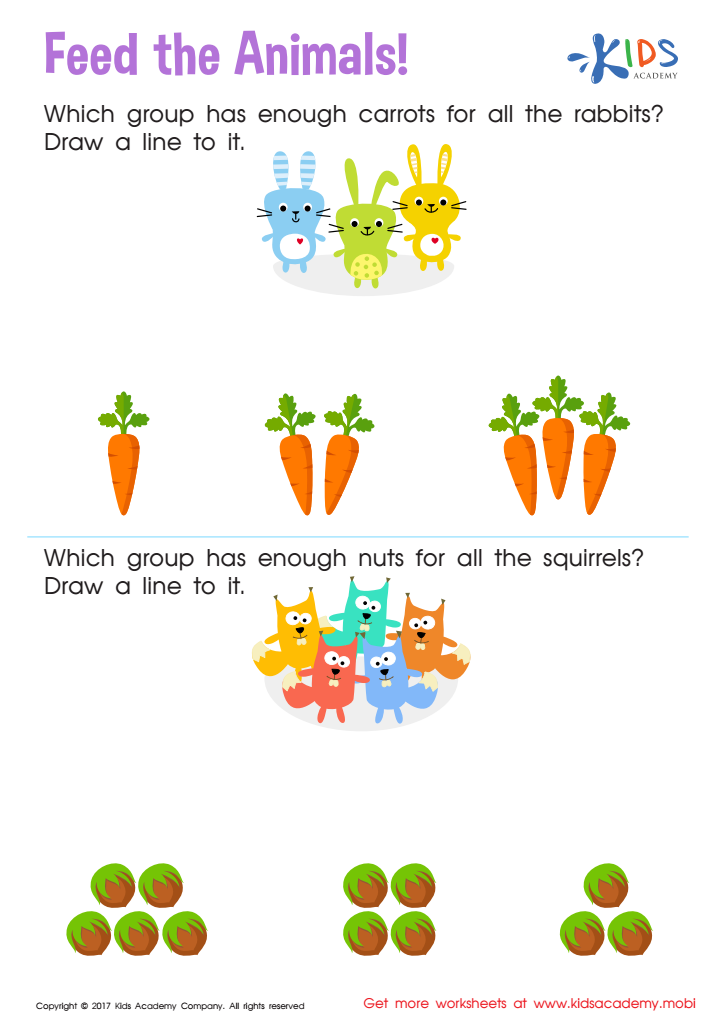
Count and Match: Feed the Animals Worksheet
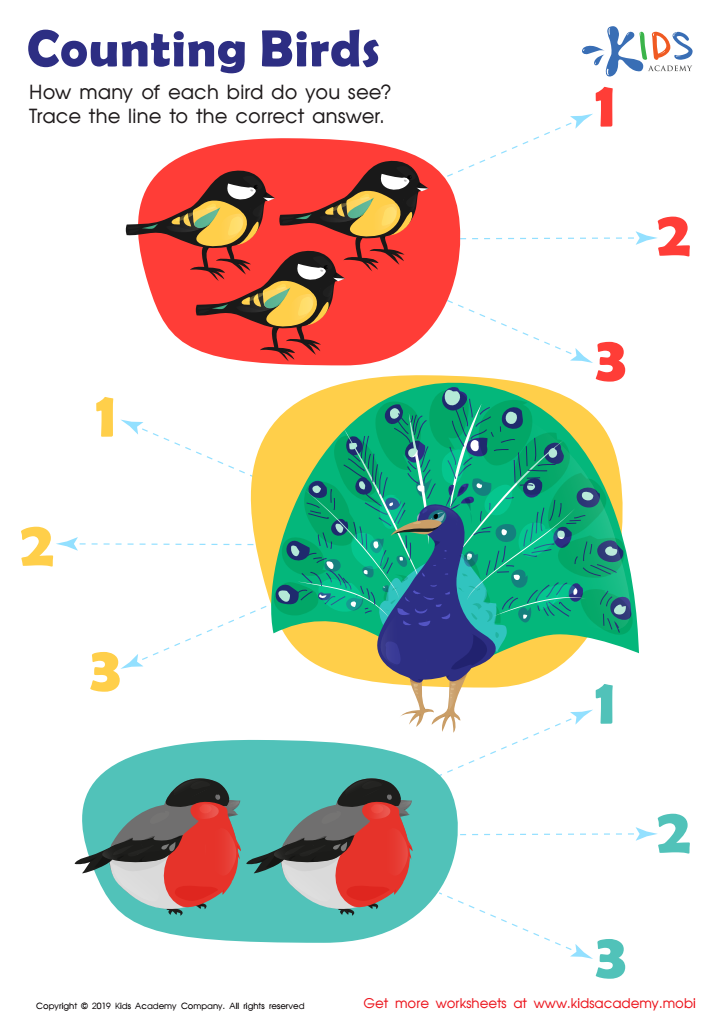
Counting Birds Worksheet
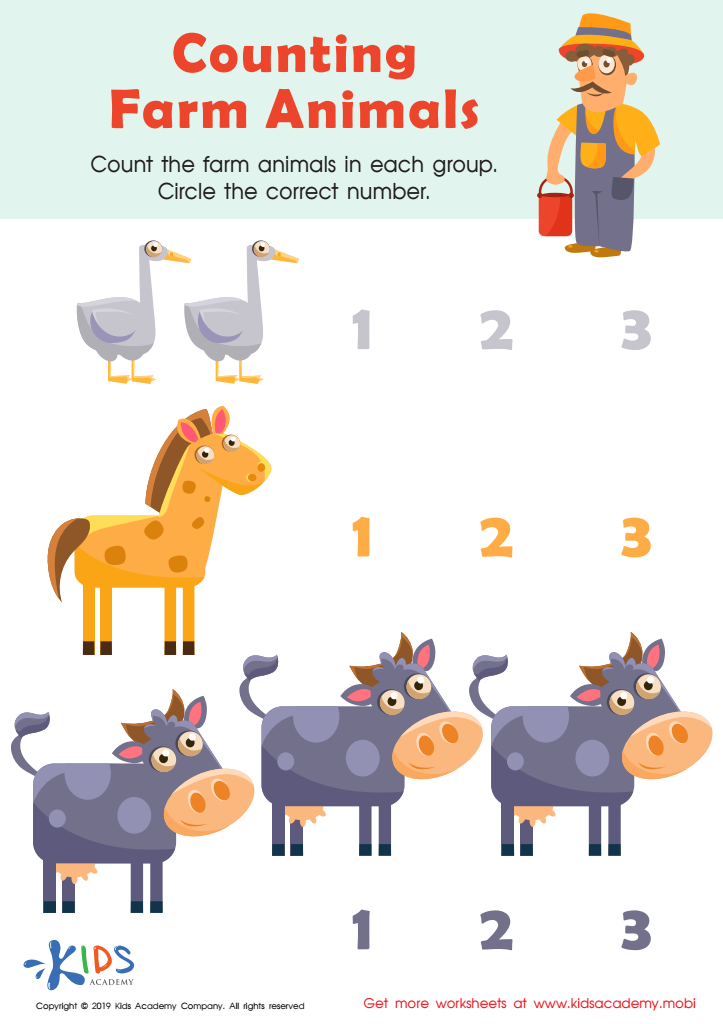
Counting Farm Animals Worksheet








Parents and teachers should care about Animal Recognition Numbers for 5-year-olds as they play a crucial role in early childhood development. At this age, children are in a developmental phase where their brains are highly receptive to visual and auditory information, making it the perfect time to introduce foundational cognitive skills.
Recognizing animals and associating them with numbers engages multiple areas of the brain simultaneously. This multi-sensory learning approach strengthens neural pathways, crucial for cognitive development. It enhances memory retention and helps develop critical thinking skills as children learn to categorize and distinguish between different animals.
Moreover, integrating numbers into animal recognition lays an early foundation for numeracy skills. Numbers and basic math concepts become less intimidating when they are introduced in a fun and familiar context. For instance, counting the number of legs on an animal or identifying how many spots a ladybug has can make learning numbers tangible and enjoyable.
Emotional and social development are also supported through these activities as they often involve interactive learning, encouraging communication skills, patience, and cooperation among peers. Overall, Animal Recognition Numbers are a holistic educational tool that supports cognitive, emotional, and social growth, making them indispensable in early childhood education.








