Understanding Quantities Numbers Worksheets for 5-Year-Olds
5 filtered results
-
From - To
Unlock the world of numbers for your 5-year-old with our "Understanding Quantities Numbers Worksheets"! These engaging worksheets are designed to foster early math skills, enabling young learners to grasp the concept of quantities through fun activities. With colorful visuals and interactive exercises, children will enjoy counting objects, comparing sizes, and recognizing numbers in everyday contexts. Perfect for at-home learning or classroom use, our resources make understanding quantities an exciting experience. Help your child build a strong mathematical foundation with worksheets that encourage problem-solving, critical thinking, and a love for numbers. Explore our collection today for a fun learning journey!
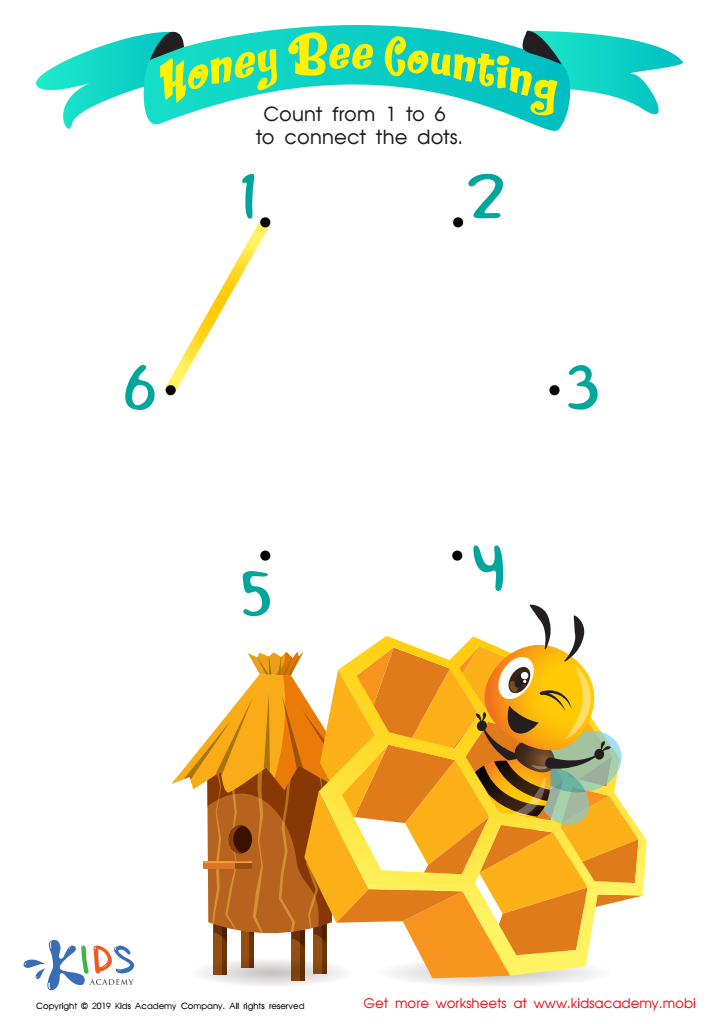
Honey Bee Counting Worksheet
 Assign to My Students
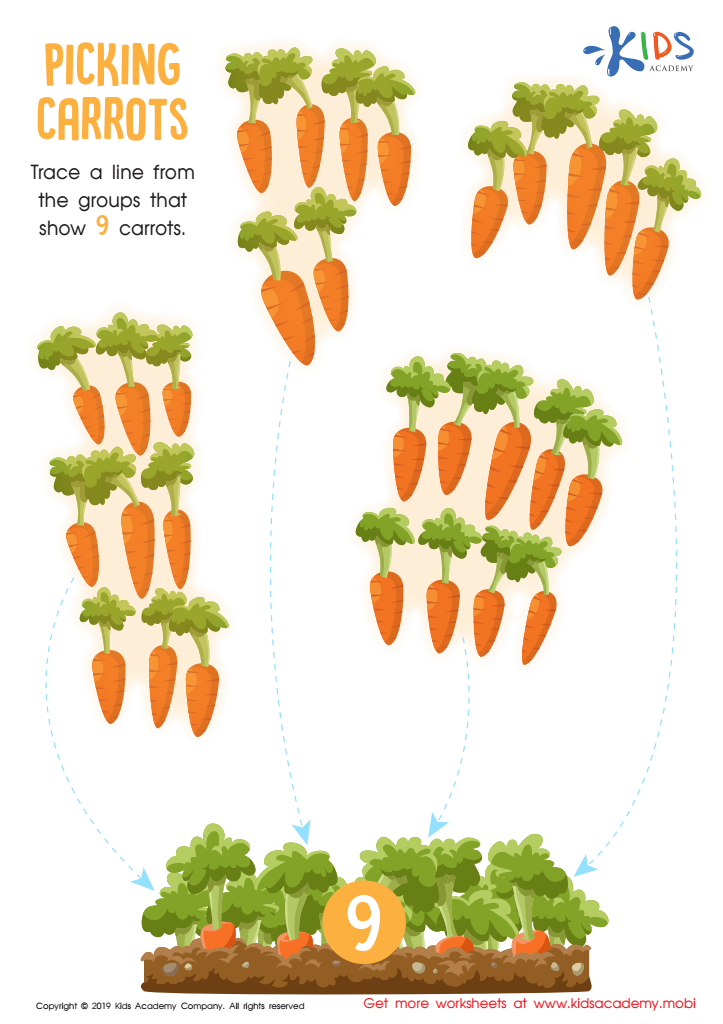
Picking Carrots Worksheet
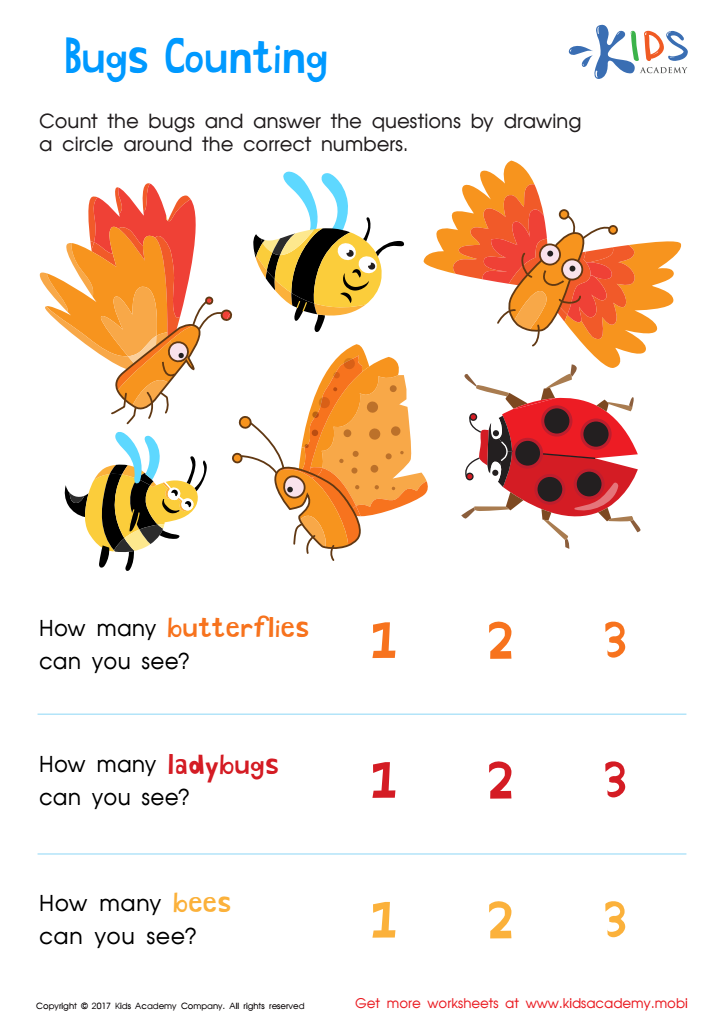
Bugs Counting Worksheet
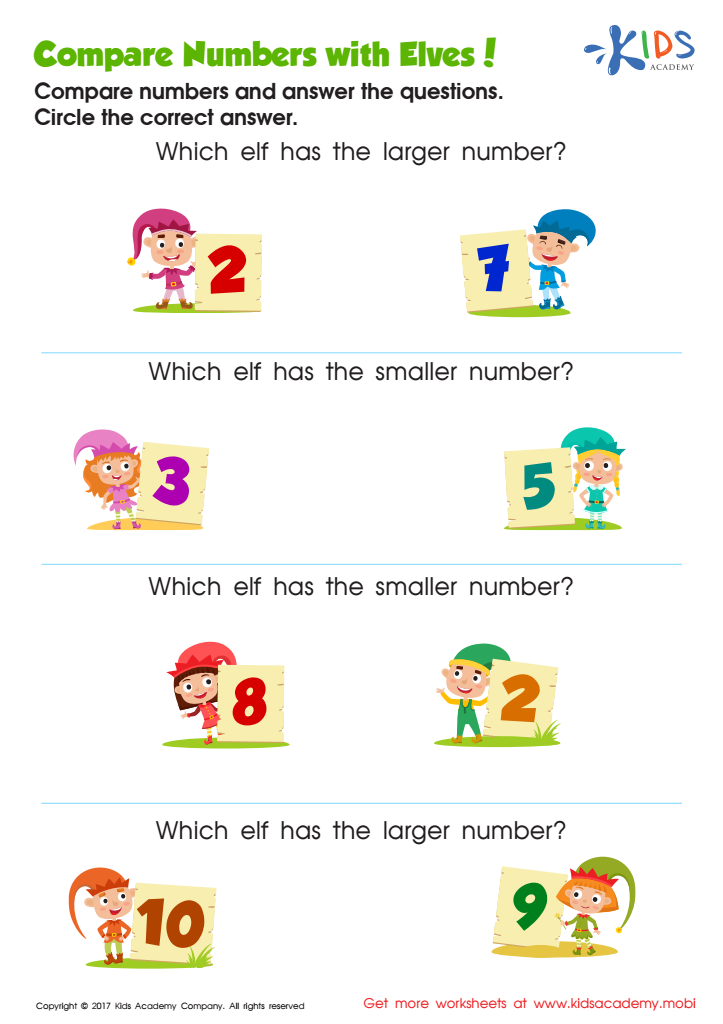
Comparing Numbers Worksheet for Kindergarten
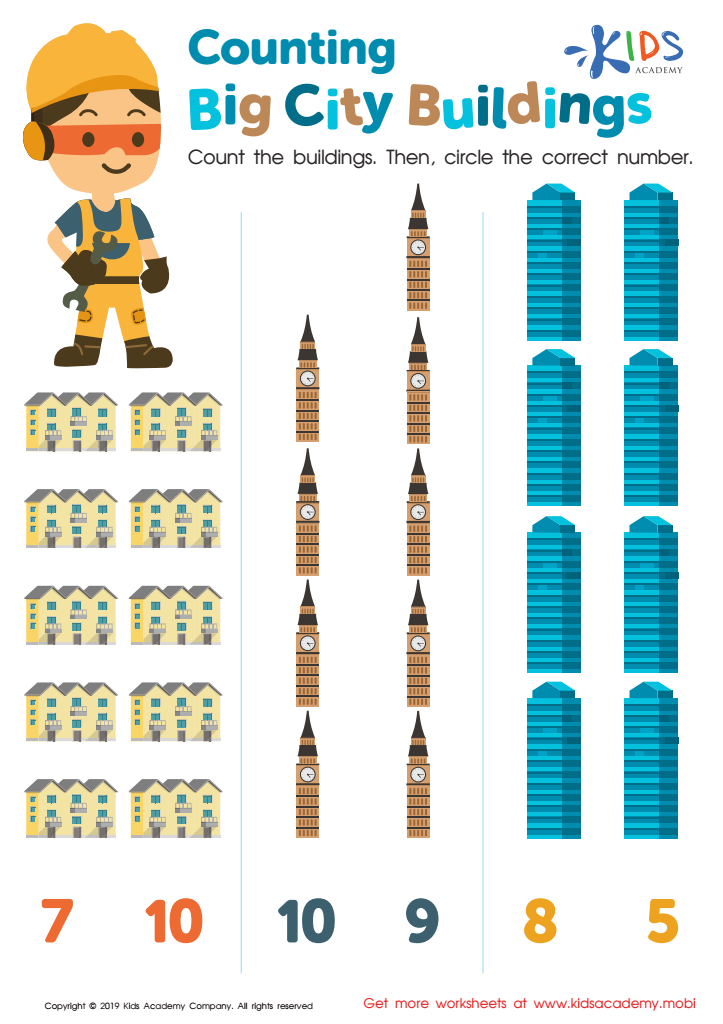
Counting Big City Buildings Worksheet


.jpg)



Understanding quantities and numbers is foundational for a child's cognitive and mathematical development. For 5-year-olds, grasping these concepts fosters critical thinking and problem-solving skills. When parents and teachers prioritize this understanding, they cultivate a love for learning and build confidence in young learners.
At this age, children transition from recognizing numbers to comprehending their meanings. Recognizing that "5" represents a specific quantity is essential when they engage in everyday activities like counting toys, sharing snacks, or organizing their playthings. This early exposure lays the groundwork for more complex math skills later, such as addition, subtraction, and even arithmetic operations.
Moreover, understanding quantities enhances a child’s ability to relate to the world around them. It encourages attention to detail, helps with decision-making, and inspires curiosity about patterns and relationships. Furthermore, it boosts their spatial awareness, which is crucial in subjects like geometry.
By immersing children in engaging and exploratory activities focused on quantities, parents and teachers not only support numeracy skills but also nurture a broader intellectual growth, enabling children to approach challenges with confidence. Ultimately, fostering a strong understanding of quantities and numbers builds a solid foundation for future academic success and lifelong learning.








